
Market Report · July 29, 2026

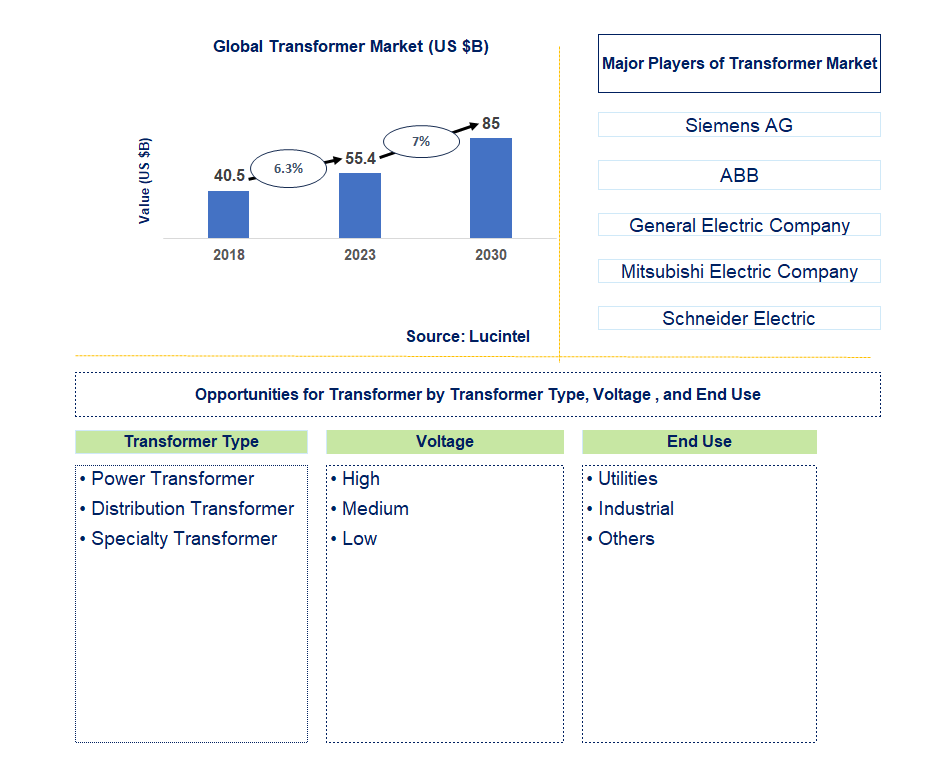
Key data points: The market size in 2023 = $55.4 billion, growth forecast = 7% annually next 7 years. Scroll below to get more insights. This market report covers trends, opportunities, and forecast in the global transformer market to 2030 by transformer type (power transformer, distribution transformer, and specialty transformer), voltage (high, medium, and low), end use (utilities, industrial, and others), and region (North America, Europe, Asia Pacific, and the Rest of the World)
We'll send your sample report shortly.
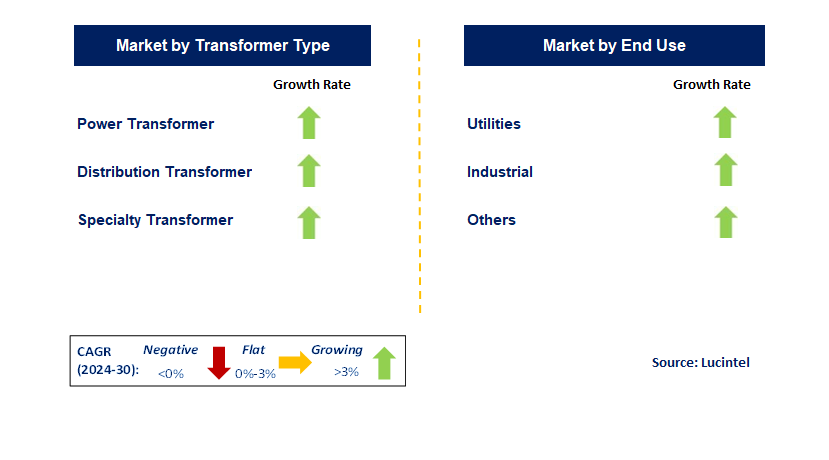
• Lucintel forecasts that industrial will remain the largest segment over the forecast period.
• Within this market, distribution transformer is expected to witness the highest growth.
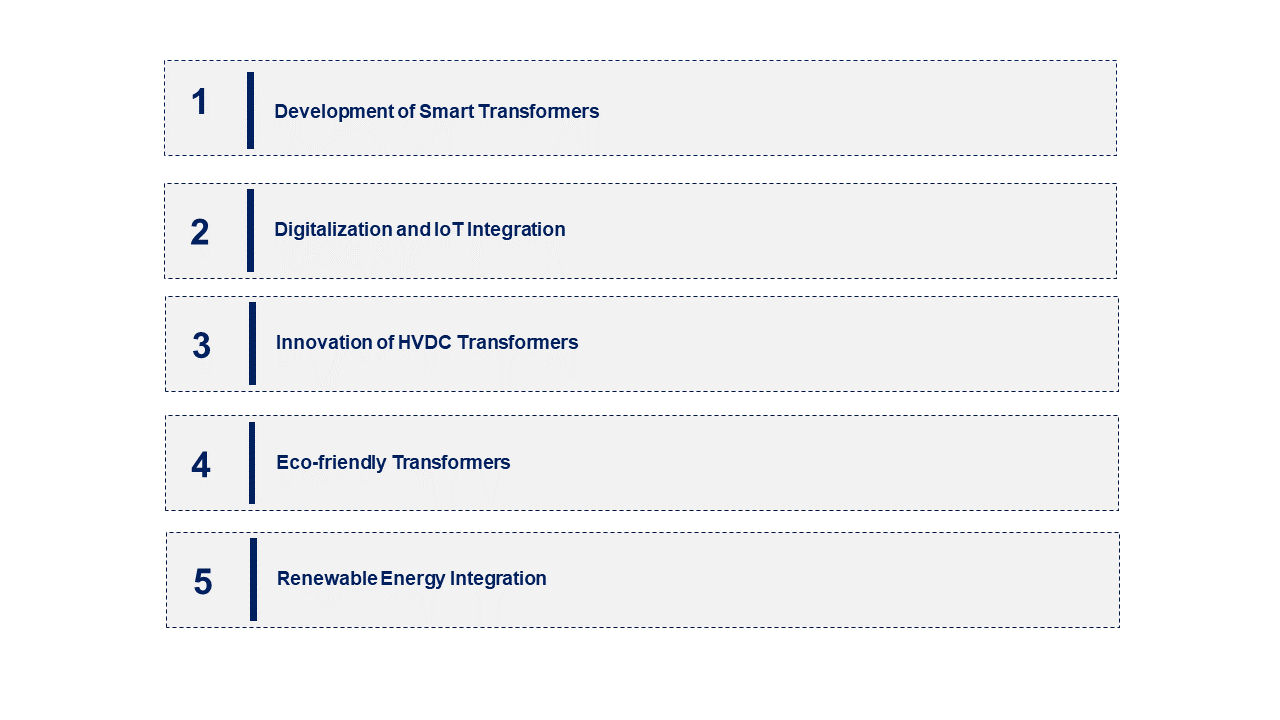
• Development of Smart Transformers: Also called solid-state transformers (SSTs), smart transformers are being developed to enhance efficiency, real-time monitoring and better control over distribution of electric power. They can adapt under varying loads and seamlessly integrate with smart grids.
• Digitalisation and IoT Integration – The miniature version of digital sensors having IOT technology at its core when integrated into transformers allows for the collection of real time data, remote monitoring as well as predictive maintenance reducing outage time and extending the life span of the transformer.
• Innovation of HVDC Transformers: High Voltage Direct Current (HVDC) transformers were recognized as an essential component for transmitting power over long distance and getting connected across different power grids. HVDC transformer technology innovations have contributed towards enhancing efficiency alongside reliability.
• Renewable Energy Integration- There is now a dedicated line for transformer designs that can handle power integration from renewable energies like wind or solar into the grid. Such transformers are equipped to handle fluctuations and ensure uninterrupted supply of green energy.
• Eco-friendly Transformers: A recent trend has been witnessed where end users prefer eco-friendly transformers that utilize biodegradable fluids such as natural esters in their insulation systems instead of non-biodegradable and toxic compounds. This results in improved safety and lower environmental impact.
• Modular Transformers: Modular/Prefabricated transformers have become popular due to their simple installation process, scalability etc. These can be used for various purposes such as renewable energy projects and urban infrastructure.
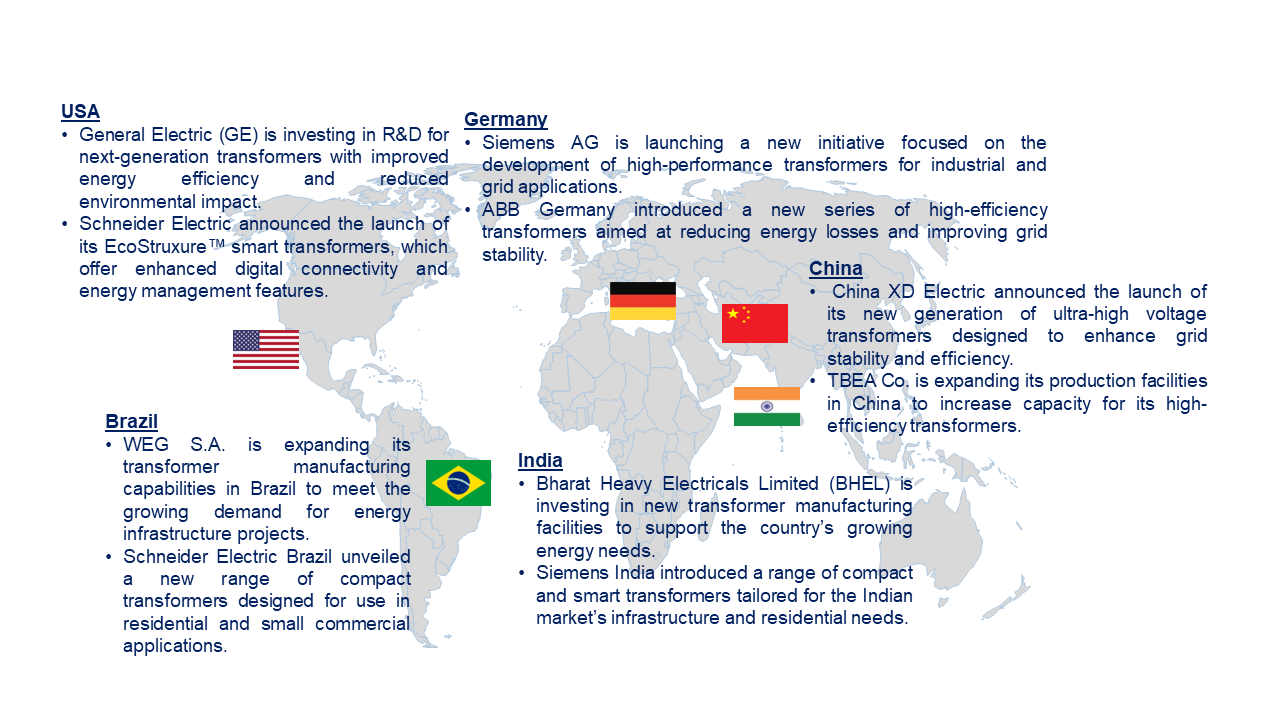
• Ongoing innovations and advancements in various sectors of the transformer market which have been highlighted by recent developments: Siemens Energy’s concentration has been on improving its digital transformer offerings. The company has introduced new features in monitoring and diagnostics that enhance their transformers’ efficiency and reliability.
• GE announced it would work with many energy companies to create smart grid transformers which are more capable of dealing with renewable sources of energy.
• ABB Ability™ TXpert Digital Distribution Transformer has been launched to allow real-time monitoring and extend the functioning life of transformers.
• Significant progress has been made by Schneider Electric in creating transformers with integrated IoT for effective power control.
• Eaton recently joined hands with electric utilities to deliver their advanced transformer technologies into smart grid initiatives at large.
• Technological Innovations: Their improvement in reliability as well as efficiency of the grid is being achieved through IoT integration and more advanced sensors that offer transformer monitoring and control. It has been noted that this technology which uses semiconductors is getting attraction due to its potential for increasing efficiency and support smart grid technologies.
• Renewable Energy Integration: With the rise of renewable sources such as wind, solar amongst others, transformers are being developed to handle varying loads while at the same time integrating with these power sources. Transformers are becoming more specialized and designed to manage unique features of renewable energy systems including variable voltages and high harmonics.
• Energy Efficiency: There has been a stronger push by governments and regulatory bodies for higher minimum efficiency specifications which have driven manufacturers to make more energy-efficient designs of transformers. Introduction of high performance materials like amorphous steel reduces core losses hence provides overall energy savings for transformers.
• Market Expansion and Investments: An increase in urbanization, industrialization especially in Asia and Africa has led to increased investment in transformer infrastructure in emerging markets. Development regions focus on upgrading existing transformer fleet so as to improve their performance & reliability respectively.
• Environmental Considerations: The trend is towards developing a new breed of eco-friendly transformers that use non-toxic substances, encourage reuse, recycling, contain less waste, pollute less during production processes among other aspects aimed at reducing environmental hazards upon their disposal after decommissioning or replacement purpose from installations previously fitted with them within the power system. Transforming companies are investing resources in research regarding ways of lowering carbon emissions from production processes associated with manufacturing; thus contributing towards reduced climate change related effects resulting from global warming all over the world.
• Changing energy sources: The demand for transformers is growing due to the expanding investment in power generation, transmission and distribution infrastructure. Such processes as industrialization and urbanization also lead to a need of extended electricity networks.
• Renewable Energy Integration: Transformers used in renewable energy systems are needed as variably powered systems like solar and wind are connected to their electrical grids effectively.
• Upgradation and Replacement: The developed countries suffer from an aging infrastructure that requires the replacement or upgrade of old transformers so as to improve efficiency and reliability.
• Technological Advancements: For example, market growth may be fostered by such innovations as smart transformers or advanced materials which enhance the performance and increase effectiveness. Digital monitoring systems together with smart grids also drive-up demand.
• Economic Growth: Electrical infrastructure such as transformers becomes highly demanded when developing nations’ industrial or residential sectors go through rapid growth.
• Government Policies: Such factors as government support on issues which include incentives for renewable energy usage as well as energy efficient programs drive transformer industry growth. Challenges in the transformer market are:
• High Initial Costs: In underdeveloped regions with limited financial resources, making and installing transformers can be capital-intensive hence restricting its progress.
• Environmental and Safety Concerns: Oil-filled transformers present environmental dangers should any leaks occur. Besides, observance of environmental standards may result into additional costs.
• Raw Material Prices: Fluctuating raw material prices including copper plus steel influence pricing levels for transformer products and production expenses respectively.
• Technological Complexity: There is increasing transformer complexity henceforth requiring skilled personnel and thus higher maintenance cost accompanies it; they have become far more sophisticated with features like intelligence, data integration of management system within advanced grids that necessitate human intervention unlike traditional models used decades ago when only simple basic operations were involved in managing them or field testing was done after field services were performed thereby no workload required above but now many people would argue they cannot live without these modern machines even though technically speaking one could say they are just fancy boxes sitting around until somebody decides what should be done next time round anyway.
• Supply Chain Disruptions: Transformer production and delivery may be affected by global supply chain problems as exemplified by those experienced during Covid-19 pandemic that also affect its component availability and costs.
• Competition and Pricing Pressure: In addition, the market is sensitive to demand changes. Competition among manufacturers can force prices to go down considerably affecting their profits as a result.
• Regulatory Compliance: It may take time to enter into the market due to the diverse regulatory standards and certifications across different regions one has to adhere to. The transformer market is a complex one; therefore, while trying to maintain sustainable growth, it is imperative for firms to balance between technological innovation and regulation compliance on one hand, with cost management and environmental considerations on the other hand.
• Siemens AG
• ABB
• General Electric Company
• Mitsubishi Electric Company
• Schneider Electric These companies have established themselves as leaders in the transformer industry, with extensive product portfolios, global presence, and strong research and development capabilities. They continually strive to enhance their market positions through strategic partnerships, mergers and acquisitions, and product innovations. The market share dynamics within the carbon fiber market are evolving, with the entry of new players and the emergence of innovative transformer technologies. Additionally, collaborations between material suppliers, manufacturers, and end-users are fostering technological advancements and expanding market opportunities.
• Power Transformer
• Distribution Transformer
• Specialty Transformer
• High
• Medium
• Low
• Utilities
• Industrial
• Others
• North America
• Europe
• Asia Pacific
• Siemens AG
• ABB
• General Electric Company
• Mitsubishi Electric Company
• Schneider Electric Q6. Which transformer market segment will be the largest in future? Answer: Lucintel forecasts that industrial will remain the largest segment over the forecast period. Q7. In transformer market, which region is expected to be the largest in next 5 years? Answer: APAC is expected to witness the highest growth over the forecast period. Q8. Do we receive customization in this report? Answer: Yes, Lucintel provides 10% customization without any additional cost.


Choose a license that fits your team. Instant PDF delivery.
Prices exclude taxes. Instant delivery. Custom licensing available on request.
Market Report · July 29, 2026
Market Report · July 20, 2026
Market Report · July 20, 2026
Trusted partner for strategic intelligence and business growth


Receive a complimentary market analysis tailored to your industry. Our analysts will identify key growth opportunities and competitive dynamics specific to your business.

Market size, growth rate, and key trend analysis for your specific sector.

Top competitor positioning and market share analysis.

Strategic recommendations backed by data-driven insights.
Get curated market intelligence and competitive moves straight to your inbox.
By subscribing, you agree to receive our monthly insights. Unsubscribe anytime.
Receive a complimentary market analysis tailored to your industry. Our analysts will identify key growth opportunities and competitive dynamics specific to your business.
Market size, growth rate, and key trend analysis for your specific sector.
Top competitor positioning and market share analysis.
Strategic recommendations backed by data-driven insights.
Get curated market intelligence, emerging trends, and competitive moves straight to your inbox each month.
By subscribing, you agree to receive our monthly insights. Unsubscribe anytime.
We'll send your sample report shortly.