
Market Report · May 18, 2026

This market report covers trends, opportunities, and forecasts in the global trade finance market to 2031 by technology (traditional trade finance, digital trade finance, and embedded trade finance ), end use industry (manufacturing, retail and wholesale, agriculture, energy, and healthcare), and region (North America, Europe, Asia Pacific, and the Rest of the World)
We'll send your sample report shortly.
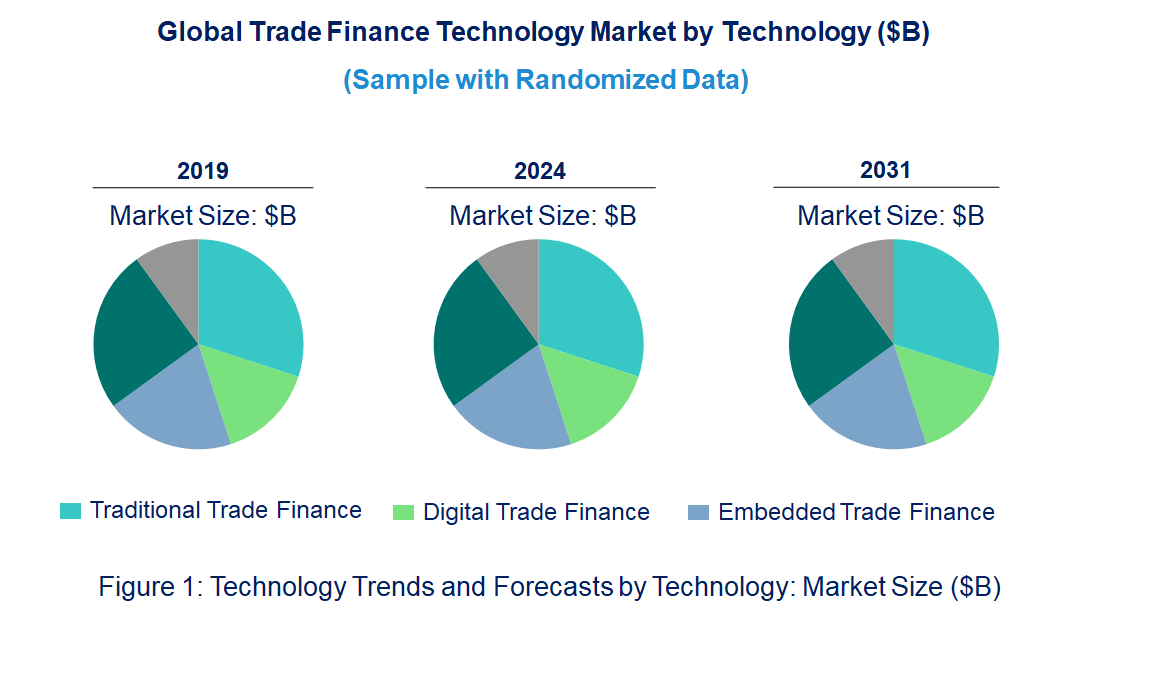
![Trade Finance Market Trend and Forecast by End Use Industry [Value from 2019 to 2031]:](https://lucintel.com/images/Trade-Finance-Technology-Market-Segment.png "Trade Finance Market Trend and Forecast by End Use Industry [Value from 2019 to 2031]:")
• Blockchain for Secure and Transparent Transactions: Blockchain technology is enabling secure, transparent, and tamper-proof transactions in trade finance. By eliminating intermediaries and enhancing document traceability, blockchain reduces fraud and delays, making global trade more efficient and trustworthy.
• Artificial Intelligence for Risk Assessment: AI-powered solutions are now changing the dynamics of risk assessment with vast amounts of data to provide insight into possible credit risks, fraud, and market movements. In this manner, financial institutions can make informed decisions, hence reducing default rates and optimizing trade finance portfolios.
• Trade Documents Digitisation: The transition from paper-based documentation to electronic documentation platforms speeds up the processing of transactions and increases the accuracy of data. Technologies such as eBL and digital letters of credit are cutting down on administrative bottlenecks and increasing efficiency.
• Cloud-Based Trade Finance Platforms: Cloud computing provides scalable and cost-effective solutions for trade finance, allowing real-time collaboration between stakeholders. These platforms allow for seamless integration with other financial systems, thereby increasing operational agility and data accessibility.
• Supply Chain Finance Integration: Integration of trade finance solutions with supply chain finance platforms is streamlining end-to-end trade processes. This trend supports cash flow management, improves supplier relationships, and enables more robust financing options for SMEs. These emerging trends are revolutionizing trade finance technology by making it more efficient, cost-effective, and transparent. Blockchain, AI, cloud platforms, and digitized processes are opening up the door to a more connected, resilient, and innovative global trade ecosystem.
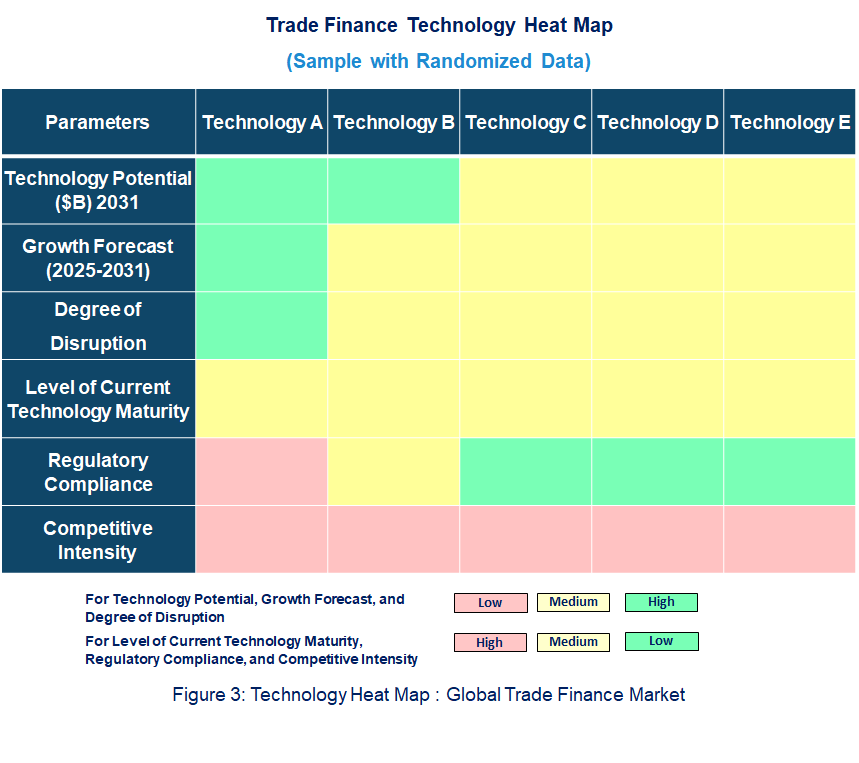
• Potential of Technology: Trade finance technology has a lot of potential in automating the verification of documents, ensuring transparency, and reducing fraud risks. Blockchain technology ensures that the transaction records are immutable, while AI-driven analytics optimize risk assessment and improve decision-making. Cloud-based solutions allow for real-time collaboration, scalability, and global accessibility.
• Degree of Disruption: Technologies such as digital trade platforms and blockchain integration disrupt traditional trade finance by removing intermediaries, automating verification processes, and ensuring real-time, transparent transactions. This reduces manual errors, operational delays, and fraud risks and results in faster, more secure trade interactions.
• Current Technology Maturity Level: Trade finance technology is very mature with existing tools, such as SWIFT messaging systems, electronic letters of credit (eLC), and trade management platforms. It is continuously being improved through the integration of cloud infrastructure, machine learning, and blockchain to provide more secure and transparent transactions.
• Regulatory Compliance: Trade finance solutions should meet international financial regulations, KYC (know your customer) standards, AML (Anti-Money Laundering) guidelines, and legal documentation compliance. Observance of regulations such as SWIFT messaging protocols and ISO standards ensures that transparency, risk mitigation, and legal accountability are ensured across international markets.
• Barclays Bank: Barclays has expanded its use of blockchain technology to streamline trade finance transactions. By leveraging distributed ledger systems, the bank has enhanced transparency and reduced transaction times, making cross-border trade more efficient and secure.
• BNP Paribas: BNP Paribas has developed digital trade platforms integrated with AI for real-time risk assessment and fraud detection. This innovation has strengthened the bank's ability to support clients with smarter financing solutions and improve operational efficiency.
• HSBC: HSBC launched its trade finance API platform, enabling seamless integration with corporate clients’ systems. This initiative facilitates real-time data exchange, enhancing efficiency and enabling clients to optimize their working capital.
• JPMorgan Chase & Co.: JPMorgan has integrated blockchain technology into its trade finance offerings through the Liink platform. This innovation has improved transaction transparency, reduced delays, and lowered costs, particularly for global trade networks.
• Deutsche Bank: Deutsche Bank introduced digital document processing and e-signature capabilities, reducing reliance on paper-based systems. This initiative has improved the speed and reliability of trade transactions for its clients.
• UBS: UBS has invested in AI-powered trade analytics, providing clients with predictive insights into trade flows and risk management. This development helps businesses make informed decisions and optimize their global trade strategies.
• Standard Chartered Bank: Standard Chartered has focused on supply chain finance digitization, launching blockchain-based solutions to enhance supplier payment processes. These advancements improve cash flow and strengthen supply chain resilience.
• Société Générale Corporate & Investment Banking: Société Générale has embraced digital trade platforms, offering end-to-end trade finance services with improved automation. This innovation simplifies document handling and accelerates transaction processing.
• Royal Bank of Scotland: RBS has expanded its trade finance offerings with AI-driven compliance solutions, addressing regulatory complexities. This ensures clients can navigate legal requirements efficiently while engaging in cross-border trade.
• ING: ING has collaborated with fintech firms to implement blockchain and smart contract solutions, reducing the complexity of trade finance operations. This partnership drives efficiency, reduces costs, and enhances security in global trade. These developments by leading financial institutions are revolutionizing trade finance by leveraging technology to address inefficiencies, reduce costs, and enhance security. The adoption of blockchain, AI, and digital platforms is fostering a more resilient, agile, and transparent global trade ecosystem.
• Blockchain Integration for Transparency and Security: Blockchain provides immutable and transparent transaction records, reducing fraud and enhancing trust among trade partners. This technology ensures greater security and efficiency in cross-border trade documentation and contract execution.
• AI and Machine Learning for Predictive Analytics: AI-driven tools enable predictive risk assessment and smarter decision-making. Businesses can identify potential fraud, optimize cash flows, and improve forecasting, enhancing overall trade efficiency and risk management.
• Cloud-Based Trade Finance Platforms: Cloud solutions are scalable and have real-time data access. Such platforms ensure better collaboration among stakeholders and seamless integration of trade finance operations in global enterprises. Challenges
• Digital Trade Documentation Solutions: The digitization of trade documents, such as electronic bills of lading, reduces the dependency on paper-based processes. The handling of documents is faster, saves costs, and reduces errors, making it highly efficient.
• Supply Chain Finance Integration: Integrated supply chain finance solutions enhance cash flows for SMEs and enterprises. The strengthening of this relationship makes the trade ecosystem for markets more resilient and stable. The trade finance technology market is driven by innovations in digital technology, based on blockchain, AI, and cloud integration. These capabilities streamline trade operations, reduce the cost of doing business, and improve compliance, driving a far more agile, secure, and interconnected global trade ecosystem.
• Barclays Bank
• BNP Paribas
• HSBC
• JPMorgan Chase
• Deutsche Bank
• UBS
• Technology Readiness by Technology Type: Traditional trade finance relies heavily on paper-based processes and manual documentation, which are slow and prone to errors. Its readiness is limited by reliance on outdated systems and intermediaries. Key applications include letters of credit, bank guarantees, and paper invoices. Digital trade finance has reached higher maturity with solutions powered by cloud technology, AI, and blockchain. Key applications include electronic bills of lading, automated document verification, and real-time transaction tracking. This technology offers greater speed and accuracy. Embedded Trade Finance is emerging as a strategic solution, integrating financing directly into enterprise tools and business platforms. Its readiness is growing as partnerships between banks and fintechs increase. Key applications include instant credit approvals, integrated supplier payments, and automated working capital solutions. Embedded trade solutions enable seamless financing within day-to-day business operations. In all three technologies, the goals remain improving speed, ensuring compliance, enhancing transparency, and reducing operational costs across global trade networks.
• Competitive Intensity and Regulatory Compliance: The competitive intensity in traditional, digital, and embedded trade finance is substantial, with digital and embedded solutions rapidly gaining ground. Traditional trade finance, with long-established processes, faces pressure from new digital players. Digital trade finance, leveraging blockchain and cloud technologies, fosters faster transactions and scalability. Embedded Trade Finance integrates seamlessly into business workflows, offering instant financing options and convenience. Compliance across all technologies remains a priority, with regulatory adherence to standards like GDPR, AML, and KYC being critical. Traditional solutions often struggle with compliance complexity due to manual processes. Digital trade solutions ensure compliance through automated audits and secure documentation. Embedded solutions also adhere to stringent compliance requirements by integrating robust validation mechanisms. Banks and fintech companies are vying to offer the most compliant and efficient solutions, driving competition. All three technologies must meet global trade regulations, but Digital and Embedded models are faster at adapting to changing legal landscapes. Consequently, businesses benefit from cost efficiency, transparency, and reduced compliance risks.
• Disruption Potential by Technology Type: The disruption potential is high across Traditional Trade Finance, Digital Trade Finance, and Embedded Trade Finance. Traditional trade finance, often reliant on paper-based documentation, is being replaced by more efficient digital alternatives. Digital Trade Finance uses blockchain and cloud solutions to automate transactions and reduce delays. Embedded Trade Finance integrates financing directly into platforms, streamlining access for businesses. These technologies reduce intermediaries, enhance transparency, and improve speed. Traditional methods face obsolescence as manual processes are replaced by automated, AI-driven solutions. Digital platforms offer scalability and global accessibility, transforming trade interactions. Embedded solutions disrupt by offering instant financial services within business tools. The cost of transaction processing decreases significantly across all technologies. Digital tools also reduce errors caused by manual documentation. Overall, these technologies drive faster transactions, reduce costs, and increase trust, reshaping global trade finance fundamentally.
• Traditional Trade Finance
• Digital Trade Finance
• Embedded Trade Finance
• Manufacturing
• Retail and Wholesale
• Agriculture
• Energy
• Healthcare
• North America
• Europe
• Asia Pacific
• The Rest of the World
• Latest Developments and Innovations in the Trade Finance Technologies
• Companies / Ecosystems
• Strategic Opportunities by Technology Type


Choose a license that fits your team. Instant PDF delivery.
Prices exclude taxes. Instant delivery. Custom licensing available on request.
Market Report · May 18, 2026
Market Report · May 18, 2026
Market Report · May 18, 2026
Trusted partner for strategic intelligence and business growth


Receive a complimentary market analysis tailored to your industry. Our analysts will identify key growth opportunities and competitive dynamics specific to your business.

Market size, growth rate, and key trend analysis for your specific sector.

Top competitor positioning and market share analysis.

Strategic recommendations backed by data-driven insights.
Get curated market intelligence and competitive moves straight to your inbox.
By subscribing, you agree to receive our monthly insights. Unsubscribe anytime.
Receive a complimentary market analysis tailored to your industry. Our analysts will identify key growth opportunities and competitive dynamics specific to your business.
Market size, growth rate, and key trend analysis for your specific sector.
Top competitor positioning and market share analysis.
Strategic recommendations backed by data-driven insights.
Get curated market intelligence, emerging trends, and competitive moves straight to your inbox each month.
By subscribing, you agree to receive our monthly insights. Unsubscribe anytime.
We'll send your sample report shortly.