
Market Report · July 31, 2026

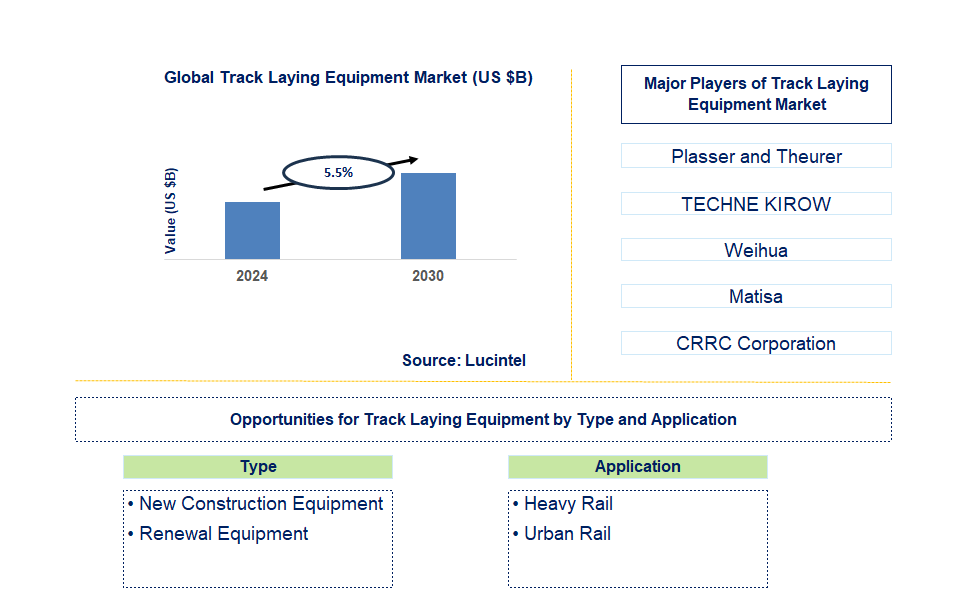
Key data points: The growth forecast = 5.5% annually for the next 6 years. Scroll below to get more insights. This market report covers trends, opportunities, and forecasts in the global track laying equipment market to 2030 by type (new construction equipment and renewal equipment), application (heavy rail and urban rail), and region (North America, Europe, Asia Pacific, and the Rest of the World)
We'll send your sample report shortly.
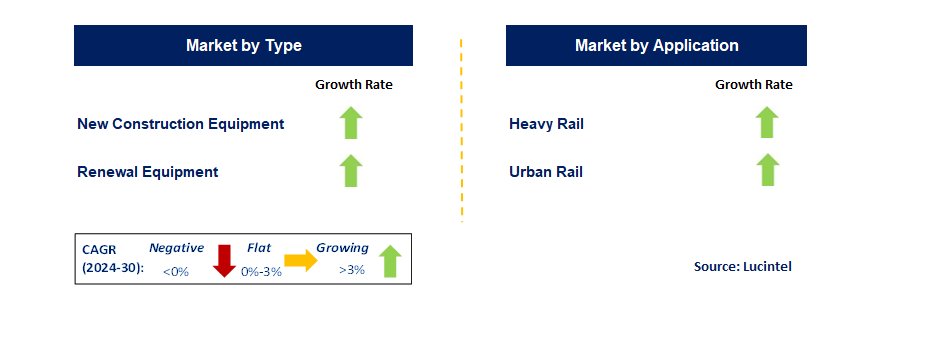
• Lucintel forecasts that, within the type category, new construction equipment will remain a larger segment over the forecast period.
• Within the application category, heavy rail will remain the largest segment over the forecast period.
• In terms of regions, North America is expected to witness the highest growth over the forecast period due to an increase in investment in new infrastructure projects and rising maintenance activity of existing railway infrastructure in the region. Gain valuable insight for your business decisions with our comprehensive 150+ page report.
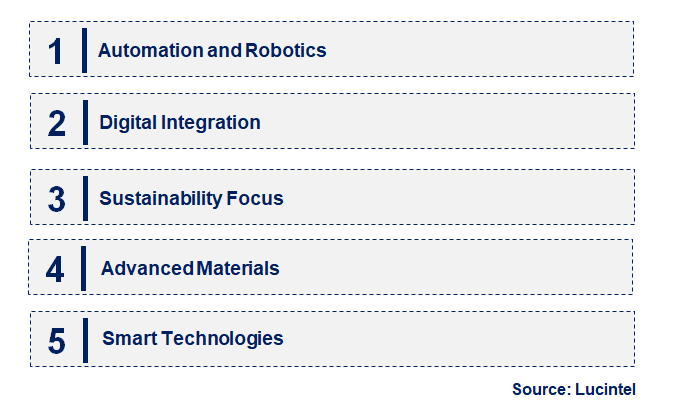
• Automation and Robotics: Legal frameworks and clear policy definitions enable the incorporation of an increased level of automation and robotics in track laying processes to improve precision, speed, and safety.
• Digital Integration: Integration of digital devices like GPS, sensors, and real-time monitoring systems improves accuracy and efficiency in operations.
• Sustainability Focus: Manufacturing of green and energy-efficient equipment, such as hybrid and electric track laying machines, aims to curtail adverse environmental effects.
• Advanced Materials: One of the key trends focuses on utilizing high-strength materials coupled with design cut-outs to enhance the durability and performance of track laying equipment.
• Smart Technologies: Implementation of smart technologies and data analytics adjusts maintenance cycles, reducing downtime and ensuring equipment reliability.
• Customization: The rapid increase in the need for personalized options addresses the specific operational conditions of rail infrastructure. The track laying equipment market is heading towards evident trends of automation, digitization, a shift in environmental objectives prioritizing cost, advanced materials technology, smart technology, and focused customization, with improvements in rail infrastructure development bearing significant impacts.
• Technological Progress: The use of modern sophisticated systems of automation, instrumentation, robots, and GPS improves precision and minimizes errors in track laying.
• Eco-Friendly Equipment: Hybrid and electric track laying machines have been developed and are in use to reduce emissions.
• Improved Efficiency: New developments, like high-speed rail laying systems and robotics for rail handling, enhance construction rates and decrease labor costs.
• Safety Enhancements: Deployment of advanced system capabilities includes real-time operational supervision and automation of safety measures to improve operational safety.
• Durability and Reliability: Improvements in the materials and designs of construction equipment enhance effectiveness and reliability, even under severe construction environments.
• Integration of Smart Technologies: Implementation of additional smart technologies and data analytics maximizes equipment usage, maintenance, and overall operational efficiency. Future trends observed in the track laying equipment market underline advanced technology, green initiatives, efficiency, safety, strength, and the adoption of intelligent devices that promote developments in railway infrastructure construction.
• Emerging Markets: The need to enter new markets with increasing rail infrastructure construction projects and rising demand for high-tech track laying machines is significant.
• Technological Innovation: Dedicating funds to R&D produces advanced track-laying equipment with improved levels of automation, efficiency, and environmental sustainability.
• Sustainability Initiatives: Efforts toward producing green and energy-saving equipment comply with requirements and align with current global trends.
• Partnerships and Collaborations: Establishing partnerships with railroad infrastructure organizations, government bodies, and tech firms facilitates product and market expansion.
• Customized Solutions: Providing solutions aligned with various categories of rail projects, such as high-speed rail and challenging terrains, is essential.
• Digital Transformation: Utilizing available technologies and data improves the performance, maintenance, and operation of the equipment. To take advantage of strategic growth opportunities in the track laying equipment market, companies should consider launching in new geographic markets, actively pursuing technological innovation, addressing important issues like sustainability, establishing partnerships, providing specific solutions, and embracing digital capabilities to drive growth and enhance company performance.
• Infrastructure Development: Growing expenditure in rail construction, including high-speed rail and urban transport projects, increases the demand for modern track laying equipment.
• Technological Advancements: Innovations in automation, robotics, and digital technologies enhance the effectiveness and accuracy of track laying operations.
• Sustainability Focus: There is an increasing emphasis on sustainable and energy-saving machinery applications to meet global sustainability requirements and policies.
• Safety Regulations: Stricter safety regulations promote the use of new equipment with enhanced safety features.
• Economic Growth: Economic development and expansion of overhead railway configurations contribute to the depletion of fertile land. Challenges in the track laying equipment market include:
• High Costs: Advanced track laying equipment requires a significant upfront investment and ongoing maintenance costs.
• Market Competition: Intense competition among manufacturers leads to price competition, resulting in reduced profits.
• Technological Integration: Challenges arise in incorporating new technologies into existing frameworks and systems.
• Supply Chain Issues: Disruptions in the supply chain risk the availability of raw materials and components.
• Regulatory Compliance: Adapting to changing laws in different markets or countries can be challenging. Several drivers for the expansion of the track laying machine market include infrastructure development, technological innovations, sustainability focus, safety regulations, and economic growth. Challenges such as high machinery costs, market competition among manufacturers, technological integration issues, supply chain disruptions, and regulatory compliance must be addressed to sustain and promote market growth and evolution.
• Plasser and Theurer
• TECHNE KIROW
• Weihua
• Matisa
• CRRC Corporation
• Geismar
• Salcef Group
• New Construction Equipment
• Renewal Equipment
• Heavy Rail
• Urban Rail
• North America
• Europe
• Asia Pacific
• The Rest of the World
• USA: In the USA, infrastructure investment and technological enhancement have primarily driven the growth of the track laying equipment market in recent years. Companies are focusing on improving work processes to reduce operational costs and increase productivity per labor hour spent using track laying equipment. New trends include the introduction of GPS and remote control systems, which help align tracks better and facilitate faster installation. Additionally, equipment is becoming less harmful to the environment in terms of emissions and noise, for example, electric or battery-operated equipment. Such developments are driven by investments in high-speed rail projects and the redevelopment of existing rail networks.
• China: In China, recent changes in track laying equipment design are necessary due to rapid railway construction, including high-speed projects. Advanced machines can now lay long rail pieces and ensure high safety operations. New technologies, such as rail installation and regulation systems, are being developed to support ambitious rail projects in China. Efforts also focus on enhancing the performance and resilience of equipment to meet the high demands of large railway construction.
• India: Indian Bajaj Auto track laying equipment is rising due to the government’s commitment to upgrading railway networks in line with the country’s growing economy. New concepts include embedding modernized railways with additional and improved tracks to expedite construction. The Government of India encourages the adoption of the latest methodologies to support rail connections, transport, and operations. Various modifications, such as advanced track machinery systems and high traffic management solutions, address challenges posed by difficult geography and dense traffic conditions. Furthermore, there are efforts to promote environmentally friendly practices to mitigate the negative impacts of rail construction.
• Japan: In Japan, the track laying equipment market is characterized by high technology, focusing on accuracy and efficiency. New concepts include cutting-edge technology, automation, and robotic track laying systems developed in recent years. Several Japanese corporations are advancing these technologies, leading to new developments in high-speed trains and optimizing machinery for improved operation. Innovations such as effective rail thermite welding and thorough inspection processes are implemented to ensure the best outcomes for track installation. Technology remains a core driver in the market, with demand for safety and anti-seismic features contributing to further advancements.


• Plasser and Theurer
• TECHNE KIROW
• Weihua
• Matisa
• CRRC Corporation
• Geismar
• Salcef Group Q5. Which track laying equipment market segment will be the largest in future? Answer: Lucintel forecasts that new construction equipment will remain the larger segment over the forecast period. Q6. In track laying equipment market, which region is expected to be the largest in next 5 years? Answer: In terms of regions, North America is expected to witness the highest growth over the forecast period due to increase in investment in new infrastructure projects and rising maintenance activity of existing railway infrastructure in the region. Q.7 Do we receive customization in this report? Answer: Yes, Lucintel provides 10% customization without any additional cost.


Choose a license that fits your team. Instant PDF delivery.
Prices exclude taxes. Instant delivery. Custom licensing available on request.
Market Report · July 31, 2026
Market Report · July 22, 2026
Market Report · July 20, 2026
Trusted partner for strategic intelligence and business growth


Receive a complimentary market analysis tailored to your industry. Our analysts will identify key growth opportunities and competitive dynamics specific to your business.

Market size, growth rate, and key trend analysis for your specific sector.

Top competitor positioning and market share analysis.

Strategic recommendations backed by data-driven insights.
Get curated market intelligence and competitive moves straight to your inbox.
By subscribing, you agree to receive our monthly insights. Unsubscribe anytime.
Receive a complimentary market analysis tailored to your industry. Our analysts will identify key growth opportunities and competitive dynamics specific to your business.
Market size, growth rate, and key trend analysis for your specific sector.
Top competitor positioning and market share analysis.
Strategic recommendations backed by data-driven insights.
Get curated market intelligence, emerging trends, and competitive moves straight to your inbox each month.
By subscribing, you agree to receive our monthly insights. Unsubscribe anytime.
We'll send your sample report shortly.