
Market Report · July 31, 2026

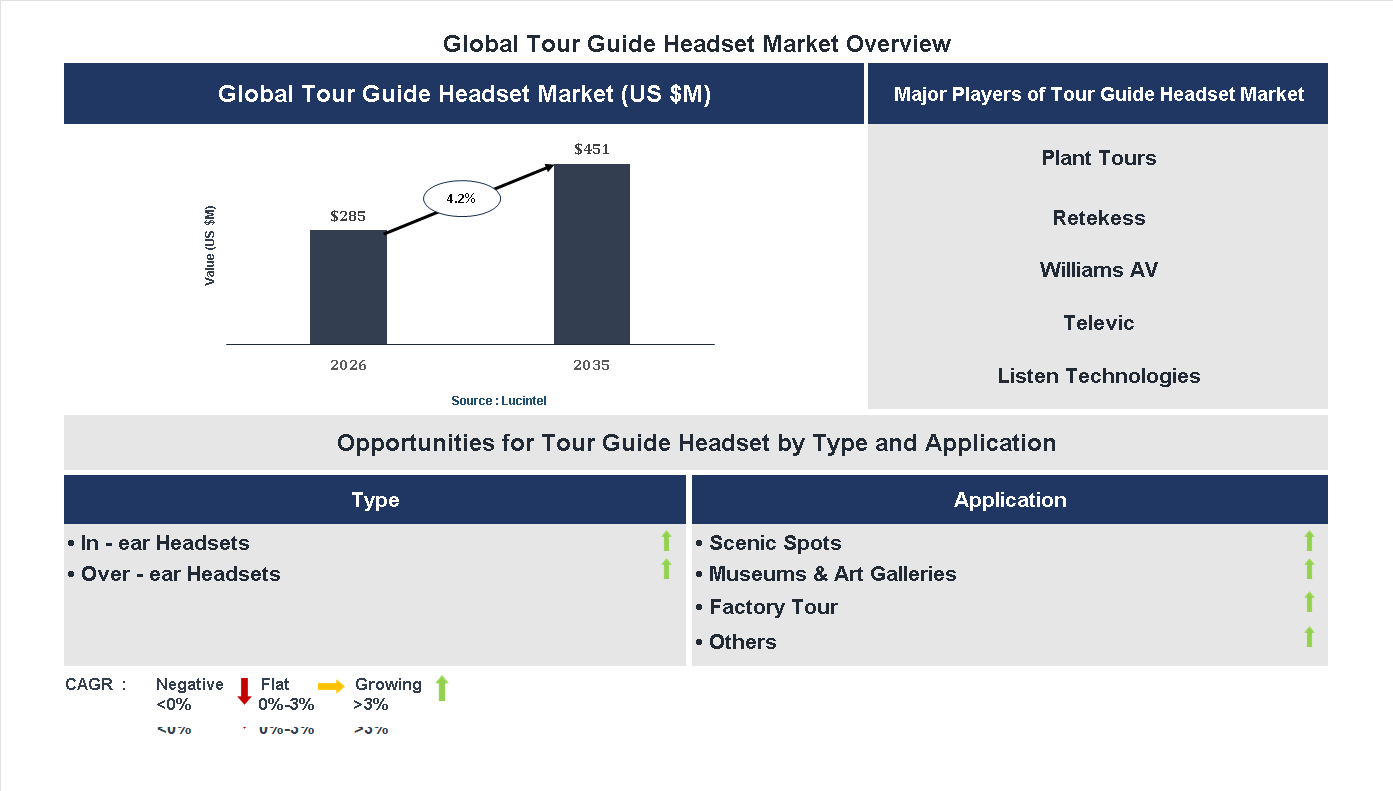
Key data points: The market size in 2035 = $451 million, growth forecast = 4.2% annually for the next 8 years. Scroll below to get more insights. This market report covers trends, opportunities and forecasts in tour guide headset market to 2035 by type (in - ear headsets and over - ear headsets), application (scenic spots, museums & art galleries, factory tour, and others), and region (North America, Europe, Asia Pacific, and the Rest of the World)
We'll send your sample report shortly.
• Lucintel forecasts that, within the type category, over - ear headset is expected to witness higher growth over the forecast period.
• Within the application category, scenic spot is expected to witness the highest growth.
• In terms of region, APAC is expected to witness the highest growth over the forecast period. Gain valuable insights for your business decisions with our comprehensive 150+ page report. Sample figures with some insights are shown below.
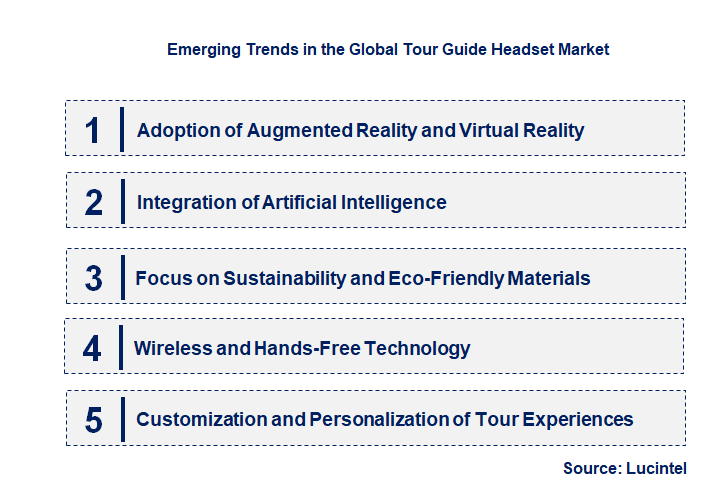
• Adoption of Augmented Reality (AR) and Virtual Reality (VR): These technologies are revolutionizing tour guide headsets by providing immersive experiences. AR overlays historical information directly onto real-world views, enhancing engagement and learning. VR allows virtual tours, making remote or inaccessible locations accessible. This trend increases interactivity, appeals to tech-savvy tourists, and offers new revenue streams for operators. As AR and VR become more affordable and sophisticated, their integration into headsets is expected to become standard, significantly enriching the tourist experience and expanding market potential.
• Integration of Artificial Intelligence (AI): AI-powered tour guide headsets are enabling real-time language translation, personalized content delivery, and intelligent navigation assistance. These features improve accessibility for international tourists and streamline guided tours. AI also facilitates data collection on visitor preferences, allowing operators to tailor experiences and optimize services. The adoption of AI enhances efficiency, reduces language barriers, and creates more engaging, customized tours. As AI technology advances, its integration will become more seamless, further transforming the market by offering smarter, more adaptive tour guide solutions.
• Focus on Sustainability and Eco-Friendly Materials: With increasing environmental awareness, manufacturers are adopting sustainable practices in producing tour guide headsets. This includes using recyclable materials, energy-efficient components, and designing durable, long-lasting devices. Eco-friendly headsets appeal to environmentally conscious consumers and align with global sustainability goals. This trend encourages innovation in product design and supply chain management, fostering a market shift toward greener solutions. As sustainability becomes a key purchasing criterion, companies that prioritize eco-friendly practices will gain competitive advantage and meet the rising demand for responsible tourism technology.
• Wireless and Hands-Free Technology: The shift toward wireless, lightweight headsets enhances mobility and ease of use for tour guides and tourists alike. Hands-free operation allows guides to move freely and interact more naturally with groups, improving communication and engagement. Wireless connectivity also facilitates seamless integration with smartphones, apps, and other devices, enabling real-time updates and multimedia sharing. This trend improves operational efficiency, safety, and overall visitor experience. As wireless technology advances, headsets are becoming more reliable, affordable, and user-friendly, driving widespread adoption across various tourism segments.
• Customization and Personalization of Tour Experiences: Tour guide headsets are increasingly offering customizable features to cater to diverse tourist preferences. This includes adjustable audio settings, personalized content based on interests, and interactive features that allow tourists to choose topics or routes. Personalization enhances satisfaction, engagement, and educational value. It also enables operators to differentiate their services in a competitive market. As consumer demand for tailored experiences grows, technology will continue to evolve, providing more flexible and personalized solutions that meet individual needs and enhance overall satisfaction. These emerging trends are significantly reshaping the tour guide headset market by making experiences more immersive, personalized, sustainable, and technologically advanced. They are driving innovation, improving operational efficiency, and aligning products with modern consumer values, ultimately leading to a more dynamic and competitive industry landscape.
• Technological Innovations in Audio Quality: Enhanced sound clarity and noise-canceling features improve tour experiences, making communication clearer in noisy environments. This advancement attracts more tour operators seeking reliable audio solutions, boosting market adoption. High-quality headsets also support multiple languages, catering to international tourists, which broadens market reach. As technology continues to evolve, the demand for sophisticated audio systems is expected to rise, further expanding the market.
• Wireless Connectivity and Ease of Use: The shift toward wireless headsets offers greater mobility and convenience for guides and tourists. Wireless devices reduce tangling and improve safety, especially in large or outdoor settings. User-friendly interfaces and long battery life enhance customer satisfaction, encouraging repeat business. The adoption of Bluetooth and other wireless standards is accelerating market growth, with companies investing in seamless connectivity solutions to meet consumer expectations.
• Growing Tourism Industry and Digital Experiences: Increasing global tourism fuels demand for innovative tour solutions, including headsets that enable immersive digital experiences. Augmented reality (AR) and virtual reality (VR) integrations are creating interactive tours, attracting tech-savvy travelers. These enhancements improve engagement and learning, making tours more memorable. As tourism continues to expand, the market for advanced headset systems is poised for significant growth, driven by the need for differentiated experiences.
• Focus on Safety and Hygiene: The COVID-19 pandemic has heightened awareness of hygiene and safety, prompting the adoption of disposable or easily sanitized headsets. Contactless operation and antimicrobial materials are becoming standard features, reassuring customers and operators. This focus on safety has increased demand for headsets that are easy to clean and maintain, influencing product design and market strategies. The emphasis on hygiene is expected to sustain market growth in the post-pandemic era.
• Customization and Sub-Segment Expansion: Tailored solutions for different tourism segments, such as historical tours, adventure trips, and cultural experiences, are emerging. Specialized headsets with features like waterproofing, rugged design, or language-specific modules cater to diverse needs. This segmentation allows companies to target niche markets effectively, increasing sales opportunities. The development of sub-segments enhances overall market diversity and resilience, encouraging innovation and competitive differentiation. The overall impact of these developments is a robust, innovative market that offers enhanced, safer, and more engaging tour experiences. Increased technological integration and focus on customer needs are driving growth, attracting new players, and expanding market reach globally. These trends are positioning the tour guide headset market for sustained expansion and technological leadership.
• Increasing Adoption of Wireless and Bluetooth Technology: The integration of wireless and Bluetooth-enabled headsets is transforming the tour guide headset market by offering greater mobility, ease of use, and improved audio quality. These features facilitate seamless communication in noisy environments like museums, outdoor sites, and theme parks. As consumers demand more flexible and hands-free solutions, manufacturers are investing in advanced wireless technology, expanding product offerings, and targeting diverse applications such as outdoor adventure tours and large-scale events, thereby driving market growth.
• Growing Demand for Multilingual and Interactive Tour Solutions: The rising influx of international tourists necessitates multilingual tour guide headsets that support real-time translation and interactive features. These headsets enhance visitor engagement by providing personalized, immersive experiences, and reducing language barriers. Companies are developing smart headsets with integrated translation apps and multimedia capabilities, catering to cultural tourism, historical sites, and museums. This trend boosts customer satisfaction and broadens market reach, especially in regions with high tourist diversity.
• Expansion of Application in Theme Parks and Amusement Parks: Theme parks and amusement parks are increasingly adopting tour guide headsets to improve visitor experience and operational efficiency. These headsets enable staff to communicate effectively across large areas, coordinate rides, and deliver guided tours with audio clarity. The demand for durable, waterproof, and comfortable headsets tailored for high-traffic environments is rising. This application segment is expected to grow significantly as parks seek innovative ways to enhance guest engagement and streamline park management.
• Integration of Augmented Reality (AR) and Virtual Reality (VR) Technologies: The incorporation of AR and VR into tour guide headsets offers immersive, interactive experiences that attract tech-savvy tourists. These advanced headsets provide virtual tours, 3D reconstructions, and contextual information, enriching cultural and historical visits. As AR/VR technology becomes more affordable and accessible, market players are investing in R&D to develop hybrid devices that combine audio communication with visual enhancements, opening new avenues for experiential tourism and educational applications.
• Focus on Regional Expansion and Customization for Different Markets: Companies are targeting emerging markets in Asia-Pacific, Latin America, and Africa by customizing products to meet regional needs and preferences. This includes designing lightweight, rugged, and cost-effective headsets suitable for outdoor and rugged environments. Strategic partnerships with local tourism operators and government agencies are facilitating market penetration. Regional expansion efforts are crucial for capturing untapped customer bases, increasing sales, and establishing a global presence in the tour guide headset industry. These growth opportunities collectively are poised to significantly influence the tour guide headset market by fostering innovation, expanding application areas, and enhancing customer experiences. Embracing technological advancements and regional customization will enable market players to capitalize on emerging trends, ensuring sustained growth and competitive advantage in a dynamic tourism landscape.
• Technological Advancements: The rapid evolution of wireless communication and audio technology has significantly improved the quality, reliability, and user experience of tour guide headsets. Innovations such as noise-canceling features, Bluetooth connectivity, and long battery life make these devices more appealing to tour operators and tourists. As technology becomes more affordable and accessible, adoption rates increase, fueling market growth. Additionally, integration with mobile apps and augmented reality features enhances the overall visitor experience, making guided tours more interactive and engaging. These technological improvements are crucial in differentiating products and expanding market reach globally.
• Growing Tourism Industry: The global tourism sector is experiencing steady growth, driven by rising disposable incomes, increased international travel, and a growing preference for experiential tourism. Tour guide headsets are increasingly adopted by tour operators to improve communication, safety, and overall visitor satisfaction. The demand is particularly high in regions with dense tourist attractions, such as historical sites, museums, and outdoor adventure parks. As tourism continues to expand, the need for efficient, hands-free communication devices becomes more critical, thereby propelling the market forward. This trend is expected to sustain as emerging markets develop their tourism infrastructure and attract more visitors.
• Increasing Adoption of Smart Devices: The proliferation of smartphones and tablets has created a conducive environment for the adoption of smart tour guide headsets. These devices enable seamless integration with mobile applications, providing real-time information, multimedia content, and interactive features. Tourists prefer these smart solutions for their convenience and enhanced experience. Moreover, the compatibility of headsets with various devices allows for flexible usage across different tour settings. As consumers become more tech-savvy and reliant on digital tools, the demand for smart, connected tour guide headsets is expected to grow, further expanding the market.
• Rising Investment in Tourism Infrastructure: Governments and private entities are investing heavily in developing tourism infrastructure, including museums, heritage sites, and entertainment complexes. These investments often include the deployment of advanced tour guide systems to improve visitor engagement and safety. Such infrastructure projects create a substantial demand for tour guide headsets, especially in large-scale attractions and organized tours. Additionally, the focus on providing high-quality visitor experiences encourages the adoption of innovative communication solutions. This investment trend is likely to accelerate market growth, especially in emerging economies seeking to boost their tourism sector.
• Impact of COVID-19 and Post-Pandemic Recovery: The pandemic significantly affected the tourism industry, leading to a temporary decline in demand for tour guide headsets due to travel restrictions and safety concerns. However, as restrictions ease and tourism resumes, there is a renewed focus on safety and contactless solutions. Tour operators are increasingly adopting wireless, hygienic headsets to minimize physical contact and ensure social distancing. The pandemic has also accelerated digital transformation within the industry, emphasizing the importance of smart, connected devices. This shift presents both challenges and opportunities, as companies innovate to meet new health and safety standards while capturing the recovering market. The challenges facing the tour guide headset market include:-
• Regulatory and Safety Standards: The market faces challenges related to compliance with various safety, health, and data privacy regulations across different regions. Ensuring that devices meet local standards can increase costs and complicate product development. Additionally, data security concerns regarding the collection and storage of user information can hinder adoption, especially in regions with strict privacy laws. Navigating these regulatory landscapes requires continuous updates and certifications, which can delay product launches and increase operational expenses. Failure to comply can result in legal penalties and damage to brand reputation, impacting overall market growth.
• Technological Compatibility and Integration Issues: Despite technological advancements, compatibility issues between different devices and platforms remain a significant challenge. Tour operators often use a mix of hardware and software, making seamless integration difficult. Compatibility problems can lead to increased costs for customization and troubleshooting, reducing overall efficiency. Moreover, rapid technological changes require continuous updates and upgrades, which can be resource-intensive. These issues may hinder widespread adoption, especially among small and medium-sized operators with limited technical expertise and budgets, thereby constraining market expansion.
• Economic Fluctuations and Budget Constraints: The tourism industry is highly sensitive to economic fluctuations, which directly impact consumer spending and travel budgets. During economic downturns, tourists tend to cut back on discretionary expenses, including guided tours and related accessories like headsets. Tour operators may also reduce investments in advanced communication systems to cut costs. This cyclical nature of tourism demand creates uncertainty for market players, affecting sales and profitability. Additionally, high costs associated with premium headsets can limit adoption in price-sensitive markets, posing a challenge to market penetration and growth. The tour guide headset market is driven by technological innovations, expanding tourism activities, and increasing integration with smart devices, all of which foster growth opportunities. However, regulatory compliance, compatibility issues, and economic uncertainties pose significant challenges. The interplay of these factors influences market dynamics, requiring stakeholders to innovate continuously and adapt strategies to sustain growth. Overall, the markets future hinges on balancing technological progress with regulatory adherence and economic resilience, ensuring long-term development and enhanced visitor experiences.
• Plant Tours
• Retekess
• Williams AV
• Televic
• Listen Technologies
• AXIWI
• Tourtalk
• Televic
• Rondson
• CHIAYO
• In - ear Headsets
• Over - ear Headsets
• Scenic Spots
• Museums & Art Galleries
• Factory Tour
• Others
• North America
• Europe
• Asia Pacific
• The Rest of the World
• United States: The US market has seen rapid adoption of wireless and Bluetooth-enabled headsets, with major companies investing in noise-canceling technology and user-friendly interfaces. There is a growing trend toward integrating augmented reality (AR) features to enhance visitor engagement. The rise of smart tourism initiatives and partnerships with tech firms have further propelled market growth, especially in popular tourist destinations and museums. Additionally, the focus on lightweight, durable, and eco-friendly materials has gained prominence among manufacturers.
• China: China’s tour guide headset market is expanding swiftly, driven by a booming domestic tourism industry and government initiatives promoting cultural tourism. Companies are focusing on affordable yet technologically advanced products, including AI-powered translation features to cater to international tourists. The integration of 5G connectivity has improved real-time communication and interactive experiences. E-commerce platforms facilitate rapid distribution, and local brands are gaining market share by offering customized solutions for large tour groups and heritage sites.
• Germany: Germany’s market emphasizes high-quality, reliable headsets suitable for historical sites, museums, and city tours. There is a notable focus on sustainability, with manufacturers adopting eco-friendly materials and energy-efficient designs. The adoption of digital tour guides with multimedia content has increased, providing immersive experiences. Germany also leads in R&D, with innovations in noise reduction and ergonomic designs, catering to both professional tour operators and individual consumers seeking premium products.
• India: The Indian market is witnessing rapid growth due to increasing domestic travel and a rising middle class seeking enhanced tour experiences. Affordable wireless headsets with basic features dominate, but there is a growing demand for smart devices with multilingual support and Bluetooth connectivity. Local startups are innovating with portable, lightweight devices suitable for large groups and outdoor environments. The government’s focus on promoting tourism infrastructure is expected to further boost market expansion, especially in heritage and pilgrimage sites.
• Japan: Japan’s market is characterized by the integration of advanced technology, including AR and AI, to provide interactive guided tours. There is a strong emphasis on compact, lightweight headsets with high durability for use in various environments. The tourism sector’s focus on cultural preservation and innovation has led to the development of headsets that support multiple languages and offer immersive multimedia content. Collaborations between tech firms and tourism authorities are driving the adoption of smart headset solutions, especially in popular cultural and historical attractions.


• Plant Tours
• Retekess
• Williams AV
• Televic
• Listen Technologies
• AXIWI
• Tourtalk
• Televic
• Rondson
• CHIAYO Q6. Which tour guide headset market segment will be the largest in future? Answer: Lucintel forecasts that, within the type category, over - ear headset is expected to witness higher growth over the forecast period. Q7. In tour guide headset market, which region is expected to be the largest in next 5 years? Answer: In terms of region, APAC is expected to witness the highest growth over the forecast period. Q8. Do we receive customization in this report? Answer: Yes, Lucintel provides 10% customization without any additional cost.


Choose a license that fits your team. Instant PDF delivery.
Prices exclude taxes. Instant delivery. Custom licensing available on request.
Market Report · July 31, 2026
Market Report · July 31, 2026
Market Report · July 31, 2026
Trusted partner for strategic intelligence and business growth


Receive a complimentary market analysis tailored to your industry. Our analysts will identify key growth opportunities and competitive dynamics specific to your business.

Market size, growth rate, and key trend analysis for your specific sector.

Top competitor positioning and market share analysis.

Strategic recommendations backed by data-driven insights.
Get curated market intelligence and competitive moves straight to your inbox.
By subscribing, you agree to receive our monthly insights. Unsubscribe anytime.
Receive a complimentary market analysis tailored to your industry. Our analysts will identify key growth opportunities and competitive dynamics specific to your business.
Market size, growth rate, and key trend analysis for your specific sector.
Top competitor positioning and market share analysis.
Strategic recommendations backed by data-driven insights.
Get curated market intelligence, emerging trends, and competitive moves straight to your inbox each month.
By subscribing, you agree to receive our monthly insights. Unsubscribe anytime.
We'll send your sample report shortly.