
Market Report · May 18, 2026

This market report covers trends, opportunities, and forecasts in the global totalizing fluid meter and counting device market to 2031 by technology (differential pressure flow meters, positive displacement flow meters, velocity flow meters, mass flow meters, and open channel meters), end use industry (on shore and off shore), and region (North America, Europe, Asia Pacific, and the Rest of the World)
We'll send your sample report shortly.
![Totalizing Fluid Meter and Counting Device Market Trend and Forecast by End Use Industry [Value from 2019 to 2031]:](https://lucintel.com/images/Totalizing-Fluid-Meter-and-Counting-Device-Technology-Market-Segment.png "Totalizing Fluid Meter and Counting Device Market Trend and Forecast by End Use Industry [Value from 2019 to 2031]:")
• Integration of IoT: This enables the integration of IoT with fluid meters for real-time transmission of data and remote monitoring. It has allowed users to access readings and performance data from any location, thus enabling better decision-making and maintenance strategies. Remote monitoring systems offer continuous information that is updated, thereby making manual checks unnecessary and responding more quickly to problems or anomalies.
• Smart Metering and Automation: Smart fluid meters are now designed with sensors and automation options. These meters can autonomously adjust and calibrate to changing conditions, thereby providing more accurate readings. Automatically, the features reduce errors from human intervention, streamline operating workflows, and optimize resource allocation.
• Advanced Analytics and Predictive Maintenance: Through integration with AI and machine learning, fluid meters can offer the power of advanced analytics. Through analysis of both historical data and real-time data, these devices can predict failures or system inefficiency. Predictive maintenance, therefore, reduces downtime, lowers costs related to maintenance, and also expands the life cycle of these meters by assuring reliable and efficient processes.
• Greater Accuracy and Accuracy: This drive for more precise fluid measurement has led to innovations in sensor technology and materials. Modern totalizing fluid meters can measure at levels of accuracy far higher than their predecessors, even in very complex or variable flow conditions. This trend is important to industries where accurate measurements are critical, such as in pharmaceuticals, chemicals, and food production, where minor deviations can result in regulatory non-compliance or product quality issues.
• More Energy-Efficient, Environment-Friendly Solutions: Fluid meters are designed today to be energy-efficient, becoming a better means of satisfying the concerns that have long filled the pages of industries to find sustainable solutions. New material and low-energy components use innovations like battery-powered meters or self-sustaining meters, hence reducing environmental influence by the technology and supporting broader sustainability efforts across industries. The trends in totalizing fluid meter and counting device technology are dramatically changing how industries manage and measure fluid usage. From smarter, IoT-integrated systems to predictive maintenance capabilities, these innovations are enhancing efficiency, reliability, and sustainability. As these technologies continue to advance, they will play a critical role in optimizing operations, reducing costs, and improving resource management across industries.
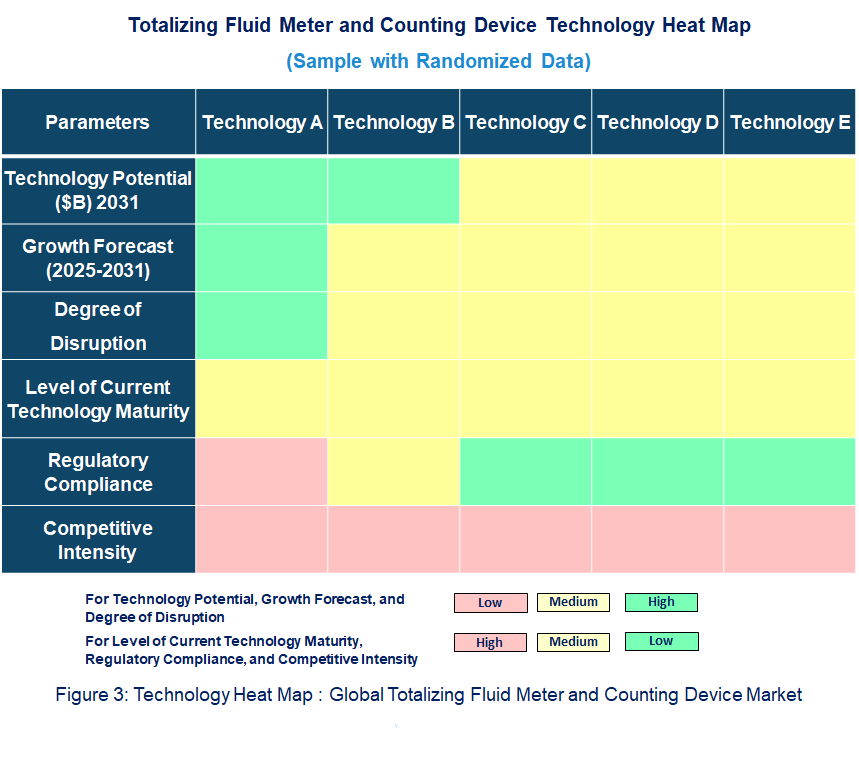
• Technology Potential: The potential of totalizing fluid meters and counting devices is, therefore, the ability to capture accurate, real-time information for better operational efficiency as well as decision-making. More so, with IoT integration and cloud computing, the gadgets can deliver remote monitoring and predictive maintenance as well as automated reporting. Besides these, smart sensors and advanced analytics offer higher accuracy and performance.
• Degree of Disruption: The introduction of digital and smart metering technologies is disrupting the traditional mechanical meters with remote communication, data integration, and automatic analytics. These technologies lessen manual labor and human error. Thus, they improve precision, operational efficiency, and service to customers in the utilities and energy management industries.
• Current Technology Readiness Level: Totalizing fluid meter and counting device technologies are established, and mature solutions like mechanical and electromagnetic meters are still in place. The adoption of IoT-enabled and smart meters is growing and advancing the industry in real-time data transmission and cloud-based monitoring.
• Regulatory Compliance: All of these technologies must meet international standards, such as ISO, OIML, and legal metrology regulations, in terms of accuracy, reliability, and consumer protection. All regulatory compliance ensures that the measurements are accurate and meet industry-specific measurement standards and billing requirements, maintaining trust and conformity to law.
• General Electric (GE): GE continues to advance in industrial measurement technologies with its fluid metering systems integrated with high-precision sensors and IoT capabilities. The solutions they provide are focused on the collection of real-time data for remote monitoring to ensure the optimization of the process by international standards for measurement.
• Badger Meter: Badger Meter has developed advanced metering solutions focusing on smart water management. Recent developments include IoT-based water meters that allow utilities to monitor consumption remotely and detect leaks, ensuring conservation and efficient resource use.
• Siemens: Siemens has launched fluid metering solutions integrated with AI and machine learning. Their technology promotes predictive maintenance, reduces downtime, and monitors performance continuously, which is very crucial for heavy industries and utility sectors.
• Schneider Electric: Schneider Electric emphasizes energy-efficient and sustainable solutions. Some of their recent technology launches include environment-friendly metering devices that maximize energy use and reduce the environmental impact in commercial and industrial settings.
• Elster: Elster continues to innovate with gas and water smart metering. Their solutions assure high-accuracy metering and analytics of data, which ensure operational efficiency and compliance with global standards for distribution and measurement.
• Zenner International: Advanced metering technologies with features such as connectivity to the cloud and real-time data analysis are introduced by Zenner International. With their technology, remote monitoring and management could be supported and is highly suitable for use in utilities and municipalities.
• Emerson Electric Co.: Emerson's innovations include flow measurement products that use ultrasonic and magnetic technologies. These flow meters provide precise flow measurement with wide acceptance in critical applications such as oil and gas, guaranteeing reliability and performance under extreme conditions.
• ABB: ABB focuses on sensor technology and industrial automation while offering metering devices that guarantee precision, reliability, and remote diagnostics. Their solutions enable real-time decision-making as well as predictive monitoring across large-scale manufacturing and utility networks.
• Landis+Gyr: Landis+Gyr specializes in smart grid technologies, including metering solutions that can be integrated into cloud-based platforms. The company's products ensure energy efficiency and can be deployed in a scalable manner, especially to meet the needs of large utilities and energy providers.
• Yokogawa Electric: Yokogawa has strengthened its metering technology portfolio with the adoption of advanced ultrasonic and digital flow metering solutions. These technologies provide the high-accuracy, robust performance expected in demanding applications. The latest innovations in fluid meter and counting device technology within key players such as General Electric, Badger Meter, Siemens, Schneider Electric, Elster, Zenner, Emerson Electric Co., ABB, Landis+Gyr, and Yokogawa Electric are going to shape a smarter landscape of more accurate and sustainable solutions. They ensure operational efficiency, comply with industry standards, and are environmentally responsible through their integration of IoT, AI, automation, and real-time analytics. As these companies continue to invest in the integration of research and technology, the technology will help drive significant progress across all industrial, commercial, and utility sectors toward smarter resource management and greater operational sustainability.
• Advancements in IoT Integration: IoT integration allows real-time monitoring and data collection, enabling remote access and operational transparency. It enhances decision-making by providing accurate consumption and performance data, which is crucial in optimizing resources across water, gas, and energy sectors.
• AI and Predictive Analytics: AI-driven predictive maintenance and analytics enhance system reliability and efficiency. Predictive tools minimize downtime by predicting failures and operational inefficiencies, ensuring smooth operation and cost savings in manufacturing and utility industries.
• Eco-Friendly and Sustainable Technologies: The need for sustainable solutions is driving the development of energy-efficient meters and devices. The use of eco-friendly materials and energy-efficient designs minimizes environmental impact and supports corporate sustainability goals across industrial and commercial sectors. Challenges
• Cloud-Based Data Management Solutions: Cloud integration in metering solutions enables scalable deployment and centralized data management. This means that industries can store, analyze, and access data remotely to enhance collaboration and make better data-driven decisions.
• Regulatory Compliance and Standardization: Tight compliance with global measurement and data standards increases the demand for highly accurate metering solutions. Compliance guarantees adherence to environmental and industrial regulations, creating trust and operational integrity in key sectors. Advances in IoT, AI, cloud integration, and eco-trend-friendly solutions have started to drive growth opportunities for totalizing fluid meter and counting device technology. This opportunity, hence, will bring together enhanced efficiency, cost-cutting benefits, and compliance along with regulatory standards for every industry to become more optimized, efficient, and less polluting.
• General Electric
• Badger Meter
• Siemens
• Schneider Electric
• Elster
• Zenner International
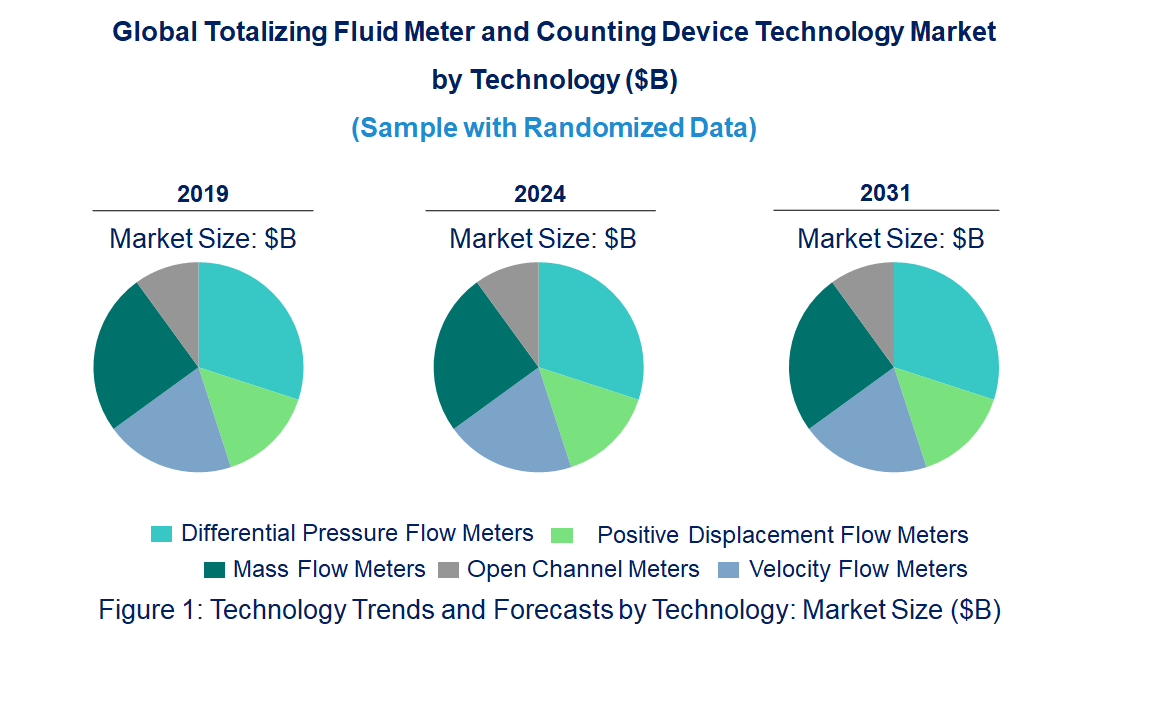
• Technology Readiness by Technology Type: Differential pressure flow meters are mature technologies that provide a cost-effective solution in the water, oil, and chemical industries, often under high pressure. Positive displacement flow meters are robust but need maintenance in viscous or abrasive applications such as lubricants and chemical processing. Velocity flow meters are well-suited for clean, low-viscosity applications such as water and air monitoring. Mass flow meters using Coriolis technology have unmatched precision for the pharmaceutical, food processing, and chemicals industries. Open channel meters remain the first choice for cost-effective water and wastewater applications, especially in municipal and agricultural settings. Each technology is now integrating IoT and cloud-based monitoring to collect real-time data and analytics. Advancements in sensor technology, AI, and automation further improve their operational efficiency and accuracy. Digital tools and predictive algorithms are becoming standard across these meter technologies. High compliance with industrial and environmental standards is driving upgrades and innovations across all types of meters. As technology continues to advance, these meters are becoming more adaptable, eco-friendly, and integrated with smart monitoring systems.s
• Competitive Intensity and Regulatory Compliance: In totalizing fluid meter and counting devices, high competitive intensity among the available flow meter technologies, such as Siemens, Badger Meter, and Emerson Electric, will make the market somewhat intensively competitive. Differential pressure flow meters are widely in demand but have to face fierce competition from more precise mass meters. Positive Displacement Flow Meters are good for niche applications, though they suffer from severe costs of wear costs. Velocity flow meters have dominated applications in low viscosity. Low-density applications but normally lacking in high-density applications, mass flow Meters now gain popularity based on excellent accuracy, but cannot keep their ground with the more affordable Differential Pressure meter. Similarly, open channel meter continues to be economic, struggling with performance variability, especially in turbulent scenarios. All technologies comply strenuously with regulations while respecting some standards such as ISO, API, and ANSI. To maintain safety, the environment, and measurement accuracy, the industries demand respective compliance according to the varied applications, including water management, oil, and pharmaceuticals. Technological upgrading is often done to ensure conformity with global as well as regional compliance regulations. Sustainability as well as environmental conformity demand greater norms that drive greater technological investment in all types of meters.
• Disruption Potential by Technology Type: Differential pressure flow meters offer disruption potential in high-pressure applications where accurate measurements can be done inexpensively. Positive Displacement Flow Meters allow accurate measurement of flow in viscous liquids, but are demanding in maintenance since wear is a great concern. Velocity Flow Meters have the advantage of real-time monitoring, but they may struggle in low-viscosity fluids. Mass Flow Meters are unmatched in accuracy due to their Coriolis technology across different fluid conditions and densities. Open Channel Meters are commonly used in wastewater and water management. They have the advantage of low-cost flow measurement but pose challenges in turbulent environments. Further disruptions can be expected from smart sensors, IoT, and predictive analytics. Digital integration across all of them enhances real-time monitoring and collection of data. New automation and sensor technologies minimize human intervention and operational errors. Improved materials and designs enhance material wear and chemical compatibility. Emerging digital technologies and AI-driven predictive analytics add efficiency to the overall performance. Future trends such as sustainability initiatives, environmental monitoring, and real-time data integration have the potential to reshape each of these technologies.
• Differential Pressure Flow Meters
• Positive Displacement Flow Meters
• Velocity Flow Meters
• Mass Flow Meters
• Open Channel Meters
• On Shore
• Off Shore
• North America
• Europe
• Asia Pacific
• The Rest of the World
• Latest Developments and Innovations in the Totalizing Fluid Meter and Counting Device Technologies
• Companies / Ecosystems
• Strategic Opportunities by Technology Type


Choose a license that fits your team. Instant PDF delivery.
Prices exclude taxes. Instant delivery. Custom licensing available on request.
Market Report · May 18, 2026
Market Report · May 18, 2026
Market Report · May 18, 2026
Trusted partner for strategic intelligence and business growth


Receive a complimentary market analysis tailored to your industry. Our analysts will identify key growth opportunities and competitive dynamics specific to your business.

Market size, growth rate, and key trend analysis for your specific sector.

Top competitor positioning and market share analysis.

Strategic recommendations backed by data-driven insights.
Get curated market intelligence and competitive moves straight to your inbox.
By subscribing, you agree to receive our monthly insights. Unsubscribe anytime.
Receive a complimentary market analysis tailored to your industry. Our analysts will identify key growth opportunities and competitive dynamics specific to your business.
Market size, growth rate, and key trend analysis for your specific sector.
Top competitor positioning and market share analysis.
Strategic recommendations backed by data-driven insights.
Get curated market intelligence, emerging trends, and competitive moves straight to your inbox each month.
By subscribing, you agree to receive our monthly insights. Unsubscribe anytime.
We'll send your sample report shortly.