
Market Report · July 22, 2026

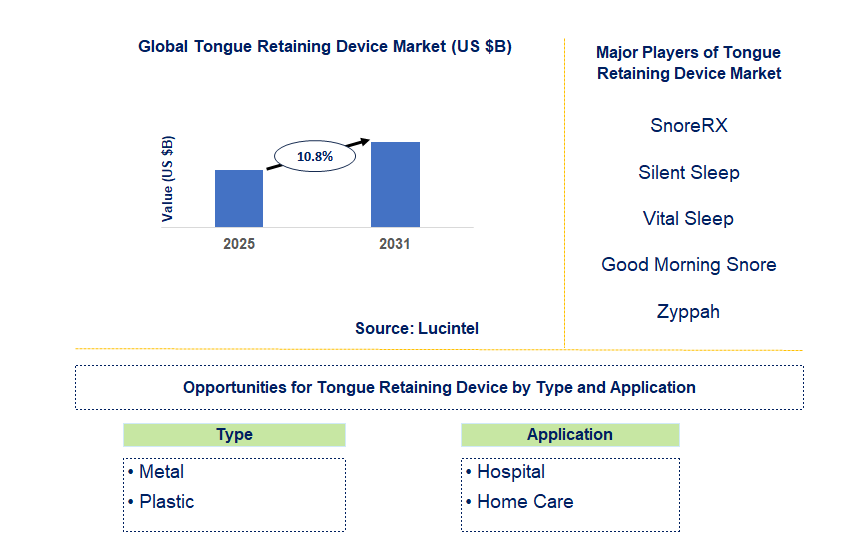
Key data points: The growth forecast = 10.8% annually for the next 7 years. Scroll below to get more insights. This market report covers Trends, opportunities and forecasts in tongue retaining device market to 2031 by type (metal and plastic), application (hospital and home care), and region (North America, Europe, Asia Pacific, and the Rest of the World)
We'll send your sample report shortly.
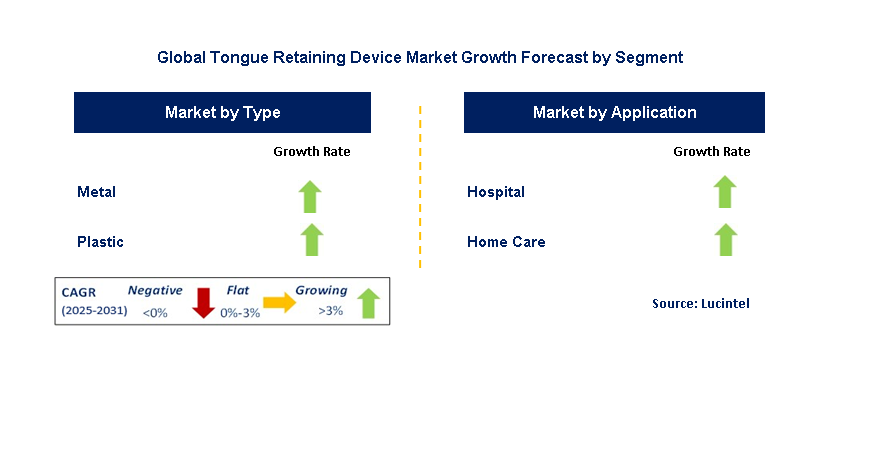
• Lucintel forecasts that, within the type category, metal is expected to witness higher growth over the forecast period due to the increasing need for long-lasting medical devices.
• Within the application category, the hospital is expected to witness higher growth due to the rising number of patients.
• In terms of region, North America is expected to witness the highest growth over the forecast period due to the growing awareness and acceptance of sleep disorders.
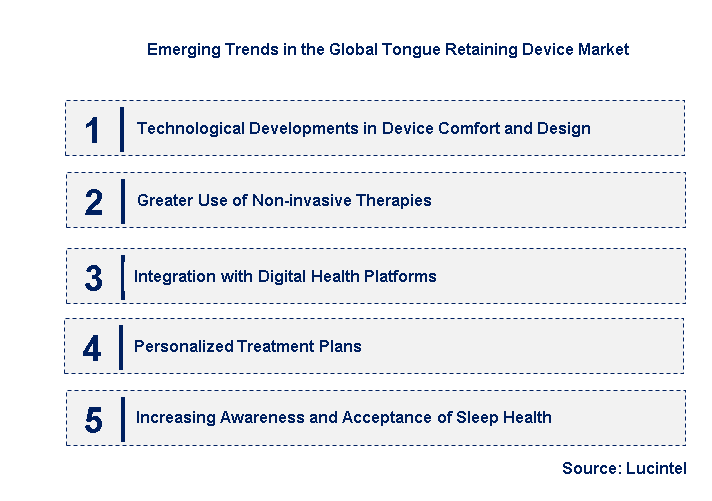
• Technological Developments in Device Comfort and Design: As consumers increasingly demand comfort and ease of use, manufacturers are developing TRDs that provide a better fit and greater flexibility. Advances in materials and 3D printing technology are allowing for the creation of lightweight, personalized devices. These developments ensure that the devices are more comfortable to wear, enhancing patient compliance and efficacy. Moreover, these technologies enable more convenient adjustment, enabling users to customize the fit of the device according to their individual anatomical characteristics.
• Greater Use of Non-invasive Therapies: The increasing popularity of less invasive treatments compared to more invasive therapies like surgery is having a significant impact on the TRD market. As education regarding sleep apnea and snoring disorders continues to rise, more people are turning towards alternatives like TRDs to solve their sleep problems. This trend is backed by declining risks and recovery time relative to surgery. Medical professionals are also increasingly likely to prescribe TRDs as a first-line therapy, further accelerating their adoption.
• Integration with Digital Health Platforms: Integration of TRDs with digital health platforms is also an emerging trend in the marketplace. The digital health platforms enable real-time tracking of sleep activity and device usage, giving users and healthcare professionals useful information to maximize treatment. Real-time tracking of progress and real-time adjustment of the treatment plan enhance the effectiveness of TRDs, which results in improved patient outcomes. This trend is likely to continue as more people adopt digital health solutions.
• Personalized Treatment Plans: Individualized customization of TRDs is on the rise. Businesses are utilizing advancements in digital technology and artificial intelligence to design personalized treatment solutions for consumers. The solutions consider the severity of sleep apnea, lifestyle choices, and anatomical factors. With individualized solutions, manufacturers are enhancing patient satisfaction and effectiveness, leading to greater adoption.
• Increasing Awareness and Acceptance of Sleep Health: Increasing awareness of the need for sleep health is a factor driving up interest in products such as tongue retaining devices. Health campaigns and sleep apnea and sleep disorder media coverage are informing a more aware public. Therefore, more individuals are looking to non-invasive methods of dealing with their sleeping conditions. The social trend toward greater concern with general well-being will continue to drive demand for TRDs. These new trends are transforming the tongue retaining device market by making the devices more affordable, efficient, and customized. With improving technology and growing customer awareness, the market will likely keep on evolving, providing patients with more customized and comfortable solutions for treating sleep disorders.
• Innovations in 3D Printing for Customization: One of the most significant advancements in the TRD market is the application of 3D printing technology to design tailor-made devices. This provides a more comfortable fit and a more personalized treatment plan, enhancing the device's comfort and effectiveness. With each device now being designed according to the particular requirements of the patient, producers are enhancing patient compliance and satisfaction levels, translating into increased treatment success rates.
• Increasing Application of Digital Health Integration: A major development is the convergence of TRDs with digital health platforms. This platform provides real-time tracking of sleeping patterns, device use, and other parameters and shares this valuable information with the patient as well as healthcare professionals. Not only does this enhance the effectiveness of treatments but also facilitate the timely reprogramming of devices for best outcomes, thus fueling industry growth.
• Widening Insurance Coverage for Sleep Apnea Therapies: With healthcare systems changing, more payers are now covering non-invasive procedures such as TRDs. This has increased the accessibility of these devices to larger groups of people, particularly in nations such as the U.S. and Germany. Expanded coverage lessens the economic load on patients, making TRDs more of a feasible treatment for patients with sleep apnea and snoring conditions.
• Greater Emphasis on Patient Comfort and Compliance: Companies are focusing more on enhancing the comfort of TRDs to improve patient compliance. Advances in materials, design, and adjustability have made them more comfortable to wear. Comfort focus is important since it has a direct impact on how regularly patients wear the devices and, consequently, the success of their treatment plans.
• Regulatory Improvements and Standards: With increasing demand for TRDs, the regulatory authorities across different nations are putting in place tougher norms to promote product safety and efficacy. These better standards of regulation contribute to enhanced consumer confidence and make sure only superior-quality devices find their way into the market. Organizations that achieve these new standards will become competitive and attract more clients. The trends in the tongue retaining device industry are building towards a more technologically advanced, patient-focused landscape. With advancements in customization, digitalization, and regulation, these trends are building toward the future of sleep disorder therapy.
• Targeting the Aging Population: As the world's population grows older, sleep disorders, including sleep apnea, are on the rise. This is a prime growth segment for TRD makers, as manufacturers can target the production of devices specifically designed to meet the demands of the elderly. These manufacturers can provide solutions to a burgeoning need in the healthcare market. The devices can also be promoted as a non-surgical option compared to more involved and expensive treatments.
• Increasing Market Access in Emerging Economies: Emerging economies in Asia and Africa offer a vast growth opportunity for the TRD market. As urbanization and access to healthcare increase, increasing numbers of people in these economies are gaining knowledge about sleep disorders and getting treatment. Increasing access to low-cost TRDs in these economies can assist in solving the rising demand for treatments of sleep disorders, fueling growth in unpenetrated markets.
• Emergence of Smart TRDs: Smart tongue retaining devices that can monitor the behavior of the user and deliver real-time feedback are a new growth prospect that is thrilling to consider. They could be fitted with digital health platforms for observing and revising treatment programs depending on an individual's sleeping habits. Smart devices' personalization and ease could make them attractive products to consumers, especially those with expertise in using technologies.
• Sleep Clinics and Medical Provider Partnerships: Strategic partnerships with sleep clinics and medical practitioners present a growth prospect for manufacturers of TRDs. Through close partnerships with health practitioners, manufacturers can raise awareness for the advantages of TRDs, enhance product usage rates, and make sure that the devices are properly utilized to achieve maximum benefits. The partnerships could also result in product endorsement and recommendations by recognized healthcare providers.
• Enhanced Customization and Personalization Options: With changing patient preferences toward personalized care, there is an increasing potential to provide highly customized TRDs. With the development of 3D printing and AI-based design, it is becoming simpler to design personalized devices that are tailored to specific requirements. By providing more customized solutions, manufacturers can stand out in a competitive marketplace, improving customer satisfaction and driving adoption. The growth opportunity in the market for tongue retaining devices is high since the consumer drifts towards personalized, non-surgical treatments. Manufacturers can further grow their business share and generate the overall progress of the industry for sleep health by making use of all such opportunities.
• SnoreRX
• Silent Sleep
• Vital Sleep
• Good Morning Snore Solution
• Zyppah
• Sleep Tight Mouthpiece
• PureSleep
• Metal
• Plastic
• Hospital
• Home Care
• North America
• Europe
• Asia Pacific
• The Rest of the World
• United States: In the United States, the market for tongue retaining devices has experienced significant growth as a result of growing awareness of sleep apnea and snoring disorders. More people are opting for non-surgical treatments like TRDs to prevent surgery. Dental practitioners are also increasingly using these devices, spurred by improvements in material technology that improve comfort and effectiveness. The growth in coverage of insurance for sleep disorder treatment has further contributed to the accessibility of TRDs to more people. The market will continue to grow with further innovations and better patient outcomes.
• China: China's tongue retaining device market is increasing at a fast rate due to the rising incidence of sleep apnea and other disorders. As access to healthcare and urbanization become better, the demand for non-invasive forms of treatment such as TRDs is on the rise. There is also more awareness about sleep health, particularly among the middle class. Nonetheless, more effective regulation and quality control of the market need to be achieved in order to improve patient safety and device performance. Regional manufacturers are starting to invest in research and development to enhance the quality of TRDs, increasing the market further.
• Germany: Germany is still a dominant force in the European tongue retaining device market due to its well-established healthcare infrastructure and emphasis on quality medical devices. German patients are finding themselves demanding increasingly more solutions for sleep apnea and associated disorders, driving the use of TRDs as a substitute for CPAP machines. The market for these devices should expand because advances in technology enhance the comfort and efficacy of TRDs. There is also an effort by German companies to make them more affordable and accessible, becoming more attractive to a wider set of consumers even with mild and moderate sleep apnea.
• India: India is also experiencing an increase in the awareness of sleep disorders and the use of non-invasive therapies like tongue retaining devices. The aging population and lifestyle sleep disorders are on the rise, and thus, there is a surge in demand for products that treat snoring and mild sleep apnea. The market is still challenged by limited insurance coverage and the relatively low penetration of sophisticated medical technologies in rural regions. In spite of these issues, the expanding middle class and the increasing number of international manufacturers in India are likely to drive market growth in the future.
• Japan: Japan's tongue retaining device market has experienced consistent growth, driven by the country's aging population and growing awareness of sleep disorders. With a well-developed healthcare system, Japan is observing more extensive use of non-surgical treatments for sleep apnea, such as TRDs. Local firms are taking the lead in device innovation to meet the unique requirements of Japan's market, where comfort and customization are much prized. In addition, Japan's emphasis on preventative care and technological progress is likely to continue fueling the market in the future.


• SnoreRX
• Silent Sleep
• Vital Sleep
• Good Morning Snore Solution
• Zyppah
• Sleep Tight Mouthpiece
• PureSleep Q5. Which tongue retaining device market segment will be the largest in future? Answer: Lucintel forecasts that, within the type category, metal is expected to witness higher growth over the forecast period due to the increasing need for long-lasting medical devices. Q6. In tongue retaining device market, which region is expected to be the largest in next 5 years? Answer: In terms of region, North America is expected to witness the highest growth over the forecast period due to the growing awareness and acceptance of sleep disorders. Q7. Do we receive customization in this report? Answer: Yes, Lucintel provides 10% customization without any additional cost.


Choose a license that fits your team. Instant PDF delivery.
Prices exclude taxes. Instant delivery. Custom licensing available on request.
Market Report · July 22, 2026
Market Report · July 22, 2026
Market Report · July 22, 2026
Trusted partner for strategic intelligence and business growth


Receive a complimentary market analysis tailored to your industry. Our analysts will identify key growth opportunities and competitive dynamics specific to your business.

Market size, growth rate, and key trend analysis for your specific sector.

Top competitor positioning and market share analysis.

Strategic recommendations backed by data-driven insights.
Get curated market intelligence and competitive moves straight to your inbox.
By subscribing, you agree to receive our monthly insights. Unsubscribe anytime.
Receive a complimentary market analysis tailored to your industry. Our analysts will identify key growth opportunities and competitive dynamics specific to your business.
Market size, growth rate, and key trend analysis for your specific sector.
Top competitor positioning and market share analysis.
Strategic recommendations backed by data-driven insights.
Get curated market intelligence, emerging trends, and competitive moves straight to your inbox each month.
By subscribing, you agree to receive our monthly insights. Unsubscribe anytime.
We'll send your sample report shortly.