
Market Report · July 22, 2026

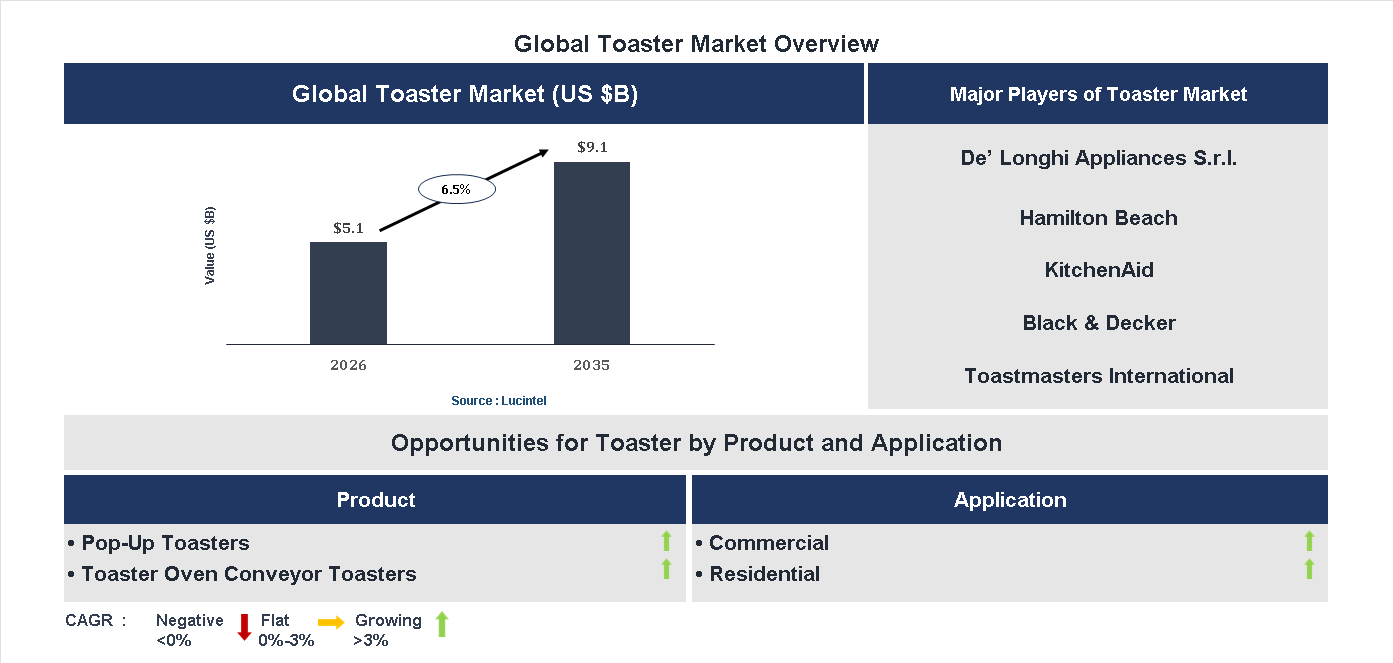
Key data points: The market size in 2035 = $9.1 billion, growth forecast = 6.5% annually for the next 8 years. Scroll below to get more insights. This market report covers trends, opportunities and forecasts in toaster market to 2035 by product (pop-up toasters and toaster oven conveyor toasters), application (commercial and residential), and region (North America, Europe, Asia Pacific, and the Rest of the World)
We'll send your sample report shortly.
• Lucintel forecasts that, within the product category, toaster oven conveyor toaster is expected to witness higher growth over the forecast period.
• Within the application category, residential is expected to witness higher growth.
• In terms of region, APAC is expected to witness the highest growth over the forecast period. Gain valuable insights for your business decisions with our comprehensive 150+ page report. Sample figures with some insights are shown below.
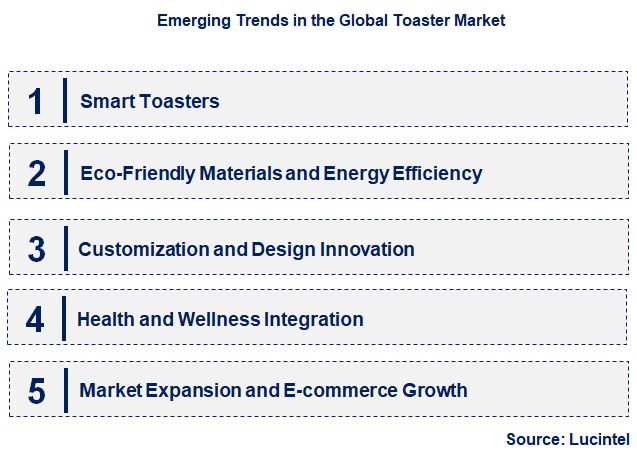
• Smart Toasters: Integration of IoT technology is revolutionizing the market by enabling remote control, personalized settings, and real-time alerts. Consumers now prefer appliances that can be connected to smartphones for convenience and customization. Smart toasters can remember user preferences, offer multiple browning levels, and even suggest optimal toasting times based on bread type. This trend enhances user experience, increases product value, and opens new revenue streams for manufacturers through app-based services. As smart home ecosystems expand, smart toasters are becoming an essential part of connected kitchens.
• Eco-Friendly Materials and Energy Efficiency: Growing environmental awareness is pushing manufacturers to adopt sustainable materials and energy-efficient designs. Use of biodegradable plastics, recycled metals, and eco-friendly insulation reduces the carbon footprint. Energy-efficient toasters with features like rapid toasting, automatic shut-off, and energy-saving modes are gaining popularity. Consumers are increasingly seeking appliances that align with their sustainability values, influencing product development and marketing strategies. This trend not only appeals to eco-conscious buyers but also helps brands comply with stricter environmental regulations, fostering a greener market landscape.
• Customization and Design Innovation: Consumers are demanding more personalized and aesthetically appealing toasters. Manufacturers are offering customizable options such as color choices, engraving, and modular designs. Sleek, modern aesthetics combined with functional features like wide slots, crumb trays, and adjustable browning controls are enhancing user satisfaction. Design innovation also includes compact, space-saving models suitable for small kitchens. This trend caters to diverse consumer preferences, boosts brand differentiation, and encourages higher engagement through tailored products, ultimately expanding market reach and consumer loyalty.
• Health and Wellness Integration: The market is witnessing a rise in toasters that promote healthier eating habits. Features like gluten-free settings, multi-grain toasting, and allergen-free options are becoming standard. Some models incorporate technology to reduce acrylamide formation, a compound linked to health risks. Additionally, toasters with built-in nutrition tracking or compatibility with health apps are emerging. This trend aligns with the increasing focus on health and wellness, attracting health-conscious consumers and expanding the market to include niche segments. It encourages innovation aimed at delivering safer, healthier toasting experiences.
• Market Expansion and E-commerce Growth: The rise of online retail channels is significantly impacting market dynamics. Consumers now prefer purchasing toasters through e-commerce platforms for convenience, variety, and competitive pricing. This shift enables brands to reach a broader audience, including emerging markets. Market expansion is also driven by urbanization and rising disposable incomes, especially in developing regions. E-commerce facilitates direct consumer engagement, personalized marketing, and faster product adoption. As digital channels grow, traditional retail is complemented or replaced, leading to increased sales, greater market penetration, and a more competitive landscape. In summary, these emerging trends are reshaping the toaster market by fostering innovation, enhancing consumer engagement, and promoting sustainability. The integration of smart technology, eco-conscious materials, customization options, health-focused features, and e-commerce expansion collectively drives growth and competitiveness. As these trends continue to evolve, they will lead to more sophisticated, personalized, and environmentally friendly toasters, ultimately transforming how consumers interact with and perceive this essential kitchen appliance.
• Smart Toasters: Integration of IoT technology enhances user experience by enabling remote control, customization, and automation, leading to increased convenience and personalization. This development attracts tech-savvy consumers and opens new revenue streams for manufacturers. Smart features also facilitate energy management and maintenance alerts, improving appliance longevity and efficiency. The market benefits from increased product differentiation, driving sales and consumer engagement in a competitive landscape.
• Energy-Efficient Designs: Focus on reducing energy consumption through innovative heating elements and insulation materials, which promotes sustainability. These designs appeal to environmentally conscious consumers and comply with stricter regulations. Energy-efficient toasters lower utility bills and carbon footprint, making them attractive for eco-friendly households. Manufacturers investing in such technologies gain a competitive edge, fostering market growth and aligning with global sustainability goals.
• Multi-Functionality and Versatility: Toasters now incorporate additional features like baking, grilling, and bagel toasting, offering multifunctional appliances that save space and enhance usability. This versatility caters to modern lifestyles with limited kitchen space and diverse culinary preferences. Consumers benefit from increased value and convenience, encouraging higher adoption rates. The market expands as brands innovate to meet these evolving demands, boosting sales across various segments.
• Customization and Aesthetic Appeal: Personalization options, including adjustable browning levels, removable crumb trays, and customizable designs, improve user satisfaction. Aesthetic enhancements with sleek, modern finishes attract style-conscious buyers. Customizable features allow consumers to tailor appliances to their preferences, increasing brand loyalty. The market sees growth driven by demand for visually appealing, user-friendly toasters that complement contemporary kitchen decor.
• Sustainable Materials and Eco-Friendly Manufacturing: Adoption of biodegradable plastics, recycled metals, and eco-conscious production processes reduces environmental impact. This development aligns with global sustainability initiatives and appeals to eco-aware consumers. Sustainable manufacturing practices also enhance brand reputation and compliance with regulations. The market benefits from increased consumer trust and demand for environmentally responsible products, fostering long-term growth and innovation in the industry. The recent developments in smart technology, energy efficiency, multifunctionality, customization, and sustainability are significantly impacting the toaster market by driving innovation, enhancing consumer satisfaction, and promoting eco-friendly practices. These trends are fostering a competitive environment that encourages continuous improvement and diversification of products. As a result, the market is experiencing accelerated growth, increased consumer engagement, and a shift towards more sustainable and technologically advanced appliances.
• Rising Demand for Smart and Connected Toasters: The integration of IoT technology into toasters allows consumers to control and customize toasting via smartphones, enhancing convenience and user experience. Smart toasters offer features like automatic browning control, remote operation, and maintenance alerts, appealing to tech-savvy consumers. As smart home ecosystems expand, the adoption of connected toasters is expected to grow rapidly, creating new revenue streams and market differentiation opportunities for manufacturers.
• Increasing Preference for Energy-Efficient and Eco-Friendly Toasters: Consumers are increasingly prioritizing energy conservation and sustainability, prompting manufacturers to develop eco-friendly toasters with energy-saving features. Use of recyclable materials, reduced power consumption, and eco-conscious manufacturing processes are gaining importance. Governments and environmental regulations further incentivize the adoption of energy-efficient appliances, driving innovation and market growth in sustainable toasters that meet consumer and regulatory demands.
• Growing Popularity of Premium and Designer Toasters: The demand for aesthetically appealing and feature-rich toasters is rising among consumers seeking to enhance kitchen decor. Premium toasters with advanced functionalities, unique designs, and customizable options are gaining traction. This trend is driven by rising disposable incomes and a desire for luxury kitchen appliances. Manufacturers are collaborating with designers and celebrities to create exclusive product lines, expanding market share in the high-end segment.
• Expansion of Product Offerings with Innovative Features: Companies are continuously innovating to introduce toasters with advanced features such as multiple bread slots, wide toasting chambers, and specialized settings for bagels, gluten-free bread, and more. Incorporating features like crumb trays, adjustable browning levels, and quick-to-clean surfaces enhances user convenience. These innovations cater to diverse consumer needs, enabling brands to differentiate their products and capture a broader market segment.
• Growing Adoption in Commercial and Hospitality Sectors: The commercial sector, including hotels, cafes, and restaurants, is increasingly adopting high-capacity, durable toasters to meet customer demand for quality breakfast offerings. The hospitality industry seeks reliable, energy-efficient, and customizable toasters to enhance guest experience. This expansion into commercial markets offers significant growth opportunities for manufacturers, driven by the need for scalable, robust appliances that comply with safety and efficiency standards. These growth opportunities are poised to significantly influence the toaster market by fostering innovation, expanding consumer choices, and driving industry competitiveness. Embracing technological advancements, sustainability, premiumization, and commercial expansion will enable market players to capitalize on emerging trends. As consumer preferences evolve, the market is expected to witness sustained growth, diversification, and increased profitability, shaping the future landscape of the global toaster industry.
• Technological Innovation: The integration of smart features, such as Wi-Fi connectivity and digital controls, enhances user experience and differentiates products. Manufacturers are investing in R&D to develop energy-efficient, durable, and feature-rich toasters, which appeal to tech-savvy consumers. These innovations not only improve functionality but also open new market segments, including premium and connected appliances. As technology advances, the market is expected to see increased adoption of IoT-enabled toasters, fostering growth and competitive advantage.
• Rising Consumer Demand for Convenience: Modern consumers prioritize ease of use and time-saving appliances. Toasters with multiple browning settings, quick toasting features, and easy cleaning mechanisms cater to busy lifestyles. The demand for versatile appliances that can handle various bread types and sizes further fuels market expansion. This trend is driven by urbanization and changing lifestyles, prompting manufacturers to innovate and offer more user-friendly products to meet evolving consumer expectations.
• Increasing Focus on Energy Efficiency and Sustainability: Growing environmental awareness and stricter regulations are pushing manufacturers to develop energy-efficient toasters that consume less power and incorporate eco-friendly materials. Consumers are increasingly seeking appliances that reduce their carbon footprint, which influences product design and marketing strategies. Governments are also implementing standards that encourage sustainable manufacturing practices, thereby shaping the product landscape and fostering innovation in energy-saving features.
• Expansion of Retail and E-commerce Channels: The proliferation of online shopping platforms and retail outlets has expanded market reach. E-commerce provides consumers with easy access to a wide range of products, reviews, and competitive pricing, boosting sales. Retail partnerships and direct-to-consumer models enable brands to enhance visibility and customer engagement. This channel diversification helps manufacturers respond quickly to market trends and consumer preferences, accelerating market growth and product adoption.
• Product Differentiation and Branding Strategies: Companies are focusing on unique designs, branding, and marketing to stand out in a competitive market. Premium branding, innovative features, and aesthetic appeal attract different consumer segments. Collaborations with designers and influencers further enhance brand visibility. Effective differentiation strategies help companies build customer loyalty and command higher price points, thereby driving revenue and market share expansion. The challenges facing the toaster market include:-
• Stringent Regulatory Standards: Compliance with safety, energy efficiency, and environmental regulations can increase production costs and complicate product development. Manufacturers must invest in R&D to meet evolving standards, which may delay product launches and increase operational expenses. Non-compliance risks legal penalties and damage to brand reputation, making regulatory adherence a critical but challenging aspect of market sustainability.
• Intense Competition and Price Pressure: The market is highly competitive, with numerous local and international brands vying for consumer attention. Price wars and promotional activities can erode profit margins, forcing companies to innovate cost-effectively. Differentiating products through features and branding becomes essential but challenging in a crowded marketplace, impacting overall profitability and market stability.
• Fluctuating Raw Material Costs: Volatility in the prices of key raw materials such as plastics, metals, and electronic components affects manufacturing costs. Supply chain disruptions and geopolitical tensions can exacerbate these fluctuations, leading to increased production expenses and potential delays. Managing supply chain risks and maintaining cost efficiency are ongoing challenges for market players aiming to sustain profitability. In summary, the toaster market is shaped by rapid technological advancements, changing consumer preferences, and regulatory pressures that drive innovation and growth. However, challenges such as regulatory compliance, intense competition, and raw material volatility pose significant hurdles. Successful market players will need to balance innovation with cost management and regulatory adherence to capitalize on emerging opportunities. Overall, these drivers and challenges collectively influence the market’s trajectory, requiring strategic agility and continuous adaptation to sustain competitive advantage and achieve long-term growth.
• De’ Longhi Appliances S.r.l.
• Hamilton Beach
• KitchenAid
• Black & Decker
• Toastmasters International
• West Bend Insurance Company
• Breville Pty Limited
• Pop-Up Toasters
• Toaster Oven Conveyor Toasters
• Commercial
• Residential
• North America
• Europe
• Asia Pacific
• The Rest of the World
• United States: The US market has seen a surge in smart toasters with Wi-Fi connectivity and app control features. Consumers are increasingly prioritizing energy efficiency and eco-friendly materials, prompting brands to innovate with sustainable components. Premium models with advanced browning controls and sleek designs are gaining popularity, alongside a growing demand for retro and minimalist aesthetics. Retailers are expanding online channels, boosting accessibility and consumer engagement.
• China: In China, the market is characterized by rapid growth driven by urbanization and rising disposable incomes. Local brands are expanding their product portfolios with affordable yet feature-rich toasters, integrating digital controls and multiple browning settings. E-commerce platforms like Alibaba and JD.com are pivotal in distribution, facilitating quick adoption. Additionally, there is a focus on compact, space-saving designs suitable for small urban kitchens, along with increasing interest in multifunctional appliances.
• Germany: The German market emphasizes quality, durability, and energy efficiency, aligning with strict EU regulations. Manufacturers are innovating with eco-friendly materials and energy-saving technologies, such as insulation and smart energy management. There is a notable trend toward minimalist, functional designs that blend seamlessly into modern kitchens. Brands are also investing in product safety features and offering extended warranties, catering to a discerning consumer base that values longevity and sustainability.
• India: The Indian market is experiencing rapid growth due to rising middle-class incomes and changing lifestyles. Affordable, durable toasters with basic features are in high demand, with a shift toward more stylish and compact models. Local and international brands are competing fiercely, often offering value-for-money products. The market is also witnessing increased penetration through online sales channels, with consumers seeking convenient shopping options and innovative features like multiple toasting options and easy cleaning.
• Japan: In Japan, the focus is on compact, multifunctional toasters that cater to small living spaces. Technological advancements include precise temperature controls, automatic shut-off, and energy-efficient operation. Consumers prefer sleek, modern designs with user-friendly interfaces. There is also a growing interest in health-conscious features, such as gluten-free or allergen-friendly options. Brands are emphasizing quality, safety, and innovative features to meet the high standards of Japanese consumers, while sustainability remains an important consideration.


• De’ Longhi Appliances S.r.l.
• Hamilton Beach
• KitchenAid
• Black & Decker
• Toastmasters International
• West Bend Insurance Company
• Breville Pty Limited Q6. Which toaster market segment will be the largest in future? Answer: Lucintel forecasts that, within the product category, toaster oven conveyor toaster is expected to witness higher growth over the forecast period. Q7. In toaster market, which region is expected to be the largest in next 5 years? Answer: In terms of region, APAC is expected to witness the highest growth over the forecast period. Q8. Do we receive customization in this report? Answer: Yes, Lucintel provides 10% customization without any additional cost.


Choose a license that fits your team. Instant PDF delivery.
Prices exclude taxes. Instant delivery. Custom licensing available on request.
Market Report · July 22, 2026
Market Report · July 22, 2026
Market Report · July 22, 2026
Trusted partner for strategic intelligence and business growth


Receive a complimentary market analysis tailored to your industry. Our analysts will identify key growth opportunities and competitive dynamics specific to your business.

Market size, growth rate, and key trend analysis for your specific sector.

Top competitor positioning and market share analysis.

Strategic recommendations backed by data-driven insights.
Get curated market intelligence and competitive moves straight to your inbox.
By subscribing, you agree to receive our monthly insights. Unsubscribe anytime.
Receive a complimentary market analysis tailored to your industry. Our analysts will identify key growth opportunities and competitive dynamics specific to your business.
Market size, growth rate, and key trend analysis for your specific sector.
Top competitor positioning and market share analysis.
Strategic recommendations backed by data-driven insights.
Get curated market intelligence, emerging trends, and competitive moves straight to your inbox each month.
By subscribing, you agree to receive our monthly insights. Unsubscribe anytime.
We'll send your sample report shortly.