
Market Report · July 22, 2026

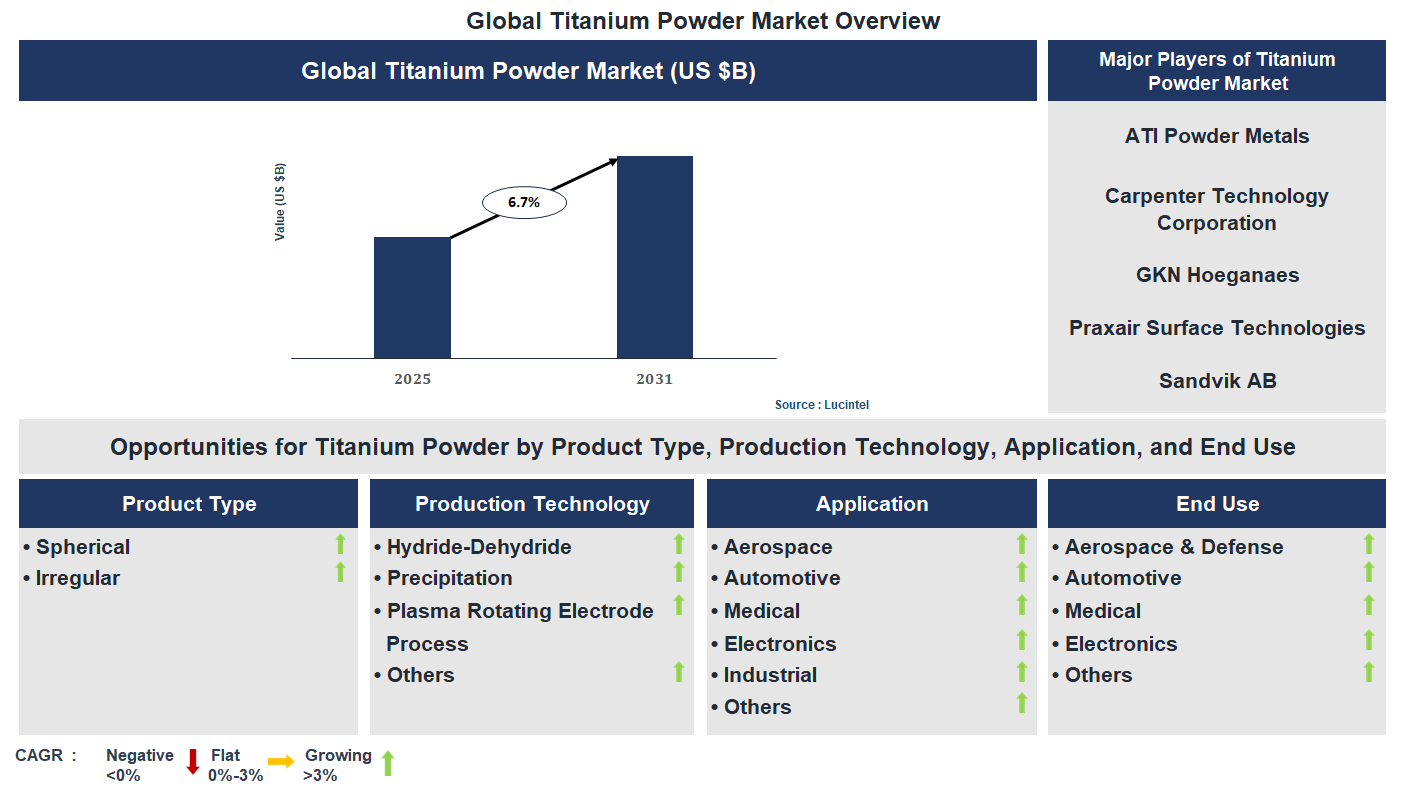
Key data points: The growth forecast = 6.7% annually for the next 7 years. Scroll below to get more insights. This market report covers trends, opportunities and forecasts in titanium powder market to 2031 by product type (spherical and irregular), production technology (hydride-dehydride, precipitation, plasma rotating electrode process, and others), application (aerospace, automotive, medical, electronics, industrial, and others), end use (aerospace & defense, automotive, medical, electronics, and others), and region (North America, Europe, Asia Pacific, and the Rest of the World)
We'll send your sample report shortly.
• Lucintel forecasts that, within the product type category, spherical is expected to witness higher growth over the forecast period.
• Within the end use category, aerospace & defense is expected to witness the highest growth.
• In terms of region, APAC is expected to witness the highest growth over the forecast period. Gain valuable insights for your business decisions with our comprehensive 150+ page report. Sample figures with some insights are shown below.
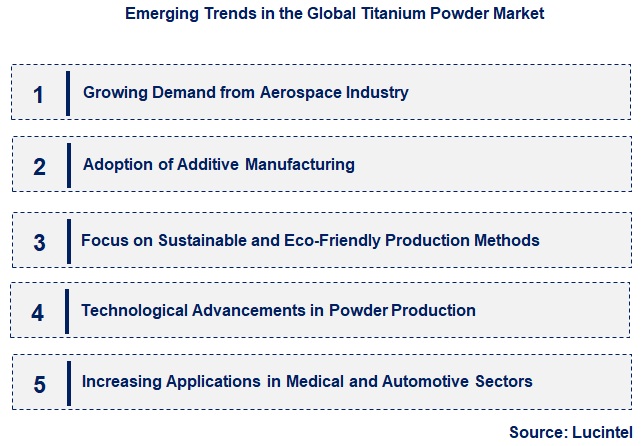
• Growing Demand from Aerospace Industry: The aerospace sector is a major driver for titanium powder due to its high strength-to-weight ratio and corrosion resistance. As aircraft manufacturing pushes for lighter, more fuel-efficient designs, the need for advanced materials like titanium powder increases. This trend boosts market growth, encourages innovation in powder production techniques, and prompts suppliers to expand capacity to meet the rising demand for aerospace-grade titanium powders.
• Adoption of Additive Manufacturing: The rise of 3D printing technology is revolutionizing titanium powder applications. Additive manufacturing allows for complex, customized components with reduced waste and shorter lead times. The demand for high-quality, spherical titanium powders suitable for 3D printing is surging, prompting manufacturers to develop specialized powders. This trend enhances design flexibility, reduces costs, and opens new avenues for titanium powder use in medical implants, aerospace parts, and automotive components.
• Focus on Sustainable and Eco-Friendly Production Methods: Environmental concerns are prompting the industry to adopt greener practices. Innovations in energy-efficient production processes, recycling of titanium scrap, and reduction of carbon emissions are gaining importance. Companies investing in sustainable manufacturing are gaining competitive advantages, aligning with global environmental standards, and appealing to eco-conscious consumers. This shift is expected to reshape supply chains and influence market growth by emphasizing sustainability.
• Technological Advancements in Powder Production: New methods such as plasma atomization, gas atomization, and hydride-dihydride processes are improving powder quality, particle size distribution, and purity. These advancements lead to better performance in end-use applications and reduce defects. Enhanced production techniques also enable cost reductions and higher throughput, making titanium powder more accessible and reliable for various industries, thus expanding market opportunities and fostering innovation.
• Increasing Applications in Medical and Automotive Sectors: The medical industry benefits from titanium powders biocompatibility for implants and prosthetics, while the automotive sector seeks lightweight, durable materials for performance enhancement. Growing adoption in these sectors is driven by technological improvements and regulatory approvals. This diversification of applications broadens the market scope, stimulates R&D investments, and encourages the development of specialized powders tailored to specific industry needs. In summary, these emerging trends are significantly reshaping the titanium powder market by fostering innovation, promoting sustainability, and expanding application horizons. They are driving market growth, improving product quality, and enabling new manufacturing paradigms, ultimately positioning titanium powder as a critical material across multiple high-growth industries.
• Technological Innovations: Enhanced production methods such as plasma atomization and gas atomization have improved powder quality, reducing impurities and particle size variability. These advancements lead to better performance in end-use applications like aerospace components and medical implants, boosting market confidence and expanding application scope.
• Regulatory and Environmental Policies: Stricter environmental regulations on manufacturing emissions and waste management have prompted companies to adopt greener production techniques. Compliance costs may increase initially, but these policies encourage sustainable practices, fostering long-term market stability and attracting environmentally conscious investors.
• Rising Demand in Aerospace Sector: The aerospace industry’s need for lightweight, high-strength materials has driven increased titanium powder consumption. Innovations in additive manufacturing enable complex component fabrication, reducing weight and manufacturing costs, thus expanding market opportunities and encouraging R&D investments.
• Expansion of Medical Applications: The biocompatibility and corrosion resistance of titanium powders have led to their increased use in medical implants and devices. This growth is supported by advancements in powder purity and particle size control, resulting in improved patient outcomes and opening new revenue streams for manufacturers.
• Supply Chain and Pricing Dynamics: Fluctuations in raw material prices and geopolitical factors have impacted supply stability and costs. Companies are diversifying sourcing strategies and investing in local production facilities to mitigate risks, which influences market pricing and competitiveness. In summary, recent developments in the titanium powder market—spanning technological innovations, regulatory shifts, sector-specific demand, medical application expansion, and supply chain adjustments—are collectively driving growth and transformation. These changes enhance product quality, promote sustainability, and open new markets, positioning the industry for sustained expansion despite emerging challenges.
• Enhanced Performance and Weight Reduction: Titanium powders high strength-to-weight ratio makes it ideal for aerospace components, leading to increased adoption in aircraft manufacturing, space exploration, and defense applications. This growth improves fuel efficiency and reduces emissions, driving market expansion.
• Advanced Implants and Prosthetics: The biocompatibility and corrosion resistance of titanium powder facilitate the production of durable, lightweight medical implants and prosthetics. Growing healthcare needs and technological innovations are boosting demand, fostering market growth.
• Lightweight Vehicle Components: The use of titanium powder in manufacturing lightweight, high-performance automotive parts enhances fuel efficiency and safety. Rising demand for electric vehicles and stringent emission standards are accelerating this application’s growth.
• 3D printing of Complex Structures: Titanium powder is increasingly used in 3D printing for producing intricate, customized parts across industries. This application reduces material waste and manufacturing time, opening new avenues for market expansion.
• Durable, Lightweight Gear: The demand for high-performance sports equipment, such as bicycles, golf clubs, and protective gear, benefits from titanium powders properties. This trend supports the development of innovative, high-quality products and expanding market reach. In summary, these growth opportunities are significantly impacting the titanium powder market by diversifying applications, enhancing product performance, and fostering innovation. They are driving increased demand across multiple sectors, leading to market expansion and competitive advantages for industry players.
• Technological Innovation: The development of advanced powder production techniques, such as plasma atomization and gas atomization, has significantly improved powder quality, purity, and particle size control. These innovations enable manufacturers to meet the stringent specifications required for aerospace, medical, and industrial applications. Enhanced process efficiency reduces costs and waste, making titanium powders more accessible and appealing to end-users. As research continues, further technological breakthroughs are expected to expand application possibilities and improve product performance, fueling market growth.
• Growing Aerospace and Defense Sector: The aerospace industry is a major consumer of titanium powders due to their high strength-to-weight ratio, corrosion resistance, and ability to withstand extreme temperatures. The increasing demand for lightweight, durable components in aircraft and spacecraft drives the need for high-quality titanium powders. Defense applications, including military aircraft and naval vessels, also contribute significantly. As aerospace and defense budgets expand globally, the demand for titanium powders is expected to rise, supporting market expansion.
• Medical Industry Expansion: Titaniums biocompatibility, non-toxicity, and corrosion resistance make it ideal for medical implants and devices. The rising prevalence of orthopedic, dental, and cardiovascular implants boosts demand for titanium powders. Advances in additive manufacturing enable the production of complex, patient-specific implants, further increasing market opportunities. The medical sectors growth, coupled with technological advancements, is a key driver propelling the titanium powder market forward.
• Automotive Industry Adoption: The automotive sector is increasingly adopting titanium powders for manufacturing lightweight, high-performance parts to improve fuel efficiency and reduce emissions. The use of titanium in engine components, exhaust systems, and structural parts is gaining traction, especially in luxury and sports vehicles. As automakers focus on sustainability and performance, the demand for titanium powders is expected to grow, supported by innovations in processing and cost reduction strategies.
• Environmental and Regulatory Factors: Stricter environmental regulations concerning emissions and waste management are encouraging the adoption of sustainable manufacturing practices. Companies investing in eco-friendly production methods, such as recycling titanium scrap, are gaining a competitive edge. Regulatory standards also influence the quality and safety of titanium powders, prompting manufacturers to adhere to strict guidelines. These factors drive innovation and responsible sourcing, shaping the market landscape. The challenges facing this titanium powder market include:-
• High Production Costs: The manufacturing of titanium powders involves complex, energy-intensive processes like gas and plasma atomization, which contribute to high production costs. These costs impact the final pricing, making titanium powders less competitive compared to alternative materials. Additionally, the need for high-purity raw materials and advanced equipment further escalates expenses. Cost barriers can limit market penetration, especially in price-sensitive sectors, and hinder the adoption of titanium powders in emerging markets.
• Supply Chain Disruptions: The titanium powder supply chain is vulnerable to geopolitical tensions, raw material shortages, and logistical issues. Limited global production capacity and reliance on specific regions for raw materials can lead to supply shortages and delays. Such disruptions affect manufacturing schedules and increase costs, impacting end-user industries. Ensuring a stable, diversified supply chain remains a critical challenge for sustained market growth.
• Regulatory and Environmental Constraints: Stringent regulations regarding environmental impact, waste disposal, and safety standards pose compliance challenges for manufacturers. The need to meet evolving regulatory requirements can increase operational costs and complicate production processes. Additionally, environmental concerns related to mining and processing activities necessitate sustainable practices, which may require significant investment. Navigating these regulatory landscapes is essential but challenging for market participants aiming for growth and compliance. In summary, the titanium powder market is driven by technological advancements, expanding aerospace, medical, and automotive sectors, and regulatory shifts toward sustainability. However, high production costs, supply chain vulnerabilities, and regulatory hurdles present notable challenges. These factors collectively influence market dynamics, requiring stakeholders to innovate and adapt strategically. While growth prospects remain promising, addressing these challenges is crucial for long-term success. The markets evolution will depend on balancing technological progress with cost management and regulatory compliance, shaping a competitive and resilient industry landscape.
• ATI Powder Metals
• Carpenter Technology Corporation
• GKN Hoeganaes
• Praxair Surface Technologies
• Sandvik AB
• TLS Technik GmbH & Co.
• AMETEK Specialty Metal Products
• Metalysis Ltd
• Toho Titanium Co., Ltd.
• OSAKA Titanium Technologies Co., Ltd.
• Spherical
• Irregular
• Hydride-Dehydride
• Precipitation
• Plasma Rotating Electrode Process
• Others
• Aerospace
• Automotive
• Medical
• Electronics
• Industrial
• Others
• Aerospace & Defense
• Automotive
• Medical
• Electronics
• Others
• North America
• Europe
• Asia Pacific
• The Rest of the World
• United States: The US has seen increased investment in aerospace and medical sectors, leading to higher demand for titanium powder. Innovations in powder production techniques, such as plasma atomization, have improved quality and consistency. Several startups and established firms are expanding manufacturing capacities to cater to growing industrial needs. Government agencies are also funding research to develop sustainable and cost-effective titanium powder production methods, boosting competitiveness in the global market.
• China: China has become a major player in titanium powder production, with significant investments in new manufacturing facilities. The country is focusing on reducing reliance on imports by enhancing domestic capabilities. Advances in powder atomization technology have improved product quality, supporting applications in aerospace, military, and industrial sectors. The government’s strategic initiatives aim to strengthen the titanium industry, making China a key exporter and consumer in the global market.
• Germany: Germany remains a leader in high-precision titanium powder for aerospace and medical applications. The country has adopted advanced manufacturing processes, including gas atomization and plasma rotating electrode methods, to produce high-purity powders. German companies are collaborating with research institutions to develop innovative applications and improve powder properties. The focus on sustainability and quality standards has driven technological improvements and market expansion within Europe.
• India: India is witnessing rapid growth in titanium powder demand, primarily driven by aerospace, defense, and medical sectors. The country is investing in establishing domestic production facilities and upgrading existing ones. Recent technological advancements have enabled the production of finer, more uniform powders suitable for critical applications. Government initiatives to promote manufacturing and reduce import dependence are further fueling market growth, positioning India as an emerging hub for titanium powder manufacturing.
• Japan: Japan continues to innovate in titanium powder technology, emphasizing high-performance applications in aerospace and medical devices. The country has adopted advanced atomization techniques to produce powders with superior quality and consistency. Japanese firms are focusing on developing environmentally friendly production processes and recycling methods to enhance sustainability. The market is also supported by strong R&D efforts aimed at expanding application areas and improving powder properties, maintaining Japan’s competitive edge in the global titanium powder industry.


• ATI Powder Metals
• Carpenter Technology Corporation
• GKN Hoeganaes
• Praxair Surface Technologies
• Sandvik AB
• TLS Technik GmbH & Co.
• AMETEK Specialty Metal Products
• Metalysis Ltd
• Toho Titanium Co., Ltd.
• OSAKA Titanium Technologies Co., Ltd. Q5. Which titanium powder market segment will be the largest in future? Answer: Lucintel forecasts that, within the product type category, spherical is expected to witness higher growth over the forecast period. Q6. In titanium powder market, which region is expected to be the largest in next 5 years? Answer: In terms of region, APAC is expected to witness the highest growth over the forecast period. Q7. Do we receive customization in this report? Answer: Yes, Lucintel provides 10% customization without any additional cost.


Choose a license that fits your team. Instant PDF delivery.
Prices exclude taxes. Instant delivery. Custom licensing available on request.
Market Report · July 22, 2026
Market Report · July 22, 2026
Market Report · July 22, 2026
Trusted partner for strategic intelligence and business growth


Receive a complimentary market analysis tailored to your industry. Our analysts will identify key growth opportunities and competitive dynamics specific to your business.

Market size, growth rate, and key trend analysis for your specific sector.

Top competitor positioning and market share analysis.

Strategic recommendations backed by data-driven insights.
Get curated market intelligence and competitive moves straight to your inbox.
By subscribing, you agree to receive our monthly insights. Unsubscribe anytime.
Receive a complimentary market analysis tailored to your industry. Our analysts will identify key growth opportunities and competitive dynamics specific to your business.
Market size, growth rate, and key trend analysis for your specific sector.
Top competitor positioning and market share analysis.
Strategic recommendations backed by data-driven insights.
Get curated market intelligence, emerging trends, and competitive moves straight to your inbox each month.
By subscribing, you agree to receive our monthly insights. Unsubscribe anytime.
We'll send your sample report shortly.