
Market Report · July 22, 2026

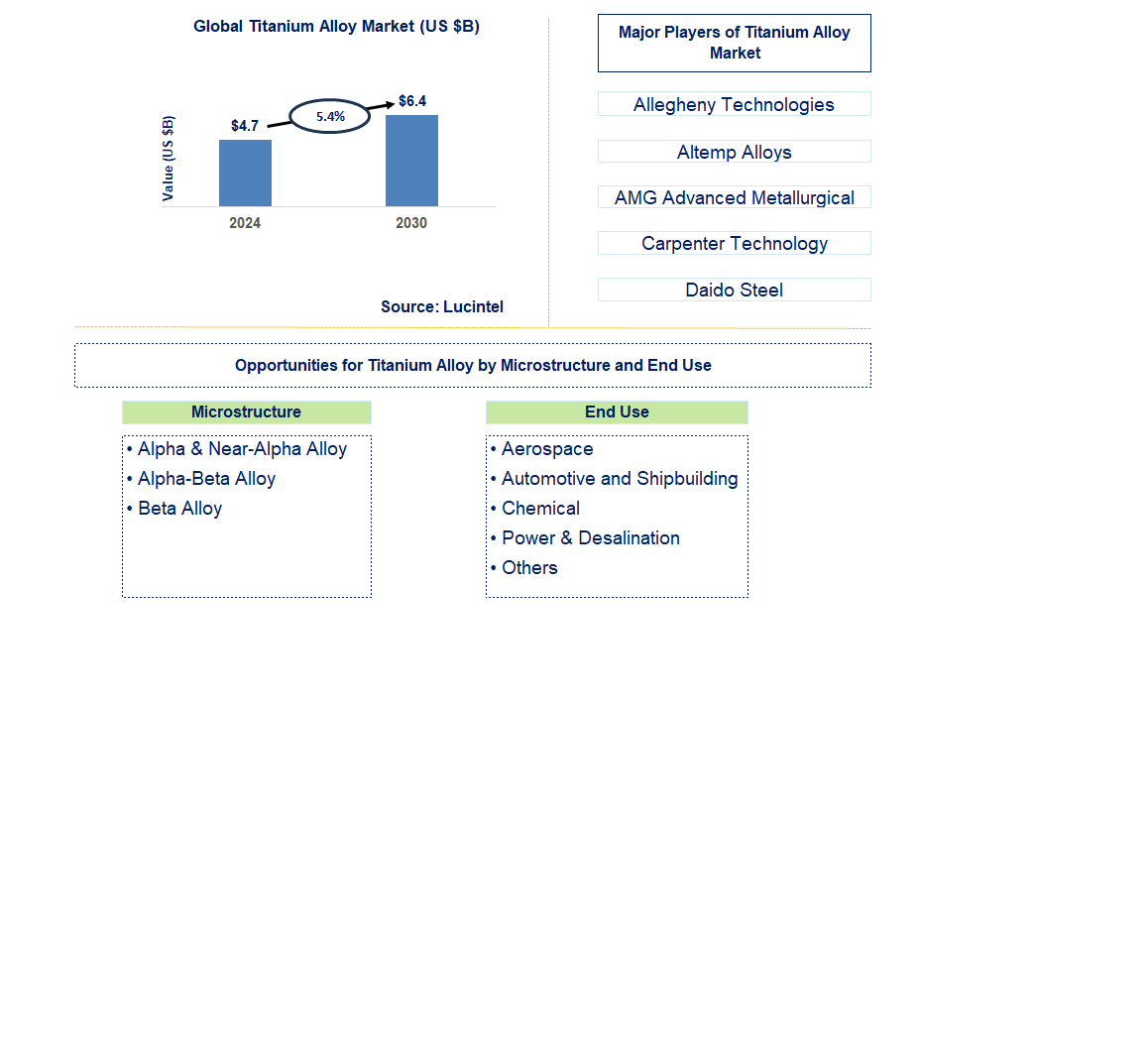
Key data points: The market size in 2030 = $6.4 billion, growth forecast = 5.4% annually for the next 6 years. Scroll below to get more insights. This market report covers trends, opportunities, and forecasts in the global titanium alloy market to 2030 by microstructure (alpha & near-alpha alloy, alpha-beta alloy, and beta alloy), end use (aerospace, automotive and shipbuilding, chemical, power & desalination, and others), and region (North America, Europe, Asia Pacific, and the Rest of the World)
We'll send your sample report shortly.
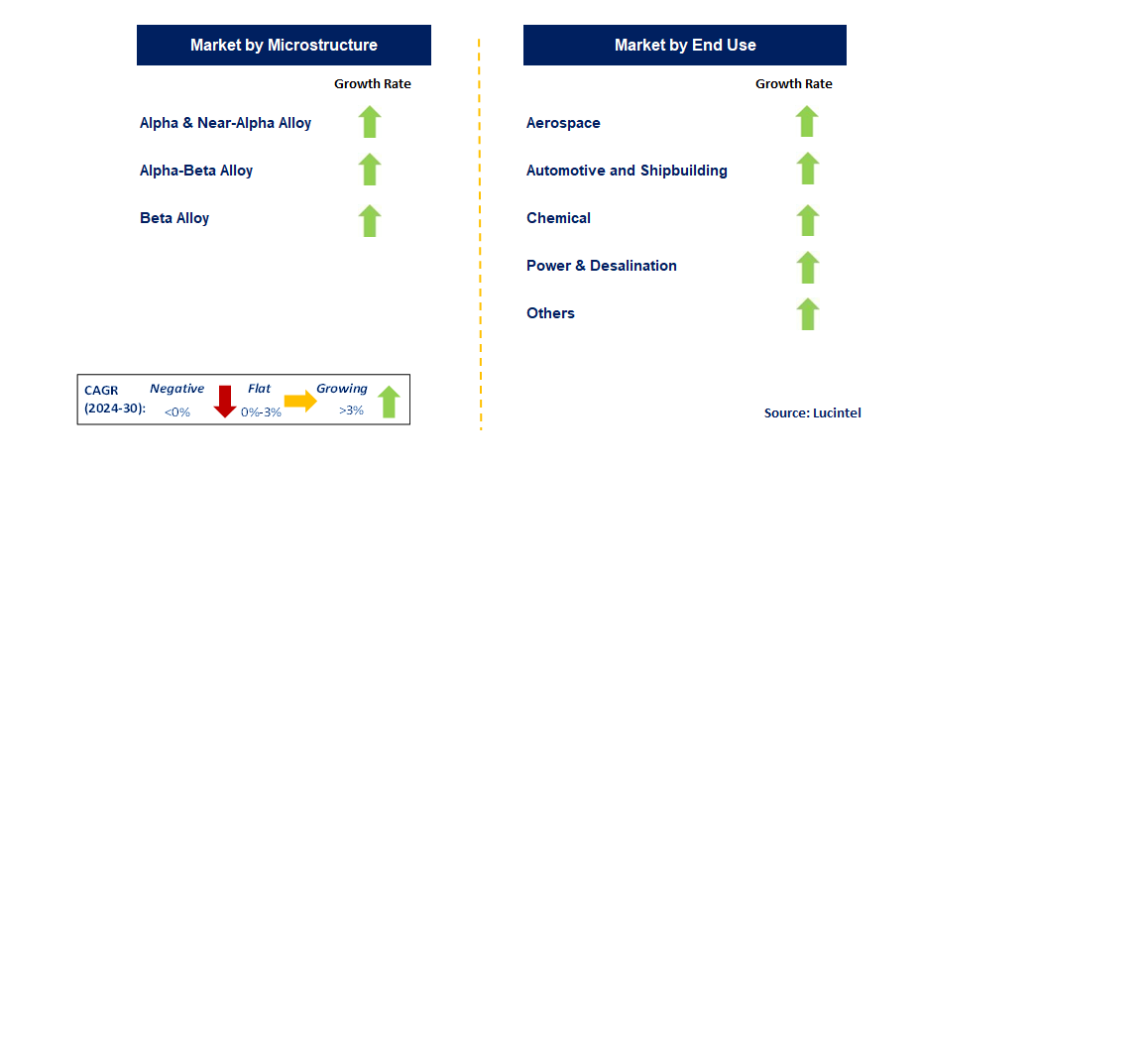
• Lucintel forecasts that,within the microstructure category, alpha & near-alpha alloy will remain the largest segment over the forecast period due to its significant usage among industries given to its good balance between strength, toughness, and corrosion resistance.
• Within the end use category, aerospace is expected to witness the highest growth due to considerable usage of titanium alloy in this sector to obtain high resistance to corrosion, high tensile strength to density ratio, and capacity to tolerate moderately high temperatures without creeping.
• In terms of regions, APAC is expected to witness the highest growth over the forecast period due to extensive usage of titanium alloy among various end use industries, such as chemical, aerospace, automotive, medical, and environmental protection sectors of the region. Gain valuable insights for your business decisions with our comprehensive 150+ page report.
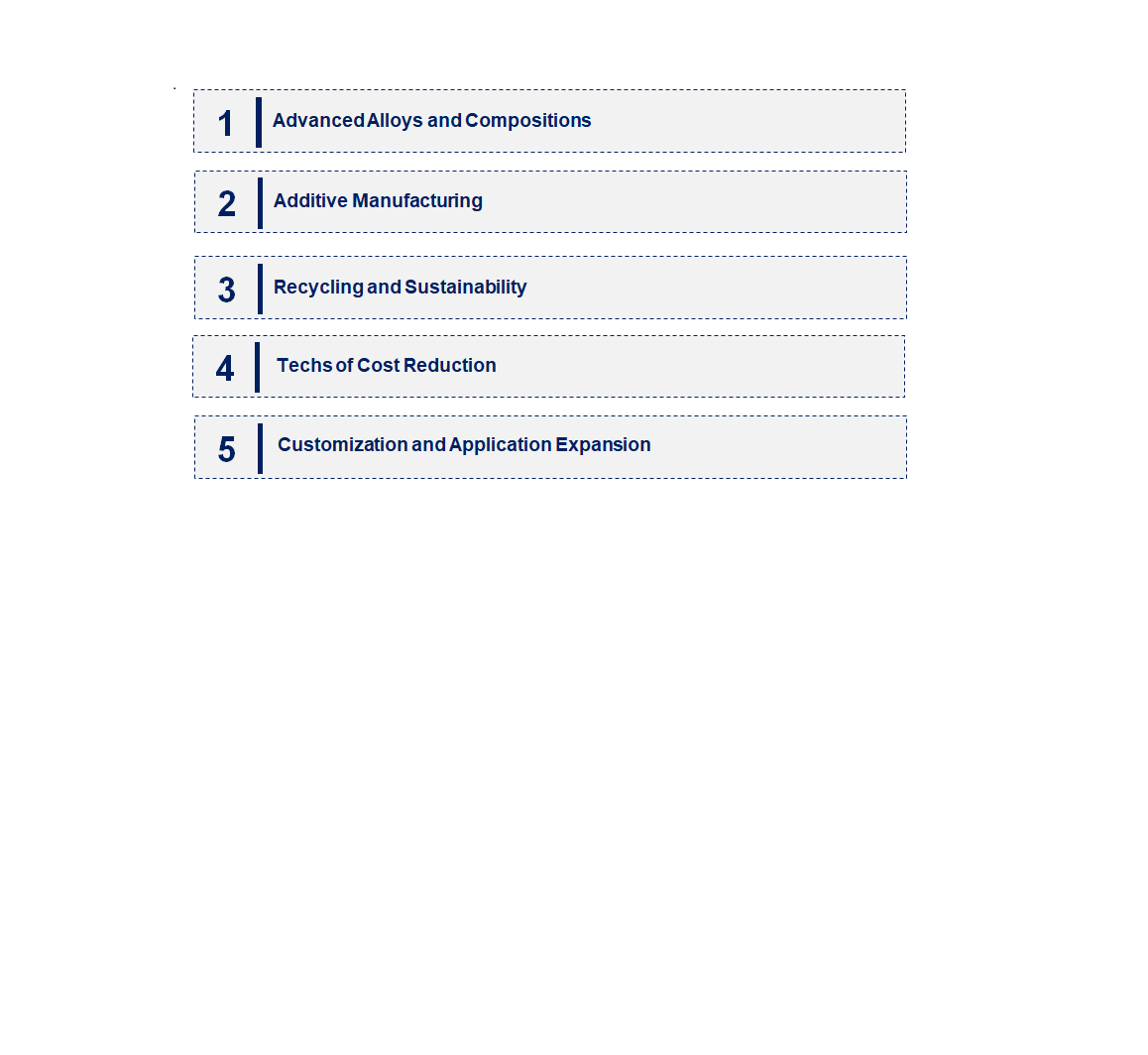
• Advanced Alloys and Compositions: New titanium alloy compositions are enhancing material properties such as strength, ductility, and corrosion resistance. Researchers have developed alloys optimized for specific applications like aerospace or medical implants. This enables the use of titanium alloys in more demanding environments or applications.
• Additive Manufacturing: The production of titanium alloys is being transformed by additive manufacturing (AM), which has the capacity to create complex geometries and customized parts. This technology reduces waste and production costs by making rapid prototyping and the production of high-performance components viable, especially in aerospace, automotive, and medical industries.
• Recycling and Sustainability: There is an increasing focus on the recycling of titanium alloys to reduce material wastage and environmental impacts. Innovations in recycling processes enhance the efficiency of reclaiming titanium from scrap and waste, contributing to sustainability initiatives and making it more cost-effective.
• Technologies for Cost Reduction: New processing technologies and developments in production techniques aim to reduce the cost of titanium alloys. Improved methods for extracting and processing titanium ore, along with enhanced manufacturing techniques, make titanium alloys more accessible and competitive in various industries.
• Customization and Application Expansion: The demand for customized titanium alloy solutions is increasing due to the need for materials specifically tailored to particular applications. Advances in alloy design and manufacturing techniques allow for specialized titanium products targeted at various sectors, including aerospace, medical, and automotive. These trends have caused major changes in the titanium alloy industry, leading to better material performance, reduced costs, and an expanded application range. The incorporation of advanced technologies alongside sustainable practices has enhanced the flexibility and affordability of titanium alloys, thereby changing their role in various high-tech areas.
• Innovations in Advanced Processing Techniques: The introduction of advanced processing techniques, such as powder metallurgy and high-temperature treatments, is improving mechanical properties and performance in titanium alloys. These methods enable better control over microstructure, thereby enhancing strength and durability through microstructural optimization.
• High-Performance Alloys: The development of new high-performance titanium alloys with superior strength-to-weight ratios and corrosion resistance is expanding their use in demanding applications. These alloys are increasingly used in aerospace, medical implants, and high-performance automotive components.
• Cost Reduction Innovations: Efforts to reduce the cost of producing titanium alloys are yielding positive results. These efforts include more efficient extraction processes developed through research initiatives by scientists worldwide who have spent years studying how to increase efficiency in mining operations, considering both social and environmental impacts. Additionally, these methods have been used to manufacture less expensive alloy formulations, making them more competitive and available.
• Advances in Recycling: The efficiency of reclaiming titanium materials has improved through advancements in recycling technology. Moreover, these new recycling methods are environmentally friendly since they result in reduced waste generation, thereby minimizing the costs associated with producing recycled titanium alloys.
• Customization Capabilities: Improved customization capabilities allow for the creation of tailor-made titanium alloys for different industrial applications. For instance, techniques such as additive manufacturing and precision processing enable the complex production of bespoke titanium components across various application sectors. These developments have significantly impacted the market for titanium alloys by improving performance, reducing costs, and expanding applications. Consequently, innovation and growth across major industries are driven by the adoption of advanced technologies and processes.
• Aerospace Industry: The aerospace industry remains a key driver of demand for titanium alloys due to its need for lightweight yet strong materials. This offers an opportunity to develop new alloys or processes that improve the performance of aircraft and spacecraft components while controlling costs.
• Medical Implants: Due to their biocompatibility and strength, there is an increasing use of titanium alloys in medical implants. Therefore, opportunities exist for developing new alloy compositions or alternative manufacturing techniques aimed at lowering the costs of orthopedic and dental applications while achieving higher performance levels among medical devices made from these materials.
• Automotive Sector: The automotive industry is exploring the use of titanium alloys to enhance the performance and fuel economy of vehicles. Titanium components for high-performance, lightweight auto parts, such as engine systems and suspension systems, represent strategic growth opportunities.
• Energy Sector: In the energy sector, gas turbines and offshore drilling equipment require titanium alloys designed for use in high-temperature, corrosive environments. Improvements in alloy properties and processing methods will enable more effective performance and durability under such demanding conditions.
• Sports and Recreational Equipment: Increased demand for high-performance sports and recreational equipment drives up titanium alloy consumption. The lightweight yet strong titanium materials are essential for manufacturing bicycles, golf clubs, and other products that enhance user experience. These growth opportunities are driving innovation and expansion in the titanium alloy market. The flexibility and productivity of titanium alloys have been enhanced by advances across various industries through developments in alloy design, manufacturing processes, and application-specific designs.
• Technological Advancements: The development of advanced alloy compositions and processing innovations has led to a surge in demand within this industry, according to statistics on the global market for titanium alloys. Improved material characteristics through advancements like additive manufacturing and recycling techniques lower costs while expanding applications.
• Increasing Industrial Demand: The growing demand from the aerospace, medical devices, automotive, and other sectors contributes to the rise experienced by global titanium alloy markets today. Innovations in production approaches related to composite fabrication methodologies also play an increasing role.
• Cost Reduction Efforts: There is a strong desire to lower production costs within the titanium alloy industry. Intensive manufacturing processes and alloy formulations are making titanium alloys cheaper and easier to use across many industries.
• Sustainability Initiatives: There is a drive towards creating more sustainable operations in the titanium alloys industry, leading to improved recycling methods. The use of better recycling technologies supports environmental objectives while mitigating costs.
• Regulatory Compliance: Adherence to safety, environmental, and quality standards affects the titanium alloy market. Market participation and growth depend on compliance with these regulations, which lead to improvements in alloy design and production. Challenges in the titanium alloy market include:
• High Production Costs: The extraction and processing of titanium ore remain expensive. Manufacturers must develop innovative ways to reduce costs while maintaining quality and performance.
• Supply Chain Issues: Disruptions in the supply chain can affect the availability and pricing of raw materials and finished goods. Establishing robust supply chains is crucial for maintaining market stability.
• Regulatory Compliance: Meeting regulatory requirements regarding safety and environmental impact can be stringent and difficult. Investments in technology and process upgrades must keep pace with compliance requirements to avoid potential penalties. The drivers and challenges together shape the development of the titanium alloy market today. Technological advances, coupled with increasing demand, drive innovation, while cost pressures and regulatory mandates pose ongoing challenges that require strategic management and adaptation over time.
• Allegheny Technologies
• Altemp Alloys
• AMG Advanced Metallurgical
• Carpenter Technology
• Daido Steel
• Haynes International
• Kobe Steel
• Mishra Dhatu Nigam
• NeoNickel
• Nippon Steel
• Alpha & Near-Alpha Alloy
• Alpha-Beta Alloy
• Beta Alloy
• Aerospace
• Automotive and Shipbuilding
• Chemical
• Power & Desalination
• Others
• North America
• Europe
• Asia Pacific
• The Rest of the World
• United States: In the US, significant strides have been made in advanced titanium alloys with improved mechanical properties and fatigue resistance. Innovations in additive manufacturing are enabling more complex and efficient designs for aerospace and defense applications. Additionally, there is a focus on reducing production costs and enhancing recycling processes to make titanium alloys more economical.
• China: To support its rapidly growing aerospace and automotive industries, China has invested heavily in titanium alloy research and development. Efforts are underway to improve alloy performance, especially at high temperatures, while scaling up domestic production capabilities. Changes in production methods are enhancing material properties and manufacturing efficiency through better control over microstructures.
• Germany: Germany excels in integrating titanium alloys into highly demanding applications, particularly within the automotive and medical technology sectors. German manufacturers are increasingly using titanium alloys for lightweight automotive components and orthopedic implants. The development of new alloy compositions, combined with processing methods that enhance strength and biocompatibility, drives these innovations.
• India: Recent developments concerning titanium alloys in India have emphasized improving the affordability of these materials for industrial use. Enhancing local production capabilities is one way the country is attempting to achieve this objective, alongside developing cheaper alloy formulations. Advancements in fabrication techniques are also being pursued to support growth in sectors like energy and aerospace.
• Japan: Japan continues to lead the world in developing titanium alloys with outstanding performance characteristics for specialized applications. Recent advancements include ultra-lightweight and high-strength alloys for aerospace and sports equipment. Japan’s emphasis on high-precision manufacturing techniques and innovative alloy compositions fuels advancements in high-tech sectors.


• Allegheny Technologies
• Altemp Alloys
• AMG Advanced Metallurgical
• Carpenter Technology
• Daido Steel
• Haynes International
• Kobe Steel
• Mishra Dhatu Nigam
• NeoNickel
• Nippon Steel Q6. Which titanium alloy market segment will be the largest in future? Answer: Lucintel forecasts that alpha & near-alpha alloy will remain the largest segment over the forecast period due to its significant usage among industries given to its good balance between strength, toughness, and corrosion resistance. Q7. In titanium alloy market, which region is expected to be the largest in next 5 years? Answer: APAC is expected to witness highest growth over the forecast period due to extensive usage of titanium alloy among various end use industries, such as chemical, aerospace, automotive, medical, and environmental protection sectors of the region. Q.8 Do we receive customization in this report? Answer: Yes, Lucintel provides 10% customization without any additional cost.


Choose a license that fits your team. Instant PDF delivery.
Prices exclude taxes. Instant delivery. Custom licensing available on request.
Market Report · July 22, 2026
Market Report · July 22, 2026
Market Report · July 22, 2026
Trusted partner for strategic intelligence and business growth


Receive a complimentary market analysis tailored to your industry. Our analysts will identify key growth opportunities and competitive dynamics specific to your business.

Market size, growth rate, and key trend analysis for your specific sector.

Top competitor positioning and market share analysis.

Strategic recommendations backed by data-driven insights.
Get curated market intelligence and competitive moves straight to your inbox.
By subscribing, you agree to receive our monthly insights. Unsubscribe anytime.
Receive a complimentary market analysis tailored to your industry. Our analysts will identify key growth opportunities and competitive dynamics specific to your business.
Market size, growth rate, and key trend analysis for your specific sector.
Top competitor positioning and market share analysis.
Strategic recommendations backed by data-driven insights.
Get curated market intelligence, emerging trends, and competitive moves straight to your inbox each month.
By subscribing, you agree to receive our monthly insights. Unsubscribe anytime.
We'll send your sample report shortly.