
Market Report · July 31, 2026

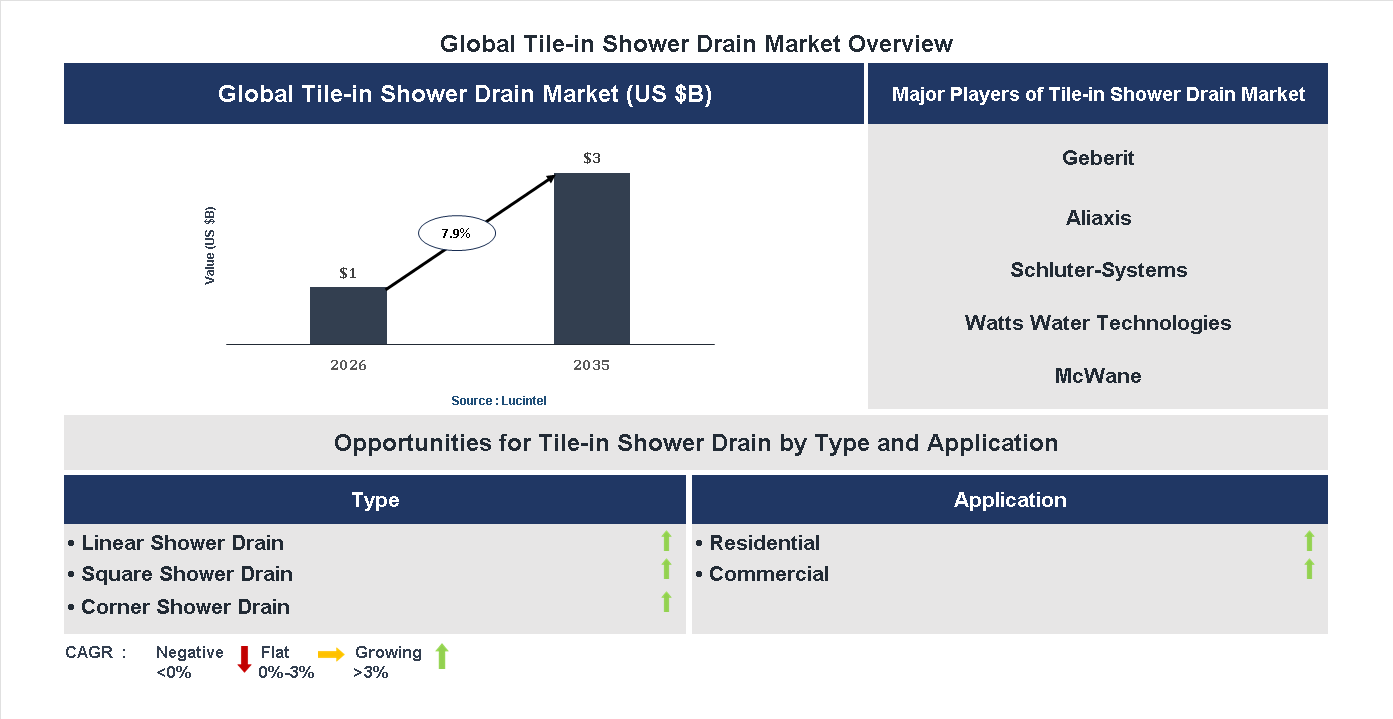
Key data points: The market size in 2035 = $3 billion, growth forecast = 7.9% annually for the next 8 years. Scroll below to get more insights. This market report covers trends, opportunities and forecasts in tile-in shower drain market to 2035 by type (linear shower drain, square shower drain, and corner shower drain), application (residential and commercial), and region (North America, Europe, Asia Pacific, and the Rest of the World)
We'll send your sample report shortly.
• Lucintel forecasts that, within the type category, linear shower drain is expected to witness the highest growth over the forecast period.
• Within the application category, residential is expected to witness higher growth.
• In terms of region, APAC is expected to witness the highest growth over the forecast period. Gain valuable insights for your business decisions with our comprehensive 150+ page report. Sample figures with some insights are shown below.
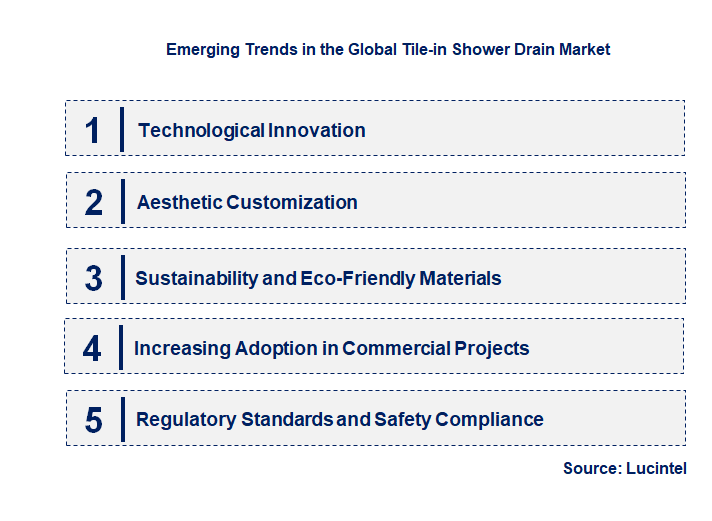
• Technological Innovation: Integration of smart features and advanced materials is revolutionizing the market. New designs incorporate features like anti-odor systems, easy-clean surfaces, and modular components, improving user experience and maintenance. Additionally, innovations in drainage efficiency and water flow management are enhancing performance. These technological advancements are making tile-in shower drains more reliable, durable, and user-friendly, which attracts both residential and commercial customers. As technology continues to evolve, expect further integration of smart home compatibility and eco-friendly features, driving market growth and differentiation.
• Aesthetic Customization: Consumers increasingly demand products that seamlessly blend with their bathroom decor. The trend toward customizable designs, finishes, and shapes allows homeowners and designers to create cohesive, stylish spaces. Manufacturers are offering a wider range of options, including various metals, finishes, and tile patterns, to meet these preferences. This focus on aesthetics enhances the overall bathroom appeal and adds value to properties. Customization also enables better integration with different architectural styles, making tile-in shower drains a versatile choice for diverse market segments.
• Sustainability and Eco-Friendly Materials: Growing environmental awareness is pushing the market toward sustainable solutions. Manufacturers are adopting eco-friendly materials such as recycled metals and plastics, and designing products that promote water conservation. Water-efficient drainage systems and leak-proof designs reduce waste and energy consumption. Additionally, eco-conscious consumers prefer products that are recyclable and have minimal environmental impact. This trend aligns with broader industry shifts toward sustainability, encouraging innovation and responsible manufacturing practices, which are expected to boost market acceptance and growth.
• Increasing Adoption in Commercial Projects: The commercial sector, including hotels, gyms, and public facilities, is increasingly adopting tile-in shower drains for their durability and aesthetic appeal. These drains offer a sleek, integrated look that complements modern architectural designs. Their ease of maintenance and compliance with safety standards make them suitable for high-traffic environments. As commercial construction projects grow, the demand for reliable, stylish, and easy-to-install drainage solutions is rising, expanding the market beyond residential applications. This trend is expected to significantly contribute to overall market expansion.
• Regulatory Standards and Safety Compliance: Stricter building codes and safety regulations are influencing product development and market offerings. Manufacturers are focusing on producing drains that meet or exceed standards for water safety, slip resistance, and hygiene. Compliance with these regulations ensures market access and consumer trust. Additionally, innovations aimed at reducing mold and bacterial growth are gaining importance. As regulatory frameworks evolve, companies investing in compliant, safe, and hygienic products will have a competitive advantage, shaping the future landscape of the tile-in shower drain market. These emerging trends—technological innovation, aesthetic customization, sustainability, commercial adoption, and regulatory compliance—are collectively reshaping the tile-in shower drain market. They are driving product development, influencing consumer preferences, and expanding application scopes, ultimately leading to a more integrated, sustainable, and design-focused industry landscape.
• Growing Demand for Aesthetic Bathroom Solutions: The market is expanding as homeowners and designers prioritize sleek, integrated drainage options that complement modern bathroom aesthetics, leading to increased adoption of tile-in shower drains that offer seamless appearance and customization options.
• Technological Innovations in Drainage Systems: Advances such as anti-odor features, quick installation mechanisms, and improved water flow efficiency are enhancing product performance, attracting more consumers and professionals seeking reliable, high-quality drainage solutions.
• Rising Construction and Renovation Activities: Increased residential and commercial construction projects, especially in urban areas, are fueling demand for durable, easy-to-install tile-in shower drains, supporting market growth through renovation and new builds.
• Environmental and Water Conservation Trends: Eco-friendly designs with water-saving features and sustainable materials are gaining popularity, encouraging manufacturers to develop environmentally conscious tile-in drain options that appeal to eco-aware consumers.
• Expansion of Distribution Channels and Market Reach: The growth of online retail platforms and specialized plumbing outlets is broadening access to tile-in shower drains, enabling manufacturers to reach a wider customer base and increase sales globally. These developments are significantly impacting the tile-in shower drain market by driving innovation, expanding consumer choices, and increasing adoption across residential and commercial sectors. The focus on aesthetics, technology, sustainability, and distribution channels is fostering a competitive environment that benefits consumers and encourages industry growth.
• Growing Demand for Aesthetic and Seamless Bathroom Designs: As homeowners and designers prioritize sleek, modern aesthetics, tile-in shower drains offer a discreet, integrated solution that enhances visual appeal. The ability to customize drain covers and materials allows for seamless integration with various tile patterns and styles, driving adoption. Increased renovation activities and new construction projects focusing on contemporary designs further boost market growth, especially in high-end residential and boutique commercial spaces.
• Technological Innovations in Drainage Efficiency and Durability: Advances in materials such as stainless steel, polymer composites, and corrosion-resistant alloys improve the longevity and performance of tile-in shower drains. Innovations like anti-odor systems, easy-clean features, and improved water flow capacity address consumer needs for hygiene and convenience. These technological enhancements enable manufacturers to differentiate their products, expand into new markets, and meet stringent building codes, thereby fueling market expansion.
• Rising Adoption in Commercial and Hospitality Sectors: The hospitality industry, including hotels and resorts, increasingly adopts tile-in shower drains for their aesthetic appeal and ease of maintenance. Commercial buildings also favor these drains for their durability and compliance with safety standards. The trend toward uniform, high-quality bathroom fixtures in public and commercial spaces creates opportunities for manufacturers to develop specialized, large-scale solutions, expanding their market share in these sectors.
• Expansion of Eco-Friendly and Water-Saving Solutions: Sustainability trends drive demand for eco-friendly tile-in shower drains that incorporate water-saving features such as flow restrictors and efficient drainage systems. Use of recyclable materials and environmentally conscious manufacturing processes appeal to eco-conscious consumers and builders. These sustainable solutions not only meet regulatory standards but also enhance brand reputation, opening avenues for market growth in green building projects and environmentally focused markets.
• Increasing Focus on Easy Installation and Maintenance: Consumers and contractors prefer products that simplify installation and reduce maintenance costs. Innovations like modular designs, quick-connect fittings, and self-cleaning features make tile-in shower drains more user-friendly. This focus on convenience accelerates adoption in DIY markets and professional installations alike, broadening the customer base. As ease of use becomes a key purchasing criterion, manufacturers are investing in product development to capture this expanding segment. The overall market outlook is positively influenced by these growth opportunities, promising increased innovation, wider application, and enhanced consumer satisfaction. Companies that strategically leverage these trends can secure competitive advantages, expand their market presence, and meet evolving customer demands effectively.
• Technological Innovation: The development of advanced drainage systems with improved durability, ease of installation, and aesthetic appeal is a major driver. Innovations such as modular designs and water-efficient features attract consumers and builders, enhancing market growth. These technological advancements reduce installation time and maintenance costs, making tile-in shower drains more appealing for both residential and commercial projects. As manufacturers continue to innovate, the market is expected to see increased adoption driven by improved product performance and compliance with environmental standards.
• Construction and Renovation Activities: Growing construction activities, especially in urban areas, significantly boost demand for tile-in shower drains. Renovation projects, driven by consumer preferences for modern and stylish bathrooms, also contribute to market expansion. The increasing trend of remodeling existing bathrooms to incorporate contemporary fixtures and drainage solutions fuels demand. This factor is particularly influential in regions experiencing economic growth, where increased disposable income leads to higher investment in home improvement, thereby expanding the market.
• Regulatory Standards and Environmental Policies: Stringent regulations related to water conservation, waste management, and environmental sustainability influence the market. Governments are implementing standards that require efficient drainage systems to prevent water wastage and promote eco-friendly practices. Compliance with these standards encourages manufacturers to develop innovative, sustainable products, which in turn drives market growth. Additionally, certifications and eco-labels serve as quality indicators, influencing consumer choices and fostering market confidence.
• Economic Growth and Disposable Income: Economic stability and growth directly impact consumer spending on home improvement and construction projects. Higher disposable incomes enable consumers and developers to invest in quality drainage solutions, boosting market demand. Economic incentives and favorable financing options further facilitate market expansion. As economies grow, the increased investment in infrastructure and residential projects creates a favorable environment for the tile-in shower drain market to thrive.
• Urbanization and Lifestyle Changes: Rapid urbanization leads to increased demand for modern, space-efficient bathroom fixtures, including tile-in shower drains. Changing lifestyles, with a focus on aesthetics and functionality, drive consumers to opt for contemporary drainage solutions that complement modern bathroom designs. The trend towards luxury and customized bathroom spaces also propels market growth. Urban development projects and real estate investments further support the demand for innovative drainage systems, making urbanization a key driver. The challenges facing the tile-in shower drain market include:-
• High Installation and Maintenance Costs: The installation of tile-in shower drains can be complex and costly, requiring skilled labor and precise workmanship. These high upfront costs may deter some consumers and small-scale builders from adopting these products. Additionally, maintenance and repair costs, especially if installation is not optimal, can impact long-term affordability. This challenge limits market penetration in price-sensitive regions and among budget-conscious consumers, potentially slowing overall growth.
• Stringent Regulatory Compliance: While regulations promote sustainability, they also pose challenges for manufacturers. Meeting diverse and evolving standards across different regions requires significant investment in research, development, and certification processes. Non-compliance can lead to legal penalties and product recalls, affecting brand reputation. Navigating complex regulatory landscapes can delay product launches and increase costs, creating barriers for new entrants and constraining market expansion.
• Supply Chain Disruptions: The tile-in shower drain market relies heavily on the global supply chain for raw materials and components. Disruptions caused by geopolitical tensions, pandemics, or logistical issues can lead to delays and increased costs. Shortages of specialized materials or components can hinder production schedules and reduce product availability. These disruptions threaten to slow market growth, increase prices, and reduce consumer confidence, especially during periods of global instability. The tile-in shower drain market is driven by technological advancements, construction activities, regulatory standards, economic growth, and urbanization. These factors collectively foster innovation, expand demand, and promote sustainable practices. However, high installation costs, regulatory compliance challenges, and supply chain disruptions pose significant hurdles. The overall impact of these drivers and challenges will shape the market’s future trajectory, requiring stakeholders to adapt strategically. Embracing innovation and navigating regulatory landscapes effectively will be crucial for sustained growth in this evolving market.
• Geberit
• Aliaxis
• Schluter-Systems
• Watts Water Technologies
• McWane
• BLS Industries
• Jomoo
• ACO
• Sioux Chief Mfg
• Beijing Runde Hongtu
• Linear Shower Drain
• Square Shower Drain
• Corner Shower Drain
• Residential
• Commercial
• North America
• Europe
• Asia Pacific
• The Rest of the World
• United States: The US market has seen a surge in demand for modern, low-profile tile-in shower drains, driven by a trend toward minimalist bathroom designs. Innovations in corrosion-resistant materials and easy installation methods have gained popularity. The rise of smart home integration has also influenced product development, with some manufacturers offering features like leak detection. Regulatory standards emphasizing water efficiency and sustainability are shaping product offerings. Additionally, e-commerce platforms have expanded access to a wider range of options, boosting market growth. Overall, the US market is characterized by technological innovation and a focus on eco-friendly solutions.
• China: Chinas tile-in shower drain market is rapidly expanding due to urbanization and rising disposable incomes. Local manufacturers are increasingly adopting advanced manufacturing techniques to improve product quality and reduce costs. There is a growing preference for customizable and aesthetically appealing designs, aligning with modern bathroom trends. The government’s emphasis on sustainable construction practices is encouraging the adoption of eco-friendly materials. E-commerce and online retail channels are significantly contributing to market penetration. Moreover, collaborations with international brands are enhancing product standards and innovation. The Chinese market is poised for continued growth, driven by infrastructure development and consumer demand for premium bathroom fixtures.
• Germany: In Germany, the market emphasizes high-quality, durable, and environmentally sustainable tile-in shower drains. The focus on energy efficiency and water conservation aligns with strict EU regulations. Manufacturers are innovating with corrosion-resistant and recyclable materials to meet these standards. There is a notable trend toward minimalist and sleek designs that complement contemporary bathroom aesthetics. The adoption of smart and sensor-based drainage systems is emerging, driven by technological advancements. The market benefits from a well-established construction sector and a high level of consumer awareness regarding sustainability. Overall, Germanys market is characterized by quality, innovation, and eco-consciousness.
• India: The Indian tile-in shower drain market is witnessing rapid growth due to increasing urbanization, rising middle-class income, and modernization of infrastructure. Local manufacturers are expanding their product portfolios to include affordable, durable, and easy-to-install options. There is a rising demand for stylish and contemporary bathroom fixtures, influenced by changing consumer preferences. Government initiatives promoting affordable housing and sanitation are also boosting market prospects. E-commerce platforms are playing a vital role in increasing product accessibility. Additionally, manufacturers are focusing on eco-friendly materials and water-saving features to cater to environmentally conscious consumers. The Indian market is expected to continue its upward trajectory with ongoing urban development.
• Japan: Japans market for tile-in shower drains is characterized by a focus on innovation, quality, and sustainability. The country’s strict building codes and environmental regulations drive the adoption of eco-friendly and water-efficient products. Advanced materials resistant to corrosion and mold are preferred. There is a growing trend toward compact, space-saving designs suitable for small bathrooms. Smart drainage systems with leak detection and automation features are gaining popularity. Japanese consumers prioritize durability and aesthetic appeal, leading to high standards for product performance. The market benefits from technological innovation and a strong emphasis on environmental responsibility, positioning Japan as a leader in sustainable bathroom fixtures.


• Geberit
• Aliaxis
• Schluter-Systems
• Watts Water Technologies
• McWane
• BLS Industries
• Jomoo
• ACO
• Sioux Chief Mfg
• Beijing Runde Hongtu Q6. Which tile-in shower drain market segment will be the largest in future? Answer: Lucintel forecasts that, within the type category, linear shower drain is expected to witness the highest growth over the forecast period. Q7. In tile-in shower drain market, which region is expected to be the largest in next 5 years? Answer: In terms of region, APAC is expected to witness the highest growth over the forecast period. Q8. Do we receive customization in this report? Answer: Yes, Lucintel provides 10% customization without any additional cost.


Choose a license that fits your team. Instant PDF delivery.
Prices exclude taxes. Instant delivery. Custom licensing available on request.
Market Report · July 31, 2026
Market Report · July 31, 2026
Market Report · July 31, 2026
Trusted partner for strategic intelligence and business growth


Receive a complimentary market analysis tailored to your industry. Our analysts will identify key growth opportunities and competitive dynamics specific to your business.

Market size, growth rate, and key trend analysis for your specific sector.

Top competitor positioning and market share analysis.

Strategic recommendations backed by data-driven insights.
Get curated market intelligence and competitive moves straight to your inbox.
By subscribing, you agree to receive our monthly insights. Unsubscribe anytime.
Receive a complimentary market analysis tailored to your industry. Our analysts will identify key growth opportunities and competitive dynamics specific to your business.
Market size, growth rate, and key trend analysis for your specific sector.
Top competitor positioning and market share analysis.
Strategic recommendations backed by data-driven insights.
Get curated market intelligence, emerging trends, and competitive moves straight to your inbox each month.
By subscribing, you agree to receive our monthly insights. Unsubscribe anytime.
We'll send your sample report shortly.