
Market Report · May 18, 2026

This market report covers trends, opportunities, and forecasts in the global thick film devices market to 2031 by technology (resistor paste, conductor paste, dielectric paste, and others), end use industry (automotive, industrial, military applications, and consumer electronics), and region (North America, Europe, Asia Pacific, and the Rest of the World)
We'll send your sample report shortly.
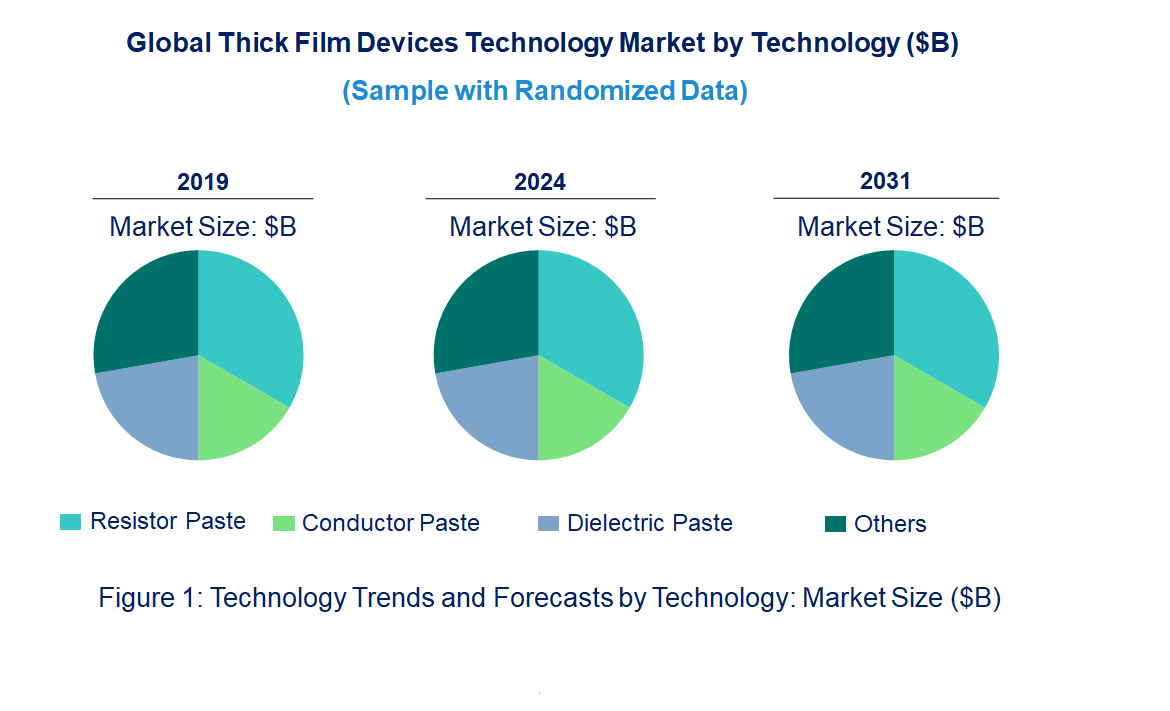
![Thick Film Devices Market Trend and Forecast by End Use Industry [Value from 2019 to 2031]:](https://lucintel.com/images/Thick-Film-Devices-Technology-Market-Segment.png "Thick Film Devices Market Trend and Forecast by End Use Industry [Value from 2019 to 2031]:")
• Printed Electronics: Printed electronics are increasingly used in thick film devices, opening the way to making such components flexible, lightweight, and low-cost. This contributes to wearable technology, IoT devices, and other portable AI applications that require size reduction and high performance.
• Hybrid Systems: Hybrid systems that combine thick film technology with other advanced materials, such as flexible substrates and organic semiconductors, have improved the performance and flexibility of electronic devices. Such systems are being integrated into more advanced AI applications where flexibility and miniaturization are critical.
• Increased Durability and Reliability: New material science developments increase the durability and reliability of thick film devices, making them appropriate for use in harsh environments. This is important for AI-powered industrial and automotive systems that demand long-lasting, robust electronic solutions.
• Increased Integration and Miniaturization: The trend of miniaturized components has led to increased integration, allowing for more compact AI circuits. This trend supports high-density circuits used in modern electronic devices, such as smartphones and compact computing systems.
• Sustainability and Eco-Friendly Manufacturing: The trend of making production more environmentally friendly is driving the integration of eco-friendly thick film device designs. Such developments will be crucial for meeting environmental regulations and responding to the increasing pressure for green technology in AI and electronics. These emerging trends will transform the landscape of artificial intelligence thick film devices technology by enhancing performance, allowing for the miniaturization of devices, and promoting sustainability. The evolutionary flow of these technologies is not only shaping the future of many AI applications but also leading to more innovative, efficient electronic systems and greater environmental responsibility.
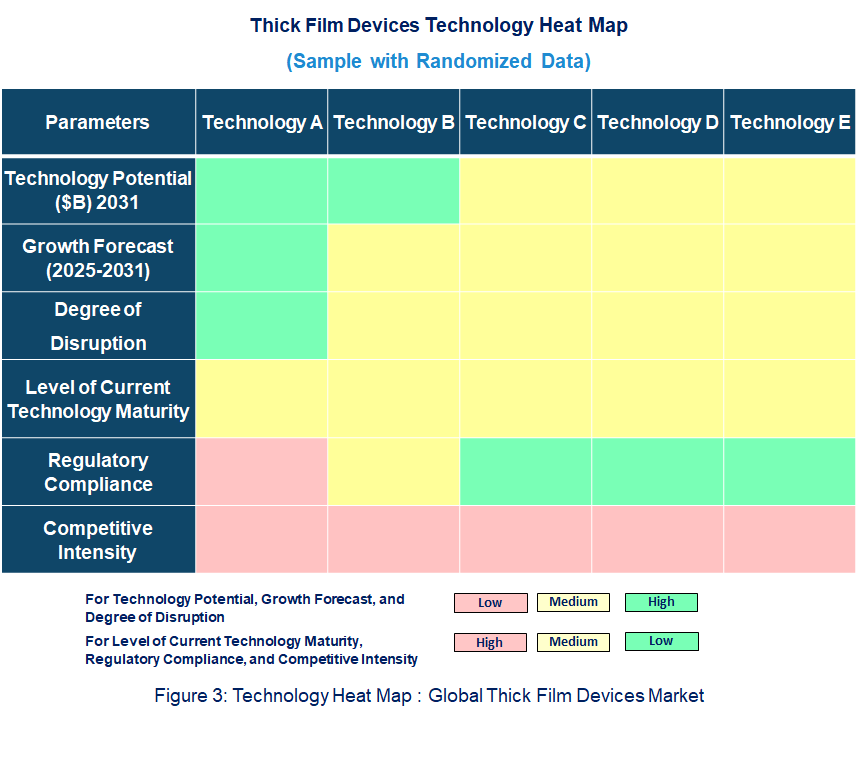
• Technology Potential: Thick Film Devices have great potential in the AI market due to cost-effectiveness, durability, and miniaturization capabilities.
• Degree of Disruption: Hybrid and printed electronic systems are set to disrupt conventional ceramic-based approaches because they provide more flexible, lightweight, and integrated solutions. This supports innovation in AI applications that require compact, robust circuits.
• Current Technology Maturity Level: The current technology maturity level for thick film devices is intermediate. Traditional ceramic-based methods are well-established and widely used. New hybrid and printed systems are in the process of being developed and are gradually finding their place in the market. Improved materials and production processes have increased the reliability and integration capabilities of these newer technologies.
• Regulatory Compliance: Regulatory Compliance: In the area of thick film devices, regulatory compliance mainly relates to standard electronic and environmental requirements. Material safety, energy efficiency, and environmental sustainability regulations are becoming increasingly important with the development of eco-friendly production techniques by manufacturers. These rules are vital for meeting industry expectations and maintaining market competitiveness.
• Advanced Semiconductor Engineering (ASE): ASE has focused on enhancing its thick film device technologies through advanced packaging solutions for better heat management, improved power efficiency, and miniaturization. This has been the route to deploying highly sophisticated AI applications in more compact devices.
• Panasonic Corporation: Panasonic has made considerable investments in the development of rugged, high-quality thick film devices based on improved material science and production processes. Such development leads to devices supporting high integration and reliability necessary aspect for next-generation AI and IoT applications.
• Samsung Electronics: They have been researching the means of perfecting their thick-film production process while focusing much on flexible and hybrid systems that offer compact solutions in advanced electronic devices. A focus on flexibility has exposed new applications to wearable technologies and AI-driven consumer electronics.
• Vishay Intertechnology: Vishay has leveraged its expertise to advance thick film technology by integrating eco-friendly materials that align with sustainability goals. This approach not only meets regulatory demands but also appeals to consumers looking for environmentally responsible electronics.
• ROHM Semiconductor: Rohm has developed next-generation thick film components with higher reliability and miniaturized structures to be used in the complexities and high-speed electronic systems and AI applications requiring reliable and compact solutions.
• TE Connectivity: TE Connectivity has been driving the improvement of thick film device integration to enhance the performance of electronics in hostile environments. Strong packaging for high-performance supports automotive and industrial AI applications with a requirement for durability.
• KOA Speer Electronics: KOA Speer’s innovations have added to the market by optimizing thick film resistor technology, leading to devices that provide precise and reliable performance. This technological advancement supports high-accuracy, high-performance AI applications in the development of novel electronic systems.
• AVX Corporation: AVX has been advancing the technology of hybrid thick film solutions, increasing the ability to develop high-density, efficient electronic circuits, which has increased the scope for thick film technology in all applications that require high-performance and compact design, among them AI-driven devices.
• Aragonesa De Componentes Pasivos: Aragonesa De Componentes Pasivos has targeted the development of cost-effective, high-quality thick film passive components that align with demand for compact, efficient electronic systems. The company’s efforts are supporting the quest for affordability of advanced AI and electronic products.
• Wurth Electronics: Wurth Electronics made high-performance thick film components that integrate well with flexible electronics. Their innovations opened up further applications in wearables and IoT devices, where space and performance requirements are key.
• Material Science Advances: The development of new materials for thick film devices, including stronger and more flexible substrates, allows for better integration and performance. This results in increased device efficiency and reliability in AI applications and supports the need for compact, high-performance electronic systems.
• Hybrid and Printed Electronics: The move toward hybrid and printed electronics has led to a range of flexibility and scalability for the solution. It has brought applications that can be integrated into wearables, IoT devices, and other AI-driven technologies, where the product must be strong and miniaturized.
• Sustainability and Eco-Friendly Production: Growing pressure for eco-friendly manufacturing processes stimulates innovation in thick film device technology. Sustainability is a competitive edge that companies can use in the AI market to comply with regulatory requirements and consumer demand. Challenges
• High Integration and Miniaturization: Technological progress has been spurred by the push for higher integration and smaller device sizes. Thick film devices can thus be used to support compact, multi-functional circuits that are necessary for advanced AI applications such as edge computing and high-speed processing.
• Regulatory and Safety Standards: Compliance with environmental and safety regulations across the globe has been a driving force for advancements in production techniques. Companies that meet these standards are better positioned to capture available market share and appeal to consumers looking for safe, reliable electronic products. The opportunities presented transform the Thick Film Devices Technology market in terms of more advanced, reliable, and environmentally friendly solutions. These advancements help achieve better integration into AI systems and improve performance and adaptability in numerous electronic applications. They promote innovation, industry competitiveness, and the accelerated growth of AI technologies.
• Panasonic Corporation
• Samsung Electronics
• Vishay Intertechnology
• ROHM Semiconductor
• TE Connectivity
• KOA Speer Electronics
• Technology Readiness: Resistor paste technology is mature and widely used in traditional electronic circuit boards for power management and signal processing applications. Conductor paste is an established technology, with key applications in high-frequency circuits, printed circuit boards, and flexible electronic devices that require high conductivity. Dielectric paste technology is in a growth phase; it represents an essential technology for advanced, high-speed circuits, capacitors, and insulating layers in compact electronics. Other paste technologies—hybrid electronics-specific pastes, to name one—are developing and now essential for use in wearable tech, flexible displays, and other IoT devices. Resistor pastes are crucial in any package or technology of power control, while conductor pastes will be further relevant in high-performance communication devices. Dielectric pastes are used in RF and microwave applications for unobstructed signal clarity and greater energy efficiency. Other advanced pastes are enabling innovation in sustainable and compact electronic manufacturing. This diverse readiness highlights their roles in both traditional and emerging applications, underscoring their importance in shaping future electronics
• Competitive Intensity and Regulatory Compliance: The competitive intensity of resistor paste, conductor paste, dielectric paste, and other technologies is high because of the critical roles they play in electronic systems. Companies seek to differentiate themselves through innovation, cost-effectiveness, and performance. The types vary in terms of regulatory compliance; for instance, conductor and resistor pastes have high environmental and safety standards because they are used in high-performance applications. Dielectric pastes are required to meet electrical safety and material sustainability regulations. Compliance with these standards will be necessary to maintain market share and fulfill consumer expectations for environmentally safe and secure products. Companies have to adapt to changing regulations to stay competitive in an increasingly environmentally and safety-conscious marketplace. The pressure to meet these regulations also drives investment in research and development for better compliant formulations. .
• Disruption potential: Resistor paste, conductor paste, dielectric paste, and other related materials have the potential to cause significant disruption in the electronics industry. Resistor paste has improved integration capabilities, enabling more compact electronic devices and contributing to advanced circuit designs. Conductor paste is increasingly essential for developing high-performance and flexible electronic systems, supporting the demand for miniaturized and efficient components. The advent of dielectric paste innovation creates better insulation and better signal integrity for high-speed and high-frequency applications. Other specialized pastes are pushing boundaries in flexible and printed electronics, supporting new product categories like wearables and IoT. These materials together allow for more efficient and reliable, smaller electronic devices, enhancing applications using AI and high-tech. Potential discontinuity is influenced by advancements in material science and manufacturing processes, which introduce more environmentally friendly and flexible alternatives. Advances in these technologies are expected to change traditional circuit manufacturing and create opportunities for smart electronics and AI-driven devices.
• Resistor Paste
• Conductor Paste
• Dielectric Paste
• Others
• Automotive
• Industrial
• Military Applications
• Consumer Electronics
• North America
• Europe
• Asia Pacific
• The Rest of the World
• Latest Developments and Innovations in the Thick Film Devices Technologies
• Companies / Ecosystems
• Strategic Opportunities by Technology Type


Choose a license that fits your team. Instant PDF delivery.
Prices exclude taxes. Instant delivery. Custom licensing available on request.
Market Report · May 18, 2026
Market Report · May 18, 2026
Market Report · May 18, 2026
Trusted partner for strategic intelligence and business growth


Receive a complimentary market analysis tailored to your industry. Our analysts will identify key growth opportunities and competitive dynamics specific to your business.

Market size, growth rate, and key trend analysis for your specific sector.

Top competitor positioning and market share analysis.

Strategic recommendations backed by data-driven insights.
Get curated market intelligence and competitive moves straight to your inbox.
By subscribing, you agree to receive our monthly insights. Unsubscribe anytime.
Receive a complimentary market analysis tailored to your industry. Our analysts will identify key growth opportunities and competitive dynamics specific to your business.
Market size, growth rate, and key trend analysis for your specific sector.
Top competitor positioning and market share analysis.
Strategic recommendations backed by data-driven insights.
Get curated market intelligence, emerging trends, and competitive moves straight to your inbox each month.
By subscribing, you agree to receive our monthly insights. Unsubscribe anytime.
We'll send your sample report shortly.