
Market Report · July 22, 2026

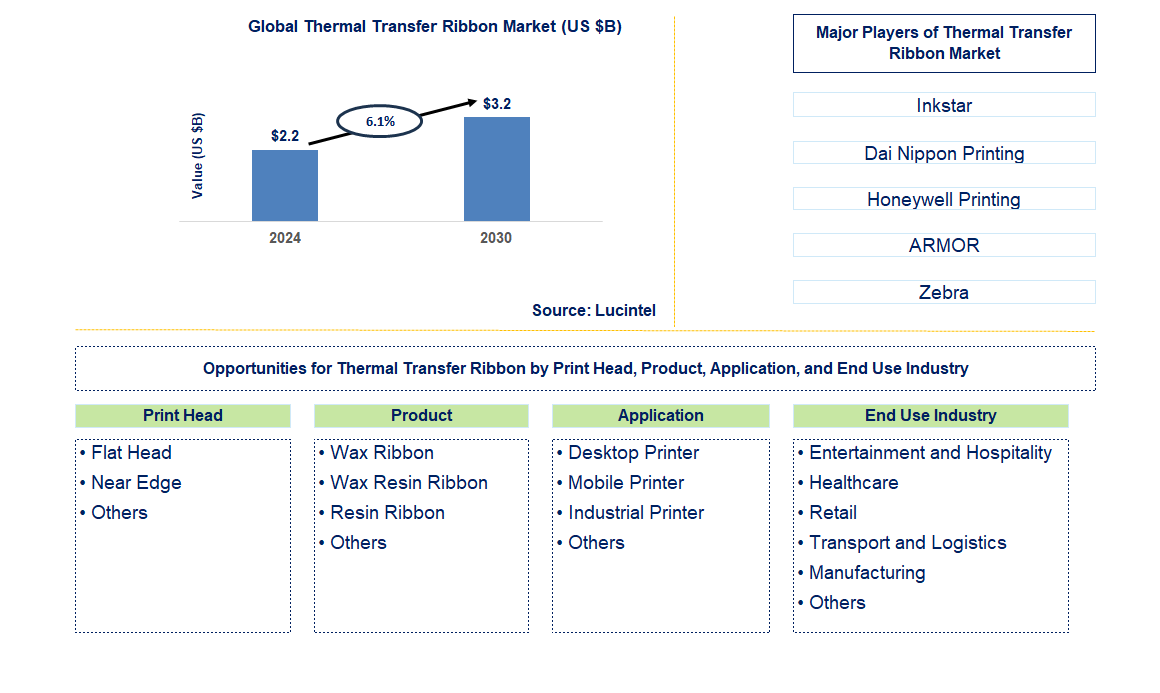
Key data points: The market size in 2030 = $3.2 billion, growth forecast = 6.1% annually next 6 years. Scroll below to get more insights. This market report covers trends, opportunities, and forecast in the global thermal transfer ribbon market to 2030 by print head (flat head, near edge, and others), product (wax ribbon, wax resin ribbon, resin ribbon, and others), application (desktop printer, mobile printer, industrial printer, and others), end use industry (entertainment and hospitality, healthcare, retail, transport and logistics, manufacturing, and others), and region (North America, Europe, Asia Pacific, and the Rest of the World)
We'll send your sample report shortly.
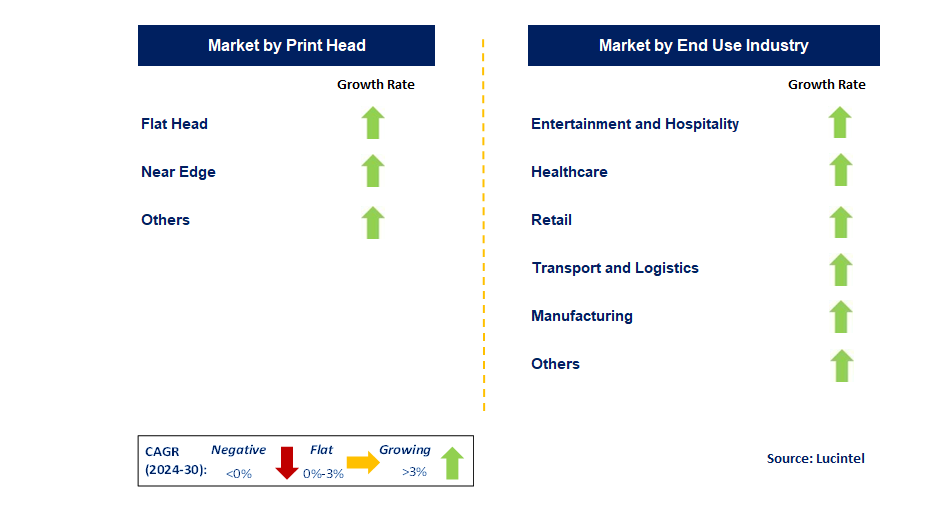
• Lucintel forecasts that flat head is expected to witness higher growth over the forecast period because the print head rests flat on the media and ribbon and it allows for speedier, higher-quality printing at lower font sizes.
• APAC is expected to witness the highest growth over the forecast period due to growing FDI in a wide range of industries across the region. A more than 150-page report is developed to help in your business decisions.
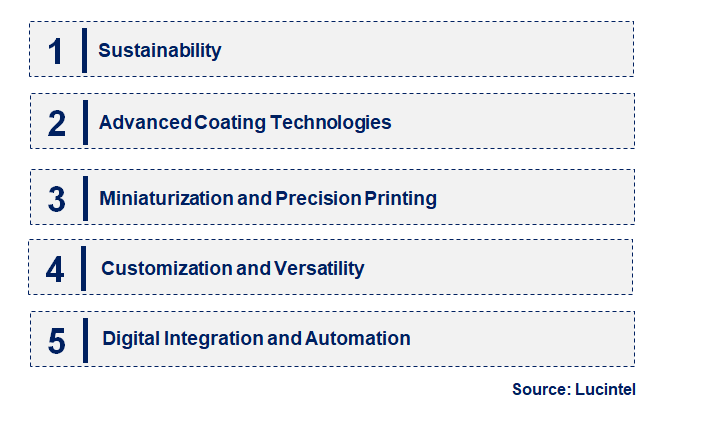
• Sustainability: A growing trend in the TTR market is the focus on sustainability. Manufacturers are developing eco-friendly ribbons made from biodegradable materials and reducing the environmental impact of production processes. This trend is driven by increasing environmental regulations and consumer demand for sustainable products, reshaping the industry towards greener practices.
• Advanced Coating Technologies: The adoption of advanced coating technologies is enhancing the performance of TTR products. These technologies improve the durability and print quality of ribbons, making them suitable for more demanding applications, such as high-temperature environments and long-term labeling. This trend is expanding the range of industries that can effectively use TTR.
• Miniaturization and Precision Printing: As industries like electronics and healthcare require smaller, more precise labels, the trend towards miniaturization and precision printing is gaining momentum. TTR manufacturers are developing ultra-thin ribbons that allow for finer detail in printing without sacrificing durability or readability, meeting the needs of these specialized sectors.
• Customization and Versatility: Customization is becoming a key trend in the TTR market, with manufacturers offering a wide range of ribbon options tailored to specific industry needs. This includes ribbons with varying levels of durability, heat resistance, and compatibility with different substrates, allowing for more versatile and application-specific solutions.
• Digital Integration and Automation: The integration of digital technology and automation in TTR manufacturing and printing processes is enhancing efficiency and reducing costs. Automated systems for ribbon production and thermal transfer printing are improving accuracy, reducing waste, and enabling real-time monitoring, which is crucial for high-volume and high-precision industries. These emerging trends are driving innovation and expanding the applications of Thermal Transfer Ribbons. As sustainability, precision, customization, and digital integration become more prominent, the TTR market is poised for significant growth, with a focus on meeting the evolving needs of various industries.
• Eco-Friendly Materials: One of the key developments in the TTR market is the introduction of eco-friendly materials. Manufacturers are now producing ribbons made from biodegradable and recyclable materials, reducing the environmental impact of printing processes. This development is aligned with global sustainability goals and is increasingly demanded by environmentally conscious consumers.
• High-Temperature Resistant Ribbons: The development of high-temperature resistant ribbons is another significant advancement. These ribbons are designed to withstand extreme heat without compromising print quality, making them ideal for use in industries like automotive, aerospace, and electronics, where labels are exposed to high temperatures during production or operation.
• Improved Durability and Longevity: Advancements in ribbon durability are enhancing the longevity of printed materials. New coating technologies are being applied to ribbons, making them more resistant to abrasion, chemicals, and environmental factors. This development is particularly important for sectors like logistics and healthcare, where label integrity is critical over time.
• Enhanced Print Quality: The TTR market has seen significant improvements in print quality, with the development of ribbons that offer sharper, more precise printing. This is achieved through advancements in ink formulation and ribbon design, enabling high-resolution printing that meets the needs of industries requiring detailed and accurate labeling, such as electronics and pharmaceuticals.
• Integration with Digital Systems: The integration of TTR with digital systems is revolutionizing the way labels are printed and managed. This development includes the use of digital interfaces and software that enhance the efficiency of the printing process, enabling real-time adjustments, monitoring, and automation, which are crucial for high-volume production environments. These key developments are transforming the thermal transfer ribbon market, making products more sustainable, durable, and efficient. As these advancements continue to unfold, they are expected to expand the applications of TTR and drive growth in various industries.
• Logistics and Supply Chain: The logistics and supply chain sector offers significant growth opportunities for TTR, driven by the need for durable and accurate labeling. As global trade expands, the demand for high-quality labels that can withstand the rigors of transportation is increasing, making TTR an essential component in the logistics industry.
• Healthcare and Pharmaceuticals: In healthcare and pharmaceuticals, the demand for precise and durable labeling is driving growth in the TTR market. Ribbons that offer high-resolution printing and are resistant to chemicals and environmental factors are crucial for labeling medical devices, pharmaceuticals, and laboratory samples, presenting a key growth opportunity.
• Retail and E-commerce: The retail and e-commerce sectors are expanding rapidly, creating a demand for efficient labeling solutions that can handle high volumes. TTR offers a reliable and cost-effective solution for barcode and product labeling, with customization options that cater to different product types and packaging, driving growth in this sector.
• Automotive and Electronics: The automotive and electronics industries require labels that can withstand harsh environments and provide long-lasting durability. TTR is increasingly being used for labeling components in these sectors, where high-temperature resistance and abrasion resistance are critical, offering a significant growth opportunity.
• Food and Beverage: In the food and beverage industry, the need for compliant and durable labeling is driving the adoption of TTR. Ribbons that provide high-quality printing on various packaging materials, including plastics and metals, and that can withstand temperature fluctuations during storage and transportation are in demand, presenting a growth opportunity. These strategic growth opportunities are expanding the applications of thermal transfer ribbon across various industries. As demand for durable, high-quality labeling solutions continues to rise, the TTR market is expected to see significant growth, driven by these key application areas.
• Inkstar
• Dai Nippon Printing
• Honeywell Printing
• ARMOR
• Zebra
• ITW Thermal Films
• Hangzhou Todaytec Digital
• The Ricoh Company
• IIMAK
• TSC Auto ID Technology
• Flat Head
• Near Edge
• Others
• Wax Ribbon
• Wax Resin Ribbon
• Resin Ribbon
• Others
• Desktop Printer
• Mobile Printer
• Industrial Printer
• Others
• Entertainment and Hospitality
• Healthcare
• Retail
• Transport and Logistics
• Manufacturing
• Others
• North America
• Europe
• Asia Pacific
• The Rest of the World
• United States: In the U.S., recent developments in TTR focus on sustainability, with companies investing in eco-friendly ribbons made from biodegradable materials. Additionally, advancements in thermal transfer technology are improving the durability and quality of printed materials, catering to industries like logistics and retail that require long-lasting labeling solutions.
• China: China is experiencing rapid growth in TTR production, driven by the demand for cost-effective solutions in manufacturing and retail. Recent developments include the adoption of advanced coating technologies that enhance the durability and efficiency of ribbons, making them more suitable for high-volume printing in industrial applications.
• Germany: Germany is at the forefront of innovation in TTR, with a focus on developing high-performance ribbons for specialized applications. Recent advancements include the introduction of heat-resistant ribbons that can withstand extreme temperatures, making them ideal for automotive and electronics labeling, where durability is crucial.
• India: In India, the TTR market is expanding, particularly in the logistics and retail sectors. Recent developments include the localization of manufacturing processes, reducing costs and improving supply chain efficiency. Indian companies are also exploring recyclable and reusable ribbon options to address environmental concerns and meet sustainability goals.
• Japan: Japan's TTR market is characterized by technological innovation, with companies focusing on enhancing the precision and speed of thermal transfer printing. Recent developments include the creation of ultra-thin ribbons that reduce material waste while maintaining high print quality, catering to the needs of the electronics and healthcare industries.


• Inkstar
• Dai Nippon Printing
• Honeywell Printing
• ARMOR
• Zebra
• ITW Thermal Films
• Hangzhou Todaytec Digital
• The Ricoh Company
• IIMAK
• TSC Auto ID Technology Q6. Which thermal transfer ribbon market segment will be the largest in future? Answer: Lucintel forecasts that flat head is expected to witness the higher growth over the forecast period because the print head rests flat on the media and ribbon and it allows for speedier, higher-quality printing at lower font sizes Q7. In thermal transfer ribbon market, which region is expected to be the largest in next 5 years? Answer: APAC is expected to witness highest growth over the forecast period due to growing FDI in a wide range of industries across the region. Q.8 Do we receive customization in this report? Answer: Yes, Lucintel provides 10% customization without any additional cost.


Choose a license that fits your team. Instant PDF delivery.
Prices exclude taxes. Instant delivery. Custom licensing available on request.
Market Report · July 22, 2026
Market Report · July 22, 2026
Market Report · July 22, 2026
Trusted partner for strategic intelligence and business growth


Receive a complimentary market analysis tailored to your industry. Our analysts will identify key growth opportunities and competitive dynamics specific to your business.

Market size, growth rate, and key trend analysis for your specific sector.

Top competitor positioning and market share analysis.

Strategic recommendations backed by data-driven insights.
Get curated market intelligence and competitive moves straight to your inbox.
By subscribing, you agree to receive our monthly insights. Unsubscribe anytime.
Receive a complimentary market analysis tailored to your industry. Our analysts will identify key growth opportunities and competitive dynamics specific to your business.
Market size, growth rate, and key trend analysis for your specific sector.
Top competitor positioning and market share analysis.
Strategic recommendations backed by data-driven insights.
Get curated market intelligence, emerging trends, and competitive moves straight to your inbox each month.
By subscribing, you agree to receive our monthly insights. Unsubscribe anytime.
We'll send your sample report shortly.