
Market Report · May 18, 2026

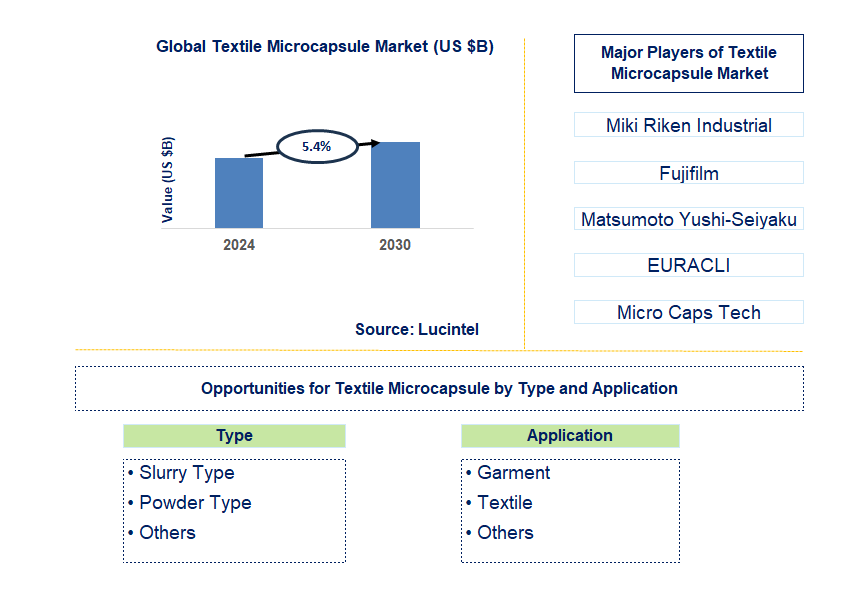
Key data points: The growth forecast = 5.4% annually next for the 6 years. Scroll below to get more insights. This market report covers trends, opportunities, and forecasts in the global textile microcapsule market to 2030 by type (slurry type, powder type, and others), application (garment, textile, and others), and region (North America, Europe, Asia Pacific, and the Rest of the World)
We'll send your sample report shortly.
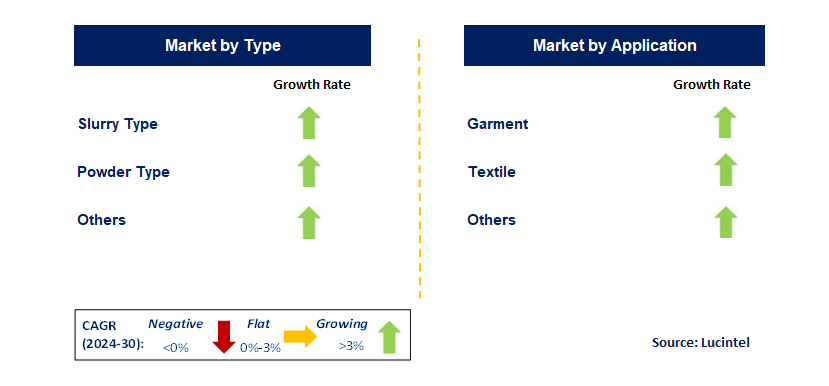
• Lucintel forecasts that, within the type category, slurry type is expected to witness the higher growth over the forecast period.
• Within this application category, garment is expected to witness the higher growth.
• In terms of regions, APAC is expected to witness the highest growth over the forecast period due to growing pharmaceutical and food processing sectors in the region. Gain valuable insight for your business decisions with our comprehensive 150+ page report.
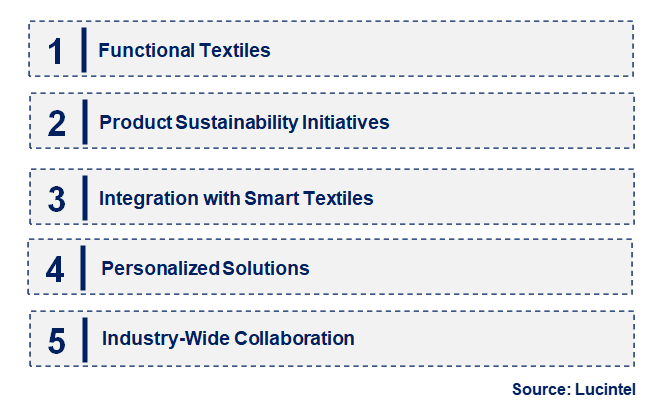
• Functional Textiles: There is a growing demand for functional textiles that provide features such as moisture control, odor elimination, and thermal regulation. This highlights the emerging need from consumers for multipurpose, performance-oriented fabrics.
• Product Sustainability Initiatives: The majority of pressures that have recently driven manufacturers to make decisions about microcapsules and production are based on environmentally friendly product requirements. This trend aligns with the broader consumer and regulatory expectations for sustainable textiles.
• Integration with Smart Textiles: Microcapsules are increasingly being integrated with smart textiles. Products that monitor health or environmental conditions through embedded microcapsules are gaining popularity in both fashion and technical applications.
• Personalized Solutions: Customized microcapsule solutions that offer specific fragrances or skin benefits provide higher value to consumers and enhance the overall user experience.
• Industry-Wide Collaboration: Collaboration among textile manufacturers, technology firms, and research institutes enhances innovation. Inter-institutional collaboration is essential for improving and diversifying microencapsulation technology. These developments are transforming the microcapsule market for textiles by enhancing functionality, sustainability, and user experience. The industry is poised for significant growth as it responds to innovations aimed at fulfilling consumer needs, contributing to the overall shift towards technologically oriented and eco-friendly solutions in textiles.
• Microcapsules Sensitivity to Temperature: Manufacturers are creating microcapsules that include phase change materials for use in clothing, allowing textiles to adapt to fluctuations in temperature. This will enable comfort in performance and outdoor clothing.
• Antimicrobial Microencapsulation: New microencapsulated antimicrobials are imparting textiles with long-term antibacterial and odor protection. This is an evolution in innovation for activewear and healthcare textiles.
• Fragrance Release Technologies: Microencapsulated fragrances in textile applications permit controlled and sustained fragrance emission. This attribute has endeared consumers to fresh and fragrant fabrics.
• Eco-Friendly Microcapsules: The world is increasingly interested in using eco-friendly and biodegradable microcapsules. This aligns with global sustainability targets and addresses consumer concerns about textile waste.
• Smart Textiles Embedded with Sensors: Microencapsulated sensors in textiles allow for real-time tracking of health indicators or environmental requirements. This innovation opens up new possibilities for wearable devices and functional textiles. These significant developments are profoundly impacting the textile microcapsule market through functional product development and a move toward sustainability alongside performance. The market is on the cusp of another change.
• Activewear and Sports Textiles: The demand for functional activewear drives growth for microencapsulated textiles, especially those delivering moisture management, odor control, and temperature regulation, which are appealing to health-conscious consumers.
• Home Textiles Market: Microcapsules find increasing applications in home textiles, including curtains and upholstery, with added functions such as stain resistance and fragrance release.
• Healthcare Textiles: Microencapsulated textiles that are antimicrobial and antibacterial have significant growth potential in healthcare applications, especially in hospitals where hygiene is crucial for items like gowns and linens.
• Automotive Textiles: Microencapsulated fabrics can enhance comfort and durability while improving the passenger experience in modern, high-tech vehicles, designed to meet greater passenger requirements.
• Luxury Fashion Market: The infusion of microencapsulated attributes into luxury textiles allows brands to differentiate themselves by offering unique functionalities appealing to exclusive, high-end consumers. These strategic growth opportunities illustrate the broad scope of the microcapsule market in textiles for various applications. Companies can enhance their position for long-term growth and innovation in the textile domain by aligning product offerings with consumer preferences and market trends.
• Technological Advancements: Continuous innovations in microencapsulation technology spur the production of better-performing textiles with enhanced functionalities, making it easier for manufacturers to cater to the needs of diverse consumers.
• Increased Consumer Awareness: Growing consumer awareness about textile performance and sustainability has prompted manufacturers to innovate and introduce functional, eco-friendly products, thus opening up significant market opportunities.
• Growing Regulatory Pressures for Sustainability: Increasing pressure from environmental regulations is compelling producers to adopt eco-friendly practices and become manufacturers of biodegradable microcapsule materials.
• Market Competition: The market is becoming more competitive, driving companies to differentiate their products through unique features and functionalities. Therefore, innovation becomes essential.
• Globalization of Supply Chains: Increasing interpenetration among markets provides manufacturers with a variety of materials and technologies, making it easier to innovate in microencapsulation. Challenges in the textile microcapsule market include:
• Cost of Innovation: Advanced microencapsulation technologies are costly, making it difficult for producers, especially small and medium-sized enterprises, to remain competitive in terms of pricing.
• Consumer Education: Educating consumers about the benefits of microencapsulated textiles is necessary. Skepticism about the performance of these textiles is prevalent and may hinder market growth.
• Regulatory Compliance: The changing regulations regarding textile safety and environmental impact create a complex landscape that requires constant adaptation and investment from manufacturers. The drivers and challenges of the textile microcapsule market reflect the ever-changing nature of this industry. Significant opportunities exist with technological developments and rising consumer demand; however, increasing costs, the need for consumer education, and compliance with regulatory standards must be addressed for sustained growth and innovation.
• Miki Riken Industrial
• Fujifilm
• Matsumoto Yushi-Seiyaku
• EURACLI
• Micro Caps Tech
• Tanatex Chemicals
• Reed Pacific
• Koehler Paper
• Insilico
• Givaudan
• Slurry Type
• Powder Type
• Others
• Garment
• Textile
• Others
• North America
• Europe
• Asia Pacific
• The Rest of the World
• United States: Technological advances in microcapsules in the United States are, in many respects, related to functional and smart textiles. Companies are researching the design of microcapsules for fragrance release, moisture-wicking agents, and antimicrobial properties. Innovations include encapsulated essential oils for activewear, providing long-lasting freshness and comfort.
• China: The Chinese textile microcapsule market is rapidly growing, mainly due to advanced manufacturing techniques and increased demand for various innovations in textiles. Recent breakthroughs involve applying microencapsulation to add functionality to conventionally used fabrics, focusing on moisture management and odor control.
• Germany: Germany is currently setting trends in textile microcapsule innovation, emphasizing quality engineering and sustainability. Applications of newly developed microencapsulated phase change materials in textiles include temperature regulation and improved comfort. German companies are investing considerable R&D in biodegradable and sustainably manufactured microcapsules for performance textiles, especially in the outdoor and sportswear markets for their durability and functionality.
• India: The Indian textile microcapsule sector is on an upward trend, particularly in functional apparel and home textiles. Recent developments include the latest technology of microencapsulated dyes and finishes for enhancing the aesthetic appeal and performance of fabrics. Indian manufacturers are widely adopting technology to enhance product offerings for both the Indian and export markets.
• Japan: Precision and innovation characterize the textile microcapsule market in Japan, where recent developments have focused on integrating technology into traditional fabrics. Japanese manufacturers are developing microcapsules to enhance fabric functionality, such as UV protection and self-cleaning properties. The "high-performance textile for sports and outdoor" category will target high-end consumers.


• Miki Riken Industrial
• Fujifilm
• Matsumoto Yushi-Seiyaku
• EURACLI
• Micro Caps Tech
• Tanatex Chemicals
• Reed Pacific
• Koehler Paper
• Insilico
• Givaudan Q5. Which textile microcapsule market segment will be the largest in future? Answer: Lucintel forecasts that slurry type is expected to witness the higher growth over the forecast period. Q6. In textile microcapsule market, which region is expected to be the largest in next 5 years? Answer: APAC is expected to witness highest growth over the forecast period due to growing pharmaceutical and food processing sectors in the region. Q.7 Do we receive customization in this report? Answer: Yes, Lucintel provides 10% customization without any additional cost.


Choose a license that fits your team. Instant PDF delivery.
Prices exclude taxes. Instant delivery. Custom licensing available on request.
Market Report · May 18, 2026
Market Report · May 18, 2026
Market Report · May 18, 2026
Trusted partner for strategic intelligence and business growth


Receive a complimentary market analysis tailored to your industry. Our analysts will identify key growth opportunities and competitive dynamics specific to your business.

Market size, growth rate, and key trend analysis for your specific sector.

Top competitor positioning and market share analysis.

Strategic recommendations backed by data-driven insights.
Get curated market intelligence and competitive moves straight to your inbox.
By subscribing, you agree to receive our monthly insights. Unsubscribe anytime.
Receive a complimentary market analysis tailored to your industry. Our analysts will identify key growth opportunities and competitive dynamics specific to your business.
Market size, growth rate, and key trend analysis for your specific sector.
Top competitor positioning and market share analysis.
Strategic recommendations backed by data-driven insights.
Get curated market intelligence, emerging trends, and competitive moves straight to your inbox each month.
By subscribing, you agree to receive our monthly insights. Unsubscribe anytime.
We'll send your sample report shortly.