
Market Report · July 29, 2026

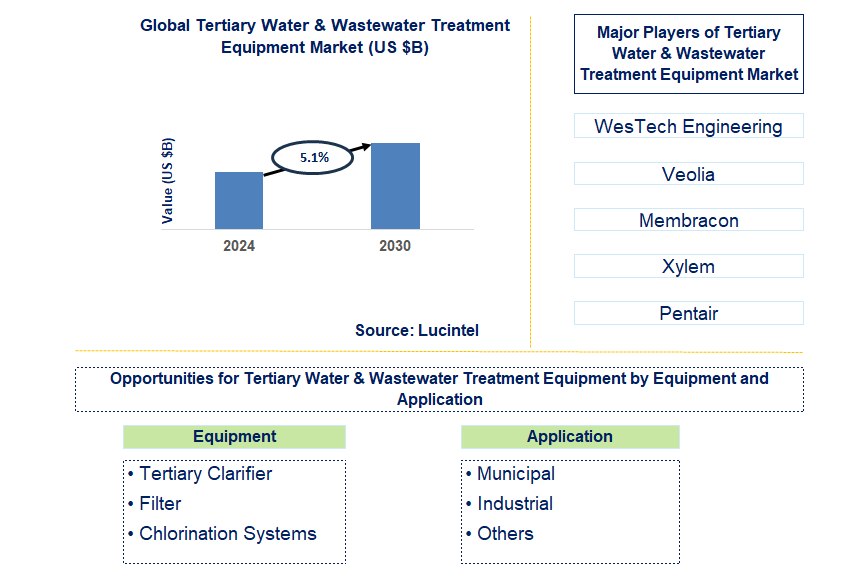
Key data points: The growth forecast = 5.1% annually for the next 6 years. Scroll below to get more insights. This market report covers trends, opportunities, and forecasts in the global tertiary water & wastewater treatment equipment market to 2030 by equipment (tertiary clarifier, filter, and chlorination systems), application (municipal, industrial, and others), and region (North America, Europe, Asia Pacific, and the Rest of the World)
We'll send your sample report shortly.
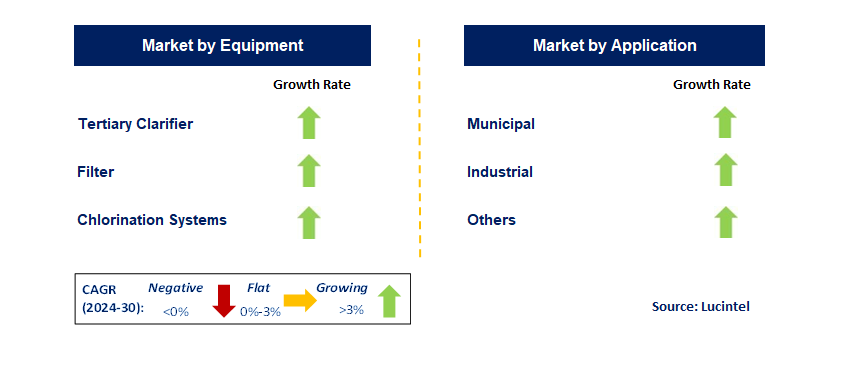
• Lucintel forecasts that, within the equipment category, filter segment is expected to witness the highest growth over the forecast period due to its quality of eliminating any remaining suspended contaminants from the wastewater.
• In terms of regions, APAC is expected to witness the highest growth over the forecast period due to rising rates of economic growth in emerging nations and a high concentration of factories producing nitrogenous fertilizers. A more than 150-page report is developed to help in your business decisions.
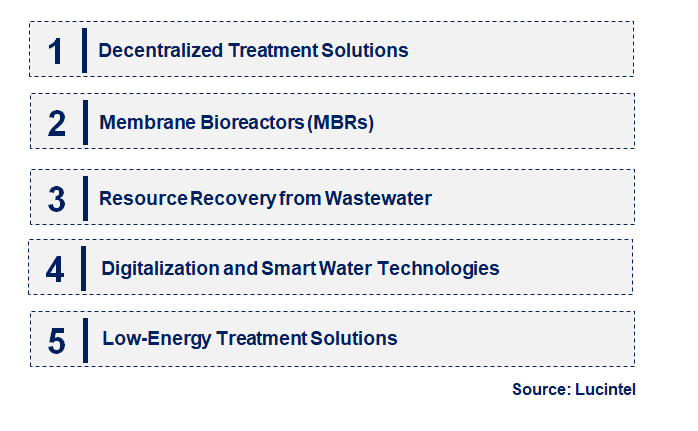
• Decentralized Treatment Solutions: Decentralized systems are gaining popularity, especially in rural and remote areas. These systems offer efficient wastewater management without the need for extensive infrastructure, enabling treatment close to the source and promoting local water reuse.
• Membrane Bioreactors (MBRs): MBRs are increasingly favored for their ability to deliver high-quality treated water. Combining biological treatment with membrane filtration, MBRs are ideal for industrial and municipal applications requiring high-efficiency wastewater treatment.
• Resource Recovery from Wastewater: The trend toward extracting valuable resources, such as nutrients and biogas, from wastewater is on the rise. Technologies focusing on energy recovery and nutrient extraction are helping treatment facilities lower costs and contribute to a circular economy.
• Digitalization and Smart Water Technologies: The integration of IoT, AI, and real-time monitoring systems is revolutionizing wastewater treatment. Digital technologies enable more efficient plant operations, predictive maintenance, and better water quality management, enhancing overall plant efficiency.
• Low-Energy Treatment Solutions: As sustainability becomes a priority, low-energy wastewater treatment solutions are being developed. These include advanced biological treatments and energy-efficient filtration systems that reduce the carbon footprint of wastewater treatment plants. These emerging trends are reshaping the tertiary water and wastewater treatment market by focusing on decentralized systems, advanced filtration, resource recovery, and digitalization. The emphasis on energy efficiency and sustainability is transforming the industry.
• Hybrid Treatment Technologies: Hybrid systems that combine biological treatments with filtration technologies are being developed to provide more effective wastewater treatment. These systems offer enhanced water quality at reduced operational costs, making them ideal for both industrial and municipal applications.
• Energy Recovery Systems: Technologies enabling energy recovery from wastewater, such as anaerobic digestion for biogas production, are gaining prominence. These systems help wastewater treatment plants reduce energy consumption by generating renewable energy.
• Advanced Membrane Filtration: Innovations in membrane filtration, particularly in ultrafiltration and nanofiltration, are improving the removal of micro-pollutants and pathogens. These technologies ensure high water purity and are increasingly adopted in municipal and industrial sectors.
• Nutrient Removal Technologies: Advances in nitrogen and phosphorus removal technologies are helping to prevent eutrophication in water bodies. These systems are being integrated into wastewater treatment plants to meet stricter environmental regulations.
• Real-Time Monitoring and Automation: The adoption of real-time monitoring systems and automation technologies is improving the operational efficiency of wastewater treatment plants. These technologies enable better control of treatment processes and reduce maintenance costs. These developments are driving improvements in the quality, efficiency, and sustainability of wastewater treatment systems, helping to address global water treatment challenges.
• Industrial Wastewater Treatment: The industrial sector offers significant growth potential for advanced treatment technologies. Industries such as chemicals, pharmaceuticals, and food processing are investing in advanced tertiary treatment systems to meet stricter effluent discharge regulations.
• Water Reuse and Recycling: With water scarcity becoming a critical global issue, the demand for water reuse systems is growing. Municipalities and industries are adopting advanced filtration and disinfection technologies to recycle treated wastewater for non-potable uses, such as irrigation and industrial processes.
• Desalination and Brackish Water Treatment: Desalination projects are expanding in regions facing severe water shortages. Tertiary treatment equipment, such as advanced filtration and reverse osmosis, is crucial for producing high-quality water from saline and brackish sources.
• Agricultural Water Reuse: Tertiary-treated wastewater is increasingly being used for agricultural irrigation, particularly in water-scarce regions. This application helps reduce pressure on freshwater resources and promotes sustainable farming practices.
• Decentralized Systems for Rural Areas: Decentralized treatment systems offer significant growth potential in rural areas and small communities. These systems provide efficient wastewater management without the need for extensive infrastructure, supporting local water reuse initiatives. Strategic growth opportunities in the tertiary water and wastewater treatment market lie in industrial wastewater treatment, water reuse projects, desalination, agricultural reuse, and decentralized systems. These applications are driving market expansion and innovation.
• Stricter Environmental Regulations: Increasingly stringent water quality and effluent discharge regulations are driving the demand for advanced treatment systems, especially in industrial and municipal sectors that must comply with environmental standards.
• Water Scarcity and Reuse Initiatives: Rising water scarcity is prompting governments and industries to adopt water reuse and recycling technologies. Tertiary treatment systems are essential in producing clean water from wastewater for non-potable uses.
• Technological Advancements: Innovations in membrane filtration, biological treatment, and real-time monitoring technologies are improving the efficiency of wastewater treatment systems, encouraging their adoption across industries.
• Public Health Concerns: Growing concerns over public health and the need to ensure pathogen-free water supplies are increasing the demand for advanced disinfection technologies, such as UV and ozone treatment.
• Sustainability Goals: Industries and municipalities are prioritizing sustainability by adopting low-energy treatment processes and resource recovery systems, fueling demand for energy-efficient and sustainable wastewater treatment technologies. Challenges in the tertiary water & wastewater treatment equipment market are:
• High Capital Costs: The installation and maintenance costs of advanced tertiary treatment systems can be prohibitively high, especially for small communities and industries. Financing these projects remains a significant challenge.
• Operational Complexity: Advanced treatment systems often require skilled operators and regular maintenance, which can be challenging for facilities with limited technical expertise or financial resources.
• Energy Consumption: Despite advances in energy-efficient systems, many wastewater treatment processes remain energy-intensive. Balancing the need for advanced treatment with energy consumption continues to be a significant challenge. While the tertiary water and wastewater treatment equipment market is driven by stricter regulations, technological advancements, and the need for water reuse, addressing challenges such as high costs, operational complexity, and energy consumption is essential for sustainable growth.
• WesTech Engineering
• Veolia
• Membracon
• Xylem
• Pentair
• Tertiary Clarifier
• Filter
• Chlorination Systems
• Municipal
• Industrial
• Others
• North America
• Europe
• Asia Pacific
• The Rest of the World
• United States: The U.S. is seeing growth in advanced membrane filtration and UV disinfection technologies, supported by increased federal funding through infrastructure bills. There is also a focus on upgrading aging wastewater treatment facilities to meet stricter discharge standards and promote water reuse projects.
• China: China is heavily investing in wastewater recycling technologies due to stricter environmental regulations and concerns over water scarcity. Technologies such as reverse osmosis and activated carbon filtration are being deployed to enhance industrial wastewater treatment and ensure sustainable water management.
• Germany: Germany is advancing in energy-efficient wastewater treatment technologies, particularly with membrane bioreactors (MBRs) and advanced biological treatments. These efforts align with the country's ambitious sustainability goals and climate policies.
• India: India is prioritizing decentralized wastewater treatment systems, driven by rapid urbanization and the need for clean water. Government initiatives like the Swachh Bharat Mission are accelerating the adoption of tertiary treatment solutions, focusing on recycling treated wastewater for agriculture and industrial use.
• Japan: Japan is innovating in nutrient removal and energy recovery systems for wastewater treatment. The country is developing hybrid treatment technologies that focus on resource recovery, including algae-based systems for nutrient extraction and energy-efficient filtration techniques.


• WesTech Engineering
• Veolia
• Membracon
• Xylem
• Pentair Q5. Which tertiary water & wastewater treatment equipment market segment will be the largest in future? Answer: Lucintel forecasts that filter segment is expected to witness the highest growth over the forecast period due to its quality of eliminating any remaining suspended contaminants from the wastewater. Q6. In tertiary water & wastewater treatment equipment market, which region is expected to be the largest in next 5 years? Answer: APAC is expected to witness the highest growth over the forecast period due to rising rates of economic growth in emerging nations and a high concentration of factories producing nitrogenous fertilizers. Q.7 Do we receive customization in this report? Answer: Yes, Lucintel provides 10% customization without any additional cost.


Choose a license that fits your team. Instant PDF delivery.
Prices exclude taxes. Instant delivery. Custom licensing available on request.
Market Report · July 29, 2026
Market Report · July 20, 2026
Market Report · July 20, 2026
Trusted partner for strategic intelligence and business growth


Receive a complimentary market analysis tailored to your industry. Our analysts will identify key growth opportunities and competitive dynamics specific to your business.

Market size, growth rate, and key trend analysis for your specific sector.

Top competitor positioning and market share analysis.

Strategic recommendations backed by data-driven insights.
Get curated market intelligence and competitive moves straight to your inbox.
By subscribing, you agree to receive our monthly insights. Unsubscribe anytime.
Receive a complimentary market analysis tailored to your industry. Our analysts will identify key growth opportunities and competitive dynamics specific to your business.
Market size, growth rate, and key trend analysis for your specific sector.
Top competitor positioning and market share analysis.
Strategic recommendations backed by data-driven insights.
Get curated market intelligence, emerging trends, and competitive moves straight to your inbox each month.
By subscribing, you agree to receive our monthly insights. Unsubscribe anytime.
We'll send your sample report shortly.