
Report Feature
Tertiary Butyl Alcohol Market Trends and Forecast
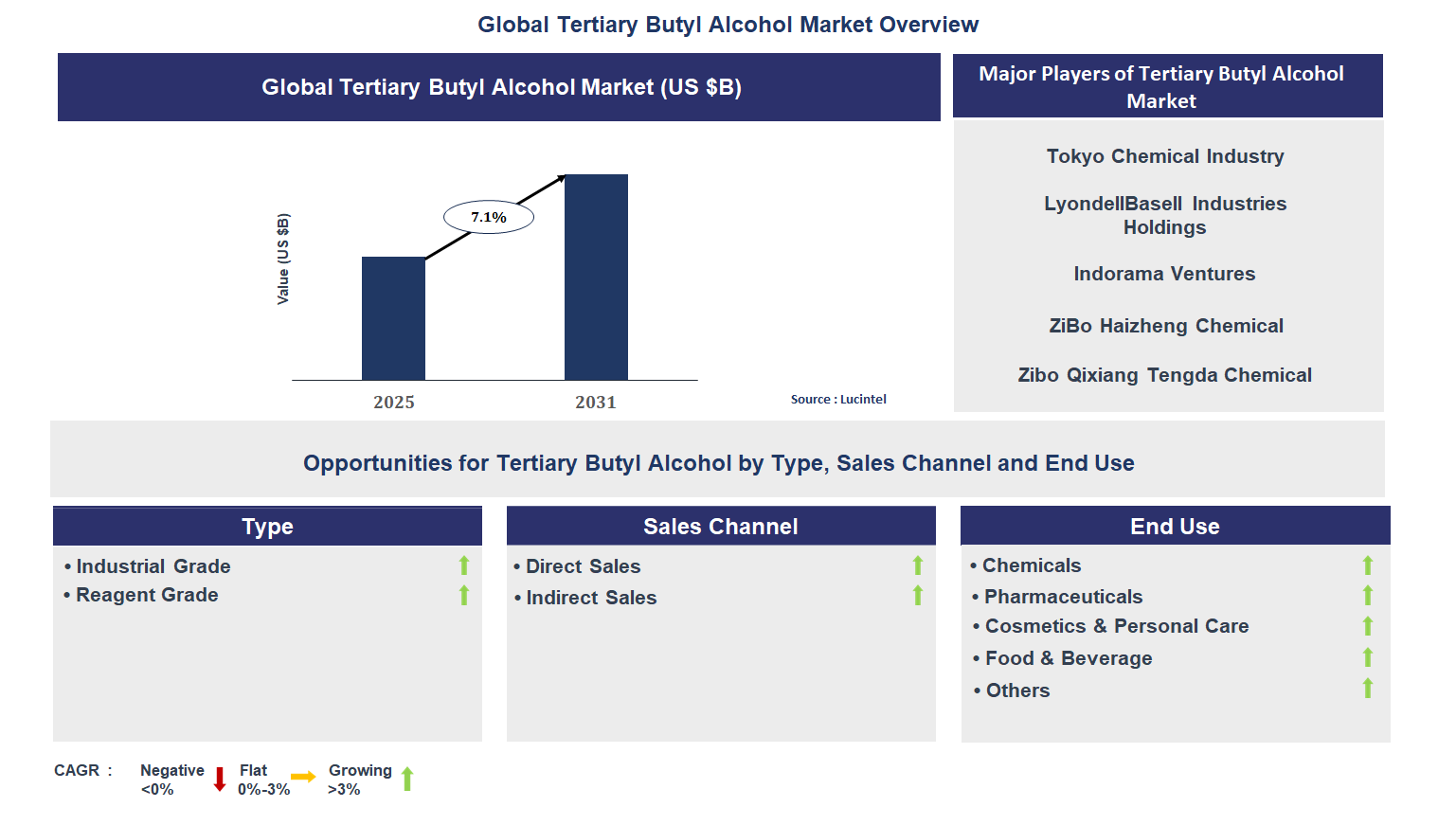
The future of the global tertiary butyl alcohol market looks promising with opportunities in the chemical, pharmaceutical, cosmetics & personal care, and food & beverage markets. The global tertiary butyl alcohol market is expected to grow with a CAGR of 7.1% from 2025 to 2031. The major drivers for this market are the increasing demand for industrial solvents, the rising adoption in chemical manufacturing processes, and the growing use in fuel additives & coatings.• Lucintel forecasts that, within the type category, industrial grade is expected to witness higher growth over the forecast period.
• Within the end use category, pharmaceutical is expected to witness the highest growth.
• In terms of region, APAC is expected to witness the highest growth over the forecast period. Gain valuable insights for your business decisions with our comprehensive 150+ page report. Sample figures with some insights are shown below.
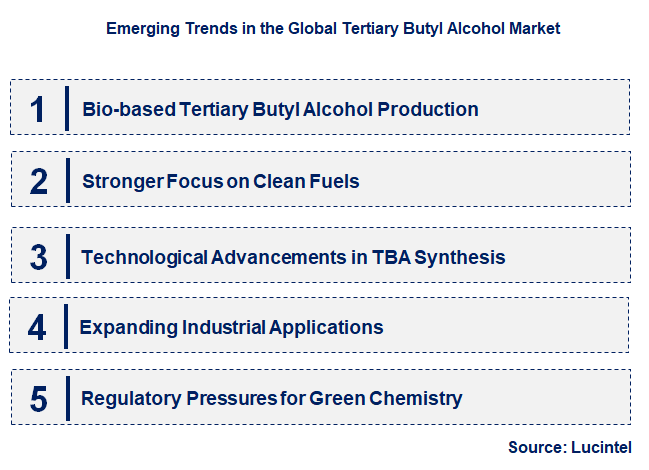
Emerging Trends in the Tertiary Butyl Alcohol Market
The tertiary butyl alcohol market is experiencing a transformation, driven by new technologies, regulatory changes, and shifts in consumer preferences. Emerging trends highlight sustainability, bio-based production, and industrial applications as key drivers of growth and innovation.• Bio-based Tertiary Butyl Alcohol Production: The shift towards renewable feedstocks and sustainable production methods is gaining momentum. Bio-based TBA, produced from renewable resources, reduces the environmental impact of traditional petrochemical production, aligning with global trends towards sustainability and green chemistry.
• Stronger Focus on Clean Fuels: TBAs role as an oxygenate in clean fuels continues to grow. In response to stricter emissions regulations, TBA is being used to enhance fuel quality, improving combustion efficiency and reducing harmful emissions. This trend is particularly evident in markets with stringent environmental standards.
• Technological Advancements in TBA Synthesis: Innovations in TBA synthesis methods, such as the use of novel catalysts, are improving production efficiency and reducing costs. These advancements also contribute to the greener production of TBA, further supporting the industrys push toward sustainability and resource efficiency.
• Expanding Industrial Applications: TBA’s use in various industries, such as coatings, adhesives, and pharmaceuticals, is expanding. As demand for specialty chemicals grows, TBA is increasingly incorporated into formulations that require its unique properties, such as solubility and high-performance characteristics.
• Regulatory Pressures for Green Chemistry: Stricter environmental regulations and growing consumer demand for eco-friendly products are pushing manufacturers to adopt more sustainable practices. This includes greener methods for TBA production, reducing waste, and improving energy efficiency, in response to global environmental and climate change goals. These emerging trends are reshaping the tertiary butyl alcohol market by driving innovation in bio-based production, cleaner fuel applications, and more sustainable industrial practices. As regulatory pressures increase, companies are investing in greener, more efficient production technologies, creating long-term growth opportunities while meeting the evolving demands of industries and consumers worldwide.
Recent Development in the Tertiary Butyl Alcohol Market
Recent developments in the tertiary butyl alcohol market reflect growing interest in sustainability, technological innovation, and the expansion of applications. The market is becoming increasingly diversified, with both traditional and new applications driving growth.• Development of Bio-based TBA: Bio-based TBA production is gaining traction, with several companies investing in renewable feedstocks. This development aligns with global sustainability goals, offering an eco-friendlier alternative to traditional petroleum-based TBA.
• Increased Demand for Clean Fuels: TBA’s role as a fuel additive in clean and high-octane fuels is expanding. This growth is driven by stringent emission regulations, as governments push for lower carbon footprints in the automotive industry, leading to higher demand for TBA in fuel formulations.
• Technological Innovations in Production: New advancements in production technologies, such as improved catalysts and more energy-efficient processes, are reducing costs and environmental impact. These innovations make TBA production more sustainable, enabling manufacturers to meet market demand while lowering their carbon footprint.
• Expansion of TBA Applications: As the global market for specialty chemicals expands, TBA is increasingly used in coatings, adhesives, and even pharmaceuticals. The versatility of TBA as a solvent and intermediate for these industries is boosting its demand and opening new market opportunities.
• Stronger Regulatory Environment: Governments are tightening regulations on emissions and pushing for more sustainable chemical manufacturing. This shift is driving innovation in TBA production, encouraging the industry to adopt greener methods while ensuring compliance with environmental standards. These developments are enhancing the overall growth of the tertiary butyl alcohol market, with bio-based production and cleaner fuel applications providing significant opportunities. Technological innovations, combined with a regulatory push for sustainability, are making TBA a eco-friendlier and more versatile chemical, driving its demand across various sectors.
Strategic Growth Opportunities in the Tertiary Butyl Alcohol Market
The tertiary butyl alcohol market presents numerous growth opportunities across applications, driven by technological advances, sustainability trends, and the increasing demand for specialty chemicals and clean fuels.• Bio-based TBA Production: Investing in bio-based TBA production presents a significant growth opportunity as demand for sustainable products increases. Companies that embrace renewable feedstocks can differentiate themselves in the market and meet consumer and regulatory demands for greener alternatives.
• Clean Fuel Additives: As the automotive industry focuses on cleaner fuels, the demand for TBA as an oxygenate additive is set to grow. This opportunity is particularly strong in regions with stringent emissions standards, where high-octane fuels are increasingly being adopted.
• Expanding Use in Specialty Chemicals: The increasing demand for advanced coatings, adhesives, and pharmaceuticals presents an opportunity to expand TBA’s role as a versatile solvent and chemical intermediate. This trend is driven by growth in industries that require high-performance and eco-friendly chemical solutions.
• Technological Innovation in Production: Companies that invest in cutting-edge technologies for TBA synthesis, such as more efficient catalysts or sustainable production processes, can gain a competitive edge in the market by lowering production costs and environmental impact.
• Regulatory Compliance and Green Chemistry: As regulatory frameworks tighten, the demand for TBA produced via greener methods is increasing. Companies that align with these regulations and adopt sustainable practices will have a competitive advantage in the market, meeting both consumer and regulatory expectations. The growth opportunities identified are driving the tertiary butyl alcohol market towards more sustainable and high-performance solutions. Bio-based production, cleaner fuel applications, and expanding industrial use are creating new revenue streams for companies, while technological innovation and regulatory compliance are reshaping the industry to meet future demands.
Tertiary Butyl Alcohol Market Driver and Challenges
The tertiary butyl alcohol market is influenced by several key drivers, including technological advances, regulatory changes, and industrial growth. However, the market also faces challenges, such as the cost of production and competition from alternative products. The factors responsible for driving the tertiary butyl alcohol market include: 1. Technological Advancements in Production: Advances in catalysts and energy-efficient production technologies are lowering the cost and environmental impact of TBA manufacturing, driving market growth. 2. Demand for Cleaner Fuels: Growing environmental concerns and stricter fuel emissions regulations are increasing the demand for TBA as an oxygenate in high-performance fuels, which fuels market expansion. 3. Bio-based Product Trends: The shift toward bio-based chemicals and renewable feedstocks is driving innovation in TBA production, appealing to consumers and regulators looking for sustainable products. 4. Industrial Demand for Specialty Chemicals: The growing demand for TBA in coatings, adhesives, and pharmaceuticals is pushing the market forward. TBA’s versatility and performance make it an essential ingredient in these industries. 5. Regulatory Support for Sustainable Practices: Increased government support for green chemistry and sustainable manufacturing practices is creating an environment where eco-friendly TBA production methods can thrive. Challenges in the tertiary butyl alcohol market are: 1. High Production Costs: While advances are being made, the production of bio-based TBA and cleaner fuels remains costly. These high costs can limit profitability and create barriers for smaller manufacturers. 2. Fungibility of Alternatives: Alternative chemicals and additives, such as ethanol and other alcohols, present competition to TBA. As these alternatives are often cheaper, they may limit market share for TBA producers. 3. Supply Chain and Raw Material Constraints: The global supply chain for raw materials, especially renewable feedstocks, can be unpredictable. Disruptions in supply chains can hinder production and affect market stability. While the tertiary butyl alcohol market is driven by technological advances, growing demand for cleaner fuels, and sustainability trends, challenges such as high production costs and competition from alternatives remain. Manufacturers must innovate to reduce costs and enhance production efficiency, while addressing regulatory and consumer demands for greener solutions, ensuring the markets future growth.List of Tertiary Butyl Alcohol Companies
Companies in the market compete on the basis of product quality offered. Major players in this market focus on expanding their manufacturing facilities, R&D investments, infrastructural development, and leverage integration opportunities across the value chain. With these strategies tertiary butyl alcohol companies cater increasing demand, ensure competitive effectiveness, develop innovative products & technologies, reduce production costs, and expand their customer base. Some of the tertiary butyl alcohol companies profiled in this report include-• Tokyo Chemical Industry
• LyondellBasell Industries Holdings
• Indorama Ventures
• ZiBo Haizheng Chemical
• Zibo Qixiang Tengda Chemical
• LOTTE Chemical Corporation
• Shandong Qilu Petrochemical Engineering
• Shandong Hengyuan Petrochemical Company Limited
• TASCO CHEMICAL CORPORATION
• Sisco Research Laboratories
Tertiary Butyl Alcohol Market by Segment
The study includes a forecast for the global tertiary butyl alcohol market by type, sales channel, end use, and region.Tertiary Butyl Alcohol Market by Type [Value from 2019 to 2031]:
• Industrial Grade
• Reagent Grade
Tertiary Butyl Alcohol Market by Sales Channel [Value from 2019 to 2031]:
• Direct Sales
• Indirect Sales
Tertiary Butyl Alcohol Market by End Use [Value from 2019 to 2031]:
• Chemicals
• Pharmaceuticals
• Cosmetics & Personal Care
• Food & Beverage
• Others
Tertiary Butyl Alcohol Market by Region [Value from 2019 to 2031]:
• North America
• Europe
• Asia Pacific
• The Rest of the World
Country Wise Outlook for the Tertiary Butyl Alcohol Market
The tertiary butyl alcohol is a versatile chemical used in various applications, including fuel additives, solvents, and the production of specialty chemicals. As demand for high-performance chemicals increases, the TBA market is witnessing several developments, driven by technological advances and evolving consumer preferences. The United States, China, Germany, India, and Japan play significant roles in shaping the global market dynamics.• United States: In the U.S., the demand for TBA is largely driven by its use in fuel additives. With the growing focus on cleaner, high-octane fuels, TBAs role as an oxygenate in gasoline has expanded. The U.S. also sees innovations in TBA production, with bio-based TBA gaining traction as a more sustainable alternative to conventional methods.
• China: China has become a major consumer of TBA, particularly in the production of solvents and specialty chemicals. The growing demand for TBA in the coatings and adhesives industries is boosting market growth. China’s focus on industrial expansion and the shift towards more eco-friendly products is also pushing for cleaner production methods and sustainability in TBA manufacturing.
• Germany: Germany is focusing on sustainable production methods for TBA, in line with its broader push for green chemistry. Innovations in renewable feedstock for TBA production, along with stricter environmental regulations, are driving the market. TBA’s use in automotive and industrial applications continues to be strong, supported by Germany’s high demand for high-performance, low-emission products.
• India: In India, TBA is increasingly used in industrial applications, such as adhesives, paints, and coatings. The growing manufacturing sector, combined with rising urbanization, is contributing to the increased consumption of TBA. As India moves towards eco-friendly products, there is a shift toward greener, bio-based TBA production technologies.
• Japan: Japan continues to be a leader in chemical innovation, and TBA is no exception. The country focuses on high-end TBA applications in pharmaceuticals, personal care, and industrial sectors. Japan is also a significant exporter of TBA, with advanced production processes emphasizing quality and sustainability, maintaining a strong position in the global market.

Features of the Global Tertiary Butyl Alcohol Market
Market Size Estimates: Tertiary butyl alcohol market size estimation in terms of value ($B). Trend and Forecast Analysis: Market trends (2019 to 2024) and forecast (2025 to 2031) by various segments and regions. Segmentation Analysis: Tertiary butyl alcohol market size by type, sales channel, end use, and region in terms of value ($B). Regional Analysis: Tertiary butyl alcohol market breakdown by North America, Europe, Asia Pacific, and Rest of the World. Growth Opportunities: Analysis of growth opportunities in different types, sales channels, end uses, and regions for the tertiary butyl alcohol market. Strategic Analysis: This includes M&A, new product development, and competitive landscape of the tertiary butyl alcohol market. Analysis of competitive intensity of the industry based on Porter’s Five Forces model.
FAQ
Q1. What is the growth forecast for tertiary butyl alcohol market? Answer: The global tertiary butyl alcohol market is expected to grow with a CAGR of 7.1% from 2025 to 2031. Q2. What are the major drivers influencing the growth of the tertiary butyl alcohol market? Answer: The major drivers for this market are the increasing demand for industrial solvents, the rising adoption in chemical manufacturing processes, and the growing use in fuel additives & coatings. Q3. What are the major segments for tertiary butyl alcohol market? Answer: The future of the tertiary butyl alcohol market looks promising with opportunities in the chemical, pharmaceutical, cosmetics & personal care, and food & beverage markets. Q4. Who are the key tertiary butyl alcohol market companies? Answer: Some of the key tertiary butyl alcohol companies are as follows:• Tokyo Chemical Industry
• LyondellBasell Industries Holdings
• Indorama Ventures
• ZiBo Haizheng Chemical
• Zibo Qixiang Tengda Chemical
• LOTTE Chemical Corporation
• Shandong Qilu Petrochemical Engineering
• Shandong Hengyuan Petrochemical Company Limited
• TASCO CHEMICAL CORPORATION
• Sisco Research Laboratories Q5. Which tertiary butyl alcohol market segment will be the largest in future? Answer: Lucintel forecasts that, within the type category, industrial grade is expected to witness higher growth over the forecast period. Q6. In tertiary butyl alcohol market, which region is expected to be the largest in next 5 years? Answer: In terms of region, APAC is expected to witness the highest growth over the forecast period. Q7. Do we receive customization in this report? Answer: Yes, Lucintel provides 10% customization without any additional cost.
Table of Contents
List of Figures
List of Tables
Methodology
- In-depth interviews of the major players in this market
- Detailed secondary research from competitors’ financial statements and published data
- Extensive searches of published works, market, and database information pertaining to industry news, company press releases, and customer intentions
- A compilation of the experiences, judgments, and insights of Lucintel’s professionals, who have analyzed and tracked this market over the years.


Buy Now
Choose a license that fits your team. Instant PDF delivery.
Prices exclude taxes. Instant delivery. Custom licensing available on request.
Key Questions
- • What are some of the most promising, high-growth opportunities for the tertiary butyl alcohol market by type (industrial grade and reagent grade), sales channel (direct sales and indirect sales), end use (chemicals, pharmaceuticals, cosmetics & personal care, food & beverage, and others), and region (North America, Europe, Asia Pacific, and the Rest of the World)?
- • Which segments will grow at a faster pace and why?
- • Which region will grow at a faster pace and why?
- • What are the key factors affecting market dynamics? What are the key challenges and business risks in this market?
- • What are the business risks and competitive threats in this market?
- • What are the emerging trends in this market and the reasons behind them?
- • What are some of the changing demands of customers in the market?
- • What are the new developments in the market? Which companies are leading these developments?
- • Who are the major players in this market? What strategic initiatives are key players pursuing for business growth?
- • What are some of the competing products in this market and how big of a threat do they pose for loss of market share by material or product substitution?
- • What M&A activity has occurred in the last 5 years and what has its impact been on the industry? For any questions related to Tertiary Butyl Alcohol Market, Tertiary Butyl Alcohol Market Size, Tertiary Butyl Alcohol Market Growth, Tertiary Butyl Alcohol Market Analysis, Tertiary Butyl Alcohol Market Report, Tertiary Butyl Alcohol Market Share, Tertiary Butyl Alcohol Market Trends, Tertiary Butyl Alcohol Market Forecast, Tertiary Butyl Alcohol Companies, write Lucintel analyst at email: helpdesk@lucintel.com. We will be glad to get back to you soon.


