
Market Report · July 20, 2026

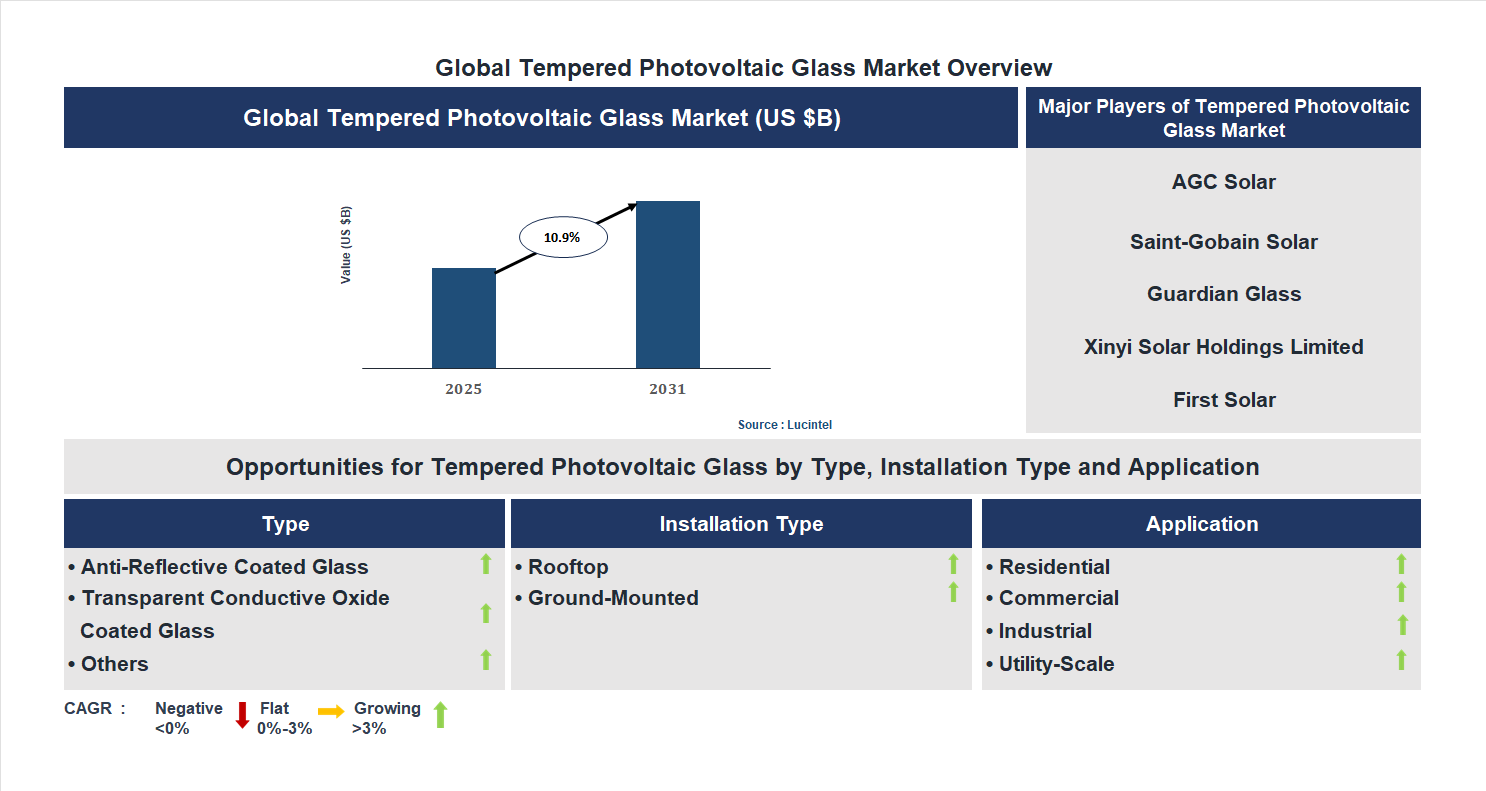
Key data points: The growth forecast = 10.9% annually for the next 7 years. Scroll below to get more insights. This market report covers trends, opportunities and forecasts in tempered photovoltaic glass market to 2031 by type (anti-reflective coated glass, transparent conductive oxide coated glass, and others), installation type (rooftop and ground-mounted), application (residential, commercial, industrial, and utility-scale), and region (North America, Europe, Asia Pacific, and the Rest of the World)
We'll send your sample report shortly.
• Lucintel forecasts that, within the type category, anti-reflective coated glass is expected to witness higher growth over the forecast period.
• Within the application category, residential is expected to witness the highest growth.
• In terms of region, APAC is expected to witness the highest growth over the forecast period. Gain valuable insights for your business decisions with our comprehensive 150+ page report. Sample figures with some insights are shown below.
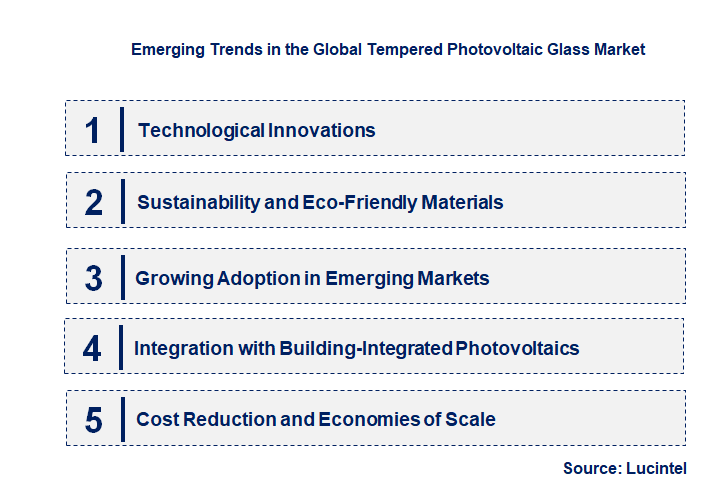
• Technological Innovations: Advancements in manufacturing processes and material science are leading to higher efficiency and durability of tempered photovoltaic glass. New coatings and treatments improve light transmission and resistance to environmental stressors, extending product lifespan. These innovations enable better energy output and reduce maintenance costs, making solar installations more economically viable. As technology progresses, the market will see more customized solutions tailored to specific climatic conditions and installation types, further boosting adoption rates.
• Sustainability and Eco-Friendly Materials: Increasing emphasis on environmental sustainability is driving the adoption of eco-friendly manufacturing practices and recyclable materials in tempered photovoltaic glass production. Companies are exploring ways to reduce carbon footprints and incorporate recycled content, aligning with global sustainability goals. This trend enhances the markets appeal to environmentally conscious consumers and regulatory bodies. The shift towards greener materials not only benefits the environment but also provides a competitive edge for manufacturers committed to sustainable practices.
• Growing Adoption in Emerging Markets: Rapid urbanization and government incentives in emerging economies are fueling the adoption of photovoltaic technology, including tempered glass solutions. Countries in Asia, Africa, and Latin America are investing heavily in solar infrastructure, creating new opportunities for market expansion. This trend is driven by the need for affordable, reliable energy sources and supportive policies. As emerging markets develop their solar capacities, the demand for durable, high-performance tempered photovoltaic glass is expected to surge, broadening the market scope globally.
• Integration with Building-Integrated Photovoltaics (BIPV): The integration of tempered photovoltaic glass into building facades, windows, and skylights is gaining traction, blending aesthetics with functionality. BIPV solutions offer a seamless way to incorporate solar energy generation into architectural designs, reducing the need for traditional solar panels. This trend is transforming the market by opening new avenues for growth in the construction and real estate sectors. It also promotes sustainable building practices, making solar technology more appealing to architects and developers seeking innovative, energy-efficient solutions.
• Cost Reduction and Economies of Scale: As production volumes increase and manufacturing techniques improve, the cost of tempered photovoltaic glass is decreasing. Economies of scale, along with technological efficiencies, are making solar installations more affordable for consumers and businesses alike. Lower costs are expanding market access, especially in price-sensitive regions, and accelerating adoption rates. This trend is crucial for achieving widespread solar deployment and supporting global renewable energy targets, ultimately making solar power a more competitive alternative to conventional energy sources. In summary, these emerging trends are collectively reshaping the tempered photovoltaic glass market by enhancing product performance, promoting sustainability, expanding geographic reach, integrating with innovative building designs, and reducing costs. These developments are driving market growth, increasing adoption, and positioning solar energy as a key component of the global renewable energy landscape.
• Technological Advancements in Coating Technologies: Enhanced coatings improve light transmission and durability, increasing the efficiency of photovoltaic panels and extending their lifespan, which boosts market adoption and reduces maintenance costs.
• Integration of Bifacial Solar Modules: The adoption of bifacial modules utilizing tempered photovoltaic glass allows for higher energy yields by capturing sunlight from both sides, significantly impacting overall system performance and market growth.
• Development of Lightweight Glass: Innovations in lightweight tempered glass reduce installation costs and facilitate easier handling, expanding applications in residential and commercial sectors and broadening market reach.
• Increased Focus on Sustainability and Recycling: Companies are adopting eco-friendly manufacturing processes and developing recyclable glass products, aligning with global sustainability goals and attracting environmentally conscious consumers.
• Expansion in Emerging Markets: Growing investments in solar infrastructure in regions like Asia-Pacific and Africa are driving demand for tempered photovoltaic glass, opening new growth opportunities and diversifying the market landscape. In summary, these developments are collectively enhancing the efficiency, sustainability, and accessibility of photovoltaic glass, leading to increased adoption of solar energy solutions worldwide. The market is becoming more competitive and innovative, with technological improvements and expanding geographic reach fueling sustained growth and environmental benefits.
• Residential Solar Applications: Expanding demand for home-based solar systems is a major growth driver. Tempered photovoltaic glass enhances safety and durability, making it ideal for residential installations. Innovations in lightweight and aesthetically appealing glass solutions are attracting homeowners, boosting adoption rates. This growth improves market penetration in the residential sector, fostering increased investments in sustainable energy at the household level.
• Commercial Solar Projects: The commercial sector is increasingly adopting photovoltaic glass for large-scale solar installations. The focus on high efficiency and long-term performance drives demand for advanced tempered glass with superior strength and weather resistance. This opportunity enables manufacturers to cater to a broader range of commercial clients, supporting the expansion of solar infrastructure in business complexes, industrial parks, and educational institutions.
• Utility-Scale Solar Power Plants: Utility-scale projects require robust, high-performance glass to withstand harsh environmental conditions. Tempered photovoltaic glass with enhanced durability and thermal stability is critical for these large installations. This growth opportunity allows for the development of more reliable, cost-effective solar farms, contributing significantly to the global renewable energy capacity and reducing reliance on fossil fuels.
• Portable Solar Devices: The rising popularity of portable and off-grid solar solutions presents a new application avenue. Tempered photovoltaic glass offers the necessary strength and safety features for portable panels used in camping, emergency, and military applications. This niche market is expected to grow rapidly, driven by increasing outdoor activities and energy independence needs.
• Emerging Technologies and Innovations: Advancements such as bifacial solar panels and flexible photovoltaic glass open new horizons. Tempered glass tailored for these innovative technologies enhances efficiency and flexibility, enabling integration into diverse surfaces and structures. This opportunity fosters product differentiation and positions manufacturers at the forefront of technological progress, expanding the market scope. In summary, these growth opportunities are significantly impacting the tempered photovoltaic glass market by expanding its application base, improving product performance, and supporting the global shift toward renewable energy. As technological innovations and demand for sustainable solutions increase, the market is poised for substantial growth, driven by diverse applications and evolving customer needs.
• Technological Innovation: The rapid development of solar panel efficiency and durability has increased demand for high-quality tempered photovoltaic glass. Innovations in manufacturing processes, such as improved tempering techniques, enhance the glasss strength and lifespan, making it more suitable for large-scale solar installations. These technological advancements reduce costs and improve performance, encouraging adoption across residential, commercial, and utility sectors. As research continues, the market benefits from more efficient, lightweight, and aesthetically appealing glass options, further fueling growth.
• Rising Adoption of Renewable Energy: Governments worldwide are prioritizing renewable energy to combat climate change and reduce reliance on fossil fuels. Policies such as subsidies, tax incentives, and renewable energy targets have accelerated solar panel installations. Tempered photovoltaic glass, being a critical component of solar modules, benefits directly from this trend. The increasing shift towards sustainable energy sources creates a robust demand for durable, high-performance glass, supporting market expansion across emerging and developed economies.
• Cost Reduction in Manufacturing: The decreasing costs of raw materials and advancements in manufacturing technologies have significantly lowered the production costs of tempered photovoltaic glass. Economies of scale, automation, and improved supply chain management contribute to more affordable products. Cost reductions make solar installations more economically viable for end-users, boosting demand. This affordability encourages market penetration in price-sensitive regions and accelerates the adoption of solar energy solutions, thereby expanding the market footprint.
• Growing Infrastructure and Urbanization: Rapid urbanization and infrastructure development worldwide are driving the need for sustainable building materials, including photovoltaic glass. The integration of solar panels into building facades, windows, and rooftops is becoming increasingly popular. Tempered photovoltaic glass offers safety, durability, and aesthetic appeal, making it ideal for architectural integration. The trend towards green buildings and smart cities further amplifies demand, fostering market growth through innovative applications and increased installation volumes.
• Environmental Regulations and Standards: Stringent environmental policies and safety standards promote the use of high-quality, durable materials like tempered photovoltaic glass. Regulations aimed at reducing carbon emissions and promoting renewable energy adoption compel manufacturers to develop compliant products. Certification requirements for safety, performance, and environmental impact ensure market players focus on quality, which in turn boosts consumer confidence and market credibility. These regulatory frameworks support sustainable growth and innovation within the industry. The challenges facing this tempered photovoltaic glass market include:-
• High Production Costs: Despite technological advancements, the manufacturing of tempered photovoltaic glass remains costly due to the need for specialized equipment and raw materials. The energy-intensive tempering process and quality control measures add to expenses, which can limit profit margins and increase product prices. These high costs pose barriers for manufacturers, especially in price-sensitive markets, potentially slowing down adoption rates and constraining overall market growth.
• Technological Limitations: While progress has been made, certain technological challenges persist, such as optimizing the balance between durability and weight. Developing lightweight yet strong glass that can withstand environmental stresses remains complex. Additionally, issues related to the integration of photovoltaic cells with glass, such as efficiency losses and long-term stability, hinder widespread adoption. Overcoming these limitations requires ongoing research and development, which can be time-consuming and costly.
• Regulatory and Certification Barriers: Navigating diverse regulatory landscapes and obtaining necessary certifications can be complex and time-consuming. Variations in safety standards, environmental regulations, and quality requirements across regions create compliance challenges for manufacturers. Delays in certification processes can hinder market entry and expansion, especially for new entrants. These regulatory hurdles increase costs and can slow innovation, impacting the overall growth trajectory of the market. In summary, the tempered photovoltaic glass market is driven by technological innovations, increasing renewable energy adoption, cost reductions, infrastructure development, and regulatory support. However, high production costs, technological challenges, and regulatory barriers pose significant hurdles. The interplay of these factors will shape the markets future, requiring stakeholders to innovate continuously and adapt to evolving standards. Overall, the market holds substantial growth potential, provided these challenges are effectively managed through strategic investments and technological advancements.
• AGC Solar
• Saint-Gobain Solar
• Guardian Glass
• Xinyi Solar Holdings Limited
• First Solar
• Interfloat Corporation
• Trina Solar Limited
• Jinko Solar
• Canadian Solar
• Hanwha Q CELLS
• Anti-Reflective Coated Glass
• Transparent Conductive Oxide Coated Glass
• Others
• Rooftop
• Ground-Mounted
• Residential
• Commercial
• Industrial
• Utility-Scale
• North America
• Europe
• Asia Pacific
• The Rest of the World
• United States: The U.S. market has seen substantial growth due to supportive government policies and incentives for solar energy. Innovations in tempered photovoltaic glass have improved efficiency and durability, making solar panels more reliable. Major players are investing in R&D to develop lightweight and high-strength glass solutions. The adoption of bifacial solar modules has increased, requiring advanced glass technology. Additionally, the U.S. is focusing on integrating smart solar solutions, boosting demand for specialized tempered glass. The market is also witnessing increased collaborations between manufacturers and technology firms to enhance product performance.
• China: China remains the largest producer and consumer of photovoltaic glass, with rapid industry expansion driven by government initiatives and large-scale solar projects. The country has invested heavily in manufacturing capacity, leading to cost reductions and increased export opportunities. Technological advancements include the development of anti-reflective and high-transparency glass to improve solar panel efficiency. Chinese firms are also focusing on sustainable production methods, reducing environmental impact. The domestic market is expanding with new solar farm projects, and China is increasingly exporting tempered photovoltaic glass to other regions, strengthening its global market position.
• Germany: Germanys market is characterized by high-quality standards and technological innovation. The country emphasizes sustainable manufacturing practices and energy efficiency. German companies are developing advanced tempered glass with enhanced resistance to weathering and mechanical stress, suitable for harsh climates. The government’s renewable energy policies and incentives continue to support market growth. There is a focus on integrating photovoltaic glass into building-integrated photovoltaics (BIPV), promoting aesthetic and functional benefits. The market also benefits from strong research collaborations and investments in R&D to improve glass performance and sustainability.
• India: India’s market is rapidly expanding due to government initiatives like the National Solar Mission and increasing solar capacity targets. The demand for durable, cost-effective tempered photovoltaic glass is rising to support large-scale solar parks and rooftop installations. Local manufacturers are adopting advanced production techniques to reduce costs and improve quality. The focus is on developing lightweight and high-efficiency glass to optimize energy output. Additionally, India is exploring innovative applications such as building-integrated photovoltaics, which require specialized glass solutions. The market growth is also driven by increasing foreign investments and international collaborations.
• Japan: Japan’s market is driven by technological innovation and a strong emphasis on energy security and sustainability. Japanese firms are developing high-performance tempered photovoltaic glass with enhanced durability and efficiency, suitable for diverse climatic conditions. The country is investing in R&D to improve anti-reflective and self-cleaning glass technologies. Japan’s focus on disaster resilience has led to the development of earthquake-resistant photovoltaic glass solutions. The government’s support for renewable energy projects and the adoption of smart grid technologies are further boosting demand. The market is also witnessing collaborations between domestic and international companies to advance glass manufacturing and application techniques.


• AGC Solar
• Saint-Gobain Solar
• Guardian Glass
• Xinyi Solar Holdings Limited
• First Solar
• Interfloat Corporation
• Trina Solar Limited
• Jinko Solar
• Canadian Solar
• Hanwha Q CELLS Q5. Which tempered photovoltaic glass market segment will be the largest in future? Answer: Lucintel forecasts that, within the type category, anti-reflective coated glass is expected to witness higher growth over the forecast period. Q6. In tempered photovoltaic glass market, which region is expected to be the largest in next 5 years? Answer: In terms of region, APAC is expected to witness the highest growth over the forecast period. Q7. Do we receive customization in this report? Answer: Yes, Lucintel provides 10% customization without any additional cost.


Choose a license that fits your team. Instant PDF delivery.
Prices exclude taxes. Instant delivery. Custom licensing available on request.
Market Report · July 20, 2026
Market Report · July 20, 2026
Market Report · July 20, 2026
Trusted partner for strategic intelligence and business growth


Receive a complimentary market analysis tailored to your industry. Our analysts will identify key growth opportunities and competitive dynamics specific to your business.

Market size, growth rate, and key trend analysis for your specific sector.

Top competitor positioning and market share analysis.

Strategic recommendations backed by data-driven insights.
Get curated market intelligence and competitive moves straight to your inbox.
By subscribing, you agree to receive our monthly insights. Unsubscribe anytime.
Receive a complimentary market analysis tailored to your industry. Our analysts will identify key growth opportunities and competitive dynamics specific to your business.
Market size, growth rate, and key trend analysis for your specific sector.
Top competitor positioning and market share analysis.
Strategic recommendations backed by data-driven insights.
Get curated market intelligence, emerging trends, and competitive moves straight to your inbox each month.
By subscribing, you agree to receive our monthly insights. Unsubscribe anytime.
We'll send your sample report shortly.