
Market Report · May 18, 2026

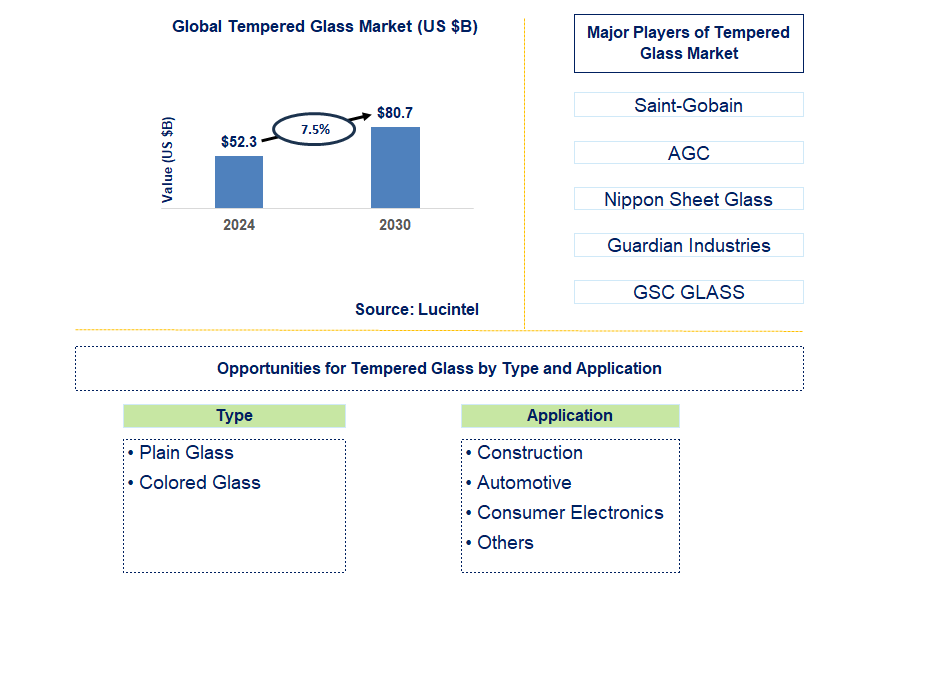
Key data points: The market size in 2030 = $80.7 billion, growth forecast = 7.5% annually for the next 6 years. Scroll below to get more insights. This market report covers trends, opportunities, and forecasts in the global tempered glass market to 2030 by type (plain glass and colored glass), application (construction, automotive, consumer electronics, and others), and region (North America, Europe, Asia Pacific, and the Rest of the World)
We'll send your sample report shortly.
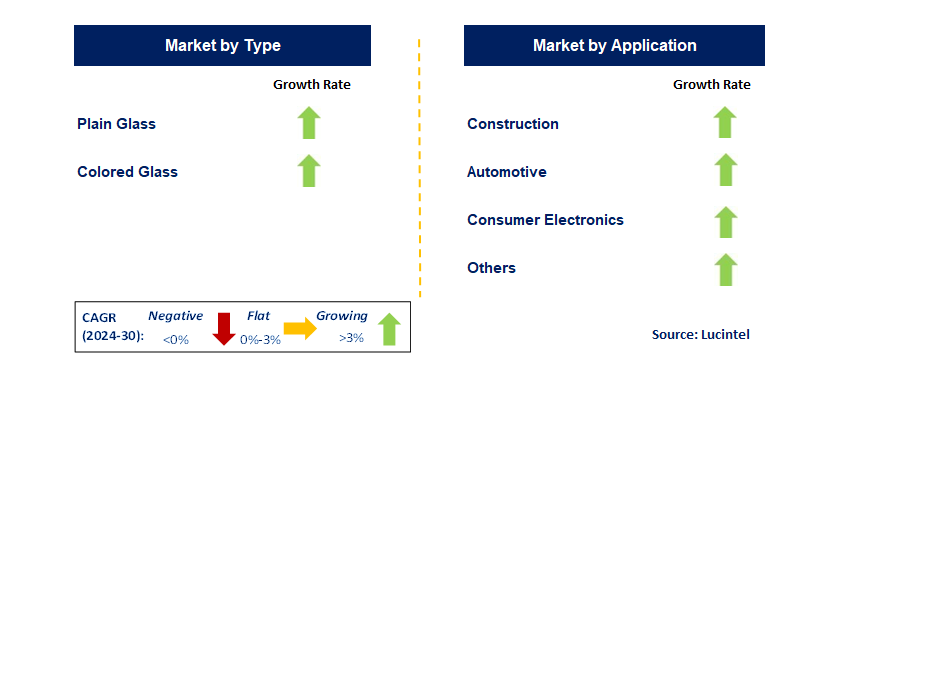
• Lucintel forecasts that, within the type category, plain glass will remain a larger segment over the forecast period.
• Within the application category, construction will remain the largest segment.
• In terms of regions, APAC will remain the largest region over the forecast period. Gain valuable insight for your business decisions with our comprehensive 150+ page report
• Smart Glass Technology: With the latest advancements in smart glass technology, not only does this type of glass change its opacity, but it also controls its heat. Indeed, this technology has transformed both commercial and residential spaces into more attractive pieces of architecture and interior design, with energy efficiency as a major criterion.
• Sustainability Initiatives: Growing environmental concerns encourage manufacturers to opt for sustainable products. In an effort to achieve go-green policies, manufacturers are focusing on eco-friendly materials and production processes, including recycling and reducing carbon emissions. This is believed by consumers and regulatory bodies to add value to brand image and market share.
• Automotive Applications: Growth in the automobile segment toward lightweight materials and enhanced safety features drives demand for tempered glass. The innovation of high-performance glass for windshields and windows improves vehicle efficiency and passenger safety, aligning with changing consumer preferences and requirements for safer yet more efficient vehicles.
• Customization and Aesthetic Appeal: In architecture and interior design, the demand for individualized tempered glass has increased. Architects and designers seek high-quality, unique textures, colors, and finishes for the realization of space. As a result, aesthetics have become a significant part of current applications, along with functionality.
• Advancements in Coatings: Advanced coatings include low-emissivity and anti-reflective layers, further enhancing the performance of tempered glass. Some of these improvements include enhanced thermal insulation and glare prevention. As such, tempered glass is used in the energy-efficient designs of buildings, which in turn propels the growth of this market. These trends reposition the tempered glass market regarding higher product capabilities, sustainability, and diversified consumer preferences. By adapting to these changes, manufacturers not only increase competition but also develop more innovative and eco-friendly products that meet modern demands.
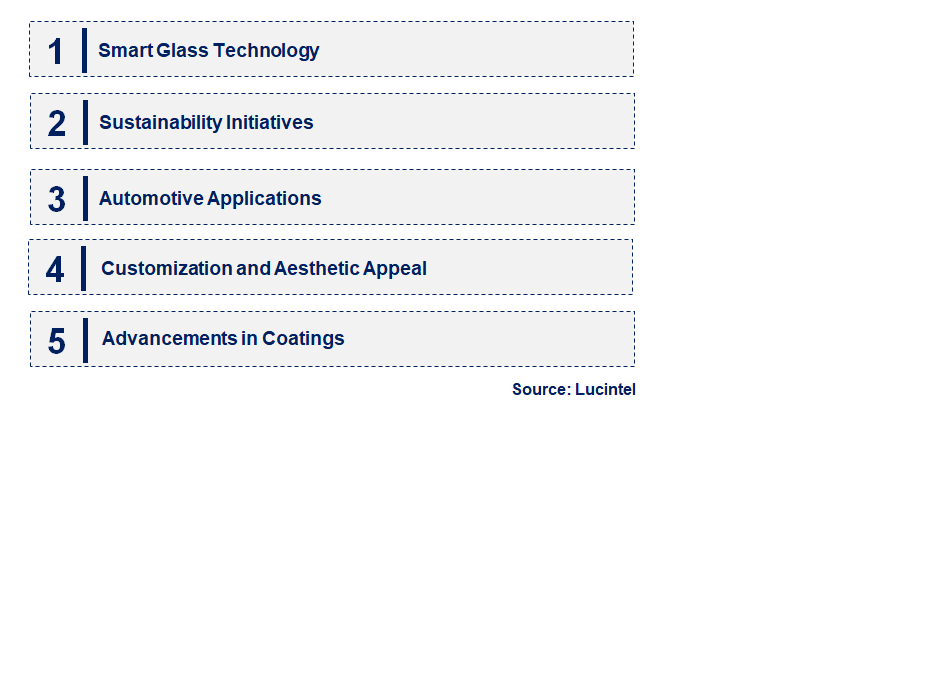
• Smart Glass Technology: With the latest advancements in smart glass technology, not only does this type of glass change its opacity, but it also controls its heat. Indeed, this technology has transformed both commercial and residential spaces into more attractive pieces of architecture and interior design, with energy efficiency as a major criterion.
• Sustainability Initiatives: Growing environmental concerns encourage manufacturers to opt for sustainable products. In an effort to achieve go-green policies, manufacturers are focusing on eco-friendly materials and production processes, including recycling and reducing carbon emissions. This is believed by consumers and regulatory bodies to add value to brand image and market share.
• Automotive Applications: Growth in the automobile segment toward lightweight materials and enhanced safety features drives demand for tempered glass. The innovation of high-performance glass for windshields and windows improves vehicle efficiency and passenger safety, aligning with changing consumer preferences and requirements for safer yet more efficient vehicles.
• Customization and Aesthetic Appeal: In architecture and interior design, the demand for individualized tempered glass has increased. Architects and designers seek high-quality, unique textures, colors, and finishes for the realization of space. As a result, aesthetics have become a significant part of current applications, along with functionality.
• Advancements in Coatings: Advanced coatings include low-emissivity and anti-reflective layers, further enhancing the performance of tempered glass. Some of these improvements include enhanced thermal insulation and glare prevention. As such, tempered glass is used in the energy-efficient designs of buildings, which in turn propels the growth of this market. These trends reposition the tempered glass market regarding higher product capabilities, sustainability, and diversified consumer preferences. By adapting to these changes, manufacturers not only increase competition but also develop more innovative and eco-friendly products that meet modern demands.
• Automotive Industry: The automotive sector is a significant driver of the tempered glass market, with increasing adoption of windshields, side windows, and sunroofs. The adoption of electric vehicles is expected to contribute to tempered glass and enhance heat resistance and vision clarity, the key features of electric and self-driven vehicles. The shift towards electric vehicles and increased automation in driving is also opening new doors for improved tempered glass. The use of augmented reality is quickly being recognized for its energy saving benefits, and in conjunction with tempered glass, can be incorporated into heads up displays. As automakers prioritize energy saving and safety, the demand for tempered glass that is added with these new features is rapidly growing for the manufacturers.
• Construction and Infrastructure: They say that construction is the biggest catalyst for a nation’s development and glass tempered sogo is no different, with the status quo and belief prevailing unchanged, changing the construction landscape including the multitude of urban constructions will further drive the growth in this sector. For covered windows and doors, tempered glass is preferred because of its extensive strength and impact resistance. Integration of energy efficient construction further boosts the demand for tempered glass with low emissivity. These particular properties are bound to lead to sustained growth for the glass tempered market. The adoption of green building initiatives also aids this. The adoption of green building initiatives also elevates these facts. The rise of initiatives to create green buildings will also aid these facts. A shift towards green building initiatives will certainly help improve the market standing. Net corridors alongside sophisticated facades are certain to prove useful to boost the heat-resistant elastic Low-E coated glass tempered market. Construction-grade glass tempered sogo will also see a spike in demand.
• Consumer Electronics: Smartphones, laptops, tablets, and other gadgets are emerging to become essential for today’s generation alongside ultra modern desk panels, which in turn propels the demand for tempered constructible sogo glass. The demand for hybrid devices that fold, surfaces that are sensitive to touch, and other modern gadgets encourage the use of tempered glass that has high flexibility and durability, which is proven to satisfy the needs for modern day electronics and improves the user experience. Further, use cases for ultra-thin tempered glass and anti reflective coatings are on the rise with the rise in demand for ultra modern laptops, tablets, and smartphones. With more brands introducing touch screens, the need for flexible tempered glass is only increasing, as its adoption becomes common, enabling growth within the electronics market. Hilltops of the industry are focusing on reinforcing anti-glare coatings and ultra thin tempered glass for other devices. The era of modern gadgets ranging from tablets to ultra-low power laptops is paving the way for increased demand for chemically constructed glass that is resistant to scratches. Marketers use low markable flexile sogo tempered glass to gain access to new markets.
• Solar Energy Sector: Demand for tempered glass in the solar sector of the renewable energy industry is rising. The glass protects PV modules from environmental hazards, increasing the durability and efficiency of solar modules. Solar power usage is continuously supported by government policies around the world, which create demand for high quality tempered glass. Development of anti-glare coatings, light weight solar mounts, and greater transparency in the designs of solar panels makes it easier to use solar energy. These developments present greater opportunities for tempered glass manufacturers in the renewable energy sector.
• Interior Design and Furniture: The shift towards contemporary design aesthetics and modern furnishing is increasing the use of tempered glass. Its elegance and safety features make it ideal for use in shower enclosures, shelves, tabletops, and decorative panels. The ability to change between transparent and opaque states of smart glass has further propelled market demand. Increasing usage of glass partitions in office spaces, coupled with a growing need among consumers for simple and modern designs, is increasing the use of tempered glass in interior design. A combination of technological advancements along with regulatory standards and shifting consumer preferences will boost the tempered glass market across numerous industries. The surge in possibilities within the automotive, construction, consumer electronics, solar energy, and interior design sectors reflects the material’s versatility and significance. Companies that put their resources towards innovation, energy-saving measures, and customization will put themselves ahead of the competition in this fast-paced market. With industries constantly increasing their focus on safety, sustainability, and aesthetics, the high demand for tempered glass will increase, thus, defining the future of architectural and industrial glass solutions.
• Construction activities in China increase: Construction worldwide, especially in residential and commercial facilities, has been rising. For builders, tempered glass provides not only aesthetic appeal but also energy efficiency. This results in higher sales of tempered glass and drives innovation in glass designs and applications.
• Advancements in technology: Improvements in production technologies, such as automated manufacturing and advanced heat treatment processes, enhance the quality and efficiency of tempered glass. These advancements lower costs and improve performance, enabling manufacturers to maintain competitive pricing while keeping pace with ever-evolving consumer expectations for safety and durability.
• Keep in mind safety standards: Stringent safety regulations worldwide have created a demand for high-performance tempered glass in numerous applications, including the automotive and construction sectors. Product demand benefits from the emphasis on safety, as firms strive to comply with legal standards while offering products that satisfy or exceed consumer safety expectations. Challenges in the tempered glass market are:
• Fluctuating price of raw materials: Price volatility of raw materials, such as silica and soda ash, poses serious challenges for manufacturers. Higher material costs squeeze profit margins, increasing prices for consumers and necessitating cost management strategies to maintain competitiveness without raising product prices.
• Competition intensity: Competition in the tempered glass market is stiff due to established players and new entrants. Competitive price wars threaten profit margins. The only viable strategy for a firm to outperform its competitors is through innovation, quality, and superior customer service. The tempered glass market is driven by critical factors. In the construction sector, it has witnessed increased activity coupled with growing emphasis on technological advancements, safety, and sustainability considerations. However, raw material volatility and intense competition present challenges that must be managed to achieve long-term success in the marketplace.
• Saint-Gobain
• AGC
• Nippon Sheet Glass
• Guardian Industries
• GSC GLASS
• Plain Glass
• Colored Glass
• Construction
• Automotive
• Consumer Electronics
• Others
• North America
• Europe
• Asia Pacific
• The Rest of the World
• United States: Efficiencies and cost reductions have been achieved through improved manufacturing processes, including fully automated production methods. The rebounding construction sector post-pandemic has been a significant driver, alongside interest in energy-efficient building materials. Additionally, pressure for greater sustainability has motivated firms toward green production methods.
• China: China remains the largest consumer of tempered glass, driven by rapid urbanization and infrastructure development. Recent developments include the rise of smart glass technologies, which have significantly improved the energy efficiency of buildings. The use of green building materials continues to grow, as tempered glass is a principal component of contemporary construction.
• Germany: Innovations in safety and design aspects within the automotive sector have defined growth in the German tempered glass market. The increasing demand for electric vehicles has raised the need for high-performance glass. Pressures from strict EU regulations regarding energy efficiency have spurred innovations such as low-emissivity coatings, enhancing the thermal insulation properties of the product.
• India: Urbanization and the rapidly growing real estate sector in India present enormous growth opportunities for tempered glass. Newly invested facilities in these areas entail capacity augmentation and quality upgrades; government initiatives and drives, such as "Make in India," are also gaining momentum.
• Japan: Japan focuses on high-tech applications of tempered glass, especially in consumer electronics and automotive markets. The market has developed anti-reflective coatings and advanced safety features. Sustainability initiatives also encourage manufacturers to adopt environmentally friendly practices, which align with Japan's intention to minimize its environmental impact.


• Saint-Gobain
• AGC
• Nippon Sheet Glass
• Guardian Industries
• GSC GLASS Q6. Which tempered glass market segment will be the largest in future? Answer: Lucintel forecasts that plain glass will remain the larger segment over the forecast period. Q7. In tempered glass market, which region is expected to be the largest in next 5 years? Answer: APAC will remain the largest region over the forecast period. Q.8 Do we receive customization in this report? Answer: Yes, Lucintel provides 10% customization without any additional cost.


Choose a license that fits your team. Instant PDF delivery.
Prices exclude taxes. Instant delivery. Custom licensing available on request.
Market Report · May 18, 2026
Market Report · May 16, 2026
Market Report · May 16, 2026
Trusted partner for strategic intelligence and business growth


Receive a complimentary market analysis tailored to your industry. Our analysts will identify key growth opportunities and competitive dynamics specific to your business.

Market size, growth rate, and key trend analysis for your specific sector.

Top competitor positioning and market share analysis.

Strategic recommendations backed by data-driven insights.
Get curated market intelligence and competitive moves straight to your inbox.
By subscribing, you agree to receive our monthly insights. Unsubscribe anytime.
Receive a complimentary market analysis tailored to your industry. Our analysts will identify key growth opportunities and competitive dynamics specific to your business.
Market size, growth rate, and key trend analysis for your specific sector.
Top competitor positioning and market share analysis.
Strategic recommendations backed by data-driven insights.
Get curated market intelligence, emerging trends, and competitive moves straight to your inbox each month.
By subscribing, you agree to receive our monthly insights. Unsubscribe anytime.
We'll send your sample report shortly.