
Report Feature
The material technologies in automotive luggage carrier have undergone significant change in recent years, with heavy cast-iron to composite materials. The rising wave of new material technologies, such as vinyl, double-coated thermoplastic elastomer, and ABS (Acrylonitrile butadiene styrene) material are creating significant potential for automotive luggage carrier in various vehicle platforms considering quickness and easiness to mount, high durability, and storage of maximum luggage.
In the automotive luggage carrier market, various material technologies, such as aluminum alloy, composite, and plastic are used in the passenger cars, and commercial cars. Demand for extra luggage space, increasing expenditure on travel and tourism, rising e-commerce retail sales and rising recreational vehicle production are creating opportunities for various automotive luggage carrier technologies.
Some of the latest technological developments by various countries in the automotive luggage carrier market are as follows:
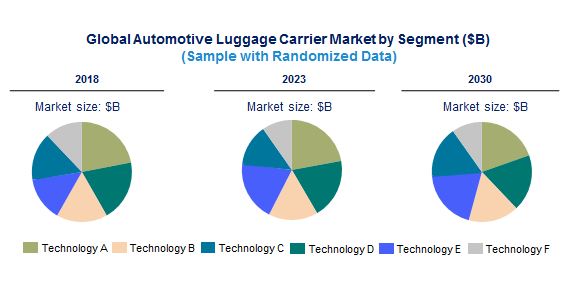
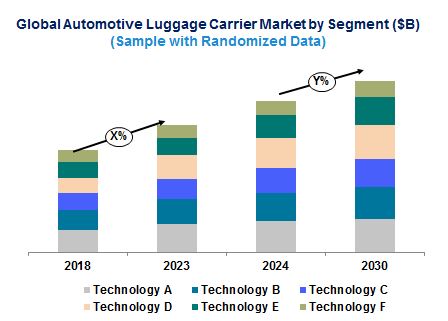
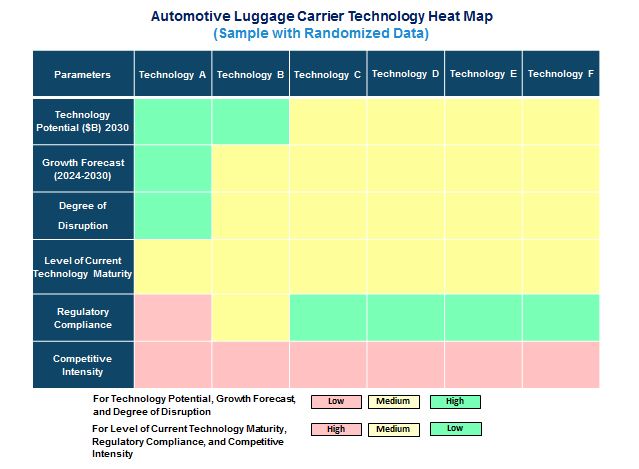
The study includes technology readiness, competitive intensity, regulatory compliance, disruption potential, trends, forecasts and strategic implications for the global automotive luggage carrier technology by material technology, application, and region as follows:
Technology Readiness by Technology Type
Competitive Intensity and Regulatory Compliance
Disruption Potential by Technology Type
Trends and Forecasts by Material Technology [$M shipment analysis from 2018 to 2030]:
Technology Trends and Forecasts by Application [$M shipment analysis from 2018 to 2030]:
Technology Trends and Forecasts by Region [$M shipment analysis for 2018 to 2030]:
Latest Developments and Innovations in the Automotive Luggage Carrier Technologies
Companies / Ecosystems
Strategic Opportunities by Technology Type
Some of the automotive luggage carrier companies profiled in this report include Thule Group, Magna International, Vdl Hapro bv, Minth Group, Cruzber, Atera, Rhino-Rack, Bosal, Jac Products, and Yakima Products.
Below are the latest technological developments from top companies in the automotive luggage carrier market:
Q.1 What are some of the most promising and high-growth technology opportunities for the automotive luggage carrier market?
Q.2 Which technology will grow at a faster pace and why?
Q.3 What are the key factors affecting dynamics of different technologies? What are the drivers and challenges of these technologies in automotive luggage carrier market?
Q.4 What are the levels of technology readiness, competitive intensity and regulatory compliance in this technology space?
Q.5 What are the new technology developments in automotive luggage carrier market? Which companies are leading these developments?
Q.6 What are the latest developments in automotive luggage carrier technologies? Which companies are leading these developments?
Q.7 Which technologies have potential of disruption in this market?
Q.8 Who are the major players in this automotive luggage carrier market? What strategic initiatives are being implemented by key players for business growth?
Q.9 What are strategic growth opportunities in this automotive luggage carrier technology space?
In the automotive luggage carrier market, various material technologies, such as aluminum alloy, composite, and plastic are used in the passenger cars, and commercial cars. Demand for extra luggage space, increasing expenditure on travel and tourism, rising e-commerce retail sales and rising recreational vehicle production are creating opportunities for various automotive luggage carrier technologies.
Some of the latest technological developments by various countries in the automotive luggage carrier market are as follows:
- United States: Yakima, a leading US carrier manufacturer, announced its new line of roof racks made with a proprietary carbon fiber composite material. This reduces weight by 50% compared to aluminum, targeting fuel-efficient vehicles. The US Department of Energy aims for a 25% fuel efficiency improvement in new cars. This indirectly pushes luggage carrier manufacturers towards lightweight materials.
- Germany: Thule, a German carrier giant, unveiled its new range of roof boxes with active airflow technology. These boxes adjust airflow based on driving conditions, reducing wind noise and drag. German car manufacturers like Audi and BMW are increasingly focusing on aerodynamic efficiency. This creates a demand for luggage carriers that complement that focus.
- Japan: Rhino Rack announced a new locking system for its carriers that integrate with the vehicle's central locking system, enhancing security. Japan is considering stricter safety regulations for protruding cargo, potentially driving demand for enclosed carriers with proper weight distribution.
- China: Several Chinese companies are developing low-cost, functional luggage carriers specifically designed for the booming domestic SUV market. The rise of online car accessory sales in China is prompting manufacturers to develop carriers with easy assembly and clear online instructions.
The study includes technology readiness, competitive intensity, regulatory compliance, disruption potential, trends, forecasts and strategic implications for the global automotive luggage carrier technology by material technology, application, and region as follows:
Technology Readiness by Technology Type
Competitive Intensity and Regulatory Compliance
Disruption Potential by Technology Type
Trends and Forecasts by Material Technology [$M shipment analysis from 2018 to 2030]:
- Aluminum Alloy
- Composite
- Plastic
Technology Trends and Forecasts by Application [$M shipment analysis from 2018 to 2030]:
-
Passenger Cars
- Aluminum Alloy
- Composite
- Plastic
-
Commercial Vehicles
- Aluminum Alloy
- Composite
- Plastic
Technology Trends and Forecasts by Region [$M shipment analysis for 2018 to 2030]:
-
North America
- United States
- Canada
- Mexico
-
Europe
- United Kingdom
- Germany
- France
-
Asia Pacific
- Japan
- China
- South Korea
- India
- The Rest of the World
Latest Developments and Innovations in the Automotive Luggage Carrier Technologies
Companies / Ecosystems
Strategic Opportunities by Technology Type
Some of the automotive luggage carrier companies profiled in this report include Thule Group, Magna International, Vdl Hapro bv, Minth Group, Cruzber, Atera, Rhino-Rack, Bosal, Jac Products, and Yakima Products.
Below are the latest technological developments from top companies in the automotive luggage carrier market:
- Yakima, a leading manufacturer of roof racks and cargo carriers, announced the acquisition of the Thule Components Division. This acquisition strengthens Yakima's position in the aluminum alloy luggage carrier market by adding Thule's expertise in lightweight and durable aluminum designs.
- Thule announced a significant capital expenditure (capex) for a new manufacturing facility dedicated to aluminum roof racks. This investment reflects the growing demand for high-strength and aerodynamic aluminum carriers in the global market.
- UWS, a major player in truck accessories, launched a new line of composite cargo carriers made from recycled materials. This move caters to the growing consumer demand for sustainable automotive products and positions UWS at the forefront of eco-conscious luggage carrier innovation.
- Hannibal Racks, a renowned manufacturer of off-road gear, announced a partnership with a material science startup to develop next-generation composite materials for luggage carriers. This collaboration aims to create even lighter and stronger composite carriers for extreme outdoor adventures.
- Prorack, a budget-friendly luggage carrier brand, announced the expansion of its production capacity for plastic cargo boxes. This move caters to the price-sensitive segment of the market and strengthens Prorack's position as a leader in affordable luggage carrier solutions.
- Tepui Tents, a pioneer in rooftop tents, unveiled a new line of modular plastic rooftop tents. This innovative design allows for customization and expansion, catering to the growing trend of overland travel and car camping.
Q.1 What are some of the most promising and high-growth technology opportunities for the automotive luggage carrier market?
Q.2 Which technology will grow at a faster pace and why?
Q.3 What are the key factors affecting dynamics of different technologies? What are the drivers and challenges of these technologies in automotive luggage carrier market?
Q.4 What are the levels of technology readiness, competitive intensity and regulatory compliance in this technology space?
Q.5 What are the new technology developments in automotive luggage carrier market? Which companies are leading these developments?
Q.6 What are the latest developments in automotive luggage carrier technologies? Which companies are leading these developments?
Q.7 Which technologies have potential of disruption in this market?
Q.8 Who are the major players in this automotive luggage carrier market? What strategic initiatives are being implemented by key players for business growth?
Q.9 What are strategic growth opportunities in this automotive luggage carrier technology space?
Table of Contents
3. Technology Readiness 3.1. Technology Commercialization and Readiness 3.2. Drivers and Challenges in Automotive Luggage Carrier Technologies 3.3. Competitive Intensity 3.4. Regulatory Compliance
4. Technology Trends and Forecasts Analysis from 2018-2030 4.1. Automotive Luggage Carrier Opportunity 4.2. Technology Trends (2018-2023) and Forecasts (2024-2030)
5. Technology Opportunities (2018-2030) by Region 5.1. Automotive Luggage Carrier Market by Region 5.2. North American Automotive Luggage Carrier Technology Market
6. Latest Developments and Innovations in the Automotive Luggage Carrier Technologies 7. Companies / Ecosystem 7.1. Product Portfolio Analysis 7.2. Market Share Analysis 7.3. Geographical Reach
8. Strategic Implications 8.1. Implications 8.2. Growth Opportunity Analysis
9. Company Profiles of Leading Players 9.1. Thule Group 9.2. Magna International 9.3. Vdl Hapro bv 9.4. Minth Group 9.5. Cruzber 9.6. Atera 9.7. Rhino-Rack 9.8. Bosal 9.9. Jac Products
Methodology
Lucintel has been in the business of market research and management consulting since 2000 and has published over 1000 market intelligence reports in various markets / applications and served over 1,000 clients worldwide. This study is a culmination of four months of full-time effort performed by Lucintel's analyst team. The analysts used the following sources for the creation and completion of this valuable report:
- In-depth interviews of the major players in this market
- Detailed secondary research from competitors’ financial statements and published data
- Extensive searches of published works, market, and database information pertaining to industry news, company press releases, and customer intentions
- A compilation of the experiences, judgments, and insights of Lucintel’s professionals, who have analyzed and tracked this market over the years.
Extensive research and interviews are conducted across the supply chain of this market to estimate market share, market size, trends, drivers, challenges, and forecasts. Below is a brief summary of the primary interviews that were conducted by job function for this report.

Thus, Lucintel compiles vast amounts of data from numerous sources, validates the integrity of that data, and performs a comprehensive analysis. Lucintel then organizes the data, its findings, and insights into a concise report designed to support the strategic decision-making process. The figure below is a graphical representation of Lucintel’s research process.

Buy Now
Choose a license that fits your team. Instant PDF delivery.
Prices exclude taxes. Instant delivery. Custom licensing available on request.


