The material technologies in automotive liftgate have undergone significant change in recent years, with steel materials to non-steel materials. The rising wave of new material technologies such as advanced high-strength steel (AHSS), aluminum (Al), carbon fiber reinforced plastic (CFRP), and magnesium are creating significant potential for automotive liftgate in various vehicle platforms as it enhances vehicle safety, and provides efficiency for loading and unloading of goods.
In this market, various material technologies such as metal, and composite are used in passenger car, light commercial vehicle, Medium Duty Commercial Vehicles, and Heavy Duty Commercial Vehicles. Increasing automotive production, increasing share of SUVs in the overall vehicle production, and reduce the overall vehicle weight for achieving stringent government regulations recreating opportunities for various automotive liftgate technologies.
Some of the latest technological developments by various countries in the automotive liftgate market are as follows:
-
Germany: German automotive giant Daimler announced a partnership with Hankook to develop lightweight composite liftgates for their upcoming electric SUV line. This reduces weight and improves range.
-
China: The Chinese government has set a target for 20% of all new vehicles produced domestically to utilize lightweight materials. This policy push is driving innovation in composite liftgate technology within China.
-
United States: US-based liftgate manufacturer, Lift Works Inc., announced the successful integration of sensor technology into their metal liftgates. This allows for features like automatic opening and hands-free operation.
-
South Korea: South Korean automotive supplier, HYUNDAI Mobis, showcased a prototype metal liftgate with self-deploying ramps at a recent industry trade show. This innovation improves accessibility for cargo loading.
This report analyzes technology maturity, degree of disruption, competitive intensity, market potential, and other parameters of various technologies in the automotive liftgate market. Some insights are depicted below by a sample figure. For more details on figures, the companies researched, and other objectives/benefits on this research report, please download the report brochure.
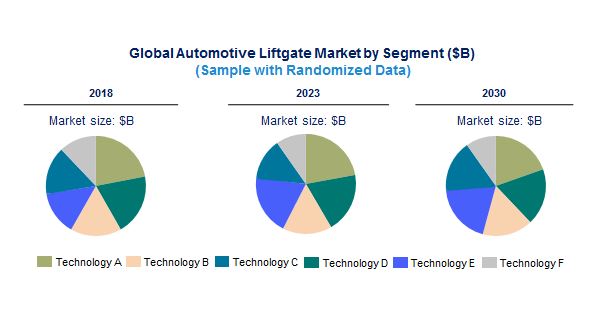

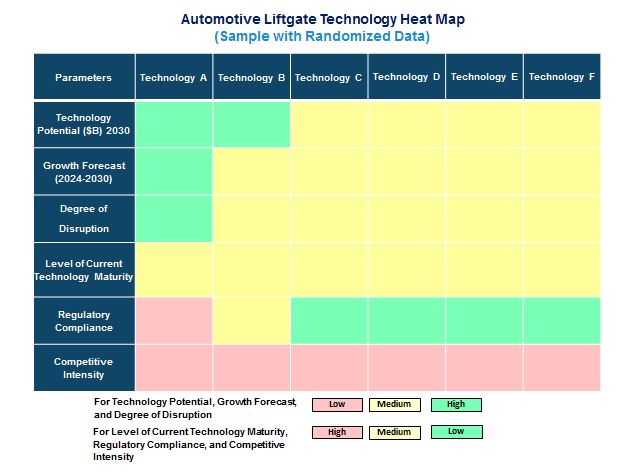
The study includes technology readiness, competitive intensity, regulatory compliance, disruption potential, trends, forecasts and strategic implications for the global automotive liftgate technology by material technology, application, and region as follows:
Technology Readiness by Technology Type
Competitive Intensity and Regulatory Compliance
Disruption Potential by Technology Type
Trends and Forecasts by Material Technology [$M shipment analysis from 2018 to 2030]:
Trends and Forecasts by Application [$M shipment analysis from 2018 to 2030]:
-
Passenger car
-
Light Commercial Vehicles
-
Medium Duty Commercial Vehicles
-
Heavy Duty Commercial Vehicles
Trends and Forecasts by Region [$M shipment analysis for 2018 to 2030]:
-
North America
-
United States
-
Canada
-
Mexico
-
Europe
-
United Kingdom
-
Germany
-
France
-
Asia Pacific
-
Japan
-
China
-
South Korea
-
India
-
The Rest of the World
Latest Developments and Innovations in the Automotive Liftgate Technologies
Companies / Ecosystems
Strategic Opportunities by Technology Type
Some of the automotive liftgate companies profiled in this report include Ford Motor Company, Johnson Electric, Stabilus, Autoease Technology, Magna International, Tommygate, Honda Motor Company, Trinseo, Palfinger, Hi-Lex Corporation, and Huf.
Below are the latest technological developments from top companies in the automotive liftgate market:
-
French automotive supplier Faurecia, a major player in metal liftgates, announced the opening of a new production facility in China specifically dedicated to tailgates, a key component of liftgates. This expansion highlights the growing demand for metal liftgates in the Chinese automotive market.
-
Magna International, another prominent metal liftgate supplier, announced an investment in research and development of lightweight materials for liftgates. This initiative aims to improve fuel efficiency and meet stricter emission regulations, suggesting a potential shift towards lighter metals in liftgate construction.
-
Johnson Electric, a leading manufacturer of automotive motors, secured a major contract to supply electric motors specifically designed for metal liftgates to an European automaker. This indicates a growing trend towards power-assisted metal liftgates.
-
Huf Baolong, a joint venture between German auto parts supplier Huf Hulsbeck and Chinese company Baolong, unveiled a new composite liftgate featuring an integrated kick sensor for hands-free operation. This launch signifies advancements in sensor technology for composite liftgates.
-
Automotive technology giant Continental AG collaborated with a startup specializing in composite recycling to develop a sustainable solution for decommissioned composite liftgates. This partnership reflects growing concerns about environmental impact and highlights potential future regulations for composite materials.
-
Chemical company DuPont presented its latest innovations in lightweight composite materials specifically designed for the automotive applications, including liftgates. This focus on lightweight composites indicates a potential shift within the composite liftgate segment.
This report answers following 9 key questions:
Q.1 What are some of the most promising and high-growth technology opportunities for the automotive liftgate market?
Q.2 Which technology will grow at a faster pace and why?
Q.3 What are the key factors affecting dynamics of different technologies? What are the drivers and challenges of these technologies in automotive liftgate market?
Q.4 What are the levels of technology readiness, competitive intensity and regulatory compliance in this technology space?
Q.4 What are the business risks and threats to these technologies in automotive liftgate market?
Q.6 What are the latest developments in automotive liftgate technologies? Which companies are leading these developments?
Q.7 Which technologies have potential of disruption in this market?
Q.6 Who are the major players in this automotive liftgate market? What strategic initiatives are being implemented by key players for business growth?
Q.9 What are strategic growth opportunities in this automotive liftgate technology space?




