
Tea Extract Market Report: Trends, Forecast and Competitive Analysis to 2035

Key data points: The market size in 2035 = $11 billion, growth forecast = 8.7% annually for the next 8 years. Scroll below to get more insights. This market report covers trends, opportunities and forecasts in tea extract market to 2035 by extract type (green tea, black tea, oolong tea, white tea, matcha extract, and others), form (powder, liquid, and encapsulated/granular), application (food & beverage, dietary supplements, cosmetics & personal care, pharmaceuticals, and animal feed), and region (North America, Europe, Asia Pacific, and the Rest of the World)

Publisher: Lucintel Last Updated: July 2026
See Pricing

Download Sample Report

| ✨ New Download Sample report — Get instant insights! | ✨ New Download Sample report — Get instant insights!

Tea Extract Market Report: Trends, Forecast and Competitive Analysis to 2035

Tea Extract Market

The future of the global tea extract market looks promising with opportunities in the food & beverage, dietary supplement, cosmetic & personal care, pharmaceutical, and animal feed markets. The global tea extract market is expected to reach an estimated $11 billion by 2035 with a CAGR of 8.7% from 2026 to 2035. The major drivers for this market are the increasing demand for natural beverage ingredients, the rising use in wellness products, and the growing adoption in food & supplement applications.

  • Lucintel forecasts that, within the extract type category, green tea is expected to witness the highest growth over the forecast period due to high antioxidant content and increasing health-conscious consumer preference.
  • Within the application category, food & beverage is expected to witness the highest growth due to growing demand for functional beverages and natural food ingredients.
  • In terms of regions, APAC is expected to witness the highest growth over the forecast period due to rising health awareness and expanding functional food consumption.

Gain valuable insights for your business decisions with our comprehensive 150+ page report. Sample figures with some insights are shown below.
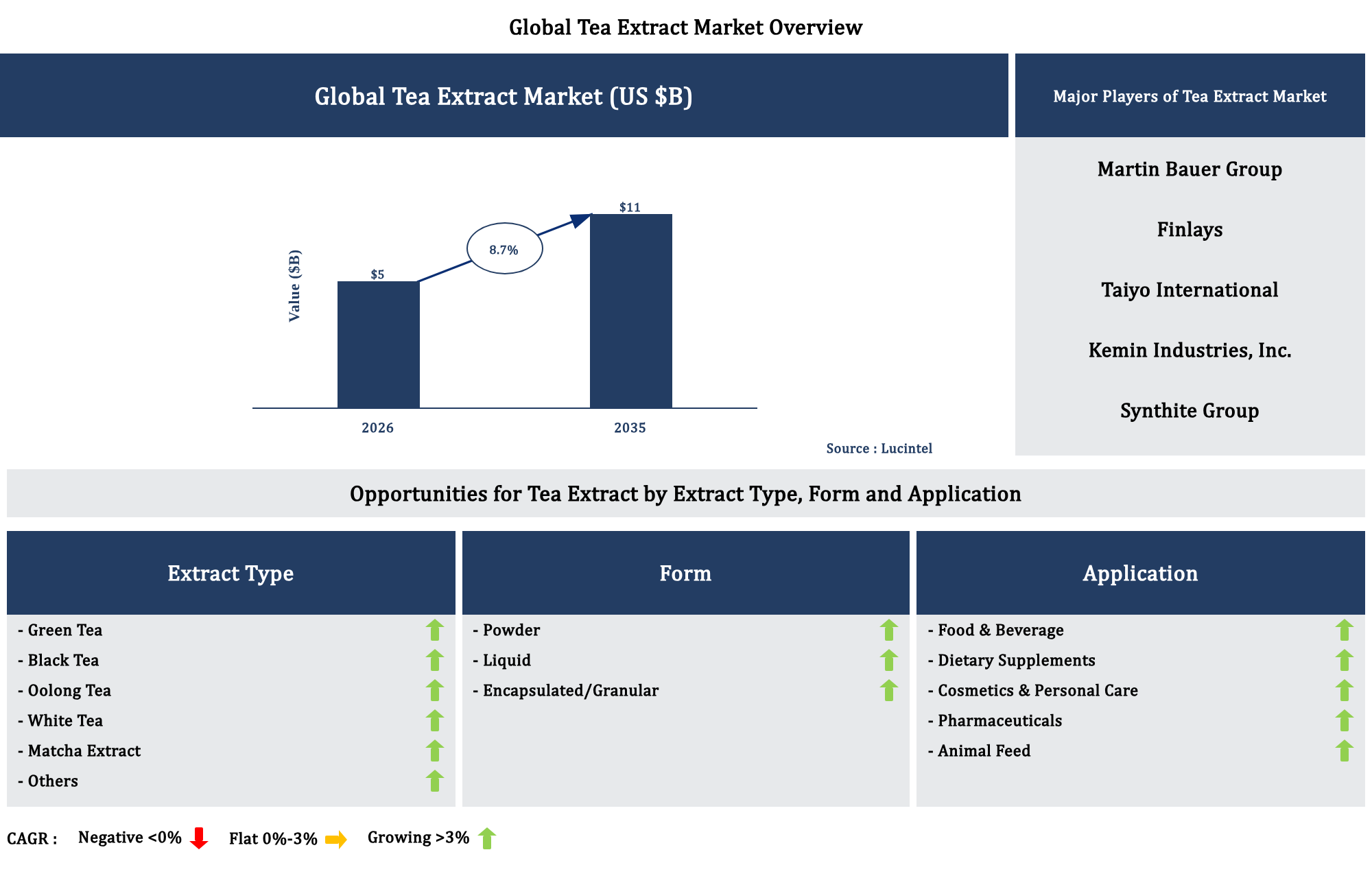
Tea Extract Market

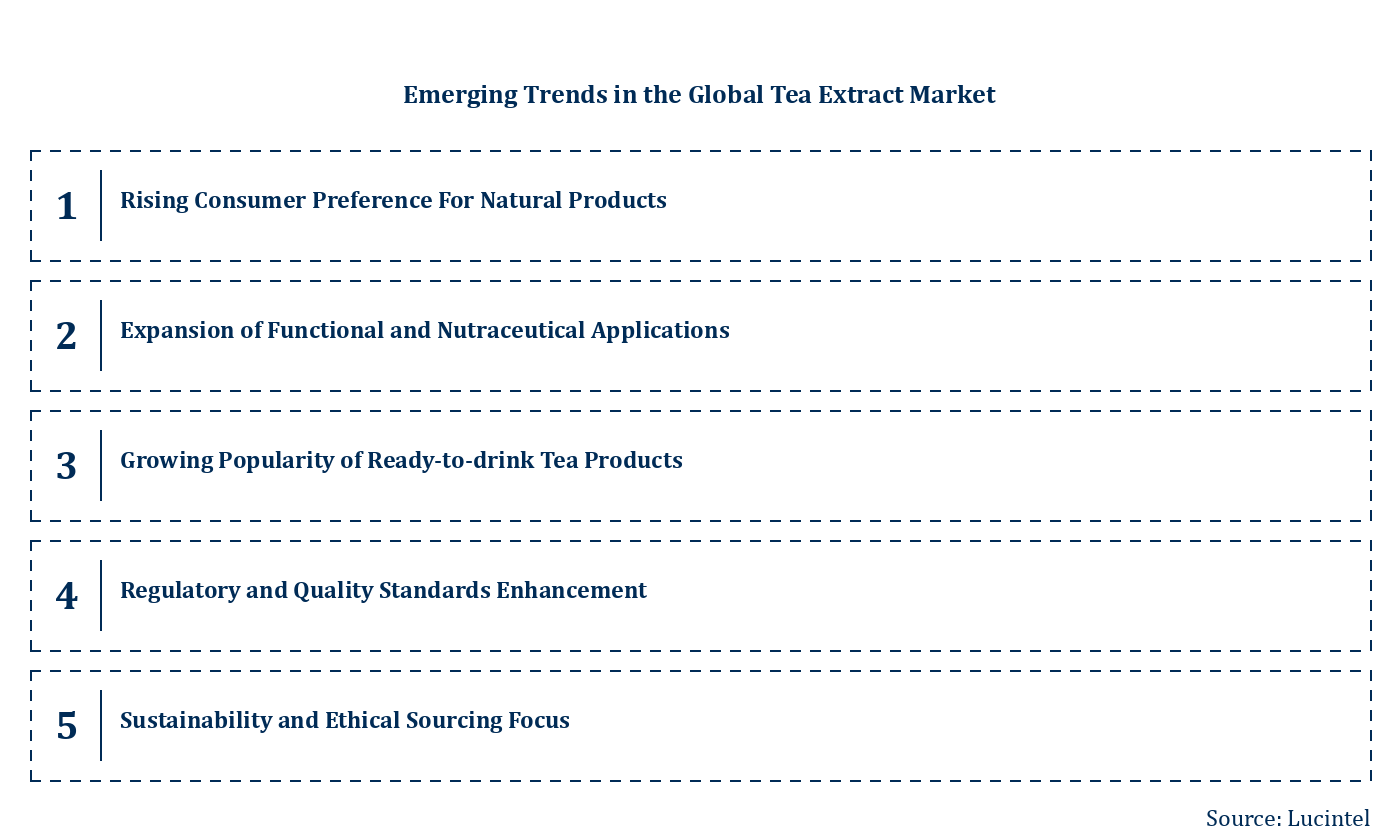
Emerging Trends in the Tea Extract Market

The tea extract market is experiencing rapid growth driven by increasing consumer health consciousness, expanding product applications, and evolving consumer preferences. As demand for natural and functional ingredients rises, industry players are innovating to meet these needs. The market is also influenced by regulatory changes, sustainability concerns, and the integration of new distribution channels. These developments are transforming the landscape, creating new opportunities and challenges for manufacturers, suppliers, and retailers. Understanding these emerging trends is crucial for stakeholders aiming to capitalize on the markets potential and stay competitive in a dynamic environment.

  • Rising Consumer Preference for Natural Products: Consumers are increasingly seeking natural, organic, and minimally processed tea extracts. This shift is driven by health awareness and a desire for clean-label products. As a result, companies are focusing on sourcing high-quality, sustainable ingredients and transparent labeling to meet consumer expectations. This trend boosts demand for herbal, green, and specialty tea extracts, fostering innovation in product formulations and marketing strategies.
  • Expansion of Functional and Nutraceutical Applications: Tea extracts are now widely incorporated into functional foods, beverages, and dietary supplements. Their antioxidant, anti-inflammatory, and cognitive-enhancing properties appeal to health-conscious consumers. This trend is encouraging manufacturers to develop new product lines that leverage tea extracts health benefits, thereby broadening market reach and creating new revenue streams in the nutraceutical sector.
  • Growing Popularity of Ready-to-Drink Tea Products: The convenience and health benefits of RTD tea beverages are fueling market growth. Consumers prefer portable, easy-to-consume options that align with busy lifestyles. Companies are innovating with unique flavors, functional ingredients, and packaging to attract a broader audience. This trend is significantly expanding the market, especially among younger demographics seeking quick, healthy refreshment options.
  • Regulatory and Quality Standards Enhancement: Governments and industry bodies are implementing stricter regulations concerning the safety, labeling, and quality of tea extracts. This trend aims to ensure consumer safety and product authenticity, prompting manufacturers to adopt rigorous quality control measures. Compliance with these standards enhances brand credibility and fosters consumer trust, ultimately shaping market dynamics and encouraging higher product standards.
  • Sustainability and Ethical Sourcing Focus: Increasing awareness of environmental and social issues is prompting companies to adopt sustainable sourcing practices. This includes fair trade certifications, eco-friendly cultivation, and transparent supply chains. Such initiatives appeal to ethically conscious consumers and can provide a competitive advantage. The emphasis on sustainability is reshaping sourcing strategies and encouraging innovation in eco-friendly extraction and packaging methods.

In summary, these emerging trends are collectively reshaping the tea extract market by emphasizing health, sustainability, innovation, and consumer-centric product development. They are driving market expansion, fostering new product categories, and setting higher standards for quality and ethical practices, ultimately creating a more dynamic and responsible industry landscape.
Tea Extract Market by country

Recent Developments in the Tea Extract Market

The tea extract market is experiencing rapid growth driven by increasing consumer health awareness, expanding product applications, and technological advancements. As consumers seek natural and functional ingredients, the industry is innovating to meet these demands. Market players are investing in research and development to enhance product quality and diversify offerings. The integration of sustainable practices and regulatory compliance further boosts market confidence. These developments collectively create new opportunities for growth, positioning the tea extract market as a significant segment within the broader health and wellness industry.

  • Growing Consumer Demand for Natural Products: The increasing preference for natural, organic, and plant-based ingredients is propelling the tea extract market. Consumers are seeking healthier alternatives to synthetic additives, driving demand for high-quality tea extracts in food, beverages, and supplements. This trend encourages manufacturers to innovate with organic certifications and sustainable sourcing, expanding market reach. The shift towards clean-label products enhances brand loyalty and opens new distribution channels, ultimately boosting sales and market share.
  • Expansion of Application Sectors: Tea extracts are increasingly used across diverse sectors such as functional foods, dietary supplements, cosmetics, and beverages. This diversification allows manufacturers to tap into multiple revenue streams, reducing dependency on traditional markets. The rising popularity of herbal teas and health drinks further amplifies demand. Innovations in extraction techniques enable the development of tailored extracts for specific health benefits, fostering product differentiation and market expansion.
  • Technological Advancements in Extraction Processes: Innovations like supercritical fluid extraction and ultrasonic extraction improve yield, purity, and potency of tea extracts. These advanced methods reduce processing time and environmental impact, aligning with sustainability goals. Enhanced extraction techniques enable the production of concentrated and standardized extracts, meeting strict quality standards. This technological progress boosts product efficacy, consumer trust, and regulatory compliance, thereby strengthening market competitiveness and opening avenues for premium product offerings.
  • Increasing Focus on Sustainability and Ethical Sourcing: Consumers and companies are prioritizing sustainable practices and ethical sourcing of tea leaves. Certification standards such as Fair Trade and Organic are gaining prominence, ensuring environmentally friendly cultivation and fair labor practices. This focus enhances brand reputation and appeals to socially conscious consumers. Sustainable sourcing also mitigates supply chain risks and supports long-term market stability, encouraging industry players to adopt eco-friendly practices and transparent supply chains.
  • Regulatory Developments and Quality Standards: Governments and industry bodies are establishing stricter regulations and quality standards for tea extracts. These measures ensure product safety, efficacy, and transparency, fostering consumer confidence. Compliance with international standards facilitates global trade and market expansion. Companies investing in quality assurance and certification processes gain competitive advantages, while regulatory clarity helps streamline product development and marketing strategies, ultimately promoting sustainable growth within the market.

The recent developments in consumer preferences, application diversification, technological innovation, sustainability, and regulatory standards are collectively transforming the tea extract market. These factors enhance product quality, expand market reach, and foster consumer trust, leading to increased market size and competitiveness. As a result, the industry is poised for sustained growth, driven by innovation and a focus on health-conscious, environmentally responsible products.

Strategic Growth Opportunities in the Tea Extract Market

The tea extract market is experiencing rapid growth driven by increasing consumer health awareness, demand for natural ingredients, and expanding applications across food, beverage, and supplement industries. Innovations in extraction techniques and product formulations are further fueling market expansion. Companies are focusing on sustainable sourcing and product diversification to meet diverse consumer preferences. This dynamic environment presents numerous strategic opportunities for industry players to capitalize on emerging trends and expand their market presence globally.

  • Expanding Applications in Functional Foods and Beverages: Tea extracts are increasingly incorporated into functional foods and beverages, driven by consumer demand for health benefits like antioxidants and stress relief. This trend opens new revenue streams for manufacturers, encouraging product innovation such as ready-to-drink teas, health shots, and fortified snacks. The versatility of tea extracts allows brands to cater to health-conscious consumers seeking natural, functional options, thereby boosting market growth and diversification.
  • Growing Demand for Organic and Natural Tea Extracts: Consumers are prioritizing organic and natural ingredients, prompting a shift toward organic tea extracts. This demand encourages producers to adopt sustainable farming and extraction practices, creating opportunities for premium product offerings. The rise in organic certifications and clean-label trends enhances consumer trust and willingness to pay higher prices, fostering market expansion and encouraging new entrants focused on quality and sustainability.
  • Technological Advancements in Extraction and Processing: Innovations in extraction technologies, such as supercritical fluid extraction and green solvents, improve yield, purity, and sustainability of tea extracts. These advancements reduce production costs and environmental impact, enabling companies to offer higher-quality products. Enhanced extraction methods also allow for the preservation of bioactive compounds, expanding applications in nutraceuticals and cosmetics, thus driving overall market growth and product innovation.
  • Increasing Focus on Sustainable and Ethical Sourcing: Sustainability concerns are influencing sourcing strategies, with companies emphasizing ethical cultivation and fair trade practices. This focus appeals to environmentally conscious consumers and enhances brand reputation. Sustainable sourcing also ensures consistent quality and supply chain stability, creating opportunities for certifications and premium pricing. As sustainability becomes a key differentiator, market players investing in responsible sourcing are positioned for long-term growth.
  • Rising Consumer Preference for Wellness and Natural Products: The global shift toward wellness and natural products fuels demand for tea extracts as a key ingredient in health supplements, skincare, and functional foods. Consumers seek products with proven health benefits, leading to increased R&D investments and product launches. This trend supports market expansion into new regions and segments, encouraging brands to develop innovative, health-oriented offerings that align with consumer values and lifestyle choices.

The overall market outlook is positively influenced by these growth opportunities, fostering innovation, sustainability, and diversification. Companies that strategically leverage these trends can enhance their competitive edge, expand their consumer base, and achieve sustained growth in the evolving tea extract market.

Tea Extract Market Drivers and Challenges

The tea extract market is influenced by a variety of technological, economic, and regulatory factors that shape its growth trajectory. Innovations in extraction technologies enhance product quality and efficiency, while economic trends such as rising health consciousness and demand for natural ingredients drive market expansion. Regulatory frameworks concerning food safety and labeling standards impact product development and marketing strategies. Additionally, consumer preferences shifting towards organic and sustainable products further influence market dynamics. These multifaceted drivers and challenges collectively determine the markets potential for growth, innovation, and adaptation in a competitive landscape.

The factors responsible for driving the tea extract market include:-

  • Increasing Consumer Health Awareness: Growing awareness about health benefits associated with tea extracts, such as antioxidants and weight management, has led to higher demand. Consumers are seeking natural, functional ingredients, prompting manufacturers to innovate and expand product offerings. This trend boosts sales across health supplements, beverages, and functional foods, fostering market growth. The shift towards wellness-oriented products also encourages R&D investments, further fueling industry expansion.
  • Rising Demand for Natural and Organic Products: Consumers are increasingly prioritizing organic, non-GMO, and sustainably sourced ingredients. This preference drives the market towards organic tea extracts, which are perceived as safer and more environmentally friendly. Certification standards and eco-friendly farming practices support this trend, creating opportunities for premium pricing and market differentiation. As a result, manufacturers are investing in organic cultivation and extraction processes to meet consumer expectations.
  • Technological Advancements in Extraction Processes: Innovations such as supercritical fluid extraction and microwave-assisted extraction improve yield, purity, and efficiency. These technologies reduce processing time and environmental impact, making production more sustainable and cost-effective. Enhanced extraction methods also enable the development of concentrated and standardized extracts, meeting the demand for high-quality ingredients in various applications, thus expanding market reach.
  • Growing Applications Across Industries: Tea extracts are increasingly used in dietary supplements, functional beverages, cosmetics, and personal care products. The versatility of tea extracts in providing antioxidant, anti-inflammatory, and anti-aging benefits broadens their application scope. This diversification opens new revenue streams for manufacturers and encourages product innovation, supporting overall market growth.

The challenges in the tea extract market are:

  • Stringent Regulatory Standards: Food safety and labeling regulations vary across regions, requiring compliance with diverse standards. These regulations can delay product launches, increase costs, and restrict certain ingredients or claims. Navigating complex regulatory landscapes demands significant resources and expertise, which can hinder market entry for smaller players and slow overall industry growth.
  • Supply Chain Disruptions: Fluctuations in raw material availability due to climate change, seasonal variations, and geopolitical issues impact production stability. Limited access to high-quality tea leaves and organic raw materials can lead to increased costs and inconsistent supply. These disruptions challenge manufacturers to maintain product quality and meet growing demand without compromising profitability.
  • Competition and Market Saturation: The increasing number of players entering the market intensifies competition, leading to price wars and reduced profit margins. Differentiating products becomes more difficult as many companies offer similar extracts, which can dilute brand value. Market saturation in certain regions also limits growth opportunities, requiring companies to innovate continuously and explore new markets to sustain profitability.

The tea extract market is driven by rising health consciousness, demand for organic products, technological innovations, and expanding applications. However, regulatory hurdles, supply chain issues, and intense competition pose significant challenges. These factors collectively influence the markets growth potential, requiring stakeholders to adapt strategically. Embracing innovation, ensuring compliance, and focusing on sustainable sourcing will be crucial for long-term success. Overall, the markets future hinges on balancing these drivers and challenges to capitalize on emerging opportunities while mitigating risks.

List of Tea Extract Market Companies

Companies in the market compete on the basis of product quality offered. Major players in this market focus on expanding their manufacturing facilities, R&D investments, infrastructural development, and leverage integration opportunities across the value chain. Through these strategies tea extract market companies cater increasing demand, ensure competitive effectiveness, develop innovative products & technologies, reduce production costs, and expand their customer base. Some of the tea extract market companies profiled in this report include-

  • Martin Bauer Group
  • Finlays
  • Taiyo International
  • Kemin Industries, Inc.
  • Synthite Group
  • International Flavors & Fragrances Inc.
  • Hunan Sunfull Bio-tech
  • Prinova Group
  • AVT Natural Products Limited
  • Blueberry Agro Products Private Limited

Tea Extract Market by Segment

The study includes a forecast for the global tea extract market by extract type, form, application, and region.

  • Tea Extract Market by Extract Type [Value from 2019 to 2035]:
    • Green Tea
    • Black Tea
    • Oolong Tea
    • White Tea
    • Matcha Extract
    • Others
  • Tea Extract Market by Form [Value from 2019 to 2035]:
    • Powder
    • Liquid
    • Encapsulated/Granular
  • Tea Extract Market by Application [Value from 2019 to 2035]:
    • Food & Beverage
    • Dietary Supplements
    • Cosmetics & Personal Care
    • Pharmaceuticals
    • Animal Feed
  • Tea Extract Market by Region [Value ($B) from 2019 to 2035]:
    • North America
    • Europe
    • Asia Pacific
    • The Rest of the World

Country Wise Outlook for the Tea Extract Market

The tea extract market has experienced significant growth driven by increasing consumer health awareness, rising demand for natural ingredients, and expanding applications in food, beverages, and health supplements. Technological innovations and regulatory changes have also influenced market dynamics across different regions. The United States, China, Germany, India, and Japan are key players with unique developments shaping the industry landscape. These countries' market trends reflect their economic strengths, consumer preferences, and technological advancements, contributing to the overall growth and diversification of the tea extract sector worldwide.

  • United States: The U.S. market has seen a surge in organic and clean-label tea extracts, driven by health-conscious consumers. Innovations in extraction techniques have improved product purity and potency. The demand for functional beverages containing tea extracts, such as energy drinks and wellness shots, continues to grow. Regulatory standards are tightening, prompting companies to adopt sustainable sourcing and transparent labeling practices. The market also benefits from a strong presence of health supplement brands integrating tea extracts for antioxidant properties.
  • China: As the largest producer and consumer of tea, China has expanded its tea extract industry with a focus on traditional and herbal formulations. Recent developments include the adoption of advanced extraction technologies to enhance yield and quality. The government promotes the use of natural ingredients, boosting domestic production. Export markets are expanding, especially in Asia and North America. Chinese companies are investing in R&D to develop innovative tea-based products, including functional teas targeting specific health benefits like weight management and immunity.
  • Germany: The German market emphasizes organic and sustainably sourced tea extracts, aligning with European Union regulations. There is a growing preference for high-quality, minimally processed extracts used in premium food and beverage products. Technological advancements have improved extraction efficiency and product stability. The market also sees increased interest in herbal and specialty tea extracts for medicinal and wellness applications. Regulatory compliance and consumer safety are priorities, fostering trust and market growth.
  • India: India is a major producer of tea, with a focus on expanding its extract segment for both domestic and export markets. Recent developments include the adoption of eco-friendly extraction methods and value-added products like concentrated extracts and powders. The government supports the industry through initiatives promoting organic and sustainable practices. The rising popularity of Ayurveda and herbal medicine has boosted demand for traditional tea extracts. Domestic consumption is increasing, especially in health and wellness sectors, with new product launches incorporating Indian tea varieties.
  • Japan: Japan's tea extract market is characterized by innovation in functional and specialty products, driven by health-conscious consumers. The focus is on green tea extracts with high catechin content for antioxidant benefits. Advanced extraction and purification technologies are used to produce high-quality, standardized extracts. The market is also expanding into cosmetics and skincare, leveraging the anti-aging properties of tea extracts. Regulatory standards are strict, ensuring product safety and efficacy. Japanese companies are investing in R&D to develop novel applications, including tea-based supplements and beauty products.

Features of the Tea Extract Market

  • Market Size Estimates: Tea extract market size estimation in terms of value ($B).
  • Trend and Forecast Analysis: Market trends (2019 to 2025) and forecast (2026 to 2035) by various segments and regions.
  • Segmentation Analysis: Tea extract market size by extract type, form, application, and region in terms of value ($B).
  • Regional Analysis: Tea extract market breakdown by North America, Europe, Asia Pacific, and Rest of the World.
  • Growth Opportunities: Analysis of growth opportunities in different extract types, forms, applications, and regions for the tea extract market.
  • Strategic Analysis: This includes M&A, new product development, and competitive landscape of the tea extract market.
  • Analysis of competitive intensity of the industry based on Porter’s Five Forces model.

Top 5 Companies

  • Martin Bauer Group
  • Finlays
  • Taiyo International
  • Kemin Industries, Inc.
  • Synthite Group

Table of Contents

1. Executive Summary
14.1 Competitive Analysis Overview

List of Figures

List of Tables

Methodology

Lucintel has been in the business of market research and management consulting since 2000 and has published over 1000 market intelligence reports in various markets / applications and served over 1,000 clients worldwide. This study is a culmination of four months of full-time effort performed by Lucintel's analyst team. The analysts used the following sources for the creation and completion of this valuable report:

  • In-depth interviews of the major players in this market
  • Detailed secondary research from competitors' financial statements and published data
  • Extensive searches of published works, market, and database information pertaining to industry news, company press releases, and customer intentions
  • A compilation of the experiences, judgments, and insights of Lucintel's professionals, who have analyzed and tracked this market over the years.

Extensive research and interviews are conducted across the supply chain of this market to estimate market share, market size, trends, drivers, challenges, and forecasts. Below is a brief summary of the primary interviews that were conducted by job function for this report.

Lucintel's methodology for market research

Thus, Lucintel compiles vast amounts of data from numerous sources, validates the integrity of that data, and performs a comprehensive analysis. Lucintel then organizes the data, its findings, and insights into a concise report designed to support the strategic decision-making process. The figure below is a graphical representation of Lucintel's research process.

Primary interviews by job function

Buy Now

Choose a license that fits your team. Instant PDF delivery.

Market Report

1 User PDF

$4,850
Buy Now

Market Report

2-5 Users PDF

$6,700
Buy Now

Market Report

Corporate PDF

$8,850
Buy Now

Market Report

Global PDF

$10,000
Buy Now

Prices exclude taxes. Instant delivery. Custom licensing available on request.

Frequently Asked Questions

What is the tea extract market size?
The global tea extract market is expected to reach an estimated $11 billion by 2035.
What is the growth forecast for tea extract market?
The global tea extract market is expected to grow with a CAGR of 8.7% from 2026 to 2035.
What are the major drivers influencing the growth of the tea extract market?
The major drivers for this market are the increasing demand for natural beverage ingredients, the rising use in wellness products, and the growing adoption in food & supplement applications.
What are the major segments for tea extract market?
The future of the tea extract market looks promising with opportunities in the food & beverage, dietary supplement, cosmetic & personal care, pharmaceutical, and animal feed markets.
Who are the key tea extract market companies?

Some of the key tea extract companies are as follows:

  • Martin Bauer Group
  • Finlays
  • Taiyo International
  • Kemin Industries, Inc.
  • Synthite Group
  • International Flavors & Fragrances Inc.
  • Hunan Sunfull Bio-tech
  • Prinova Group
  • AVT Natural Products Limited
  • Blueberry Agro Products Private Limited
Which tea extract market segment will be the largest in future?
Lucintel forecasts that, within the extract type category, green tea is expected to witness the highest growth over the forecast period.
In tea extract market, which region is expected to be the largest in next 8 years?
In terms of region, APAC is expected to witness the highest growth over the forecast period.
Do we receive customization in this report?
Yes, Lucintel provides 10% customization without any additional cost.

Key Questions

  • What are some of the most promising, high-growth opportunities for the tea extract market by extract type (green tea, black tea, oolong tea, white tea, matcha extract, and others), form (powder, liquid, and encapsulated/granular), application (food & beverage, dietary supplements, cosmetics & personal care, pharmaceuticals, and animal feed), and region (North America, Europe, Asia Pacific, and the Rest of the World)?
  • Which segments will grow at a faster pace and why?
  • Which region will grow at a faster pace and why?
  • What are the key factors affecting market dynamics? What are the key challenges and business risks in this market?
  • What are the business risks and competitive threats in this market?
  • What are the emerging trends in this market and the reasons behind them?
  • What are some of the changing demands of customers in the market?
  • What are the new developments in the market? Which companies are leading these developments?
  • Who are the major players in this market? What strategic initiatives are key players pursuing for business growth?
  • What are some of the competing products in this market and how big of a threat do they pose for loss of market share by material or product substitution?
  • What M&A activity has occurred in the last 5 years and what has its impact been on the industry?
Why Choose Us

The Lucintel Advantage

Trusted partner for strategic intelligence and business growth

25+ Years Excellence

25+ Years Excellence

Quarter century of proven expertise in management consulting and market research across global markets.
Game-Changer Ideas

Game-Changer Ideas

Innovative strategies and actionable insights that help clients become the smartest in their industry.
Global Reach

Global Reach

Extensive coverage across 50+ industries and markets worldwide with localized expertise.
Start Your Growth Journey

Get Your Free
Market Intelligence
Briefing

Receive a complimentary market analysis tailored to your industry. Our analysts will identify key growth opportunities and competitive dynamics specific to your business.

Custom Market Snapshot

Market size, growth rate, and key trend analysis for your specific sector.

Competitive Landscape Overview

Top competitor positioning and market share analysis.

Growth Opportunity Identification

Strategic recommendations backed by data-driven insights.

Subscribe

Subscribe to our Newsletter

Get curated market intelligence and competitive moves straight to your inbox.

By subscribing, you agree to receive our monthly insights. Unsubscribe anytime.

Industry Trends Market Signals Opportunities Competitor Moves