
Market Report · July 22, 2026

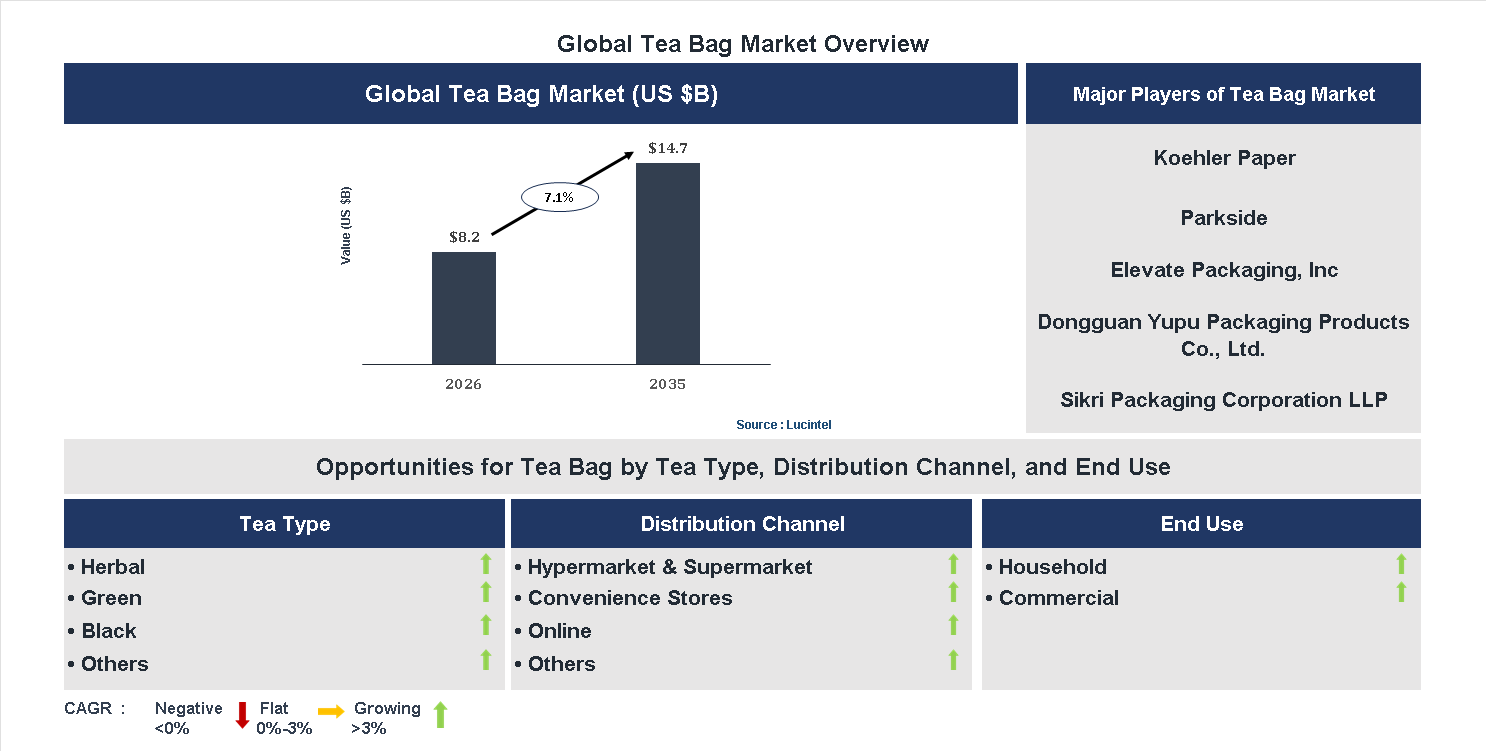
Key data points: The market size in 2035 = $14.7 billion, growth forecast = 7.1% annually for the next 8 years. Scroll below to get more insights. This market report covers trends, opportunities and forecasts in tea bag market to 2035 by tea type (herbal, green, black, and others), distribution channel (hypermarket & supermarket, convenience stores, online, and others), end use (household and commercial), and region (North America, Europe, Asia Pacific, and the Rest of the World)
We'll send your sample report shortly.
• Lucintel forecasts that, within the tea type category, black is expected to witness the highest growth over the forecast period.
• Within the end use category, household is expected to witness higher growth.
• In terms of region, Europe is expected to witness the highest growth over the forecast period. Gain valuable insights for your business decisions with our comprehensive 150+ page report. Sample figures with some insights are shown below.
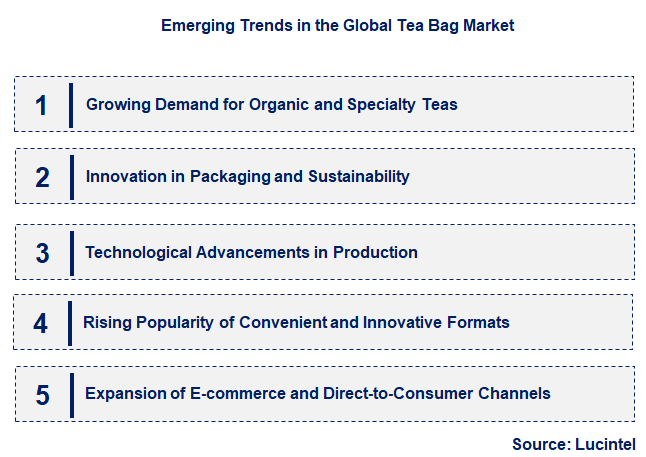
• Growing Demand for Organic and Specialty Teas: Consumers are increasingly seeking organic, herbal, and specialty teas for health benefits and unique flavors. This trend drives innovation in product development, with brands offering premium, health-focused options. The shift towards organic products also influences sourcing and certification processes, emphasizing sustainability and quality. As consumers become more health-conscious, the demand for natural, minimally processed teas is expected to grow, expanding market segments and encouraging new entrants to innovate within the premium and niche categories.
• Innovation in Packaging and Sustainability: Eco-friendly packaging solutions are gaining prominence as consumers and regulators push for sustainability. Companies are adopting biodegradable, compostable, and recyclable materials to reduce environmental impact. Innovations include pyramid-shaped tea bags, biodegradable filters, and minimal packaging designs that appeal to eco-conscious buyers. This trend not only enhances brand reputation but also aligns with global efforts to reduce plastic waste, influencing supply chain practices and prompting industry-wide shifts toward greener alternatives.
• Technological Advancements in Production: Automation and advanced manufacturing technologies are improving efficiency, consistency, and quality in tea bag production. Innovations such as precision filling, sealing, and quality control systems reduce waste and enhance product safety. Digital tracking and smart packaging solutions are also emerging, providing consumers with transparency and traceability. These technological improvements enable manufacturers to meet increasing demand for high-quality, safe, and innovative products while reducing costs and environmental footprint.
• Rising Popularity of Convenient and Innovative Formats: Consumers favor convenient, easy-to-use tea bag formats, including pyramid-shaped, biodegradable, and single-serve options. Innovations such as flavor-infused, herbal, and functional teas cater to diverse preferences and lifestyles. The development of innovative formats enhances the consumer experience, offering portability and variety. This trend supports the growth of on-the-go consumption, catering to busy lifestyles and expanding market reach across retail channels, including online platforms and convenience stores.
• Expansion of E-commerce and Direct-to-Consumer Channels: The rise of online shopping has transformed how consumers purchase tea bags. E-commerce platforms enable brands to reach a broader audience, offer personalized products, and provide detailed product information. Direct-to-consumer models foster brand loyalty and allow for better customer engagement through subscription services and customized offerings. This digital shift accelerates market growth, reduces reliance on traditional retail channels, and encourages brands to innovate in marketing and distribution strategies to meet the demands of tech-savvy consumers. In summary, these trends are collectively reshaping the tea bag market by emphasizing sustainability, innovation, health consciousness, and digital engagement. They are driving product diversification, improving supply chain efficiencies, and expanding market reach, ultimately creating a more dynamic and consumer-centric industry landscape.
• Growing Demand for Organic and Specialty Tea Bags: The increasing consumer focus on health and wellness has driven demand for organic, herbal, and specialty tea bags. This trend encourages producers to innovate with natural ingredients and eco-friendly packaging, boosting sales and market differentiation. As consumers become more conscious of product quality and sustainability, brands that offer organic and premium options are gaining a competitive advantage, expanding market reach, and fostering loyalty.
• Innovation in Eco-Friendly Packaging Solutions: Sustainability concerns are prompting companies to develop biodegradable, compostable, and recyclable tea bag packaging. These eco-friendly solutions reduce environmental impact and appeal to environmentally conscious consumers. The adoption of sustainable packaging not only enhances brand reputation but also aligns with regulatory pressures and global environmental goals, leading to increased market acceptance and growth in eco-conscious segments.
• Technological Advancements in Tea Bag Manufacturing: Automation, improved sealing techniques, and innovative materials are enhancing production efficiency and product quality. These technological improvements enable manufacturers to reduce costs, increase output, and introduce new product formats such as pyramid-shaped or biodegradable tea bags. As a result, the market benefits from a broader product portfolio, better shelf life, and increased consumer satisfaction, driving overall growth.
• Expansion of E-commerce and Retail Channels: The rise of online shopping platforms and modern retail outlets has expanded the reach of tea bag products globally. E-commerce provides consumers with easy access to a wide variety of brands and specialty options, boosting sales and brand visibility. Retail expansion, including supermarkets and specialty stores, enhances product accessibility and consumer engagement, contributing to increased market penetration and revenue growth.
• Focus on Functional and Wellness-Driven Tea Products: The market is witnessing a surge in functional tea bags infused with vitamins, minerals, and herbs targeting health benefits like immunity, relaxation, and detoxification. This trend caters to health-conscious consumers seeking convenient wellness solutions. The development of such products is driving innovation, expanding consumer base, and creating new revenue streams, thereby significantly impacting market dynamics and growth prospects. The overall impact of these developments is a more dynamic, sustainable, and consumer-centric tea bag market. Innovation, health focus, and sustainability are driving growth, expanding market segments, and enhancing brand differentiation, ultimately shaping a resilient and competitive industry landscape.
• Growing Demand for Organic and Natural Tea Bags: Increasing consumer awareness about health and wellness is driving demand for organic, natural, and chemical-free tea bags. This trend encourages manufacturers to develop eco-friendly, non-GMO, and sustainably sourced products, appealing to environmentally conscious buyers. The shift towards organic options also supports premium pricing strategies, expanding market share in health-focused segments. As consumers prioritize transparency and quality, the market for organic tea bags is expected to grow rapidly, fostering innovation and differentiation among brands.
• Expansion of Premium and Specialty Tea Bag Offerings: Consumers are seeking unique flavors, blends, and artisanal experiences, prompting brands to develop premium and specialty tea bags. These include rare teas, herbal infusions, and functional blends targeting specific health benefits. Packaging innovations such as biodegradable wrappers and luxury designs enhance appeal. The rise of specialty tea bags caters to a more discerning customer base willing to pay higher prices, thereby increasing profit margins and market diversity. This trend supports brand differentiation and market expansion into niche segments.
• Adoption of Sustainable and Eco-Friendly Packaging Solutions: Environmental concerns are prompting manufacturers to adopt sustainable packaging materials like biodegradable, compostable, and recyclable options. This shift reduces environmental impact and aligns with consumer values, boosting brand loyalty. Innovations include plant-based wrappers and minimal packaging designs that maintain product freshness. Sustainable packaging not only meets regulatory standards but also enhances corporate social responsibility profiles. As eco-consciousness grows, sustainable packaging is becoming a key differentiator, driving market growth and consumer preference for environmentally responsible brands.
• Integration of Technology for Enhanced Consumer Experience: Digital innovations such as QR codes, augmented reality, and mobile apps are being integrated into tea bag packaging to provide consumers with product information, brewing tips, and personalized recommendations. Smart packaging enhances engagement and transparency, fostering brand loyalty. E-commerce platforms leverage technology for targeted marketing and direct-to-consumer sales, expanding reach. These technological advancements improve customer satisfaction, streamline supply chains, and enable brands to gather valuable consumer data, supporting strategic growth and innovation in the market.
• Rising Popularity of Single-Serve and Convenient Packaging Formats: The demand for convenience is fueling growth in single-serve and portable tea bag formats suitable for on-the-go lifestyles. Compact, easy-to-use packaging appeals to busy consumers seeking quick, mess-free brewing options. Innovations include resealable pouches and portion-controlled sachets that maintain freshness. This trend supports the expansion into new retail channels such as convenience stores and vending machines. The focus on convenience and portability is expected to continue driving sales, broadening market accessibility, and consumer base. These growth opportunities collectively shape a dynamic and expanding tea bag market, driven by consumer preferences for health, sustainability, convenience, and premium experiences. Companies that innovate in product offerings, packaging, and technology are positioned to capitalize on emerging trends, ensuring sustained growth and competitive advantage. As the market evolves, embracing these opportunities will be crucial for brands aiming to meet diverse consumer demands and expand globally.
• Increasing Consumer Preference for Convenience: The modern consumer seeks quick, easy, and portable beverage options. Tea bags fulfill this demand by offering a simple brewing process, which has led to widespread adoption across households and cafes. The convenience factor is further enhanced by innovations such as biodegradable and pyramid-shaped tea bags that improve infusion and flavor. As busy lifestyles continue to grow, the demand for ready-to-brew tea solutions is expected to rise, fueling market expansion globally.
• Growth in Organic and Specialty Tea Segments: Consumers are increasingly health-conscious and prefer organic, herbal, and specialty teas. This shift is driven by awareness of health benefits and a desire for unique flavors. Tea bag manufacturers are responding by offering a broader range of organic and specialty options, which command premium pricing. The trend towards wellness and natural products is expected to sustain growth in these segments, attracting new customer bases and expanding market share.
• Technological Advancements in Packaging and Brewing: Innovations such as pyramid-shaped tea bags, biodegradable materials, and airtight packaging improve product quality and environmental sustainability. These advancements enhance flavor infusion, ease of use, and shelf life, thereby increasing consumer satisfaction. Additionally, smart packaging with QR codes provides transparency about sourcing and health benefits, influencing purchasing decisions. Such technological progress helps companies differentiate their products and meet evolving consumer expectations.
• Expansion of E-commerce and Retail Channels: The proliferation of online shopping platforms has made tea bags more accessible to a global audience. E-commerce enables brands to reach niche markets and offer a wide variety of products, including organic and specialty teas. Retail expansion, including supermarkets, convenience stores, and specialty outlets, further boosts visibility and availability. The integration of digital marketing strategies and direct-to-consumer models is expected to accelerate market penetration and sales growth.
• Rising Focus on Sustainability and Eco-friendly Packaging: Environmental concerns are prompting manufacturers to adopt sustainable practices, such as using biodegradable, recyclable, and compostable materials for tea bags. Consumers are increasingly favoring brands that demonstrate environmental responsibility, influencing purchasing decisions. Regulatory pressures and corporate social responsibility initiatives also drive innovation in eco-friendly packaging solutions. This focus on sustainability not only enhances brand image but also aligns with global efforts to reduce plastic waste and carbon footprint, shaping the future landscape of the market. The challenges facing the tea bag market include:
• Stringent Regulatory Standards: Governments and international bodies impose strict regulations concerning food safety, labeling, and environmental impact. Compliance requires significant investment in quality control, certification, and sustainable sourcing, which can increase operational costs. Non-compliance risks legal penalties and damage to brand reputation. Navigating diverse regulatory environments across regions adds complexity, potentially hindering market entry and expansion for smaller players.
• Volatility in Raw Material Prices: The primary raw materials, such as tea leaves and packaging materials, are subject to price fluctuations due to climate change, supply chain disruptions, and geopolitical factors. Rising costs can squeeze profit margins and force manufacturers to increase product prices, potentially reducing competitiveness. Ensuring a stable supply of high-quality raw materials remains a persistent challenge, impacting production planning and profitability.
• Environmental Impact and Waste Management: Despite efforts to adopt eco-friendly packaging, the environmental footprint of tea bag production remains a concern. Non-biodegradable materials contribute to plastic pollution, and waste disposal regulations are becoming more stringent. Managing waste sustainably while maintaining product quality and affordability is complex. Companies face pressure to innovate in sustainable packaging and waste reduction, which can involve significant R&D investments and operational adjustments. In summary, the tea bag market is shaped by a combination of technological innovations, changing consumer preferences, and regulatory pressures. While growth opportunities abound in organic, specialty, and convenience segments, challenges such as regulatory compliance, raw material volatility, and environmental concerns pose significant hurdles. Successful market players will need to adapt swiftly to these dynamics by investing in sustainable practices, technological advancements, and diversified distribution channels. Overall, the markets future hinges on balancing innovation with sustainability to meet evolving consumer and regulatory expectations, ensuring long-term growth and competitiveness.
• Koehler Paper
• Parkside
• Elevate Packaging, Inc
• Dongguan Yupu Packaging Products Co., Ltd.
• Sikri Packaging Corporation LLP
• TONCHANT
• Greenshield Nutricare
• YITING NON-WOVEN CO., LTD
• Macrokun
• Custom Co-Pak
• Herbal
• Green
• Black
• Others
• Hypermarket & Supermarket
• Convenience Stores
• Online
• Others
• Household
• Commercial
• North America
• Europe
• Asia Pacific
• The Rest of the World
• United States: The U.S. tea bag market has seen a surge in organic and specialty tea offerings, with brands focusing on eco-friendly packaging and health-conscious products. Innovative flavors and functional teas targeting wellness trends are gaining popularity, alongside increased demand for convenient, single-serve options. Retail channels are expanding to include online platforms, boosting accessibility and sales.
• China: As the worlds largest tea producer and consumer, China is witnessing a shift towards premium and branded tea bags, emphasizing quality and authenticity. Traditional tea consumption is evolving with modern packaging and convenience formats, catering to younger consumers. The market also sees growth in organic and health-oriented tea products, supported by government initiatives promoting tea culture.
• Germany: The German market is characterized by a strong preference for organic and sustainable tea products. Consumers are increasingly interested in fair-trade and environmentally friendly packaging. The demand for herbal and wellness teas is rising, with innovative blends and functional ingredients. Retailers are expanding their offerings to include a broader range of premium and specialty teas.
• India: India, a major tea producer, is experiencing growth in packaged and branded tea bags, driven by urbanization and changing lifestyles. There is a rising demand for premium and flavored teas, including green and herbal variants. The market is also witnessing increased focus on sustainable sourcing and eco-friendly packaging, aligning with global trends.
• Japan: The Japanese market emphasizes high-quality, traditional, and organic tea bags. Consumers prefer premium, artisanal, and health-oriented products, with a focus on green and specialty teas. Innovative packaging and convenient formats are popular, alongside a growing interest in functional teas that promote health and wellness.


• Koehler Paper
• Parkside
• Elevate Packaging, Inc
• Dongguan Yupu Packaging Products Co., Ltd.
• Sikri Packaging Corporation LLP
• TONCHANT
• Greenshield Nutricare
• YITING NON-WOVEN CO., LTD
• Macrokun
• Custom Co-Pak Q6. Which tea bag market segment will be the largest in future? Answer: Lucintel forecasts that, within the tea type category, black is expected to witness the highest growth over the forecast period. Q7. In tea bag market, which region is expected to be the largest in next 5 years? Answer: In terms of region, Europe is expected to witness the highest growth over the forecast period. Q8. Do we receive customization in this report? Answer: Yes, Lucintel provides 10% customization without any additional cost.


Choose a license that fits your team. Instant PDF delivery.
Prices exclude taxes. Instant delivery. Custom licensing available on request.
Market Report · July 22, 2026
Market Report · July 22, 2026
Market Report · July 22, 2026
Trusted partner for strategic intelligence and business growth


Receive a complimentary market analysis tailored to your industry. Our analysts will identify key growth opportunities and competitive dynamics specific to your business.

Market size, growth rate, and key trend analysis for your specific sector.

Top competitor positioning and market share analysis.

Strategic recommendations backed by data-driven insights.
Get curated market intelligence and competitive moves straight to your inbox.
By subscribing, you agree to receive our monthly insights. Unsubscribe anytime.
Receive a complimentary market analysis tailored to your industry. Our analysts will identify key growth opportunities and competitive dynamics specific to your business.
Market size, growth rate, and key trend analysis for your specific sector.
Top competitor positioning and market share analysis.
Strategic recommendations backed by data-driven insights.
Get curated market intelligence, emerging trends, and competitive moves straight to your inbox each month.
By subscribing, you agree to receive our monthly insights. Unsubscribe anytime.
We'll send your sample report shortly.