
Market Report · July 22, 2026

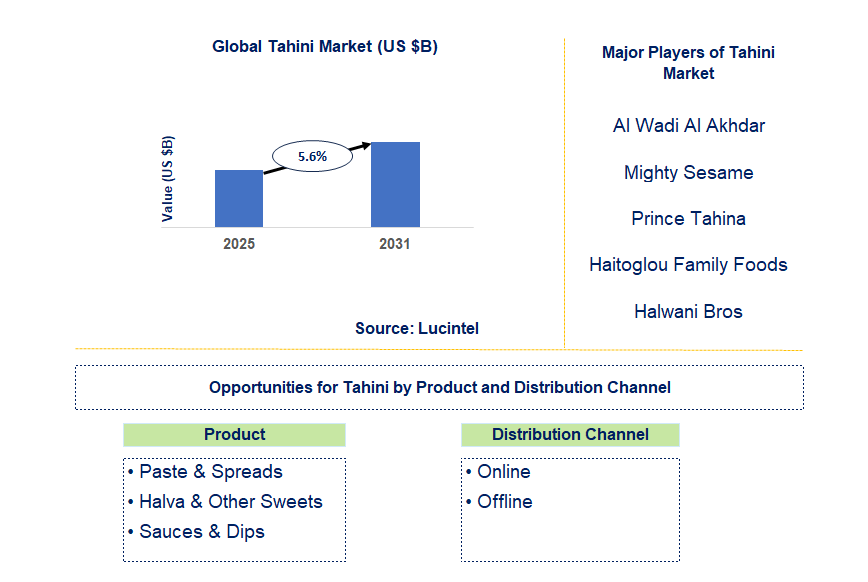
Key data points: The growth forecast = 5.6% annually for the next 7 years. Scroll below to get more insights. This market report covers Trends, opportunities and forecasts in tahini market to 2031 by product (paste & spreads, halva & other sweets, and sauces & dips), distribution channel (online and offline), and region (North America, Europe, Asia Pacific, and the Rest of the World)
We'll send your sample report shortly.
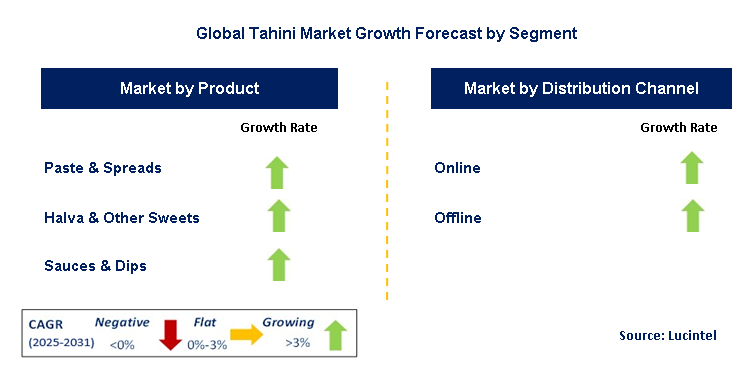
• Lucintel forecasts that, within the product category, paste & spread is expected to witness the highest growth over the forecast period.
• Within the distribution channel category, offline is expected to witness higher growth.
• In terms of region, North America is expected to witness the highest growth over the forecast period.
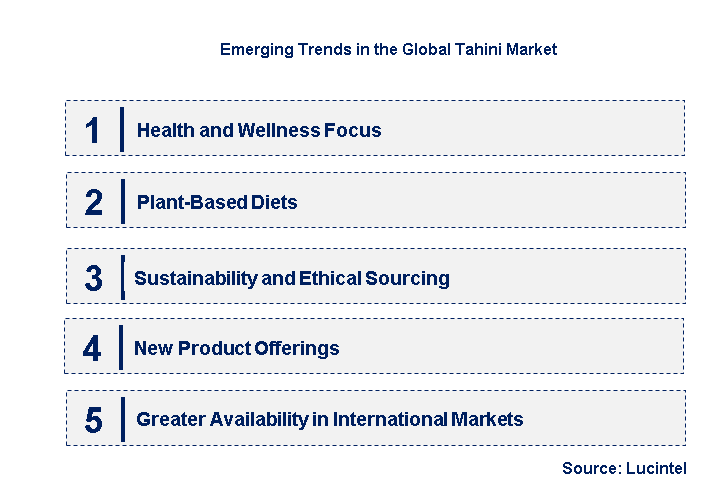
• Health and Wellness Focus: Consumers are looking for healthier and plant-based substitutes for conventional spreads and condiments. Tahini, rich in healthy fats, protein, and vitamins, is emerging as a superfood. The trend towards vegan, gluten-free, and organic lifestyles has added to the popularity of tahini. Its presence in health-oriented snacks, smoothies, and energy bars is transforming its image from that of a specialty ingredient to that of a mainstream superfood product.
• Plant-Based Diets: As the popularity of plant-based eating continues to rise globally, tahini is increasingly becoming a staple in vegan and vegetarian diets. Consumers are choosing tahini for its plant-based protein, healthy fats, and versatility in various dishes. This trend is particularly noticeable in regions like North America and Europe, where veganism is rapidly growing. The increasing demand for plant-based alternatives to dairy products, meat, and processed snacks has further solidified tahini’s place in the plant-based food market.
• Sustainability and Ethical Sourcing: Sustainability has become a key focus in the tahini market, as consumers demand ethically sourced and eco-friendly products. Producers are increasingly offering organic and fair-trade tahini to meet these demands. Sesame cultivation's environmental impact, from which tahini is made, is being questioned, and businesses are embracing sustainable cultivation in order to minimize their footprint. These moral concerns, coupled with a greater supply-chain transparency, are influencing consumer demand and supporting sales of sustainably grown tahini.
• New Product Offerings: Tahini is moving beyond its historical applications in Mediterranean and Middle Eastern foods. New tahini-based products, such as dressings, energy bars, dips, and sauces, are being brought to market by manufacturers. These new developments are appealing to more consumers, such as those looking for healthier snack options or wanting to add more plant-based foods to their diets. As more consumers embrace tahini, new uses and innovative product formulations are reaching more market segments.
• Greater Availability in International Markets: The international market for tahini is expanding as a result of better distribution channels and greater availability of tahini products in new markets. International supermarkets, health food stores, and online stores are increasing their products to accommodate the demand for tahini. This can be especially noted in non-Middle East and Mediterranean nations, where the popularity of tahini is increasing with the enhanced health awareness and usage of the ingredient in food preparations. Greater accessibility of tahini products is enhancing its market appeal worldwide. These new trends are revolutionizing the market for tahini, taking it from a specialty ingredient to a modern, widely accepted superfood. As more consumers become increasingly health-aware and plant-focused in their diets, tahini will be well placed to influence the next generation of food trends, with new technologies and responsible sourcing strategies further expanding its growth and market share.
• Diversification of Product Categories: Producers are diversifying product lines for tahini, launching new and innovative products like tahini dips, dressings, energy bars, and spreads. These innovative products are capturing the health-aware market and those looking for plant-based options. Diversification of tahini into ready-to-use products increases its popularity and convenience for consumers, leading to its widespread application at home globally.
• Organic and Fair-Trade Certification emphasis: As consumers grow more aware of sustainability and ethical sourcing, tahini companies are becoming more concerned with providing organic and fair-trade certified products. This action is responding to increasing calls for open and ethically produced foods. Organic farming practice and fair-trade certified sesame seeds are certifications that provide assurance to consumers that they are making informed choices, an aspect that is imperative for market development in Europe and North America, where ethical consumption is much encouraged.
• Retail Growth Online: Online platforms are becoming a more significant part of the tahini industry. The increased use of online grocery shopping and the increased demand for consumers to buy food items through online portals have enabled the producers of tahini to gain access to more consumers. As more consumers find out about tahini through online food stores, the convenience and accessibility of buying tahini products have grown, driving market growth, particularly in areas where it is not locally consumed.
• Greater Investment in Manufacturing Technology: As demand for tahini increases, manufacturers are spending on modern production technologies to expand operations and enhance efficiency. Automation of the sesame processing and the manufacturing process of tahini has enabled producers to respond to increased demand while ensuring high-quality products. Technology investments also enable producers to develop value-added products, including flavored tahini and other added-value products, enabling manufacturers to reach niche markets with customized products.
• Increasing Popularity in Non-Traditional Markets: Tahini is becoming popular beyond its conventional Middle Eastern and Mediterranean markets. In nations such as the United States, Japan, and India, tahini is being used more in local dishes. This demonstrates a wider recognition of global foods and flavors through globalization and demand for varied eating experiences. With these markets getting accustomed to tahini, consumption is growing in regular cooking as well, driving further expansion in these markets. These recent trends reflect how the market for tahini is changing to accommodate new consumer needs. From innovations in products and sustainable sourcing to the expansion of online sales and international acceptance, tahini is increasing its visibility in both established and new markets. These trends not only enhance the convenience and availability of tahini but are also transforming its place in kitchens around the world.
• Plant-Based and Vegan Products: With the growing demand for plant-based food, tahini is becoming a must-have in the diet of vegans and vegetarians. The trend can be leveraged by companies that create tahini-based substitutes for conventional dairy products, like vegan cheese, spreads, and dressings. This use provides a good opportunity for growth in the market for vegan food, particularly in North America and Europe, where plant-based diets are fast becoming mainstream.
• Health and Wellness Food Products: As consumers become more concerned with health and wellness, the demand for dense, clean-label products is increasing. Tahini, being a rich source of healthy fats, protein, and antioxidants, is an opportunity for creating healthy energy bars, smoothies, and snacks. With tahini promoted as a superfood ingredient in these products, manufacturers can enter the health-aware market, which is still growing internationally.
• Ethical and Sustainable Production of Food: The increase in sustainable and ethical food production methods offers a platform for tahini manufacturers to differentiate themselves. Manufacturers can appeal to customers who choose to pay a premium for products that are sustainably produced by procuring sesame seeds from organic and fair-trade farms. Demand for such sustainable ingredients is high in markets such as Europe and North America, where customers increasingly are becoming environmentally conscious about the production of food.
• International Cuisine Applications of Culinary: Tahini is being employed across international cuisine in new ways beyond its conventional Middle Eastern and Mediterranean uses. With changing global food trends, the use of tahini as a sauce base, dressing base, or dip base is increasingly being touted. Food manufacturers can capitalize on this trend by marketing tahini in fusion cuisines, especially in consumer groups like Asia and Latin America, where people are trying new flavors.
• Ready-to-Use and Convenient Products: There is a mounting need for convenience foods, and tahini has the ability to fill that niche. Sauces, dressings, and pre-packaged meals made with ready-to-use tahini represent convenience for today's busy consumer. Through producing such products, the producers of tahini are able to accommodate more and more consumers seeking quicker, healthier meals consistent with their nutritional needs. The tahini market offers varied opportunities for growth through core applications, such as plant-based foods, healthy foods, ethically sourced materials, and gastronomic innovation. These uses are fueling growth in new markets and product channels for tahini, presenting firms with an opportunity to benefit from new consumer developments. Through their alignment with such opportunities for growth, businesses are able to amplify their presence within the marketplace and support further development of tahini as a general-purpose, healthy ingredient.
• Al Wadi Al Akhdar
• Mighty Sesame
• Prince Tahina
• Haitoglou Family Foods
• Halwani Bros
• Carwari International
• Dipasa USA
• Kevala
• MounirBissat
• SESAJAL
• Paste & Spreads
• Halva & Other Sweets
• Sauces & Dips
• Online
• Offline
• North America
• Europe
• Asia Pacific
• The Rest of the World
• United States: Tahini consumption in the United States has increased because Mediterranean and Middle Eastern cuisine are more popular now than ever before. The increasing demand for vegan and plant-based products has been responsible for the growth of tahini, especially among health-oriented and gluten-free consumers. Current trends involve an increase in tahini snacks, sauces, and dressings responding to the growing demand for plant-based alternatives. Large U.S. brands are starting to invest more in organic tahini, leveraging the wellness trend. Furthermore, the application of tahini in other new food products, including energy bars and smoothies, has further boosted its popularity.
• China: In China, tahini is gaining popularity as the country is moving towards a healthier and more diversified diet. With an increasing consciousness of the advantages of plant foods, Chinese consumers are increasingly using tahini in their cuisine. The global food trends and greater availability of foreign ingredients in the larger urban cities have led to the adoption of tahini in Chinese cooking. The consumption of imported, premium-quality tahini has picked up significantly, especially in the urban cities of Beijing and Shanghai, where the expanding middle class is trying new foods.
• Germany: Tahini consumption has steadily grown in Germany, especially for vegan and organic foods. One of the strongest nations for plant-based food in Europe, the German market for tahini has increased greatly, with organic and fair-trade options proving increasingly popular with consumers. Consumers in Germany are especially interested in the versatility of tahini, employing it not just for conventional recipes but also as a spread or smoothie ingredient. The trend of healthy eating, coupled with the popularity of Middle Eastern and Mediterranean food, is increasing the visibility of tahini in German households.
• India: In India, tahini is also becoming popular, especially in metros where consumers are getting more health-conscious and experimental with international flavors. The spiking demand for plant-based foods, coupled with the popularity of Middle Eastern food in city centers, has created a surge in demand for tahini. Indian consumers are adding tahini to their diets for nutritional purposes, particularly its high levels of healthy fats, proteins, and vitamins. Moreover, with international supermarkets increasing in India, more consumers have access to imported tahini products.
• Japan: Tahini is becoming increasingly popular in Japan as part of the increasing movement towards health and wellness. Japanese consumers who are more and more conscious of the health benefits of plant-based foods are using tahini in innovative ways, from using it in smoothies, bakery, and even dressings for salads. The demand for tahini is also fueled by the growing popularity of international and fusion cuisine. With the Japanese food moving more towards variety, tahini is being incorporated to enhance local foods, providing a new taste and a source of nutrition for the customers.


• Al Wadi Al Akhdar
• Mighty Sesame
• Prince Tahina
• Haitoglou Family Foods
• Halwani Bros
• Carwari International
• Dipasa USA
• Kevala
• MounirBissat
• SESAJAL Q5. Which tahini market segment will be the largest in future? Answer: Lucintel forecasts that, within the product category, paste & spread is expected to witness the highest growth over the forecast period. Q6. In tahini market, which region is expected to be the largest in next 5 years? Answer: In terms of region, North America is expected to witness the highest growth over the forecast period. Q7. Do we receive customization in this report? Answer: Yes, Lucintel provides 10% customization without any additional cost.


Choose a license that fits your team. Instant PDF delivery.
Prices exclude taxes. Instant delivery. Custom licensing available on request.
Market Report · July 22, 2026
Market Report · July 22, 2026
Market Report · July 22, 2026
Trusted partner for strategic intelligence and business growth


Receive a complimentary market analysis tailored to your industry. Our analysts will identify key growth opportunities and competitive dynamics specific to your business.

Market size, growth rate, and key trend analysis for your specific sector.

Top competitor positioning and market share analysis.

Strategic recommendations backed by data-driven insights.
Get curated market intelligence and competitive moves straight to your inbox.
By subscribing, you agree to receive our monthly insights. Unsubscribe anytime.
Receive a complimentary market analysis tailored to your industry. Our analysts will identify key growth opportunities and competitive dynamics specific to your business.
Market size, growth rate, and key trend analysis for your specific sector.
Top competitor positioning and market share analysis.
Strategic recommendations backed by data-driven insights.
Get curated market intelligence, emerging trends, and competitive moves straight to your inbox each month.
By subscribing, you agree to receive our monthly insights. Unsubscribe anytime.
We'll send your sample report shortly.