Synthetic Industrial Absorbent Market Trends and Forecast
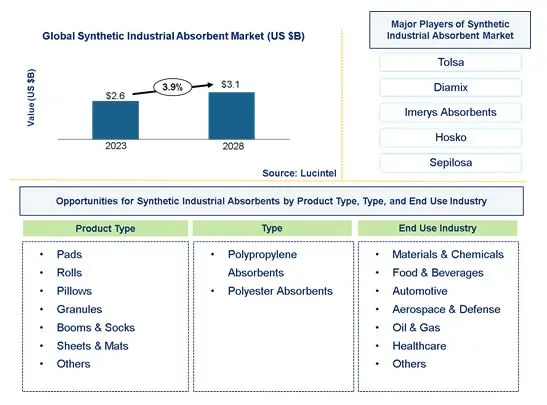
The future of the synthetic industrial absorbent market looks promising with opportunities in the material & chemical, food & beverage, automotive, aerospace & defense, oil & gas, and healthcare sectors. The global synthetic industrial absorbent market is expected to reach an estimated $3.1 billion by 2028 with a CAGR of 3.9% from 2023 to 2028. The major drivers for this market are growing environmental awareness towards hazardous chemical, rising demand for effective spill clean up solution in various end use industries, and increasing demand for reusable absorbents across the globe.
A more than 150-page report is developed to help in your business decisions. Sample figures with some insights are shown below.
Synthetic Industrial Absorbent Market by Segment
The study includes a forecast for the global synthetic industrial absorbent market by product type, type, end use industry, and region, as follows:
Synthetic Industrial Absorbent Market by Product Type [Shipment Analysis by Value from 2017 to 2028]:
-
Pads
-
Rolls
-
Pillows
-
Granules
-
Booms & Socks
-
Sheets & Mats
-
Others
Synthetic Industrial Absorbent Market by Type [Shipment Analysis by Value from 2017 to 2028]:
-
Polypropylene Absorbent
-
Polyester Absorbent
Synthetic Industrial Absorbent Market by End Use Industry [Shipment Analysis by Value from 2017 to 2028]:
-
Materials & Chemicals
-
Food & Beverages
-
Automotive
-
Aerospace & Defense
-
Oil & Gas
-
Healthcare
-
Others
Synthetic Industrial Absorbent Market by Region [Shipment Analysis by Value from 2017 to 2028]:
-
North America
-
Europe
-
Asia Pacific
-
The Rest of the World
List of Synthetic Industrial Absorbent Companies
Companies in the market compete on the basis of product quality offered. Major players in this market focus on expanding their manufacturing facilities, R&D investments, infrastructural development, and leverage integration opportunities across the value chain. With these strategies synthetic industrial absorbent companies cater to increasing demand, ensure competitive effectiveness, develop innovative products & technologies, reduce production costs, and expand their customer base. Some of the synthetic industrial absorbent companies profiled in this report include:
-
Tolsa
-
Diamix
-
Imerys Absorbents
-
Hosko
-
Sepilosa
-
Empteezy
-
Bardy
Synthetic Industrial Absorbent Market Insights
-
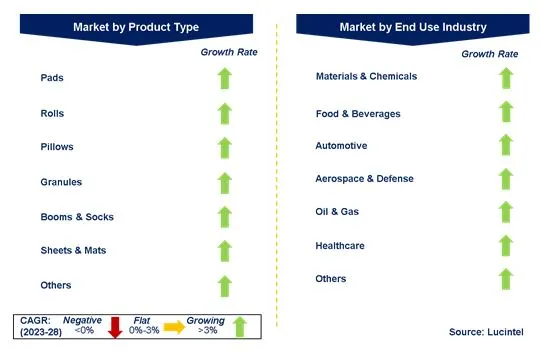
Lucintel forecasts that pad is expected to witness highest growth over the forecast period due to the significant demand for polypropylene based absorbent pads as these are chemically resistant and possess the capability to absorb corrosives, oxidizers, fuels, water, and oil-based liquids.
-
Oil and gas is expected to witness highest growth over the forecast period due to the widespread use of synthetic absorbents as hydrophobic and oleophillic for absorbing oil from the surface of water.
-
APAC will remain the largest region due to the rapid industrialization and growing demand for advanced absorbent products among various end use industries, such as oil and gas, automotive, and chemical sectors of the region.
Features of the Synthetic Industrial Absorbent Market
-
Market Size Estimates: Synthetic industrial absorbent market size estimation in terms of value ($B)
-
Trend And Forecast Analysis: Market trends (2017-2022) and forecast (2023-2028) by various segments and regions.
-
Segmentation Analysis: Synthetic industrial absorbent market size by various segments, such as by product type, type, end use industry, and region
-
Regional Analysis: Synthetic industrial absorbent market breakdown by North America, Europe, Asia Pacific, and the Rest of the World.
-
Growth Opportunities: Analysis on growth opportunities in different by product type, type, end use industry, and regions for the synthetic industrial absorbent market.
-
Strategic Analysis: This includes M&A, new product development, and competitive landscape for the synthetic industrial absorbent market.
-
Analysis of competitive intensity of the industry based on Porter’s Five Forces model.
FAQ
Q1. What is the synthetic industrial absorbent market size?
Answer: The global synthetic industrial absorbent market is expected to reach an estimated $3.1 billion by 2028.
Q2. What is the growth forecast for synthetic industrial absorbent market?
Answer: The global synthetic industrial absorbent market is expected to grow with a CAGR of 3.9% from 2023 to 2028.
Q3. What are the major drivers influencing the growth of the synthetic industrial absorbent market?
Answer: The major drivers for this market are growing environmental awareness towards hazardous chemical, rising demand for effective spill clean up solution in various end use industries, and increasing demand for reusable absorbents across the globe.
Q4. What are the major segments for synthetic industrial absorbent market?
Answer: The future of the synthetic industrial absorbent market looks promising with opportunities in the material & chemical, food & beverage, automotive, aerospace & defense, oil & gas, and healthcare sectors.
Q5. Who are the key synthetic industrial absorbent companies?
Answer: Some of the key synthetic industrial absorbent companies are as follows:
-
Tolsa
-
Diamix
-
Imerys Absorbents
-
Hosko
-
Sepilosa
-
Empteezy
-
Bardy
Q6. Which synthetic industrial absorbent segment will be the largest in future?
Answer: Lucintel forecasts that pad is expected to witness highest growth over the forecast period due to the significant demand for polypropylene based absorbent pads as these are chemically resistant and possess the capability to absorb corrosives, oxidizers, fuels, water, and oil-based liquids.
Q7. In synthetic industrial absorbent market, which region is expected to be the largest in next 5 years?
Answer: APAC will remain the largest region due to the rapid industrialization and growing demand for advanced absorbent products among various end use industries, such as oil and gas, automotive, and chemical sectors of the region.
Q8. Do we receive customization in this report?
Answer: Yes, Lucintel provides 10% Customization Without any Additional Cost.