
Market Report · July 22, 2026

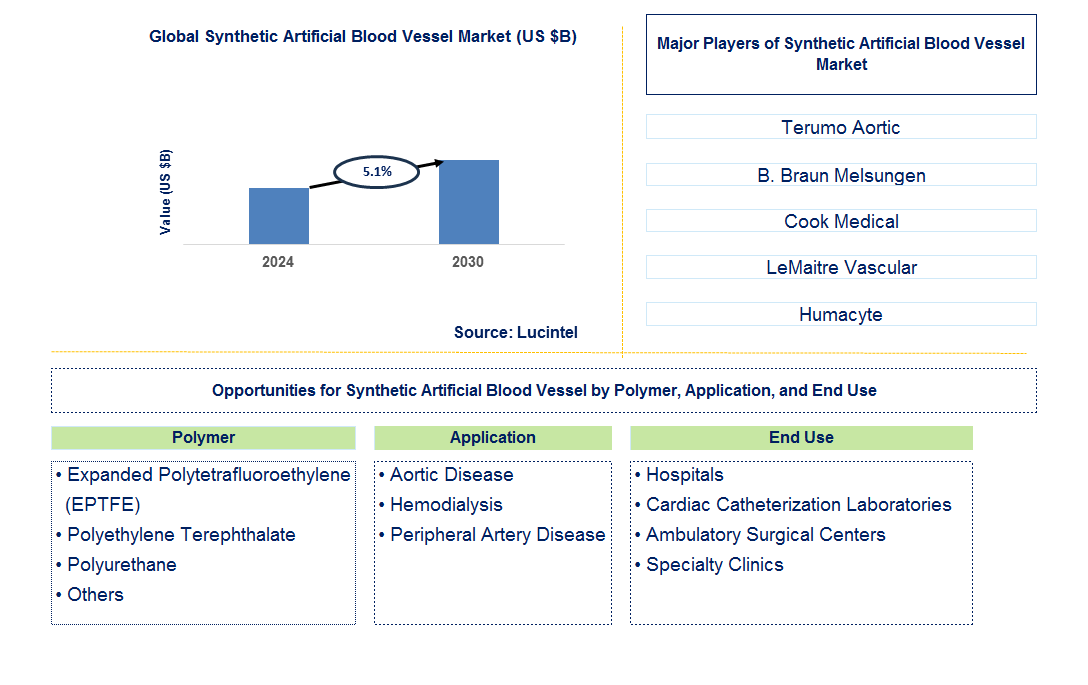
Key data points: The growth forecast = 5.1% annually for the next 6 years. Scroll below to get more insights. This market report covers trends, opportunities, and forecasts in the global synthetic artificial blood vessel market to 2030 by polymer (expanded polytetrafluoroethylene (eptfe), polyethylene terephthalate, polyurethane, and others), application (aortic disease, hemodialysis, and peripheral artery disease), end use (hospitals, cardiac catheterization laboratories, ambulatory surgical centers, and specialty clinics), and region (North America, Europe, Asia Pacific, and the Rest of the World)
We'll send your sample report shortly.
• United States: Researchers in the US have developed bioengineered blood vessels using 3D printing technology, allowing for customizable and patient-specific grafts. This innovation aims to enhance the integration of synthetic vessels with natural tissues and improve overall surgical success rates.
• China: China is focusing on integrating nanotechnology into synthetic blood vessels, enhancing their mechanical properties and biocompatibility. Recent studies show promising results, indicating that these advanced vessels can significantly reduce complications associated with traditional grafts, making them a preferred choice in vascular surgeries.
• Germany: German firms are leading in the development of biodegradable synthetic blood vessels. These products are designed to support natural healing processes while gradually dissolving, eliminating the need for secondary surgeries to remove grafts. This innovation could improve patient recovery times and overall outcomes.
• India: In India, the introduction of cost-effective synthetic blood vessels is expanding access to vascular surgeries. Local manufacturers are creating affordable options using innovative materials, thus addressing the healthcare disparity and enabling more patients to receive essential treatments.
• Japan: Japanese researchers are making significant advancements in tissue-engineered vascular grafts that incorporate stem cell technology. These grafts aim to promote tissue regeneration, leading to enhanced healing and functionality, and are being evaluated in clinical trials for their efficacy and safety.
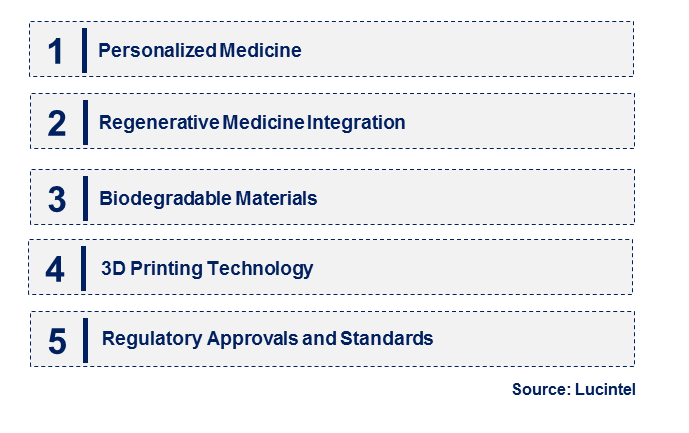
• Personalized Medicine: The trend toward personalized medicine is driving the demand for customized synthetic blood vessels tailored to individual patient anatomies. This approach improves compatibility and reduces rejection rates, ultimately leading to better surgical outcomes.
• Regenerative Medicine Integration: The incorporation of regenerative medicine principles in developing synthetic blood vessels enhances healing and functionality. This trend is resulting in more effective grafts that promote tissue growth and integration with the host.
• Biodegradable Materials: The shift toward biodegradable synthetic blood vessels is gaining momentum. These products support natural healing while minimizing the need for additional surgeries, representing a significant advancement in patient care.
• 3D Printing Technology: The application of 3D printing technology in fabricating synthetic blood vessels allows for complex designs and precise customization. This trend is improving production efficiency and enabling the creation of patient-specific solutions.
• Regulatory Approvals and Standards: Stricter regulatory frameworks are emerging, ensuring higher standards for synthetic blood vessel products. This trend aims to enhance safety and efficacy, fostering trust among healthcare providers and patients. These trends are reshaping the synthetic artificial blood vessel market by driving innovation, enhancing patient outcomes, and encouraging the adoption of advanced technologies in healthcare settings.
• 3D Bioprinting: Advances in 3D bioprinting are allowing the creation of vascular grafts that closely mimic natural blood vessels, enhancing integration and reducing complications. This technology is revolutionizing how synthetic blood vessels are manufactured, improving customization and precision.
• Smart Materials: The introduction of smart materials that respond to physiological conditions is gaining traction. These materials can change properties in response to environmental factors, improving functionality and patient compatibility.
• Enhanced Coating Techniques: New coating techniques are being developed to improve the biocompatibility of synthetic blood vessels. These coatings reduce the risk of thrombosis and enhance the graft’s performance in the body.
• Collaborative Research Initiatives: Collaborative research between academia and industry is accelerating the development of synthetic blood vessels. These partnerships focus on translating laboratory findings into clinical applications, fostering innovation and improving patient care.
• Focus on Long-Term Outcomes: There is a growing emphasis on long-term performance and safety of synthetic blood vessels. Manufacturers are conducting extensive clinical trials to gather data on durability, integration, and overall patient health outcomes. These developments are positively impacting the synthetic artificial blood vessel market, driving growth and improving the standard of care in vascular surgeries.
• Vascular Grafting Procedures: With the rising prevalence of cardiovascular diseases, the demand for synthetic blood vessels in vascular grafting procedures is increasing. This application offers significant growth potential as more patients require interventions.
• Surgical Innovations: Advancements in surgical techniques, such as minimally invasive procedures, are driving the need for specialized synthetic blood vessels. This growth opportunity allows manufacturers to develop products tailored to modern surgical practices.
• Diabetes Management: The rising incidence of diabetes is leading to complications that require vascular interventions. Synthetic blood vessels play a crucial role in managing these complications, representing a key growth area for manufacturers.
• Aging Population: The aging population globally is increasing the prevalence of vascular diseases, creating demand for synthetic blood vessels. Companies can expand their market presence by focusing on products catering to this demographic.
• Emerging Markets: Expanding into emerging markets with growing healthcare infrastructure presents significant growth opportunities for synthetic blood vessel manufacturers. These regions require affordable and effective solutions to address rising healthcare demands. These growth opportunities are shaping the synthetic artificial blood vessel market, driving innovation, and meeting the evolving needs of healthcare providers and patients.
• Technological Advancements: Continuous innovations in materials and manufacturing processes are enhancing the performance and biocompatibility of synthetic blood vessels. These advancements are attracting investments and driving market growth.
• Increasing Cardiovascular Diseases: The rising incidence of cardiovascular diseases is propelling the demand for vascular grafts. This growing patient population presents significant opportunities for synthetic blood vessel manufacturers.
• Regulatory Support: Favorable regulatory frameworks are facilitating faster approval processes for new synthetic blood vessel products. This support encourages innovation and market entry for new solutions.
• Research Collaborations: Collaborative efforts between academic institutions and industry are accelerating research and development in synthetic blood vessels. These partnerships foster innovation and drive the introduction of new products.
• Patient-Centric Approaches: A growing focus on patient-centric healthcare is driving the demand for customized synthetic blood vessels. Tailored solutions improve surgical outcomes and enhance patient satisfaction. Challenges in the synthetic artificial blood vessel market are:
• Regulatory Hurdles: Stringent regulatory requirements can slow down the approval process for synthetic blood vessel products. Navigating these regulations requires time and resources, impacting market entry.
• Market Competition: The synthetic blood vessel market is becoming increasingly competitive, with numerous players emerging. This competition may lead to pricing pressures and affect profit margins.
• High Development Costs: The research and development costs associated with creating new synthetic blood vessel products can be substantial. This financial burden may limit the ability of smaller companies to compete. Understanding the major drivers and challenges in the synthetic artificial blood vessel market is essential for stakeholders to navigate the landscape effectively and capitalize on growth opportunities.
• Terumo Aortic
• B. Braun Melsungen
• Cook Medical
• LeMaitre Vascular
• Humacyte
• Expanded Polytetrafluoroethylene (EPTFE)
• Polyethylene Terephthalate
• Polyurethane
• Others
• Aortic Disease
• Hemodialysis
• Peripheral Artery Disease
• Hospitals
• Cardiac Catheterization Laboratories
• Ambulatory Surgical Centers
• Specialty Clinics
• North America
• Europe
• Asia Pacific
• The Rest of the World
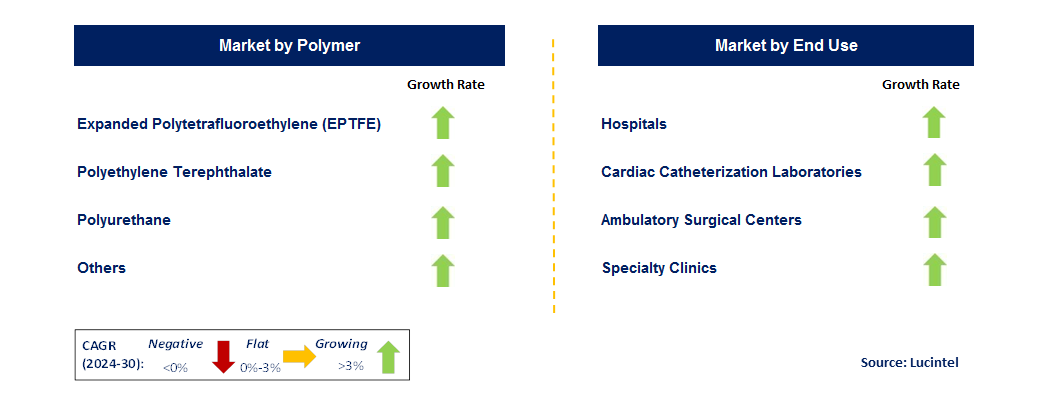
• Lucintel forecasts that, within the polymer category, expanded polytetrafluoroethylene is expected to witness the highest growth over the forecast period due to its durability and strength.
• Within the end-use category, hospitals will remain the largest segment due to they are equipped to handle complex cases involving multiple vessels or requiring specialized techniques.
• In terms of regions, North America will remain the largest region over the forecast period due to high healthcare spending.


• Terumo Aortic
• B. Braun Melsungen
• Cook Medical
• LeMaitre Vascular
• Humacyte Q5. Which synthetic artificial blood vessel market segment will be the largest in future? Answer: Lucintel forecasts that expanded polytetrafluoroethylene is expected to witness the highest growth over the forecast period due to its durability and strength. Q6. In synthetic artificial blood vessel market, which region is expected to be the largest in next 5 years? Answer: North America will remain the largest region over the forecast period due to high healthcare spending. Q.7 Do we receive customization in this report? Answer: Yes, Lucintel provides 10% customization without any additional cost.


Choose a license that fits your team. Instant PDF delivery.
Prices exclude taxes. Instant delivery. Custom licensing available on request.
Market Report · July 22, 2026
Market Report · July 22, 2026
Market Report · July 22, 2026
Trusted partner for strategic intelligence and business growth


Receive a complimentary market analysis tailored to your industry. Our analysts will identify key growth opportunities and competitive dynamics specific to your business.

Market size, growth rate, and key trend analysis for your specific sector.

Top competitor positioning and market share analysis.

Strategic recommendations backed by data-driven insights.
Get curated market intelligence and competitive moves straight to your inbox.
By subscribing, you agree to receive our monthly insights. Unsubscribe anytime.
Receive a complimentary market analysis tailored to your industry. Our analysts will identify key growth opportunities and competitive dynamics specific to your business.
Market size, growth rate, and key trend analysis for your specific sector.
Top competitor positioning and market share analysis.
Strategic recommendations backed by data-driven insights.
Get curated market intelligence, emerging trends, and competitive moves straight to your inbox each month.
By subscribing, you agree to receive our monthly insights. Unsubscribe anytime.
We'll send your sample report shortly.