
Report Feature
Switching AC Adapter Market Trends and Forecast
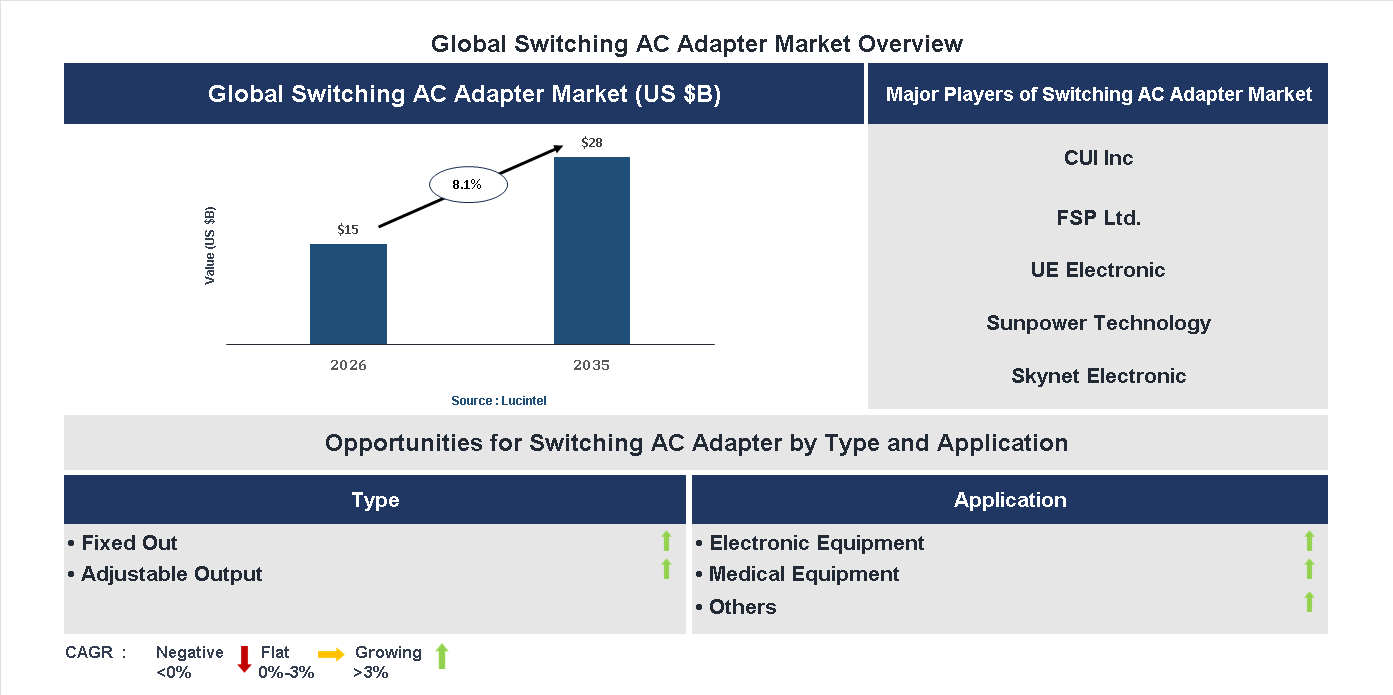
The future of the global switching AC adapter market looks promising with opportunities in the electronic equipment and medical equipment markets. The global switching AC adapter market is expected to reach an estimated $28 billion by 2035 with a CAGR of 8.1% from 2026 to 2035. The major drivers for this market are the increasing demand for portable power solutions, the rising adoption of smart devices, and the growing need for energy-efficient adapters.• Lucintel forecasts that, within the type category, adjustable output is expected to witness higher growth over the forecast period.
• Within the application category, medical equipment is expected to witness higher growth.
• In terms of region, APAC is expected to witness the highest growth over the forecast period. Gain valuable insights for your business decisions with our comprehensive 150+ page report. Sample figures with some insights are shown below.
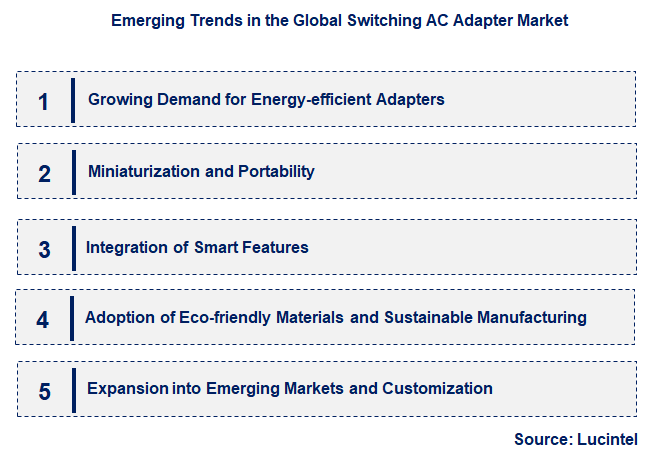
Emerging Trends in the Switching AC Adapter Market
The switching AC adapter market is experiencing rapid evolution driven by technological advancements, increasing demand for energy efficiency, and the proliferation of electronic devices worldwide. As consumers and industries seek more reliable, compact, and eco-friendly power solutions, manufacturers are innovating to meet these needs. The market is also influenced by regulatory standards, sustainability initiatives, and the rise of portable and IoT devices. These factors collectively shape the competitive landscape, prompting companies to adopt new materials, design strategies, and manufacturing processes. Understanding these emerging trends is crucial for stakeholders aiming to capitalize on growth opportunities and stay ahead in this dynamic environment.• Growing Demand for Energy-efficient Adapters: The push for sustainability and cost savings is driving the adoption of energy-efficient switching AC adapters. These adapters reduce power consumption during standby and operational modes, aligning with global energy conservation goals. Manufacturers are investing in advanced circuitry and components to improve efficiency ratings, such as 80 PLUS certification standards. This trend not only helps consumers lower electricity bills but also complies with stricter environmental regulations, making energy-efficient adapters a key differentiator in the market.
• Miniaturization and Portability: Consumers increasingly prefer compact, lightweight adapters for convenience and portability, especially for mobile devices, laptops, and IoT gadgets. Innovations in circuit design and material technology enable smaller form factors without compromising performance. This trend is reshaping product design, encouraging manufacturers to develop slim, foldable, and multi-functional adapters. The demand for portable adapters is also driven by the rise of remote work and travel, prompting a shift toward more versatile and space-saving power solutions.
• Integration of Smart Features: The market is witnessing a surge in adapters equipped with smart functionalities such as voltage regulation, power monitoring, and automatic device recognition. These features enhance user experience by providing safer, more reliable, and energy-efficient power delivery. IoT integration allows for remote monitoring and control, enabling manufacturers to offer connected adapters that can optimize power usage and alert users to potential issues. This trend is transforming traditional adapters into intelligent devices that contribute to smarter, more connected environments.
• Adoption of Eco-friendly Materials and Sustainable Manufacturing: Environmental concerns are prompting manufacturers to incorporate eco-friendly materials like biodegradable plastics and recyclable components in their adapters. Sustainable manufacturing practices, including energy-efficient production processes and waste reduction, are gaining prominence. This shift not only reduces the environmental footprint but also appeals to eco-conscious consumers. Companies adopting green practices are gaining a competitive advantage, aligning with global sustainability initiatives, and complying with evolving regulations aimed at reducing electronic waste and promoting circular economy principles.
• Expansion into Emerging Markets and Customization: As electronic device usage grows rapidly in developing regions, manufacturers are targeting emerging markets with tailored products that meet local standards and preferences. Customization options, such as voltage compatibility and plug types, are becoming standard to cater to diverse consumer needs. This trend enables companies to tap into new revenue streams and expand their global footprint. Additionally, localized marketing and distribution strategies are supporting market penetration, making switching AC adapters more accessible and affordable in these regions. In summary, these emerging trends are fundamentally reshaping the switching AC adapter market by emphasizing energy efficiency, portability, smart features, sustainability, and market expansion. These developments are driving innovation, improving consumer experience, and aligning the industry with global environmental and technological standards, ultimately fostering a more competitive and sustainable market landscape.
Recent Development in the Switching AC Adapter Market
The switching AC adapter market is experiencing rapid growth driven by technological advancements, increasing demand for portable electronics, and the need for energy-efficient power solutions. As consumers and industries seek reliable and versatile power sources, market players are innovating to meet these needs. The expansion is also fueled by the rise of smart devices and the push for sustainable energy consumption. These developments are reshaping the landscape, creating new opportunities and challenges for manufacturers and consumers alike.• Growing Demand for Portable Electronics: The surge in portable devices like laptops, smartphones, and tablets is fueling the need for efficient, compact AC adapters. Consumers prioritize lightweight, energy-efficient adapters that enhance mobility and usability. Manufacturers are innovating with smaller, more powerful adapters to meet this demand, which is expanding market size and encouraging product diversification. This trend is also prompting the development of universal adapters compatible with multiple devices, further boosting market growth.
• Advancements in Energy Efficiency Standards: Stricter energy efficiency regulations are compelling manufacturers to develop adapters that consume less power and generate less heat. These standards improve device performance and reduce environmental impact, aligning with global sustainability goals. Companies investing in R&D are creating high-efficiency adapters that meet or exceed regulatory requirements, leading to increased consumer trust and market competitiveness. This shift is also encouraging innovation in power management technologies, fostering a more sustainable market environment.
• Integration of Smart Technology: The incorporation of smart features into AC adapters, such as automatic voltage adjustment and device recognition, enhances user convenience and safety. These intelligent adapters can optimize power delivery, reduce energy waste, and provide real-time diagnostics. The integration of IoT capabilities allows remote monitoring and control, appealing to tech-savvy consumers and industrial sectors. This technological evolution is driving market differentiation and opening new revenue streams for manufacturers.
• Rise of Universal and Multi-Device Adapters: Consumers increasingly prefer universal adapters compatible with multiple devices, reducing clutter and cost. Manufacturers are designing versatile adapters with adjustable voltage and interchangeable connectors, catering to global markets. This trend simplifies user experience and supports sustainable consumption by reducing electronic waste. The demand for such adaptable solutions is expanding across consumer electronics, automotive, and industrial sectors, significantly impacting market dynamics and encouraging innovation.
• Impact of Evolving Regulatory and Safety Standards: New safety standards and certifications are shaping product development, ensuring adapters meet rigorous safety and quality benchmarks. Compliance enhances consumer confidence and reduces liability risks for manufacturers. These regulations also promote the adoption of eco-friendly materials and manufacturing processes. As standards evolve, companies must innovate continuously to stay compliant, which influences product design, cost structures, and market entry strategies, ultimately fostering a safer, more reliable market environment. The recent developments in the switching AC adapter market are fostering innovation, improving energy efficiency, and expanding product versatility. These trends are driving market growth, enhancing consumer satisfaction, and supporting sustainability initiatives. As technology advances and regulations tighten, the market is poised for continued expansion, with opportunities for new entrants and established players to innovate and capture emerging demand.
Strategic Growth Opportunities in the Switching AC Adapter Market
The switching AC adapter market is experiencing rapid growth driven by increasing demand for portable electronics, energy-efficient solutions, and technological advancements. As consumers and industries seek reliable, compact, and eco-friendly power solutions, manufacturers are innovating to meet these needs. The markets expansion is also fueled by the rise of IoT devices, smart appliances, and renewable energy integration, creating diverse opportunities for growth across various applications and regions.• Growing Demand for Portable Electronics and Devices: The proliferation of smartphones, laptops, tablets, and wearable gadgets is significantly increasing the need for efficient, lightweight, and versatile AC adapters. Consumers prioritize portability, energy efficiency, and fast charging capabilities, prompting manufacturers to develop advanced switching adapters that meet these expectations. This trend is expected to continue as new electronic devices emerge, further expanding the market and encouraging innovation in design and functionality.
• Increasing Adoption of Energy-Efficient and Eco-Friendly Solutions: Environmental concerns and regulatory standards are pushing manufacturers to develop energy-efficient switching AC adapters that reduce power consumption and carbon footprint. These adapters incorporate advanced power management features, such as low standby power and high conversion efficiency, appealing to eco-conscious consumers and businesses. The shift towards sustainable products is creating opportunities for market players to differentiate their offerings and capture a larger share of the environmentally responsible segment.
• Expansion of IoT and Smart Home Devices: The rapid growth of IoT technology and smart home systems necessitates reliable, compact, and energy-efficient power supplies. Switching AC adapters is integral to powering connected devices, sensors, and automation systems. As the adoption of smart homes accelerates, demand for specialized adapters with enhanced safety, durability, and compatibility increases. This trend offers manufacturers avenues to innovate and develop tailored solutions for diverse IoT applications, boosting overall market growth.
• Technological Advancements in Power Conversion and Miniaturization: Innovations in semiconductor materials, circuit design, and manufacturing processes are enabling the production of smaller, more efficient switching AC adapters. These advancements improve performance, reduce heat generation, and extend product lifespan. The miniaturization trend allows for sleeker device designs and integration into compact electronic products, opening new markets and applications. Continuous R&D investments are expected to sustain this growth trajectory, meeting evolving consumer and industrial needs.
• Rising Demand from Renewable Energy and Off-Grid Applications: The shift towards renewable energy sources and off-grid power solutions increases the need for reliable, efficient AC adapters capable of handling variable input conditions. These adapters support solar, wind, and other renewable systems by providing stable power conversion. Growing investments in rural electrification and sustainable infrastructure create opportunities for specialized adapters designed for harsh environments and high durability, expanding the market into new regions and applications. The overall market outlook is positively influenced by these growth opportunities, fostering innovation, sustainability, and technological progress. As demand for efficient, portable, and eco-friendly power solutions continues to rise, manufacturers are poised to capitalize on emerging trends, ensuring sustained expansion and diversification across the switching AC adapter market.
Switching AC Adapter Market Driver and Challenges
The switching AC adapter market is influenced by a variety of technological, economic, and regulatory factors that shape its growth and development. Rapid advancements in electronic devices demand more efficient and compact power solutions, driving innovation within the market. Economic factors such as increasing consumer spending on electronics and industrial automation contribute to market expansion. Regulatory standards related to energy efficiency and safety also play a crucial role in shaping product design and manufacturing practices. Additionally, the growing adoption of renewable energy sources and smart technologies further impacts market dynamics. Navigating these drivers and overcoming associated challenges is essential for stakeholders aiming to capitalize on emerging opportunities in this evolving landscape. The factors responsible for driving the switching AC adapter market include:• Technological Innovation: The continuous development of compact, energy-efficient, and high-performance adapters fuels market growth. As electronic devices become more sophisticated, there is a demand for adapters that can support higher power outputs while maintaining portability and safety standards. Innovations such as universal compatibility and smart adapters with IoT integration are expanding market applications. Manufacturers investing in R&D to improve efficiency and reduce size are gaining competitive advantages, thus propelling market expansion.
• Increasing Adoption of Consumer Electronics: The proliferation of smartphones, tablets, laptops, and wearable devices significantly boosts demand for reliable switching AC adapters. As consumers seek faster charging solutions and energy-efficient devices, manufacturers are compelled to develop advanced adapters that meet these needs. The rise in disposable income and technological literacy further accelerates adoption, creating a robust market environment driven by consumer preferences for convenience and performance.
• Growth in Industrial Automation and IoT: The expansion of industrial automation and IoT devices necessitates stable and efficient power supplies. Switching AC adapters is integral to powering sensors, controllers, and other connected devices. The push towards smart factories and connected infrastructure demands adaptable and energy-efficient adapters, which in turn stimulates market growth. This trend underscores the importance of reliable power solutions in modern industrial ecosystems.
• Regulatory Standards and Energy Efficiency Initiatives: Governments and regulatory bodies worldwide are implementing strict standards to improve energy efficiency and safety of electronic devices. Compliance with standards such as ENERGY STAR and IEC regulations compels manufacturers to innovate and improve product designs. These regulations not only enhance consumer safety but also promote environmentally sustainable practices, thereby influencing market offerings and encouraging the development of more efficient switching AC adapters.
• Rise of Renewable Energy and Green Technologies: The shift towards renewable energy sources and green technologies influences the market by increasing demand for adapters compatible with solar, wind, and other sustainable power systems. As the focus on reducing carbon footprints intensifies, there is a growing need for adapters that can efficiently convert and manage renewable energy inputs. This trend opens new avenues for market expansion, especially in off-grid and eco-friendly applications. The challenges facing the switching AC adapter market include:
• Intense Competition and Price Pressures: The market is highly competitive, with numerous players offering similar products. This leads to price wars, reducing profit margins, and forcing companies to innovate cost-effectively. Differentiating products through features and quality becomes crucial, but price sensitivity among consumers and industrial buyers can hinder profitability. Maintaining a balance between quality, innovation, and affordability remains a significant challenge for market participants.
• Rapid Technological Changes: The fast-paced evolution of technology requires continuous innovation and adaptation. Companies must invest heavily in R&D to keep up with emerging standards and consumer preferences. Failure to innovate or delays in product development can result in loss of market share. Additionally, integrating new features such as IoT connectivity or higher power ratings complicates manufacturing processes and increases costs.
• Regulatory and Compliance Complexities: Navigating diverse and evolving regulatory landscapes across different regions poses a challenge. Ensuring compliance with safety, energy efficiency, and environmental standards requires significant resources and expertise. Non-compliance can lead to legal penalties, product recalls, and damage to brand reputation. Keeping pace with changing regulations demands ongoing monitoring and adaptation, which can be resource-intensive. In summary, the switching AC adapter market is shaped by technological advancements, increasing consumer and industrial demand, and regulatory pressures that drive innovation and growth. However, it faces challenges such as intense competition, rapid technological changes, and complex regulatory environments. These factors collectively influence market dynamics, requiring companies to innovate continuously, adhere to standards, and strategically navigate competitive pressures. Overall, the markets future depends on balancing these drivers and challenges to capitalize on emerging opportunities while mitigating risks.
List of Switching AC Adapter Companies
Companies in the market compete on the basis of product quality offered. Major players in this market focus on expanding their manufacturing facilities, R&D investments, infrastructural development, and leverage integration opportunities across the value chain. With these strategies switching AC adapter companies cater increasing demand, ensure competitive effectiveness, develop innovative products & technologies, reduce production costs, and expand their customer base. Some of the switching AC adapter companies profiled in this report include-• CUI Inc
• FSP Ltd.
• UE Electronic
• Sunpower Technology
• Skynet Electronic
• Sunny Computer Technology
• TAMURA Corporation
• FranMar International Inc.
• Li Tone Electronics
• Artesyn Embedded Power
Switching AC Adapter Market by Segment
The study includes a forecast for the global switching AC adapter market by type, application, and region.Switching AC Adapter Market by Type [Value from 2019 to 2035]:
• Fixed Out
• Adjustable Output
Switching AC Adapter Market by Application [Value from 2019 to 2035]:
• Electronic Equipment
• Medical Equipment
• Others
Switching AC Adapter Market by Region [Value from 2019 to 2035]:
• North America
• Europe
• Asia Pacific
• The Rest of the World
Country Wise Outlook for the Switching AC Adapter Market
The switching AC adapter market has experienced significant growth driven by increasing demand for portable electronics, renewable energy solutions, and advancements in power management technology. As industries evolve, countries are adopting innovative designs and improving efficiency standards to meet consumer and industrial needs. The markets expansion is also influenced by regulatory policies, technological innovations, and the rise of smart devices. Each country’s developments reflect its unique technological landscape, economic priorities, and regulatory environment, shaping the global trajectory of switching AC adapters.• United States: The US market has seen substantial innovation in energy-efficient adapters, driven by strict regulatory standards and consumer demand for sustainable products. Major players are investing in smart, compact, and high-power adapters suitable for a wide range of devices. The adoption of USB-C standards has accelerated, promoting universal compatibility. Additionally, the US government’s focus on renewable energy and green technology has spurred the development of eco-friendly adapters with lower carbon footprints. The market is also witnessing increased integration of IoT-enabled adapters for smart home applications.
• China: China remains a dominant force in the switching AC adapter market, with rapid manufacturing scale-up and technological advancements. The country emphasizes cost-effective, high-performance adapters to cater to its vast consumer electronics market. Chinese companies are innovating in miniaturization and energy efficiency, aligning with global standards. The government’s push for green energy and sustainable manufacturing practices has led to the development of environmentally friendly adapters. Moreover, China’s focus on 5G and IoT devices has created demand for specialized adapters supporting new connectivity standards, boosting exports and domestic sales.
• Germany: Germany’s market is characterized by a focus on high-quality, durable, and energy-efficient adapters, driven by stringent EU regulations. The country emphasizes eco-design and sustainability, with manufacturers investing in innovative materials and manufacturing processes. Germany is also a leader in industrial automation, requiring specialized adapters for machinery and industrial equipment. The adoption of smart grid technology and renewable energy sources has increased demand for advanced adapters capable of handling complex power management tasks. The market benefits from Germany’s reputation for engineering excellence and adherence to environmental standards.
• India: The Indian switching AC adapter market is rapidly expanding, fueled by increasing smartphone penetration, urbanization, and government initiatives like Make in India. Local manufacturers are focusing on affordable, reliable adapters to serve the growing middle class. There is a rising demand for adapters compatible with multiple voltage standards, suitable for diverse regions. The market is also witnessing a shift towards energy-efficient and compact designs, driven by consumer preferences and regulatory guidelines. Additionally, the growth of e-commerce platforms has facilitated the wider distribution and availability of innovative adapter products across the country.
• Japan: Japan’s market emphasizes high-performance, compact, and energy-efficient adapters, reflecting its advanced technological landscape. The country invests heavily in R&D to develop adapters supporting high-speed data transfer and smart device integration. Japan’s focus on sustainability has led to the adoption of eco-friendly materials and energy-saving features. The market also caters to industrial and automotive sectors, requiring specialized adapters for automation and electric vehicles. Regulatory standards promote safety and efficiency, encouraging manufacturers to innovate continuously. Japan’s technological expertise ensures the development of cutting-edge adapters aligned with global standards.

Features of the Global Switching AC Adapter Market
Market Size Estimates: Switching ac adapter market size estimation in terms of value ($B). Trend and Forecast Analysis: Market trends (2019 to 2025) and forecast (2026 to 2035) by various segments and regions. Segmentation Analysis: Switching ac adapter market size by type, application, and region in terms of value ($B). Regional Analysis: Switching ac adapter market breakdown by North America, Europe, Asia Pacific, and Rest of the World. Growth Opportunities: Analysis of growth opportunities in different types, applications, and regions for the switching AC adapter market. Strategic Analysis: This includes M&A, new product development, and competitive landscape of the switching AC adapter market. Analysis of competitive intensity of the industry based on Porter’s Five Forces model.
FAQ
Q1. What is the switching AC adapter market size? Answer: The global switching AC adapter market is expected to reach an estimated $28 billion by 2035. Q2. What is the growth forecast for switching AC adapter market? Answer: The global switching AC adapter market is expected to grow with a CAGR of 8.1% from 2026 to 2035. Q3. What are the major drivers influencing the growth of the switching AC adapter market? Answer: The major drivers for this market are the increasing demand for portable power solutions, the rising adoption of smart devices, and the growing need for energy-efficient adapters. Q4. What are the major segments for switching AC adapter market? Answer: The future of the switching AC adapter market looks promising with opportunities in the electronic equipment and medical equipment markets. Q5. Who are the key switching AC adapter market companies? Answer: Some of the key switching AC adapter companies are as follows:• CUI Inc
• FSP Ltd.
• UE Electronic
• Sunpower Technology
• Skynet Electronic
• Sunny Computer Technology
• TAMURA Corporation
• FranMar International Inc.
• Li Tone Electronics
• Artesyn Embedded Power Q6. Which switching AC adapter market segment will be the largest in future? Answer: Lucintel forecasts that, within the type category, adjustable output is expected to witness higher growth over the forecast period. Q7. In switching AC adapter market, which region is expected to be the largest in next 5 years? Answer: In terms of region, APAC is expected to witness the highest growth over the forecast period. Q8. Do we receive customization in this report? Answer: Yes, Lucintel provides 10% customization without any additional cost.
Table of Contents
List of Figures
List of Tables
Methodology
- In-depth interviews of the major players in this market
- Detailed secondary research from competitors’ financial statements and published data
- Extensive searches of published works, market, and database information pertaining to industry news, company press releases, and customer intentions
- A compilation of the experiences, judgments, and insights of Lucintel’s professionals, who have analyzed and tracked this market over the years.


Buy Now
Choose a license that fits your team. Instant PDF delivery.
Prices exclude taxes. Instant delivery. Custom licensing available on request.
Key Questions
- • What are some of the most promising, high-growth opportunities for the switching AC adapter market by type (fixed out and adjustable output), application (electronic equipment, medical equipment, and others), and region (North America, Europe, Asia Pacific, and the Rest of the World)?
- • Which segments will grow at a faster pace and why?
- • Which region will grow at a faster pace and why?
- • What are the key factors affecting market dynamics? What are the key challenges and business risks in this market?
- • What are the business risks and competitive threats in this market?
- • What are the emerging trends in this market and the reasons behind them?
- • What are some of the changing demands of customers in the market?
- • What are the new developments in the market? Which companies are leading these developments?
- • Who are the major players in this market? What strategic initiatives are key players pursuing for business growth?
- • What are some of the competing products in this market and how big of a threat do they pose for loss of market share by material or product substitution?
- • What M&A activity has occurred in the last 7 years and what has its impact been on the industry? For any questions related to Switching AC Adapter Market, Switching AC Adapter Market Size, Switching AC Adapter Market Growth, Switching AC Adapter Market Analysis, Switching AC Adapter Market Report, Switching AC Adapter Market Share, Switching AC Adapter Market Trends, Switching AC Adapter Market Forecast, Switching AC Adapter Companies, write Lucintel analyst at email: helpdesk@lucintel.com. We will be glad to get back to you soon.


