
Report Feature
Surrogacy Market Trends and Forecast
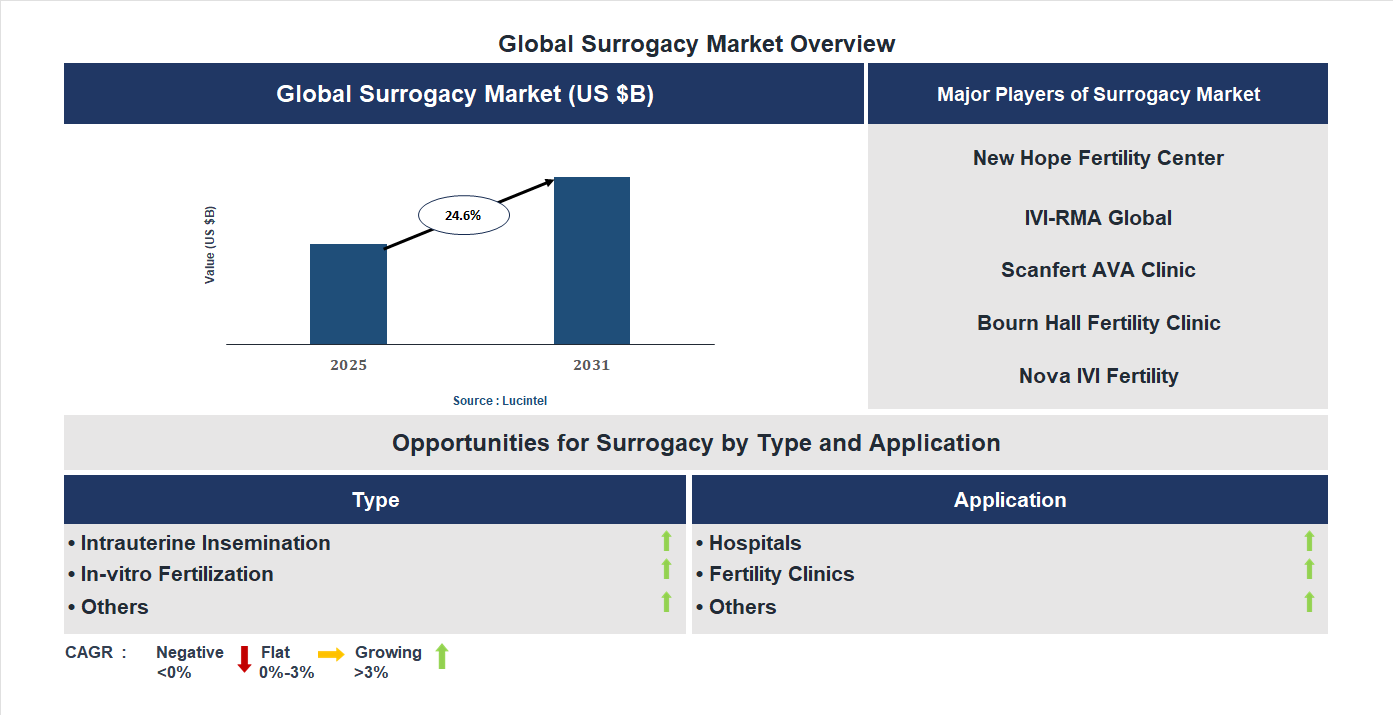
The future of the global surrogacy market looks promising with opportunities in the hospital and fertility clinic markets. The global surrogacy market is expected to grow with a CAGR of 24.6% from 2025 to 2031. The major drivers for this market are the increasing infertility rates among couples, the rising acceptance of assisted reproductive technologies, and the growing demand for cost-effective fertility solutions.• Lucintel forecasts that, within the type category, in-vitro fertilization is expected to witness higher growth over the forecast period.
• Within the application category, fertility clinic is expected to witness higher growth.
• In terms of region, APAC is expected to witness the highest growth over the forecast period. Gain valuable insights for your business decisions with our comprehensive 150+ page report. Sample figures with some insights are shown below.
Emerging Trends in the Surrogacy Market
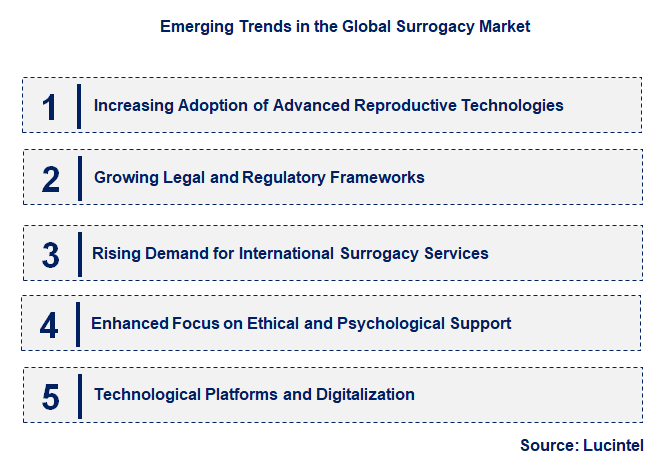
The surrogacy market is experiencing significant transformation driven by technological advancements, changing legal landscapes, and shifting societal attitudes. These developments are expanding access, improving success rates, and addressing ethical concerns. As more individuals and couples seek alternative reproductive options, the market is becoming more innovative and competitive. Emerging trends are shaping the future of surrogacy, influencing regulations, service delivery, and consumer preferences. Understanding these key trends is essential for stakeholders to navigate the evolving landscape effectively and capitalize on new opportunities. The following five trends highlight the major shifts currently impacting the surrogacy market.• Increasing Adoption of Advanced Reproductive Technologies: The integration of cutting-edge technologies such as genetic screening, cryopreservation, and artificial intelligence is enhancing success rates and reducing risks. These innovations enable better matching between surrogates and intended parents, improve embryo viability, and streamline procedures. As a result, the market sees higher confidence and satisfaction among clients, leading to increased demand. The technological evolution is also making surrogacy more predictable and accessible, encouraging more individuals to consider it as a viable option for family building.
• Growing Legal and Regulatory Frameworks: Governments and regulatory bodies are establishing clearer laws and guidelines surrounding surrogacy practices. This trend aims to protect the rights of all parties involved, prevent exploitation, and standardize procedures across regions. Enhanced legal clarity reduces uncertainties for intended parents and surrogates, fostering trust and legitimacy in the market. As regulations evolve, cross-border surrogacy arrangements are becoming more structured, facilitating international collaborations while addressing ethical concerns. This trend is crucial for creating a sustainable and ethically responsible surrogacy industry.
• Rising Demand for International Surrogacy Services: Increasing globalization and the desire for more affordable options are driving the growth of international surrogacy. Intended parents seek countries with favorable legal environments, lower costs, and high-quality medical facilities. This trend has led to the emergence of specialized agencies and clinics catering to international clients. However, it also raises ethical and legal challenges, prompting calls for stricter oversight. The international surrogacy market is expanding rapidly, offering more choices for clients but also necessitating careful navigation of legal and ethical considerations.
• Enhanced Focus on Ethical and Psychological Support: Recognizing the emotional and ethical complexities of surrogacy, providers are increasingly offering comprehensive counseling and support services. This includes psychological counseling for surrogates and intended parents, legal guidance, and post-birth support. Such initiatives aim to ensure informed consent, emotional well-being, and ethical compliance throughout the process. The emphasis on holistic care is improving client experiences and reducing potential conflicts or misunderstandings. This trend underscores the market’s shift toward more humane, transparent, and ethically responsible practices.
• Technological Platforms and Digitalization: The rise of online platforms and digital tools is transforming how surrogacy services are marketed, managed, and delivered. Virtual consultations, digital documentation, and online communities are making the process more accessible and transparent. These platforms facilitate better communication, streamline administrative tasks, and expand reach to a broader audience. Digitalization also enables data-driven decision-making and enhances privacy and security. As technology becomes integral to service delivery, the surrogacy market is becoming more efficient, user-friendly, and inclusive, attracting a diverse range of clients worldwide. In summary, these trends are collectively reshaping the surrogacy market by making it more technologically advanced, ethically sound, legally regulated, and globally accessible. They are fostering a more transparent, efficient, and inclusive environment that benefits intended parents, surrogates, and service providers alike. As these developments continue, the market is poised for sustained growth and innovation, ultimately transforming how families are built through surrogacy.
Recent Development in the Surrogacy Market
The surrogacy market has experienced significant growth and transformation over recent years, driven by technological advancements, changing legal landscapes, and increasing demand for assisted reproductive services. As societal attitudes shift and legal frameworks evolve, the industry is adapting to meet the needs of intended parents worldwide. Innovations in medical procedures, increased awareness, and expanding geographic availability are shaping the future of surrogacy. These developments are not only expanding access but also raising ethical and legal considerations, influencing market dynamics. The following key developments highlight the current trajectory and future prospects of the surrogacy market.• Technological advancements in reproductive medicine: New techniques such as improved IVF protocols and genetic screening have increased success rates, making surrogacy more viable and attractive for intended parents. These innovations reduce risks and costs, broadening access and boosting market growth.
• Legal and regulatory changes: Several countries and states are updating surrogacy laws to either permit or restrict the practice. Clearer legal frameworks provide greater security for all parties involved, encouraging market participation and international surrogacy arrangements.
• Rising demand from LGBTQ+ communities: Increased acceptance and legal recognition of same-sex relationships have led to a surge in demand for surrogacy services among LGBTQ+ individuals and couples, expanding the market’s customer base and diversity.
• Expansion into emerging markets: Countries such as Mexico, Ukraine, and parts of Southeast Asia are becoming popular surrogacy destinations due to lower costs and evolving legal environments. This geographic expansion is creating new opportunities and competition within the industry.
• Ethical and social considerations: Growing awareness of ethical issues surrounding surrogacy, including exploitation and rights of surrogate mothers, is prompting industry stakeholders to adopt more transparent and ethical practices. This shift influences market reputation and regulatory policies. In summary, these developments are collectively driving growth, increasing accessibility, and shaping the ethical landscape of the surrogacy market. They are fostering innovation, expanding geographic reach, and prompting legal reforms, which together are transforming the industry into a more structured and inclusive sector.
Strategic Growth Opportunities in the Surrogacy Market
The surrogacy market is experiencing significant growth driven by evolving societal attitudes, technological advancements, and increasing infertility rates worldwide. As more individuals and couples seek alternative reproductive options, key applications within this market are expanding rapidly. These developments are creating new opportunities for service providers, clinics, and technology developers to innovate and meet rising demand. Understanding these growth opportunities is essential for stakeholders aiming to capitalize on emerging trends and enhance their market positioning. The following are five key growth opportunities across different applications in the surrogacy market, each shaping the future landscape of reproductive services.• Fertility Clinics and Reproductive Centers: Expansion of services and technological integration. Fertility clinics are adopting advanced reproductive technologies, such as genetic screening and embryo freezing, to improve success rates. This enhances patient confidence and attracts a broader client base, fueling market growth. Additionally, clinics are expanding geographically to underserved regions, increasing accessibility and market reach.
• Surrogacy Agencies and Management Services: Streamlining processes and increasing transparency. Agencies are implementing digital platforms for better matching, legal documentation, and communication between intended parents and surrogates. This reduces operational costs and builds trust, encouraging more participants to engage in surrogacy arrangements, thereby expanding the market.
• Legal and Ethical Advisory Services: Growing demand for comprehensive legal frameworks. As surrogacy laws vary widely across regions, specialized legal services are increasingly vital. These services help navigate complex legalities, ensuring compliance and protecting all parties involved. The rise in legal advisory services is fostering a safer environment, encouraging more individuals to pursue surrogacy.
• Technology and Innovation in Reproductive Devices: Development of advanced reproductive tools. Innovations such as AI-driven embryo selection and improved cryopreservation techniques are increasing success rates. These technological advancements reduce risks and costs, making surrogacy more viable and appealing, thus driving market expansion.
• Insurance and Financial Services: Customized financial solutions for surrogacy. As surrogacy costs can be substantial, insurance providers are developing tailored plans to cover medical expenses and legal fees. These financial products make surrogacy more accessible and affordable, broadening the potential customer base and stimulating market growth. In summary, these growth opportunities are significantly impacting the surrogacy market by enhancing service quality, increasing accessibility, and reducing barriers. They are fostering innovation, improving legal and financial frameworks, and expanding geographic reach, all of which contribute to a robust and dynamic market environment.
Surrogacy Market Driver and Challenges
The surrogacy market is influenced by a complex interplay of technological advancements, economic factors, and regulatory frameworks. Innovations in reproductive technology have expanded options for intended parents, while economic considerations such as rising infertility rates and increasing disposable incomes drive demand. Conversely, regulatory challenges and ethical concerns pose significant hurdles, impacting market growth and accessibility. Understanding these drivers and challenges is essential for stakeholders to navigate the evolving landscape effectively and capitalize on emerging opportunities while addressing potential risks. The factors responsible for driving the surrogacy market include:-• Technological Advancements: The development of sophisticated reproductive technologies, such as in-vitro fertilization (IVF) and genetic screening, has significantly improved success rates and safety, making surrogacy a more viable option for many. These innovations reduce risks associated with pregnancy and enable better matching between intended parents and surrogates. As technology continues to evolve, costs are expected to decrease, broadening access and increasing demand. Additionally, advancements in cryopreservation allow for better storage and transportation of embryos, further facilitating international surrogacy arrangements. Overall, technological progress enhances efficiency, safety, and success rates, fueling market growth.
• Rising Infertility Rates: Increasing prevalence of infertility due to lifestyle changes, environmental factors, and delayed parenthood has led more individuals and couples to seek surrogacy as a solution. This trend is particularly prominent in developed countries where awareness and acceptance of assisted reproductive techniques are higher. The growing desire for biological children, coupled with limited options for natural conception, propels demand for surrogacy services. Moreover, demographic shifts such as aging populations contribute to the rising need for alternative reproductive options, making surrogacy a crucial component of fertility treatment options.
• Changing Social Attitudes: Societal acceptance of surrogacy is gradually improving, driven by greater awareness, advocacy, and legal recognition in various regions. Increasing acceptance of diverse family structures, including same-sex couples and single parents, expands the potential customer base. Media portrayals and success stories have helped normalize surrogacy, reducing stigma and ethical concerns. This shift encourages more individuals to consider surrogacy as a viable family-building option, thereby expanding market opportunities. As social attitudes continue to evolve positively, market growth is expected to accelerate.
• Economic Growth and Disposable Income: Rising disposable incomes, especially in emerging economies, enable more individuals to afford surrogacy services, which are often costly. Economic development increases access to healthcare and fertility treatments, making surrogacy a feasible option for a broader demographic. Additionally, the increasing number of fertility clinics and surrogacy agencies in developing countries offers more competitive pricing and options, attracting international clients. The affordability and availability of services directly influence market expansion, particularly in regions where surrogacy was previously inaccessible due to high costs. The challenges in the surrogacy market are:
• Regulatory and Legal Barriers: The surrogacy industry faces significant regulatory hurdles, with laws varying widely across countries and regions. Some jurisdictions have banned commercial surrogacy, while others impose strict licensing and ethical guidelines, complicating cross-border arrangements. Unclear or restrictive legal frameworks create uncertainty for intended parents and surrogates, increasing risks of legal disputes and ethical dilemmas. This fragmentation hampers market growth, limits access, and discourages international transactions. Additionally, legal complexities related to parental rights and citizenship further complicate surrogacy arrangements, impacting the overall stability and predictability of the market.
• Ethical and Social Concerns: Ethical debates surrounding surrogacy, including exploitation, consent, and the welfare of surrogates, pose significant challenges. Critics argue that commercial surrogacy can lead to exploitation of vulnerable women, especially in developing countries. Concerns about the commodification of human life and potential psychological impacts on surrogates and children also persist. These ethical issues influence public opinion and policy-making, often resulting in restrictive laws or bans. Addressing these concerns requires careful regulation and ethical standards, but ongoing debates continue to create uncertainty and limit market expansion.
• Cultural and Religious Barriers: Cultural norms and religious beliefs significantly influence the acceptance and practice of surrogacy. In many societies, surrogacy is viewed with suspicion or outright disapproval, rooted in traditional values about family, motherhood, and reproductive rights. Religious doctrines may oppose surrogacy on moral grounds, leading to legal restrictions or social stigmatization. These barriers restrict access and acceptance within certain populations, limiting market growth in conservative regions. Overcoming these cultural and religious challenges requires sensitive engagement, education, and policy adjustments to foster acceptance and ensure ethical practices. In summary, the surrogacy market is shaped by rapid technological progress, increasing infertility rates, shifting social attitudes, and economic growth, all of which drive demand and expand opportunities. However, regulatory complexities, ethical concerns, and cultural barriers present significant challenges that hinder market development and international cooperation. The overall impact of these drivers and challenges creates a dynamic environment where innovation and acceptance are poised to propel growth, provided that ethical and legal issues are effectively managed. Stakeholders must navigate these factors carefully to harness the market’s full potential and ensure sustainable, ethical expansion.
List of Surrogacy Companies
Companies in the market compete on the basis of product quality offered. Major players in this market focus on expanding their manufacturing facilities, R&D investments, infrastructural development, and leverage integration opportunities across the value chain. With these strategies surrogacy companies cater increasing demand, ensure competitive effectiveness, develop innovative products & technologies, reduce production costs, and expand their customer base. Some of the surrogacy companies profiled in this report include-• New Hope Fertility Center
• IVI-RMA Global
• Scanfert AVA Clinic
• Bourn Hall Fertility Clinic
• Nova IVI Fertility
• Ovation Fertility
• Bangkok IVF Center
• Extraordinary Conceptions
• Cardone & Associates Reproductive Medicine & Infertility
• Max Hea
Surrogacy Market by Segment
The study includes a forecast for the global surrogacy market by type, application, and region.Surrogacy Market by Type [Value from 2019 to 2031]:
• Intrauterine Insemination
• In-vitro Fertilization
• Others
Surrogacy Market by Application [Value from 2019 to 2031]:
• Hospitals
• Fertility Clinics
• Others
Surrogacy Market by Region [Value from 2019 to 2031]:
• North America
• Europe
• Asia Pacific
• The Rest of the World
Country Wise Outlook for the Surrogacy Market
The surrogacy market has experienced significant shifts globally, driven by technological advancements, legal reforms, and changing societal attitudes. Countries are increasingly adopting new policies to regulate surrogacy practices, while technological innovations improve success rates and reduce costs. Ethical debates and legal challenges continue to influence market dynamics, prompting countries to reevaluate their frameworks. The demand for surrogacy services is rising, especially among individuals facing infertility issues or seeking alternative family-building options. These developments reflect a broader trend toward more accessible, ethical, and regulated surrogacy practices worldwide, shaping the future landscape of the industry.• United States: The U.S. remains a leading market for surrogacy, with progressive legal frameworks in states like California and Illinois. Advances in reproductive technology and increased acceptance have expanded options for intended parents. Legal clarity and well-established clinics attract international clients, boosting market growth. Recent legislative efforts aim to improve surrogacy rights and reduce legal ambiguities, fostering a more supportive environment for all parties involved. The market is also witnessing a rise in agency services and fertility clinics offering comprehensive surrogacy packages, making the process more accessible and transparent.
• China: China’s surrogacy market is evolving amid tightening regulations and ethical debates. Commercial surrogacy remains illegal, but some provinces permit altruistic arrangements under strict oversight. Recent policy shifts focus on controlling reproductive practices and preventing exploitation, leading to increased scrutiny of clinics. Technological advancements are gradually improving success rates, but legal uncertainties limit market expansion. The government emphasizes ethical considerations, which may slow down commercial surrogacy growth but encourages more regulated and ethical practices. The market is primarily driven by domestic demand, with some interest from international clients seeking legal options.
• Germany: Germany maintains a restrictive stance on surrogacy, with laws prohibiting commercial arrangements and recognizing only genetic parenthood. Recent legal discussions focus on clarifying parental rights and protecting surrogate mothers. Despite restrictions, demand persists among certain groups, leading to increased cross-border arrangements. Technological innovations in reproductive medicine continue to influence the market, but legal barriers limit domestic growth. Ethical concerns about exploitation and commodification remain central to policy debates. The market is characterized by cautious progress, with ongoing efforts to balance ethical considerations and reproductive rights.
• India: India has historically been a major hub for surrogacy, but recent legal reforms have significantly impacted the market. The government banned commercial surrogacy for foreign nationals in 2018, focusing on ethical concerns and exploitation risks. Domestic surrogacy remains permitted under strict regulations, with a focus on altruistic arrangements. Technological advancements have improved success rates, but legal restrictions have curtailed the industry’s growth. The market is shifting toward more ethical practices, with increased oversight and regulation. Despite challenges, India continues to be a key player in the global surrogacy landscape, primarily serving domestic intended parents.
• Japan: Japan’s surrogacy market is limited due to strict legal and ethical restrictions. Surrogacy is generally not recognized legally, and commercial arrangements are prohibited. Recent developments include ongoing debates about reproductive rights and ethical standards, with some clinics offering surrogacy services in a legal gray area. Technological progress in reproductive medicine is improving success rates, but legal barriers restrict widespread adoption. The market remains niche, primarily serving domestic clients seeking alternative options. Ethical concerns about exploitation and the welfare of surrogate mothers continue to influence policy discussions, maintaining Japan’s cautious approach to surrogacy.

Features of the Global Surrogacy Market
Market Size Estimates: Surrogacy market size estimation in terms of value ($B). Trend and Forecast Analysis: Market trends (2019 to 2024) and forecast (2025 to 2031) by various segments and regions. Segmentation Analysis: Surrogacy market size by type, application, and region in terms of value ($B). Regional Analysis: Surrogacy market breakdown by North America, Europe, Asia Pacific, and Rest of the World. Growth Opportunities: Analysis of growth opportunities in different types, applications, and regions for the surrogacy market. Strategic Analysis: This includes M&A, new product development, and competitive landscape of the surrogacy market. Analysis of competitive intensity of the industry based on Porter’s Five Forces model.
FAQ
Q1. What is the growth forecast for surrogacy market? Answer: The global surrogacy market is expected to grow with a CAGR of 24.6% from 2025 to 2031. Q2. What are the major drivers influencing the growth of the surrogacy market? Answer: The major drivers for this market are the increasing infertility rates among couples, the rising acceptance of assisted reproductive technologies, and the growing demand for cost-effective fertility solutions. Q3. What are the major segments for surrogacy market? Answer: The future of the surrogacy market looks promising with opportunities in the hospital and fertility clinic markets. Q4. Who are the key surrogacy market companies? Answer: Some of the key surrogacy companies are as follows:• New Hope Fertility Center
• IVI-RMA Global
• Scanfert AVA Clinic
• Bourn Hall Fertility Clinic
• Nova IVI Fertility
• Ovation Fertility
• Bangkok IVF Center
• Extraordinary Conceptions
• Cardone & Associates Reproductive Medicine & Infertility
• Max Healthcare Q5. Which surrogacy market segment will be the largest in future? Answer: Lucintel forecasts that, within the type category, in-vitro fertilization is expected to witness higher growth over the forecast period. Q6. In surrogacy market, which region is expected to be the largest in next 5 years? Answer: In terms of region, APAC is expected to witness the highest growth over the forecast period. Q7. Do we receive customization in this report? Answer: Yes, Lucintel provides 10% customization without any additional cost.
Table of Contents
List of Figures
List of Tables
Methodology
- In-depth interviews of the major players in this market
- Detailed secondary research from competitors’ financial statements and published data
- Extensive searches of published works, market, and database information pertaining to industry news, company press releases, and customer intentions
- A compilation of the experiences, judgments, and insights of Lucintel’s professionals, who have analyzed and tracked this market over the years.


Buy Now
Choose a license that fits your team. Instant PDF delivery.
Prices exclude taxes. Instant delivery. Custom licensing available on request.
Key Questions
- • What are some of the most promising, high-growth opportunities for the surrogacy market by type (intrauterine insemination, in-vitro fertilization, and others), application (hospitals, fertility clinics, and others), and region (North America, Europe, Asia Pacific, and the Rest of the World)?
- • Which segments will grow at a faster pace and why?
- • Which region will grow at a faster pace and why?
- • What are the key factors affecting market dynamics? What are the key challenges and business risks in this market?
- • What are the business risks and competitive threats in this market?
- • What are the emerging trends in this market and the reasons behind them?
- • What are some of the changing demands of customers in the market?
- • What are the new developments in the market? Which companies are leading these developments?
- • Who are the major players in this market? What strategic initiatives are key players pursuing for business growth?
- • What are some of the competing products in this market and how big of a threat do they pose for loss of market share by material or product substitution?
- • What M&A activity has occurred in the last 5 years and what has its impact been on the industry? For any questions related to Surrogacy Market, Surrogacy Market Size, Surrogacy Market Growth, Surrogacy Market Analysis, Surrogacy Market Report, Surrogacy Market Share, Surrogacy Market Trends, Surrogacy Market Forecast, Surrogacy Companies, write Lucintel analyst at email: helpdesk@lucintel.com. We will be glad to get back to you soon.


