
Market Report · July 22, 2026

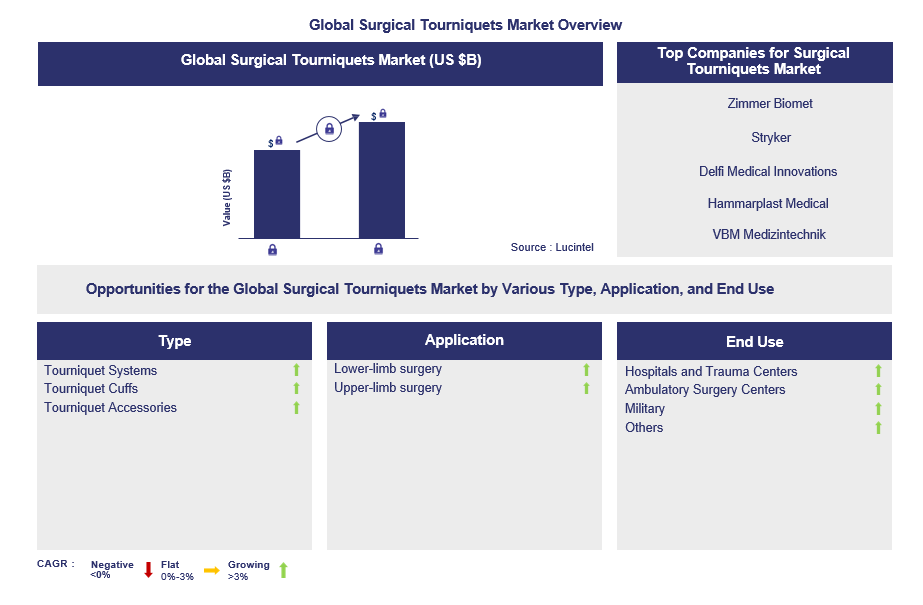
Key data points: The market size in 2030 = $0.8 billion, growth forecast = 7.8% annually for the next 6 years. Scroll below to get more insights. This market report covers trends, opportunities, and forecasts in the global surgical tourniquets market to 2030 by type (tourniquet systems, tourniquet cuffs, and tourniquet accessories), application (lower-limb surgery and upper-limb surgery), end use (hospitals and trauma centers, ambulatory surgery centers, military, and others), and region (North America, Europe, Asia Pacific, and the Rest of the World)
We'll send your sample report shortly.
• Lucintel forecasts that, within the type category, the tourniquet systems will remain the largest segment over the forecast period due to the rising number of road accidents and joint replacement surgeries.
• Within the end use category, hospitals and trauma centers will remain the largest segment due to the increasing number of emergency procedures subsequently.
• In terms of region, APAC is expected to witness the highest growth over the forecast period due to the rising number of hospitals and old age population. Gain valuable insight for your business decisions with our comprehensive 150+ page report.
• Enhanced Adoption of Automated Tourniquets: Automated surgical tourniquet technology has revolutionized the market by increasing accuracy in pressure management. This eliminates human error, enabling uniformity in applying pressure during procedures. Automated tourniquets also feature real-time monitoring that mitigates dangers associated with prolonged use, such as nerve damage. This trend is particularly useful in situations where patient welfare is critical.
• Paradigm Shift to Disposable Tourniquets: Disposable tourniquets are increasingly preferred due to infection control concerns and ease of use. Disposable options help eliminate the need for sterilization and minimize the chances of cross-contamination, making them suitable for emergency settings or outpatient care. This trend is expected to improve patient safety and streamline surgical workflows, as hospitals can easily switch to new devices without the burden of cleaning or maintaining reusable equipment.
• Focus on Training and Education: As medical procedures become more complex, there is a growing emphasis on training healthcare professionals in the proper use of tourniquets. Educational programs are being established to keep healthcare practitioners up-to-date with the latest techniques used worldwide. By minimizing complications, this movement improves patient outcomes while fostering a culture of safety that underpins quality care provision.
• Smart Technology Integration: Smart technologies are being incorporated into surgical tourniquets more frequently, with features like Bluetooth connectivity and data analytics. These advancements make it easier to track how long a tourniquet stays applied and the amount of pressure applied to the patient, thereby improving overall patient monitoring and outcomes. Surgeons can make informed decisions, refine surgical approaches, and enhance postoperative care by utilizing data that drives market growth.
• Entry into New Emerging Markets: The surgical tourniquet market is expanding into emerging markets due to increased healthcare investments and a growing number of surgeries. The demand for more technologically advanced medical equipment, including tourniquets, will increase as these nations develop their healthcare infrastructure. This trend presents significant opportunities for manufacturers to extend their reach into new markets and address unmet needs among providers in these regions. These trends are converging, changing the rules of safety, efficiency, and availability in the surgical tourniquet market. The market looks promising, with advancements in technology, a focus on education, and wider adoption of disposable products. These developments will be crucial in enhancing surgical outcomes and improving patient care as healthcare evolves.

• Smart Tourniquet Systems: Smart tourniquet systems come with advanced features such as pressure monitoring, automatic deflation, and customizable settings. They provide real-time data on tourniquet pressure, helping surgeons maintain optimal occlusion while reducing the risk of tissue damage.
• Improved Tourniquet Cuff Design: Tourniquet cuff designs have been improved to enhance patient comfort and reduce skin complications. The new cuffs are ergonomically designed with soft materials and adjustable padding, which minimize pressure on the limbs and help prevent skin injuries.
• Wireless Connectivity: Wireless connectivity has become a standard feature in many surgical tourniquet systems. This enables seamless integration with other medical devices, allowing for remote monitoring and control. It improves both efficiency and safety in the operating room.
• Single-Use Tourniquets: The popularity of single-use tourniquets is growing due to their convenience and lower risk of infection. These disposable devices eliminate the need for cleaning or sterilization, streamlining the surgical workflow and improving patient well-being.
• Enhanced Safety Features: Various safety measures have been incorporated by surgical tourniquet manufacturers to prevent inadvertent activation or reduce injuries. Examples include automatic deflation features, alarms, and flashing light signals that alert users when the device should be properly employed. These recent developments are changing the way surgeons approach limb occlusion, leading to reduced complications and better patient satisfaction. The innovations in smart systems, cuff design, wireless connectivity, single-use options, and safety features are all contributing to a safer and more efficient surgical environment.
• Orthopedic Surgery: The increasing number of orthopedic surgeries, driven by an aging population and growing sports-related injuries, is creating a significant demand for advanced tourniquet systems. Innovations like smart tourniquets, with real-time monitoring capabilities, improve the effectiveness of surgeries and enhance patient safety, positioning firms to capitalize on this booming market.
• Trauma Care: Rapid and effective hemorrhage control is critical in emergency trauma situations. The demand for tourniquets designed for quick application under extreme conditions is rising. Lightweight, portable, and easy-to-use tourniquets meet the urgent needs of trauma care workers, acting as a catalyst for the sector’s growth.
• Cardiovascular Procedures: The increasing incidence of heart ailments and related surgeries has heightened the need for specialized tourniquet systems that prevent ischemic complications. These systems use sensitive materials and adjustable pressure settings, making it easier to perform surgeries successfully while minimizing risks, thus expanding the market for cardiovascular applications.
• Plastic Surgery: Both cosmetic and reconstructive plastic surgery are experiencing growth, with a shift toward minimally invasive techniques. Tourniquets that offer better control during these procedures, while enhancing patient comfort, are highly sought after. Customizable pressure settings and ergonomic designs are among the innovations that help improve surgical efficiency and patient experiences, contributing positively to productivity in this field.
• Emergency Medical Services (EMS): The use of advanced tourniquet systems in EMS for pre-hospital care and first response is vital. Modern tourniquets are easy to use and adaptable to various emergencies, providing a huge opportunity for market expansion in the EMS sector. The surgical tourniquets market is undergoing revolutionary growth due to technological progress and the increased demand for effectiveness and accuracy. Orthopedic surgery, trauma care, cardiovascular procedures, plastic surgery, and emergency medical services present promising avenues for market players to focus on, creating innovations that better meet changing needs.
• Technological Advancements: Market growth is driven by innovations in the design, materials, and features of tourniquets. For example, pneumatic tourniquets offer precise pressure control and ease of use, while electronic tourniquets provide real-time monitoring and alarms. These technological improvements contribute to better surgical efficiency and increased patient safety.
• Increasing Surgical Procedures: The demand for surgical tourniquets is fueled by the rising number of surgeries across various specialties, including orthopedic surgery, vascular surgery, and trauma care. As healthcare systems expand globally and access to surgical care improves, the market for these devices is expected to grow.
• Rising Awareness of Patient Safety: Growing awareness among healthcare providers and patients about safety during surgical procedures has led to increased interest in surgical tourniquets. These devices play a vital role in preventing complications associated with excessive blood loss. As awareness of newer types of tourniquets increases, patients are increasingly adopting them.
• Expanding Global Healthcare Market: The global healthcare market is experiencing significant growth, driven by rising population sizes, increasing disposable incomes, and improved healthcare infrastructure. This provides an opportunity for growth within the surgical tourniquet industry, particularly as emerging economies demand more medical devices.
• Regulatory Changes: Changes in policies or safety standards can affect the surgical tourniquet market. New safety guidelines or certification requirements may influence product design or manufacturing processes. Compliance with regulatory standards is essential for market access and product acceptance. Challenges in the Surgical Tourniquet Market:
• Economic Factors: Economic downturns or fluctuations can impact healthcare spending and medical device investments, reducing demand for surgical tourniquets, especially in regions with limited healthcare budgets.
• Competition and Price Pressure: The surgical tourniquet market is highly competitive, with multiple players offering similar products. Price wars have eroded profit margins and constrained the market’s expansion.
• Safety Concerns and Adverse Events: Despite advancements in tourniquet technology, there is always a risk of adverse events, such as nerve damage or tissue ischemia. This poses challenges not only for manufacturers but also for healthcare providers, who must ensure the safety and effectiveness of these devices during surgical procedures. The surgical tourniquet market faces several drivers and challenges. Technological advancements, increasing surgical procedures, and growing awareness of patient safety are driving market growth. However, economic factors, competition, and safety concerns remain challenges for the industry. As healthcare systems evolve and the demand for surgeries rises, the market is likely to continue expanding. These challenges need to be addressed by manufacturers and healthcare providers to ensure the long-term success of the surgical tourniquet market.
• Zimmer Biomet
• Stryker
• Delfi Medical Innovations
• Hammarplast Medical
• VBM Medizintechnik
• ulrich medical
• Pyng Medical
• OHK Medical Devices
• Huaxin Medical Equipment Factory
• Sam Medical
• Tourniquet Systems
• Tourniquet Cuffs
• Tourniquet Accessories
• Lower-Limb Surgery
• Upper-Limb Surgery
• Hospitals and Trauma Centers
• Ambulatory Surgery Centers
• Military
• Others
• North America
• Europe
• Asia Pacific
• The Rest of the World
• United States: In the U.S., advancements mainly involve the integration of digital technology into surgical tourniquets to enhance accuracy and ease of use. Notably, smart tourniquets with real-time monitoring features are improving patient safety. There is also a growing focus on enhancing comfort and reducing complications.
• China: The market in China is rapidly growing due to increased investments in healthcare infrastructure and a rising number of surgeries. New developments include affordable, high-quality tourniquets that meet international standards. Additionally, there is a trend toward using advanced materials to improve resistance to wear and tear, as well as to enhance patient comfort.
• Germany: Germany has seen significant innovations, including the development of automated and programmable surgical tourniquets. These advancements aim to achieve higher precision and reduce the likelihood of human error during surgery. The industry is also shifting towards eco-friendly materials and energy-saving devices, aligning with broader sustainability objectives.
• India: The market for surgical tourniquets in India is expanding due to increasing healthcare investments and a growing number of surgeries. Recent developments include the incorporation of advanced technologies to enhance safety and effectiveness. Manufacturers are focusing on providing value-driven solutions that can be used across various healthcare settings without compromising on quality.
• Japan: Japanese market stands out for its global leadership in technology and product superiority. Recent innovations include pressure management units with digital controls and sensors, allowing surgeons to adjust them precisely when needed. There is also an emphasis on developing compact, easy-to-use tools that streamline the surgical process.


• Zimmer Biomet
• Stryker
• Delfi Medical Innovations
• Hammarplast Medical
• VBM Medizintechnik
• ulrich medical
• Pyng Medical
• OHK Medical Devices
• Huaxin Medical Equipment Factory
• Sam Medical Q6. Which surgical tourniquets market segment will be the largest in the future? Answer: Lucintel forecasts that tourniquet systems will remain the largest segment over the forecast period due to the rising number of road accidents and joint replacement surgeries. Q7. In the surgical tourniquets market, which region is expected to be the largest in the next 5 years? Answer: APAC is expected to witness the highest growth over the forecast period due to the rising number of hospitals and old age population. Q.8 Do we receive customization in this report? Answer: Yes, Lucintel provides 10% customization without any additional cost.


Choose a license that fits your team. Instant PDF delivery.
Prices exclude taxes. Instant delivery. Custom licensing available on request.
Market Report · July 22, 2026
Market Report · July 22, 2026
Market Report · July 22, 2026
Trusted partner for strategic intelligence and business growth


Receive a complimentary market analysis tailored to your industry. Our analysts will identify key growth opportunities and competitive dynamics specific to your business.

Market size, growth rate, and key trend analysis for your specific sector.

Top competitor positioning and market share analysis.

Strategic recommendations backed by data-driven insights.
Get curated market intelligence and competitive moves straight to your inbox.
By subscribing, you agree to receive our monthly insights. Unsubscribe anytime.
Receive a complimentary market analysis tailored to your industry. Our analysts will identify key growth opportunities and competitive dynamics specific to your business.
Market size, growth rate, and key trend analysis for your specific sector.
Top competitor positioning and market share analysis.
Strategic recommendations backed by data-driven insights.
Get curated market intelligence, emerging trends, and competitive moves straight to your inbox each month.
By subscribing, you agree to receive our monthly insights. Unsubscribe anytime.
We'll send your sample report shortly.