
Market Report · July 31, 2026

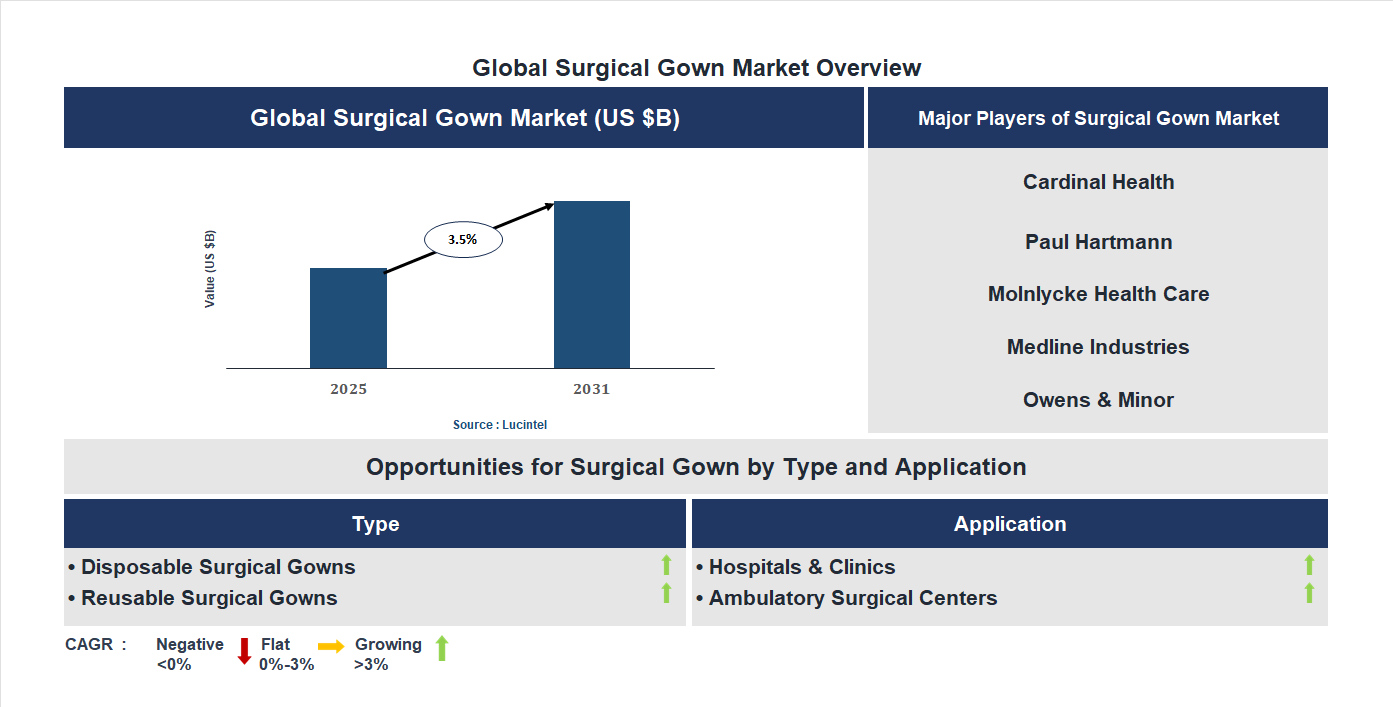
Key data points: The growth forecast = 3.5% annually for the next 7 years. Scroll below to get more insights. This market report covers trends, opportunities and forecasts in surgical gown market to 2031 by type (disposable surgical gowns and reusable surgical gowns), application (hospitals & clinics and ambulatory surgical centers), and region (North America, Europe, Asia Pacific, and the Rest of the World)
We'll send your sample report shortly.
• Lucintel forecasts that, within the type category, disposable surgical gown is expected to witness higher growth over the forecast period.
• Within the application category, hospital & clinic is expected to witness higher growth.
• In terms of region, APAC is expected to witness the highest growth over the forecast period. Gain valuable insights for your business decisions with our comprehensive 150+ page report. Sample figures with some insights are shown below.
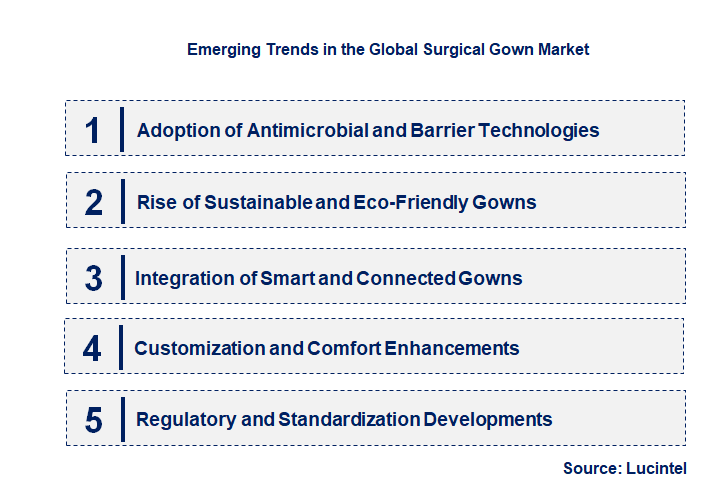
• Adoption of Antimicrobial and Barrier Technologies: This trend involves integrating antimicrobial agents and advanced barrier materials into surgical gowns to enhance infection control. These gowns provide superior protection against pathogens, reducing the risk of cross-contamination during surgeries. The use of such technologies is driven by increasing concerns over hospital-acquired infections and regulatory mandates. As a result, manufacturers are investing in research to develop gowns with longer-lasting antimicrobial properties and higher barrier efficacy, which ultimately improves patient safety and healthcare worker confidence.
• Rise of Sustainable and Eco-Friendly Gowns: Environmental concerns are prompting a shift toward sustainable manufacturing practices in the surgical gown market. Biodegradable materials, recyclable fabrics, and eco-friendly production processes are gaining popularity. This trend is driven by healthcare institutions commitments to reduce their carbon footprint and comply with environmental regulations. Sustainable gowns not only appeal to eco-conscious consumers but also help hospitals meet sustainability goals, potentially reducing waste management costs. The market is witnessing increased innovation in eco-friendly textiles that do not compromise on protection or comfort.
• Integration of Smart and Connected Gowns: The advent of wearable technology is influencing surgical gown design, with smart gowns featuring embedded sensors and connectivity options. These gowns can monitor vital signs, detect contamination, or provide real-time data to healthcare providers. Such innovations aim to improve surgical outcomes, enhance infection control, and streamline hospital workflows. The integration of IoT (Internet of Things) technology into gowns is expected to revolutionize infection prevention strategies and enable personalized patient care, making surgical gowns a critical component of digital health ecosystems.
• Customization and Comfort Enhancements: As healthcare providers recognize the importance of comfort and fit, there is a growing demand for customizable surgical gowns. Features such as adjustable closures, ergonomic designs, and breathable fabrics are being incorporated to improve wearer comfort and reduce fatigue during long procedures. This trend also emphasizes aesthetic customization, allowing hospitals to align gowns with branding or specific procedural needs. Enhanced comfort and fit contribute to better compliance with safety protocols and overall staff satisfaction, driving innovation in gown design and material selection.
• Regulatory and Standardization Developments: Evolving regulatory standards and quality benchmarks are shaping the surgical gown market. Governments and health organizations are implementing stricter guidelines regarding material safety, barrier performance, and sterilization processes. These regulations ensure higher safety standards but also pose challenges for manufacturers to meet compliance. As standards become more rigorous, there is increased investment in testing, certification, and quality assurance. This trend promotes market consolidation and encourages innovation to develop gowns that meet or exceed regulatory requirements, ultimately elevating overall safety and efficacy in surgical environments. In summary, these emerging trends are collectively transforming the surgical gown market by emphasizing safety, sustainability, technological integration, comfort, and regulatory compliance. They are driving innovation, improving healthcare outcomes, and reshaping the competitive landscape, ensuring that surgical gowns continue to meet the evolving needs of modern healthcare systems.
• Technological Innovations: Introduction of antimicrobial and smart textiles has enhanced gown safety and functionality, reducing infection risks and improving user comfort, thereby increasing market demand and expanding product applications.
• Sustainable Materials: Growing emphasis on eco-friendly and biodegradable materials has led manufacturers to develop sustainable surgical gowns, aligning with environmental regulations and appealing to environmentally conscious consumers.
• Regulatory Enhancements: Stricter standards and certifications for surgical gowns have prompted companies to upgrade product quality and safety features, ensuring compliance and boosting market credibility.
• Customization and Comfort: Advances in fabric technology allow for more customizable and comfortable gowns, improving healthcare worker compliance and patient outcomes, which positively impacts market growth.
• Impact of COVID-19: The pandemic heightened awareness of infection control, leading to increased adoption of high-performance surgical gowns and accelerating market expansion globally, with a focus on safety and innovation. In summary, these developments are significantly impacting the surgical gown market by driving innovation, improving safety standards, and promoting sustainable practices. The market is experiencing rapid growth, fueled by technological advancements and increased healthcare awareness, positioning it for continued expansion and diversification.
• Healthcare Facilities: Expansion in hospital and clinic demand : The increasing number of surgeries and infection control protocols are driving the need for high-quality surgical gowns in healthcare facilities. Hospitals are adopting advanced, disposable, and reusable gowns to enhance safety and compliance, which boosts market growth. This trend is further supported by government regulations emphasizing infection prevention, leading to sustained demand for innovative gown materials and designs.
• Ambulatory Surgical Centers: Growing preference for outpatient procedures : The rising popularity of outpatient surgeries in ambulatory surgical centers (ASCs) is creating a significant demand for specialized surgical gowns. These centers require cost-effective, comfortable, and sterile gowns to ensure patient safety and operational efficiency. The shift towards minimally invasive procedures and outpatient care is expected to propel growth in this segment, encouraging manufacturers to develop tailored gown solutions.
• Dental and Cosmetic Surgery: Surge in elective procedures : The increasing number of elective dental and cosmetic surgeries is expanding the application of surgical gowns in these fields. These procedures demand high-quality, aesthetic, and comfortable gowns that meet infection control standards. As cosmetic surgeries become more accessible and popular, the market for specialized gowns in this segment is poised for substantial growth.
• Veterinary Surgery: Rising animal healthcare procedures : The veterinary sector is witnessing a surge in surgical interventions, necessitating protective apparel similar to human surgical gowns. The demand for veterinary surgical gowns is driven by the need for infection control and safety during animal surgeries. This niche application offers new growth opportunities, especially as pet healthcare and animal surgeries become more advanced and frequent.
• Research and Pharmaceutical Labs: Increased clinical research activities : The expanding scope of clinical research and pharmaceutical manufacturing requires sterile environments and protective apparel. Surgical gowns are essential in maintaining contamination-free conditions during experiments and production processes. The growth in biotech and pharmaceutical sectors is expected to significantly boost demand for specialized gowns designed for laboratory and research applications. In summary, these growth opportunities across healthcare facilities, outpatient centers, elective procedures, veterinary surgeries, and research labs are collectively transforming the surgical gown market. They are driving innovation, expanding application scopes, and increasing overall market size, reflecting a dynamic and evolving industry landscape.
• Technological Innovations: The development of advanced materials like antimicrobial fabrics and breathable, lightweight textiles has revolutionized surgical gown manufacturing. These innovations improve patient and healthcare worker safety by reducing infection risks and enhancing comfort. The integration of nanotechnology and moisture-wicking fabrics further boosts product efficacy. As hospitals and clinics prioritize infection control, demand for high-tech gowns increases, encouraging manufacturers to invest in R&D. This continuous innovation cycle sustains market growth by offering superior products that meet evolving safety standards and user expectations.
• Rising Healthcare Expenditure: Increasing healthcare budgets worldwide, especially in emerging economies, contribute significantly to the growth of the surgical gown market. Governments and private healthcare providers are investing more in infrastructure, equipment, and protective apparel to improve patient outcomes and staff safety. The rising prevalence of chronic diseases and surgical procedures also amplifies the need for sterile, high-quality gowns. As healthcare spending continues to grow, so does the demand for reliable surgical gowns, creating opportunities for manufacturers to expand their product lines and market reach.
• Growing Focus on Infection Control: The global emphasis on preventing healthcare-associated infections (HAIs) has heightened the importance of protective apparel like surgical gowns. Hospitals and clinics are adopting stricter infection control protocols, which require the use of gowns that meet specific safety standards. This focus has led to increased demand for gowns made from barrier-enhancing materials that prevent pathogen transmission. The COVID-19 pandemic further underscored the necessity for effective protective gear, accelerating market growth. As infection control remains a priority, the market is expected to expand with innovative, compliant gown options.
• Regulatory Standards and Certifications: Stringent regulatory frameworks and certification requirements, such as FDA approval and CE marking, influence the surgical gown market significantly. Manufacturers must adhere to safety, quality, and performance standards, which can involve substantial compliance costs but ensure product reliability. These regulations drive innovation and quality improvements, fostering consumer trust. Additionally, regulatory compliance can act as a barrier to entry for new players, consolidating market share among established companies. As standards evolve, continuous adaptation is necessary, impacting manufacturing processes and product development strategies.
• Increasing Adoption of Reusable Gowns: The shift towards sustainable healthcare practices has propelled the adoption of reusable surgical gowns. These gowns offer cost advantages and reduce environmental impact compared to disposable options. Hospitals are increasingly investing in durable, sterilizable gowns that meet safety standards, aligning with eco-friendly initiatives. The development of high-quality, reusable materials has made this transition feasible without compromising safety. This trend not only addresses environmental concerns but also provides long-term economic benefits, encouraging healthcare facilities to adopt reusable gowns, thereby expanding the market scope. The challenges in the surgical gown market are:
• High Manufacturing Costs: Producing advanced surgical gowns involves significant expenses related to high-quality raw materials, specialized manufacturing processes, and stringent quality control measures. Incorporating innovative fabrics, antimicrobial agents, and compliance with regulatory standards further elevates costs. These expenses can lead to higher retail prices, potentially limiting adoption in cost-sensitive markets. Additionally, maintaining consistent quality across production batches is challenging, which can impact brand reputation and market competitiveness. Overcoming these cost barriers requires efficient supply chain management and technological advancements to reduce production expenses without compromising quality.
• Regulatory Compliance Complexities: Navigating the complex landscape of regulatory requirements across different regions poses a substantial challenge for market players. Ensuring compliance with safety standards, obtaining necessary certifications, and adhering to evolving regulations demand significant resources and expertise. Non-compliance can result in product recalls, legal penalties, and loss of market access, which can be detrimental to business sustainability. Smaller manufacturers may find it particularly difficult to meet these standards, limiting market entry and innovation. Continuous monitoring of regulatory changes and investment in compliance infrastructure are essential but can strain company resources.
• Supply Chain Disruptions: The surgical gown market is vulnerable to disruptions in raw material supply, manufacturing, and distribution channels. Factors such as geopolitical tensions, pandemics, and transportation issues can cause delays and shortages, impacting product availability. These disruptions increase costs and reduce the ability to meet market demand promptly. Additionally, reliance on specific suppliers for specialized fabrics or antimicrobial agents can create bottlenecks. Building resilient supply chains, diversifying sourcing strategies, and maintaining strategic inventories are critical to mitigating these risks, but they require significant planning and investment. In summary, the surgical gown market is driven by technological advancements, increased healthcare spending, infection control priorities, regulatory standards, and sustainability trends. However, high manufacturing costs, regulatory complexities, and supply chain vulnerabilities present notable challenges. These factors collectively influence market dynamics, shaping opportunities for innovation and growth while necessitating strategic management of risks. Overall, the markets future will depend on how effectively stakeholders can leverage drivers and address challenges to meet evolving healthcare needs efficiently and sustainably.
• Cardinal Health
• Paul Hartmann
• Molnlycke Health Care
• Medline Industries
• Owens & Minor
• Kimberly-clark
• Hogy Medical
• Ahlstrom-Munksjo
• Lohmann & Rauscher
• Winner Medical
• Disposable Surgical Gowns
• Reusable Surgical Gowns
• Hospitals & Clinics
• Ambulatory Surgical Centers
• North America
• Europe
• Asia Pacific
• The Rest of the World
• United States: The US market has seen a surge in demand for high-performance surgical gowns with enhanced barrier protection and comfort. Innovations include antimicrobial fabrics and eco-friendly materials. Regulatory agencies like the FDA have introduced stricter standards, encouraging manufacturers to improve product safety. The adoption of reusable gowns is increasing due to sustainability concerns, and e-commerce platforms are expanding access to specialized products. Additionally, partnerships between healthcare providers and suppliers are streamlining procurement processes, boosting market growth.
• China: China has experienced rapid growth in the surgical gown market, driven by expanding healthcare infrastructure and government initiatives to improve infection control. Local manufacturers are investing in advanced manufacturing techniques to produce high-quality gowns at competitive prices. The market is also witnessing increased adoption of disposable gowns to meet rising demand during the pandemic. Innovations in lightweight, breathable fabrics are gaining popularity, and domestic companies are focusing on R&D to develop eco-friendly options. The government’s emphasis on healthcare modernization is expected to further propel market expansion.
• Germany: The German surgical gown market emphasizes high safety standards and quality. There is a strong focus on sustainable and biodegradable gowns to reduce environmental impact. Technological advancements include the integration of antimicrobial coatings and improved fluid resistance. Regulatory compliance with European Union directives ensures product safety and efficacy. The market also benefits from a well-established healthcare system and increasing demand for customized gowns tailored to specific surgical procedures. Collaborations between research institutions and manufacturers are fostering innovation, particularly in developing eco-conscious and high-performance products.
• India: India’s market is characterized by rapid growth due to increasing healthcare infrastructure and government initiatives to improve healthcare access. Local manufacturers are expanding their product portfolios with affordable, disposable surgical gowns to meet the rising demand. There is a focus on developing cost-effective, lightweight, and breathable gowns suitable for diverse climatic conditions. The pandemic has accelerated adoption of advanced protective gear, and startups are innovating with new materials. The government’s push for self-reliance and quality standards is encouraging domestic production, making India a significant player in the global surgical gown market.
• Japan: Japan’s market is driven by a focus on high-quality, innovative surgical gowns with advanced protective features. The emphasis on infection control and patient safety has led to the adoption of gowns with superior barrier properties and comfort. Eco-friendly and sustainable materials are gaining traction, aligning with Japan’s environmental policies. The market benefits from technological integration, such as antimicrobial coatings and smart textiles. Regulatory standards are stringent, ensuring high product quality. Additionally, Japan’s aging population and increasing healthcare expenditure are fueling demand for specialized surgical apparel, fostering ongoing innovation and market growth.


• Cardinal Health
• Paul Hartmann
• Molnlycke Health Care
• Medline Industries
• Owens & Minor
• Kimberly-clark
• Hogy Medical
• Ahlstrom-Munksjo
• Lohmann & Rauscher
• Winner Medical Q5. Which surgical gown market segment will be the largest in future? Answer: Lucintel forecasts that, within the type category, disposable surgical gown is expected to witness higher growth over the forecast period. Q6. In surgical gown market, which region is expected to be the largest in next 5 years? Answer: In terms of region, APAC is expected to witness the highest growth over the forecast period. Q7. Do we receive customization in this report? Answer: Yes, Lucintel provides 10% customization without any additional cost.


Choose a license that fits your team. Instant PDF delivery.
Prices exclude taxes. Instant delivery. Custom licensing available on request.
Market Report · July 31, 2026
Market Report · July 31, 2026
Market Report · July 31, 2026
Trusted partner for strategic intelligence and business growth


Receive a complimentary market analysis tailored to your industry. Our analysts will identify key growth opportunities and competitive dynamics specific to your business.

Market size, growth rate, and key trend analysis for your specific sector.

Top competitor positioning and market share analysis.

Strategic recommendations backed by data-driven insights.
Get curated market intelligence and competitive moves straight to your inbox.
By subscribing, you agree to receive our monthly insights. Unsubscribe anytime.
Receive a complimentary market analysis tailored to your industry. Our analysts will identify key growth opportunities and competitive dynamics specific to your business.
Market size, growth rate, and key trend analysis for your specific sector.
Top competitor positioning and market share analysis.
Strategic recommendations backed by data-driven insights.
Get curated market intelligence, emerging trends, and competitive moves straight to your inbox each month.
By subscribing, you agree to receive our monthly insights. Unsubscribe anytime.
We'll send your sample report shortly.