
Report Feature
Surgical Dressing Market Trends and Forecast
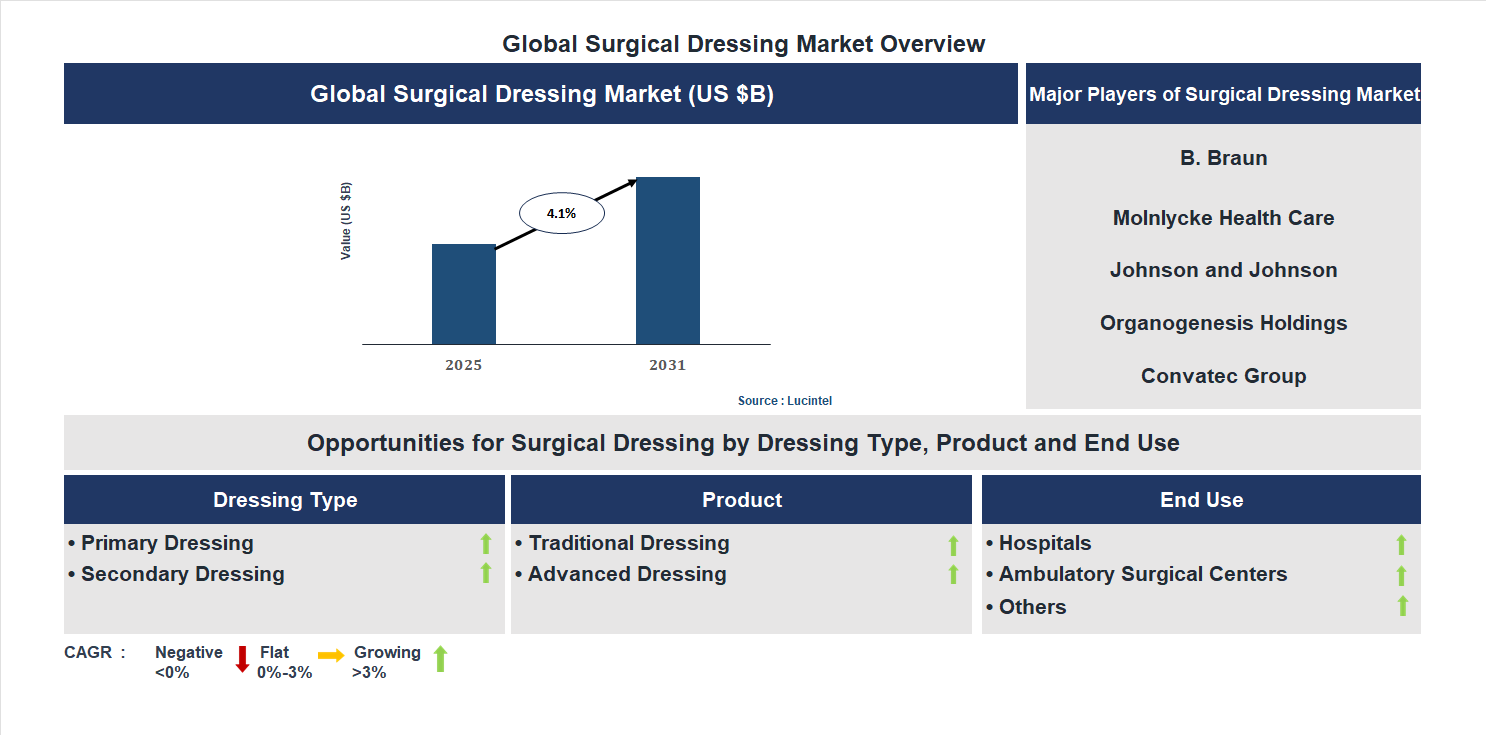
The future of the global surgical dressing market looks promising with opportunities in the hospital and ambulatory surgical center markets. The global surgical dressing market is expected to grow with a CAGR of 4.1% from 2025 to 2031. The major drivers for this market are the increasing cases of chronic & surgical wounds, the rising demand for advanced wound care products, and the growing awareness about infection prevention practices.• Lucintel forecasts that, within the dressing type category, primary dressing is expected to witness higher growth over the forecast period.
• Within the end use category, hospital is expected to witness higher growth.
• In terms of region, APAC is expected to witness the highest growth over the forecast period. Gain valuable insights for your business decisions with our comprehensive 150+ page report. Sample figures with some insights are shown below.
Emerging Trends in the Surgical Dressing Market
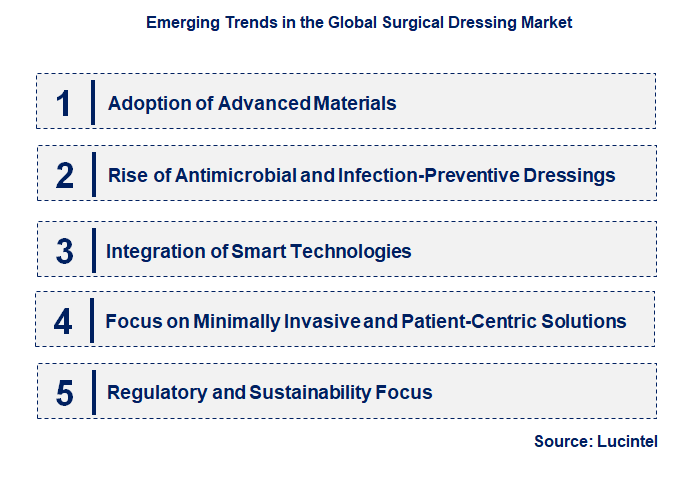
The surgical dressing market is experiencing rapid evolution driven by technological advancements, changing healthcare needs, and increasing awareness of infection control. As hospitals and clinics seek more effective, cost-efficient, and patient-friendly solutions, several emerging trends are shaping the future of this industry. These developments are not only improving clinical outcomes but also influencing market dynamics, competitive strategies, and regulatory frameworks. Understanding these key trends is essential for stakeholders aiming to capitalize on growth opportunities and address challenges in this vital segment of healthcare.• Adoption of Advanced Materials: The market is witnessing a shift towards innovative materials such as hydrocolloids, foams, and antimicrobial dressings. These materials offer enhanced healing properties, better moisture management, and infection prevention. Their biocompatibility and ability to reduce dressing change frequency improve patient comfort and reduce healthcare costs. The integration of nanotechnology and bioactive substances further boosts their efficacy, making them increasingly preferred in wound care. This trend is driving product diversification and elevating standards for dressing performance.
• Rise of Antimicrobial and Infection-Preventive Dressings: Growing concerns over hospital-acquired infections and antibiotic resistance are fueling demand for antimicrobial dressings. These dressings contain agents like silver, iodine, or honey, which actively inhibit microbial growth. Their use is expanding from acute wounds to chronic and surgical wounds, reducing infection rates and promoting faster healing. This trend emphasizes safety and efficacy, encouraging manufacturers to develop more sophisticated, broad-spectrum antimicrobial solutions that meet stringent regulatory standards.
• Integration of Smart Technologies: The incorporation of sensors and IoT-enabled features into surgical dressings is an emerging trend. Smart dressings can monitor wound conditions such as pH, temperature, and moisture levels, providing real-time data to healthcare providers. This technology facilitates early detection of infections and enables personalized treatment plans. The adoption of such innovations enhances patient outcomes, reduces complications, and optimizes resource utilization. As digital health continues to grow, smart dressings are poised to revolutionize wound management practices.
• Focus on Minimally Invasive and Patient-Centric Solutions: There is a rising demand for dressings that are easy to apply, comfortable, and suitable for outpatient and home care settings. Innovations include transparent, flexible, and adhesive dressings that minimize discomfort and improve mobility. Patient-centric designs aim to reduce dressing change frequency and pain, thereby increasing compliance and satisfaction. This trend aligns with the broader shift towards outpatient care and telemedicine, encouraging manufacturers to develop user-friendly products that support self-care and reduce hospital stays.
• Regulatory and Sustainability Focus: Increasing regulatory scrutiny and a push for environmentally sustainable products are shaping the market landscape. Manufacturers are investing in eco-friendly materials, biodegradable dressings, and sustainable manufacturing processes. Additionally, compliance with evolving regulatory standards ensures product safety and efficacy, fostering consumer trust. This trend promotes innovation in sustainable wound care solutions and encourages transparency and accountability within the industry, ultimately influencing product development, marketing strategies, and market competitiveness. In summary, these trends are collectively transforming the Surgical Dressing Market by fostering innovation, improving patient outcomes, and emphasizing sustainability. They are driving market growth, encouraging new product development, and reshaping competitive dynamics, positioning the industry for a more technologically advanced and patient-focused future.
Recent Development in the Surgical Dressing Market
The surgical dressing market has experienced significant evolution driven by technological advancements, increasing healthcare needs, and rising awareness about infection control. As hospitals and clinics seek more effective wound management solutions, innovative products and strategies are emerging to meet these demands. The market’s growth is also influenced by the rising prevalence of chronic wounds, surgical procedures, and the global focus on improving patient outcomes. These developments are shaping the competitive landscape, encouraging product innovation, and expanding market opportunities worldwide. Understanding these key trends is essential for stakeholders aiming to capitalize on the market’s potential and address evolving healthcare challenges effectively.• Technological Innovations: Development of advanced dressings such as hydrocolloid, foam, and antimicrobial dressings has improved wound healing outcomes. These products offer better moisture management, infection prevention, and ease of use, leading to increased adoption in clinical settings. The impact is a broader product portfolio and enhanced patient care, driving market growth.
• Rising Prevalence of Chronic Wounds: Increasing cases of diabetic foot ulcers, pressure ulcers, and venous leg ulcers have heightened demand for specialized dressings. This trend has expanded the market, prompting manufacturers to develop targeted solutions that accelerate healing and reduce complications, thereby boosting sales and market size.
• Focus on Infection Control: The COVID-19 pandemic underscored the importance of infection prevention, prompting innovations in antimicrobial dressings containing silver, iodine, or honey. These dressings help reduce infection risks, especially in surgical and chronic wounds, leading to increased market demand and product diversification.
• Regulatory Approvals and Reimbursements: Enhanced regulatory frameworks and reimbursement policies have facilitated market expansion by ensuring product safety and affordability. This has encouraged manufacturers to invest in R&D and launch new products, further stimulating market growth and accessibility.
• Digital and Smart Dressings: Integration of sensors and IoT technology into dressings allows real-time monitoring of wound conditions. These smart dressings improve treatment precision and patient outcomes, opening new avenues for market expansion and technological leadership. In summary, these developments are collectively transforming the Surgical Dressing Market by fostering innovation, expanding application areas, and improving patient outcomes. The market is experiencing accelerated growth driven by technological advancements, increased demand for specialized products, and a focus on infection control, positioning it for sustained expansion in the coming years.
Strategic Growth Opportunities in the Surgical Dressing Market
The surgical dressing market is experiencing rapid evolution driven by technological advancements, increasing healthcare needs, and a focus on infection control. As healthcare providers seek more effective and innovative solutions, key applications are presenting significant growth opportunities. These developments are shaping the future landscape of wound care, improving patient outcomes, and expanding market reach. Understanding these opportunities is essential for stakeholders aiming to capitalize on emerging trends and meet the rising demand for advanced surgical dressings across various medical fields.• Wound Care Management: Enhanced infection control and faster healing are driving demand for advanced dressings that promote moisture retention and antimicrobial properties, improving patient recovery times and reducing complications.
• Surgical Site Infection Prevention: The development of antimicrobial and bioactive dressings is crucial in minimizing infections post-surgery, leading to better patient outcomes and reduced healthcare costs.
• Chronic Wound Treatment: Growing prevalence of diabetic ulcers and pressure sores necessitates specialized dressings that facilitate healing, creating a substantial market for innovative solutions.
• Trauma and Emergency Care: The need for quick, effective dressings in trauma cases is expanding, with products designed for rapid application and high absorbency to manage bleeding and prevent infection.
• Cosmetic and Reconstructive Surgery: Increasing demand for dressings that support skin regeneration and minimize scarring is opening new avenues in aesthetic and reconstructive procedures, enhancing patient satisfaction. These growth opportunities are significantly impacting the surgical dressing market by fostering innovation, expanding application areas, and improving patient care standards. As a result, the market is poised for sustained growth, driven by technological advancements and increasing healthcare awareness worldwide.
Surgical Dressing Market Driver and Challenges
The surgical dressing market is influenced by a variety of technological, economic, and regulatory factors that shape its growth and development. Advances in medical technology, increasing healthcare expenditure, and evolving regulatory standards are key drivers. Additionally, rising incidences of surgical procedures and infections contribute to market expansion. However, the market also faces challenges such as stringent regulatory approvals, high costs of innovative products, and supply chain disruptions. Understanding these drivers and challenges is essential for stakeholders to navigate the dynamic landscape effectively and capitalize on emerging opportunities while addressing potential barriers. The factors responsible for driving the surgical dressing market include:-• Technological Advancements: The development of innovative dressing materials such as antimicrobial, bioactive, and moisture-retentive dressings significantly enhances wound healing outcomes. These advancements improve patient comfort, reduce infection risks, and enable faster recovery, thereby increasing demand. Continuous research and development efforts are leading to more effective and specialized products, which are crucial in expanding the market. The integration of nanotechnology and smart dressings with sensors further propels growth, offering real-time wound monitoring and personalized care solutions.
• Increasing Surgical Procedures: The rising prevalence of chronic diseases like diabetes, cardiovascular conditions, and obesity results in a higher number of surgical interventions worldwide. This surge directly correlates with increased demand for surgical dressings to manage post-operative wounds effectively. Moreover, the expanding aging population is more susceptible to wounds and infections, further fueling the need for advanced dressing solutions. The growing number of minimally invasive surgeries also necessitates specialized dressings, contributing to market growth.
• Rising Incidence of Wound Infections: The increasing occurrence of wound infections due to factors such as poor hygiene, diabetes, and immunosuppression drives the demand for effective dressings with antimicrobial properties. These dressings help prevent infections, promote faster healing, and reduce hospital stays. The growing awareness among healthcare providers and patients about infection control measures further boosts the adoption of advanced dressings. This trend underscores the importance of innovative, infection-resistant products in the market.
• Economic Growth and Healthcare Expenditure: Rapid economic development in emerging markets leads to increased healthcare spending, infrastructure development, and access to advanced medical products. Governments and private sectors are investing heavily in healthcare, which enhances the availability and affordability of surgical dressings. This economic boost facilitates market expansion, especially in developing regions, by enabling the adoption of high-quality, innovative dressings and supporting widespread surgical procedures. The challenges in the surgical dressing market are:
• Stringent Regulatory Approvals: The approval process for new surgical dressings involves rigorous testing and compliance with strict regulatory standards set by authorities such as the FDA and EMA. These procedures are time-consuming and costly, delaying product launches and increasing R&D expenses. Navigating complex regulatory landscapes can hinder innovation and market entry, especially for small and emerging companies, thereby impacting overall market growth.
• High Cost of Advanced Dressings: Innovative dressings with antimicrobial, bioactive, or smart features often come with higher manufacturing costs. These elevated prices can limit accessibility, especially in low-income regions, restricting market penetration. Healthcare providers and patients may prefer more affordable traditional options, which can slow the adoption of advanced products and affect revenue streams for manufacturers.
• Supply Chain Disruptions: The global supply chain for raw materials and manufacturing components faces challenges such as geopolitical tensions, pandemics, and logistical issues. These disruptions can lead to shortages of key materials, delays in production, and increased costs. Such instability hampers the consistent supply of surgical dressings, affecting market stability and the ability to meet rising demand efficiently. In summary, the Surgical Dressing Market is driven by technological innovations, increasing surgical procedures, and rising infection rates, which collectively foster growth. However, regulatory hurdles, high product costs, and supply chain issues pose significant challenges. Balancing these factors is crucial for sustainable market expansion. Stakeholders must focus on innovation, regulatory compliance, and supply chain resilience to capitalize on growth opportunities while mitigating risks, ensuring the market’s long-term viability and improved patient outcomes.
List of Surgical Dressing Companies
Companies in the market compete on the basis of product quality offered. Major players in this market focus on expanding their manufacturing facilities, R&D investments, infrastructural development, and leverage integration opportunities across the value chain. With these strategies surgical dressing companies cater increasing demand, ensure competitive effectiveness, develop innovative products & technologies, reduce production costs, and expand their customer base. Some of the surgical dressing companies profiled in this report include-• B. Braun
• Molnlycke Health Care
• Johnson and Johnson
• Organogenesis Holdings
• Convatec Group
• Smith and Nephew
• Essity Aktiebolag
• Cardinal Health
• 3M Company
• Coloplast
Surgical Dressing Market by Segment
The study includes a forecast for the global surgical dressing market by dressing type, product, end use, and region.Surgical Dressing Market by Dressing Type [Value from 2019 to 2031]:
• Primary Dressing
• Secondary Dressing
Surgical Dressing Market by Product [Value from 2019 to 2031]:
• Traditional Dressing
• Advanced Dressing
Surgical Dressing Market by End Use [Value from 2019 to 2031]:
• Hospitals
• Ambulatory Surgical Centers
• Others
Surgical Dressing Market by Region [Value from 2019 to 2031]:
• North America
• Europe
• Asia Pacific
• The Rest of the World
Country Wise Outlook for the Surgical Dressing Market
The surgical dressing market has experienced significant growth driven by technological advancements, increasing healthcare needs, and rising surgical procedures worldwide. As countries adapt to evolving medical standards and innovations, key developments are emerging across major markets. These changes reflect efforts to improve patient outcomes, enhance product efficacy, and address regional healthcare challenges. The United States, China, Germany, India, and Japan are at the forefront of these developments, each contributing unique innovations and market dynamics that shape the global landscape of surgical dressings.• United States: The US market has seen a surge in advanced wound care products, including antimicrobial dressings and bioengineered skin substitutes. Increased adoption of minimally invasive surgeries and a focus on infection control have driven demand. Regulatory approvals for innovative materials and the integration of smart dressings with sensors are notable trends. The rise in chronic wounds, such as diabetic foot ulcers, has further expanded the market. Additionally, partnerships between healthcare providers and biotech firms are fostering product innovation and commercialization.
• China: China’s surgical dressing market is rapidly expanding due to rising healthcare infrastructure and government initiatives to improve wound care standards. The country is witnessing increased adoption of advanced dressings like hydrocolloids and foam dressings. Local manufacturers are investing in R&D to develop cost-effective, high-quality products to meet domestic demand. The growing prevalence of chronic diseases and surgical procedures has also contributed to market growth. Moreover, e-commerce platforms are facilitating wider distribution and access to innovative wound care solutions across rural and urban areas.
• Germany: Germany’s market is characterized by a strong emphasis on research and development, with a focus on biocompatible and eco-friendly dressings. The country is a leader in the adoption of advanced wound management technologies, including negative pressure wound therapy (NPWT) and bioactive dressings. Stringent regulatory standards ensure high-quality products, fostering innovation. The aging population and rising incidence of chronic wounds are key drivers. Germany also emphasizes sustainable practices, leading to the development of environmentally friendly materials and packaging in the surgical dressing sector.
• India: The Indian market is experiencing rapid growth driven by increasing surgical procedures, a large patient population, and rising awareness of wound care. Affordable, effective dressings such as alginate and hydrogel dressings are in high demand. Local manufacturers are expanding their product portfolios and investing in R&D to develop cost-effective solutions. The government’s focus on improving healthcare infrastructure and the rise of private healthcare providers are further fueling market expansion. Additionally, the adoption of advanced dressings is gradually increasing in urban centers, with rural areas beginning to access improved wound care options.
• Japan: Japan’s market is characterized by high technological innovation and a focus on advanced wound care solutions. The country is investing in smart dressings embedded with sensors for real-time monitoring of wound conditions. The aging population has increased the prevalence of chronic wounds, prompting the development of specialized dressings. Japan emphasizes minimally invasive and outpatient procedures, boosting demand for user-friendly, effective dressings. Regulatory support for innovative products and collaborations between medical device companies and research institutions are driving market growth. Sustainability and eco-friendly materials are also gaining importance in product development.

Features of the Global Surgical Dressing Market
Market Size Estimates: Surgical dressing market size estimation in terms of value ($B). Trend and Forecast Analysis: Market trends (2019 to 2024) and forecast (2025 to 2031) by various segments and regions. Segmentation Analysis: Surgical dressing market size by dressing type, product, end use, and region in terms of value ($B). Regional Analysis: Surgical dressing market breakdown by North America, Europe, Asia Pacific, and Rest of the World. Growth Opportunities: Analysis of growth opportunities in different dressing types, products, end uses, and regions for the surgical dressing market. Strategic Analysis: This includes M&A, new product development, and competitive landscape of the surgical dressing market. Analysis of competitive intensity of the industry based on Porter’s Five Forces model.
FAQ
Q1. What is the growth forecast for surgical dressing market? Answer: The global surgical dressing market is expected to grow with a CAGR of 4.1% from 2025 to 2031. Q2. What are the major drivers influencing the growth of the surgical dressing market? Answer: The major drivers for this market are the increasing cases of chronic & surgical wounds, the rising demand for advanced wound care products, and the growing awareness about infection prevention practices. Q3. What are the major segments for surgical dressing market? Answer: The future of the surgical dressing market looks promising with opportunities in the hospital and ambulatory surgical center markets. Q4. Who are the key surgical dressing market companies? Answer: Some of the key surgical dressing companies are as follows:• B. Braun
• Molnlycke Health Care
• Johnson and Johnson
• Organogenesis Holdings
• Convatec Group
• Smith and Nephew
• Essity Aktiebolag
• Cardinal Health
• 3M Company
• Coloplast Q5. Which surgical dressing market segment will be the largest in future? Answer: Lucintel forecasts that, within the dressing type category, primary dressing is expected to witness higher growth over the forecast period. Q6. In surgical dressing market, which region is expected to be the largest in next 5 years? Answer: In terms of region, APAC is expected to witness the highest growth over the forecast period. Q7. Do we receive customization in this report? Answer: Yes, Lucintel provides 10% customization without any additional cost.
Table of Contents
List of Figures
List of Tables
Methodology
- In-depth interviews of the major players in this market
- Detailed secondary research from competitors’ financial statements and published data
- Extensive searches of published works, market, and database information pertaining to industry news, company press releases, and customer intentions
- A compilation of the experiences, judgments, and insights of Lucintel’s professionals, who have analyzed and tracked this market over the years.


Buy Now
Choose a license that fits your team. Instant PDF delivery.
Prices exclude taxes. Instant delivery. Custom licensing available on request.
Key Questions
- • What are some of the most promising, high-growth opportunities for the surgical dressing market by dressing type (primary dressing and secondary dressing), product (traditional dressing and advanced dressing), end use (hospitals, ambulatory surgical centers, and others), and region (North America, Europe, Asia Pacific, and the Rest of the World)?
- • Which segments will grow at a faster pace and why?
- • Which region will grow at a faster pace and why?
- • What are the key factors affecting market dynamics? What are the key challenges and business risks in this market?
- • What are the business risks and competitive threats in this market?
- • What are the emerging trends in this market and the reasons behind them?
- • What are some of the changing demands of customers in the market?
- • What are the new developments in the market? Which companies are leading these developments?
- • Who are the major players in this market? What strategic initiatives are key players pursuing for business growth?
- • What are some of the competing products in this market and how big of a threat do they pose for loss of market share by material or product substitution?
- • What M&A activity has occurred in the last 5 years and what has its impact been on the industry? For any questions related to Surgical Dressing Market, Surgical Dressing Market Size, Surgical Dressing Market Growth, Surgical Dressing Market Analysis, Surgical Dressing Market Report, Surgical Dressing Market Share, Surgical Dressing Market Trends, Surgical Dressing Market Forecast, Surgical Dressing Companies, write Lucintel analyst at email: helpdesk@lucintel.com. We will be glad to get back to you soon.


