
Market Report · July 22, 2026

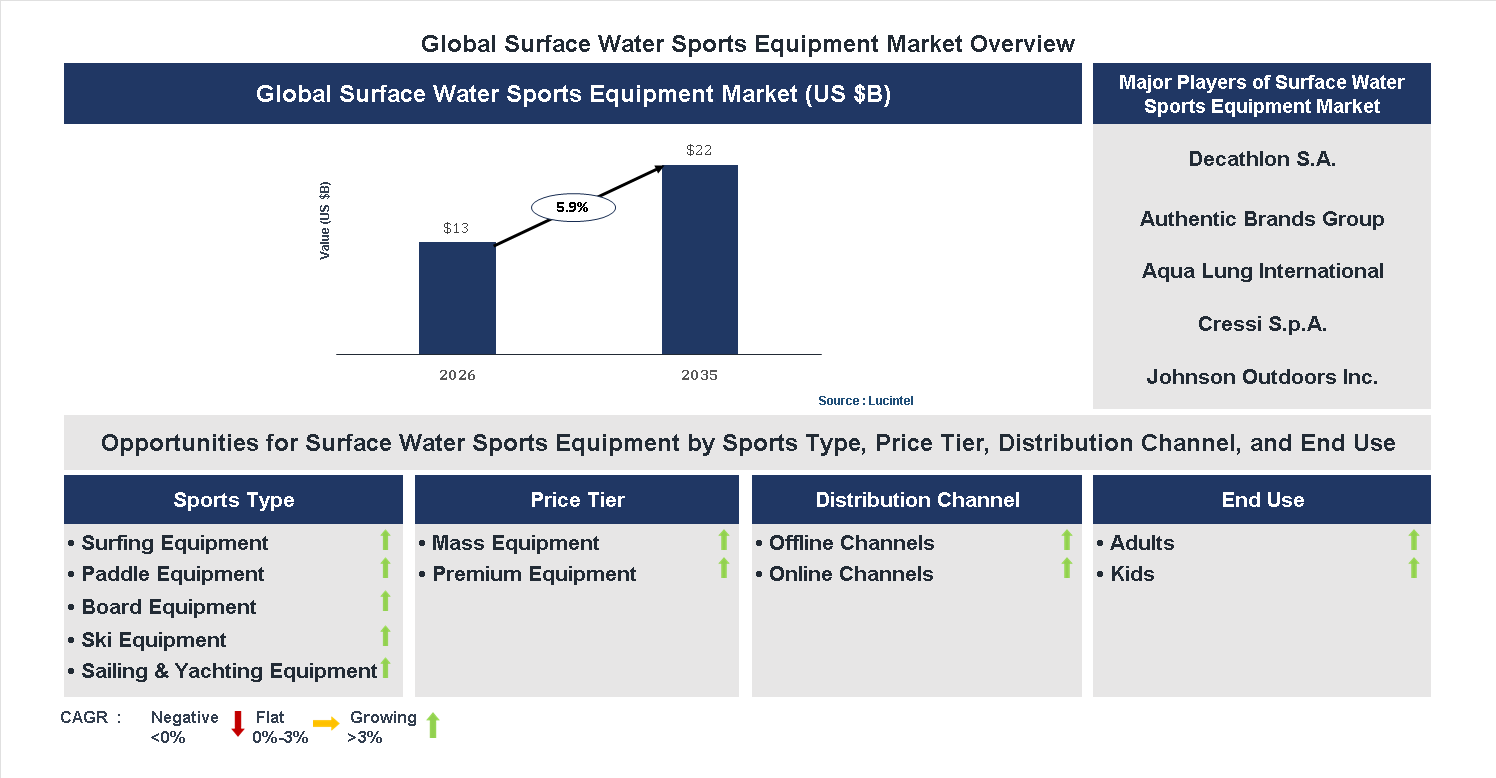
Key data points: The market size in 2035 = $22.0 billion, growth forecast = 5.9% annually for the next 8 years. Scroll below to get more insights. This market report covers trends, opportunities and forecasts in surface water sports equipment market to 2035 by sports type (surfing equipment, paddle equipment, board equipment, ski equipment, and sailing & yachting equipment), price tier (mass equipment and premium equipment), distribution channel (offline channels and online channels), end use (adults and kids), and region (North America, Europe, Asia Pacific, and the Rest of the World)
We'll send your sample report shortly.
• Lucintel forecasts that, within the sports type category, surfing equipment is expected to witness the highest growth over the forecast period.
• Within the end use category, adult is expected to witness higher growth.
• In terms of region, North America is expected to witness the highest growth over the forecast period. Gain valuable insights for your business decisions with our comprehensive 150+ page report. Sample figures with some insights are shown below.
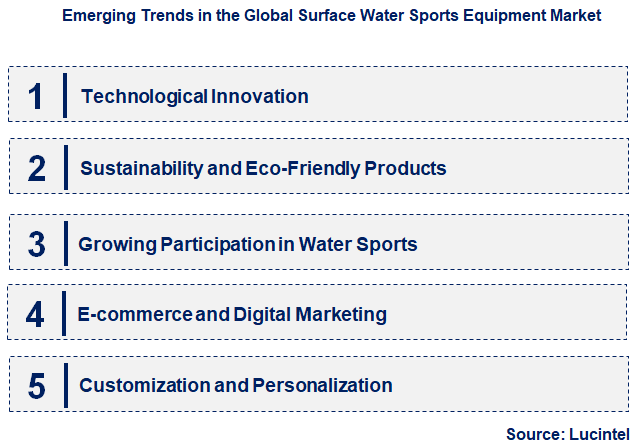
• Technological Innovation: The integration of advanced materials and smart technology is transforming water sports equipment. Lightweight, durable, and eco-friendly materials improve performance and safety. Smart gear with sensors provides real-time data on performance metrics, enhancing user experience. These innovations are attracting tech-savvy consumers and expanding the market’s reach. As technology continues to evolve, equipment becomes more efficient, safer, and accessible, encouraging more participation and broadening the market base.
• Sustainability and Eco-Friendly Products: Increasing environmental awareness is driving demand for sustainable equipment. Manufacturers are adopting biodegradable materials, recyclable components, and energy-efficient manufacturing processes. Eco-friendly products appeal to environmentally conscious consumers and regulatory bodies, fostering brand loyalty. This trend is also encouraging innovation in alternative materials, such as recycled plastics and natural fibers, which reduce the ecological footprint of water sports gear. Sustainability efforts are becoming a key differentiator and growth driver in the market.
• Growing Participation in Water Sports: Rising awareness of health and wellness, along with urbanization, is boosting participation rates in water sports like kayaking, paddleboarding, and surfing. Governments and private organizations are promoting water-based activities through campaigns and infrastructure development. This increased participation is expanding the customer base beyond traditional enthusiasts to include beginners and families. The trend is fueling demand for beginner-friendly, versatile, and affordable equipment, thereby broadening market opportunities and encouraging product diversification.
• E-commerce and Digital Marketing: The shift towards online retail channels is significantly impacting the market. E-commerce platforms offer wider product ranges, competitive pricing, and direct-to-consumer sales, enhancing accessibility. Digital marketing strategies, including social media and influencer collaborations, are increasing brand visibility and consumer engagement. Virtual try-ons and augmented reality tools are improving the online shopping experience. This trend is enabling manufacturers to reach global markets efficiently, reduce distribution costs, and respond swiftly to consumer preferences, thus accelerating market growth.
• Customization and Personalization: Consumers are seeking tailored water sports equipment that matches their skill levels, preferences, and styles. Manufacturers are offering customizable options, including personalized designs, adjustable features, and modular components. This trend enhances user satisfaction and brand loyalty by providing unique, user-centric products. Advances in manufacturing technologies like 3D printing facilitate rapid customization. As personalization becomes a key differentiator, companies that adapt to this demand are gaining a competitive advantage, leading to increased sales and customer retention in the evolving market. These emerging trends, technological innovation, sustainability, increased participation, digital transformation, and customization, are collectively reshaping the surface water sports equipment market. They are driving product development, expanding consumer bases, and fostering sustainable growth, positioning the industry for a more innovative, inclusive, and environmentally responsible future.
• Technological Innovations in Equipment: Advancements in materials and design are enhancing performance and safety, attracting more enthusiasts. New lightweight, durable, and eco-friendly materials improve user experience and reduce environmental impact. Smart equipment with integrated sensors offers real-time data, increasing engagement and safety. These innovations are expanding market reach by appealing to tech-savvy consumers and professional athletes, boosting sales and encouraging product diversification. Overall, technology-driven improvements are elevating the industry’s standards and consumer expectations.
• Growing Popularity of Eco-Friendly Products: Sustainability is becoming a key factor influencing consumer choices. Manufacturers are adopting eco-friendly materials and sustainable manufacturing processes to meet environmental concerns. Recyclable and biodegradable equipment options are gaining traction, aligning with global sustainability goals. This shift not only enhances brand reputation but also attracts environmentally conscious consumers. The emphasis on eco-friendly products is driving innovation and creating a competitive edge, ultimately expanding market share and encouraging industry-wide sustainability practices.
• Expansion into Emerging Markets: Developing economies are witnessing increased interest in water sports, driven by rising disposable incomes and urbanization. Local manufacturers are entering these markets with affordable, tailored products, while international brands are establishing distribution channels. This expansion offers significant growth opportunities, diversifies revenue streams, and increases global market penetration. As awareness and participation grow, these markets are expected to become major contributors to overall industry growth, fostering regional economic development and creating new consumer bases.
• Digital Marketing and E-Commerce Growth: The rise of online platforms and social media is transforming how brands reach consumers. E-commerce provides wider accessibility, convenience, and personalized shopping experiences, boosting sales. Digital marketing strategies, including influencer collaborations and targeted advertising, enhance brand visibility and consumer engagement. This shift enables companies to tap into global markets efficiently, reduce distribution costs, and gather valuable consumer data. The increased digital presence is vital for staying competitive and expanding market share in a rapidly evolving industry landscape.
• Focus on Safety and Regulatory Standards: Stricter safety regulations and standards are being implemented to ensure consumer protection and product reliability. Manufacturers are investing in rigorous testing and certification processes, which enhance product credibility and consumer trust. Compliance with international standards opens access to global markets and reduces liability risks. This focus on safety encourages innovation in design and materials, fostering industry growth through increased consumer confidence and market stability. It also promotes responsible manufacturing practices across the industry. The overall impact of these developments is a more innovative, sustainable, and globally accessible market. Enhanced safety standards, technological advancements, and eco-conscious products are attracting diverse consumer segments. Expansion into emerging markets and digital strategies are broadening industry reach and revenue streams. Collectively, these opportunities are driving growth, fostering competitiveness, and positioning the surface water sports equipment market for sustained success in a dynamic environment.
• Expanding Tourism and Recreational Activities Drive Market Growth: The surge in water-based tourism and recreational activities globally is significantly boosting demand for surface water sports equipment. Resorts, adventure parks, and travel destinations are investing in new equipment to attract tourists seeking adventure and leisure experiences. This trend is particularly prominent in coastal regions and emerging markets, where increased disposable income and a desire for unique experiences are fueling growth. As a result, manufacturers are innovating to meet the evolving needs of this expanding customer base.
• Technological Innovations Enhance Product Performance and Safety: Advances in materials, design, and safety features are transforming surface water sports equipment. Lightweight, durable, and eco-friendly materials improve user experience, while integrated safety features such as impact absorption and stability enhancements reduce injury risks. These innovations attract new users and encourage repeat purchases among enthusiasts. Companies investing in R&D to develop high-performance, user-friendly equipment are gaining competitive advantages, thereby expanding their market share and driving overall industry growth.
• Rising Adoption of Eco-Friendly and Sustainable Equipment: Increasing environmental awareness among consumers is prompting demand for eco-friendly water sports gear. Manufacturers are adopting sustainable materials, biodegradable components, and energy-efficient production processes to appeal to environmentally conscious customers. This shift not only aligns with global sustainability goals but also enhances brand reputation. As consumers prioritize eco-friendly options, the market for sustainable equipment is expected to grow significantly, encouraging industry players to innovate and expand their sustainable product lines.
• Growing Popularity of Water Sports in Emerging Markets: Emerging economies in Asia, Africa, and Latin America are witnessing a rise in water sports participation due to urbanization, improved infrastructure, and increased disposable incomes. This growth presents substantial opportunities for market expansion through localized product offerings and strategic partnerships. Companies are entering these markets with affordable, durable equipment tailored to regional preferences, thereby capturing new customer segments. The expanding middle class and tourism influx further bolster demand, making emerging markets a key growth driver.
• Strategic Collaborations and Sponsorships Boost Market Visibility: Partnerships between equipment manufacturers, sports organizations, and event organizers are enhancing brand visibility and credibility. Sponsoring water sports competitions and collaborating with influencers help companies reach wider audiences and promote their products. These strategies foster consumer engagement, increase sales, and establish brand loyalty. As the popularity of water sports continues to grow, such collaborations are expected to play a crucial role in market expansion and the development of innovative, market-specific products. These growth opportunities collectively are poised to significantly influence the surface water sports equipment market by expanding the consumer base, fostering innovation, and promoting sustainability. Increased participation driven by tourism, technological advancements, and emerging markets will propel industry growth. Companies that leverage strategic collaborations and focus on eco-friendly products will be well-positioned to capitalize on these trends. Overall, these opportunities will shape a dynamic, competitive landscape, ensuring sustained growth and diversification in the market.
• Technological Innovations: The development of lightweight, durable, and high-performance materials has revolutionized water sports equipment. Companies are investing in R&D to create products with enhanced safety features, better ergonomics, and smart technology integration, such as GPS and performance tracking. These innovations attract consumers seeking advanced and reliable gear, thereby expanding market reach. The continuous evolution of equipment also enables access to new water sports activities, broadening the market base and encouraging repeat purchases. As technology advances, manufacturers can differentiate their offerings, leading to increased sales and market share.
• Rising Disposable Income and Tourism: Increasing disposable incomes, especially in emerging economies, enable more consumers to participate in water sports activities. The growth of water-based tourism, including adventure resorts and cruise ships, further fuels demand for specialized equipment. Tourists and adventure enthusiasts seek high-quality gear for safety and performance, prompting suppliers to innovate and expand their product lines. This economic upliftment also encourages investments in water sports infrastructure, creating a positive feedback loop that sustains market growth. As more people engage in water sports for leisure and recreation, the market experiences consistent expansion.
• Growing Awareness of Safety and Environmental Sustainability: Consumers and regulatory bodies are emphasizing safety standards and eco-friendly practices. Manufacturers are adopting sustainable materials and environmentally responsible manufacturing processes to meet these expectations. Increased awareness about water safety and the importance of eco-conscious products encourages companies to develop safer, greener equipment. This shift not only enhances brand reputation but also aligns with regulatory compliance, reducing legal risks. As environmental concerns become more prominent, the market is driven toward sustainable innovation, which appeals to eco-conscious consumers and promotes long-term growth.
• Expansion of Water Sports Activities: The diversification of water sports such as paddleboarding, kayaking, wakeboarding, and jet skiing has broadened the market scope. The popularity of these activities among various age groups and skill levels encourages manufacturers to develop specialized equipment tailored to different needs. The proliferation of water sports clubs, events, and competitions also boosts demand. Additionally, the increasing adoption of water sports in fitness and wellness routines contributes to market growth. This expansion creates new revenue streams and opportunities for product differentiation, fostering a dynamic and competitive environment.
• Impact of Digital Marketing and E-commerce: The rise of online retail platforms and digital marketing strategies has significantly increased product visibility and accessibility. Consumers can now compare products, read reviews, and make purchases conveniently from their homes. E-commerce also enables brands to reach global markets efficiently, reducing distribution costs and expanding customer bases. Social media campaigns and influencer partnerships further enhance brand awareness and consumer engagement. This digital shift accelerates sales cycles and allows for targeted marketing, which is crucial in a competitive landscape. As online shopping becomes more prevalent, the market benefits from increased consumer reach and faster adoption of new products. The challenges facing the surface water sports equipment market include:
• Regulatory and Safety Standards: Stringent safety regulations and standards imposed by governments and international bodies pose compliance challenges for manufacturers. Developing equipment that meets diverse regulatory requirements across regions can increase costs and complicate product development. Non-compliance risks legal penalties, product recalls, and damage to brand reputation. Additionally, evolving safety standards require continuous updates and innovations, which can delay product launches and increase R&D expenses. Navigating these regulatory landscapes demands significant resources and expertise, potentially hindering rapid market expansion and innovation.
• Environmental Concerns and Climate Change: Climate change impacts water bodies through rising temperatures, pollution, and unpredictable weather patterns, affecting water sports activities. Diminished water quality and altered ecosystems can reduce the availability of suitable locations for water sports, thereby limiting market growth. Manufacturers also face pressure to develop eco-friendly products, which may involve higher costs for sustainable materials and processes. Additionally, extreme weather events can disrupt supply chains and outdoor events, negatively impacting sales. Addressing these environmental challenges requires strategic planning and innovation, adding complexity to market operations.
• Market Saturation and Intense Competition: The increasing number of players and product offerings has led to market saturation in certain regions. Differentiating products becomes difficult, resulting in price wars and reduced profit margins. Established brands face stiff competition from local and international manufacturers, which can limit market share growth for new entrants. Consumer preferences are also shifting rapidly, requiring continuous innovation and marketing efforts. This intense competition necessitates significant investment in branding, R&D, and distribution channels, which can strain resources and hinder sustainable growth, especially for smaller companies. The surface water sports equipment market is driven by technological advancements, economic growth, safety and sustainability awareness, diversification of water activities, and digital marketing. However, it faces challenges from regulatory compliance, environmental impacts, and market saturation. These factors collectively influence the market’s evolution, requiring stakeholders to innovate strategically and adapt to changing conditions. While growth opportunities are substantial, addressing regulatory and environmental challenges is crucial for sustainable development. Overall, the market’s future depends on balancing innovation with responsible practices to meet consumer demands and regulatory expectations.
• Decathlon S.A.
• Authentic Brands Group
• Aqua Lung International
• Cressi S.p.A.
• Johnson Outdoors Inc.
• Pentland Group
• Rip Curl Group
• O’Neill Wetsuits
• Mystic Boarding
• Kubus Sports
• Surfing Equipment
• Paddle Equipment
• Board Equipment
• Ski Equipment
• Sailing & Yachting Equipment
• Mass Equipment
• Premium Equipment
• Offline Channels
• Online Channels
• Adults
• Kids
• North America
• Europe
• Asia Pacific
• The Rest of the World
• United States: The US market has seen a surge in electric-powered water sports equipment, such as motorized surfboards and jet skis, driven by technological advancements. There is a growing emphasis on eco-friendly materials and sustainable manufacturing practices. The popularity of stand-up paddleboarding and kayaking continues to rise, supported by increased outdoor recreation initiatives. E-commerce platforms have expanded their offerings, making products more accessible. Additionally, safety standards and regulations are being updated to ensure consumer protection, fostering consumer confidence.
• China: China’s market is experiencing rapid growth due to rising disposable incomes and increased participation in water sports. Domestic manufacturers are investing in innovative, affordable equipment, including inflatable boats and beginner-friendly gear. The government’s focus on promoting water tourism and sports infrastructure development has further boosted demand. E-commerce sales channels are expanding, and international brands are entering the market through strategic partnerships. Sustainability practices are gradually being adopted, with some companies exploring eco-friendly materials to appeal to environmentally conscious consumers.
• Germany: The German market is characterized by a strong focus on high-quality, durable equipment suitable for both recreational and competitive water sports. Innovations include lightweight, high-performance gear made from advanced materials. There is a notable emphasis on safety features and environmentally sustainable products. The market benefits from a well-established network of water sports clubs and events, which promote product adoption. Digital marketing and online retail channels are growing, providing consumers with greater access to a diverse range of products. The industry also emphasizes eco-conscious manufacturing and recycling initiatives.
• India: India’s water sports equipment market is emerging, with increasing interest in activities like kayaking, canoeing, and stand-up paddleboarding. Rising urbanization and tourism development are key drivers. Local manufacturers are focusing on affordable, durable products suitable for beginners. Government initiatives to promote water sports in schools and the tourism sectors are contributing to market growth. E-commerce platforms are expanding their reach, making equipment more accessible. There is a growing awareness of safety and environmental sustainability, prompting some companies to adopt eco-friendly materials and practices.
• Japan: Japan’s market is characterized by technological innovation and a focus on safety and quality. Advanced materials and smart technology integration, such as GPS and performance tracking, are becoming common. The country’s strong culture of outdoor recreation supports steady demand for water sports equipment. Eco-friendly and lightweight products are gaining popularity, aligning with Japan’s sustainability goals. The market benefits from a mature distribution network, including specialty stores and online channels. Additionally, Japan is investing in research and development to create innovative, high-performance equipment tailored to both recreational and competitive users.


• Decathlon S.A.
• Authentic Brands Group
• Aqua Lung International
• Cressi S.p.A.
• Johnson Outdoors Inc.
• Pentland Group
• Rip Curl Group
• O’Neill Wetsuits
• Mystic Boarding
• Kubus Sports Q6. Which surface water sports equipment market segment will be the largest in future? Answer: Lucintel forecasts that, within the sports type category, surfing equipment is expected to witness the highest growth over the forecast period. Q7. In surface water sports equipment market, which region is expected to be the largest in next 5 years? Answer: In terms of region, North America is expected to witness the highest growth over the forecast period. Q8. Do we receive customization in this report? Answer: Yes, Lucintel provides 10% customization without any additional cost.


Choose a license that fits your team. Instant PDF delivery.
Prices exclude taxes. Instant delivery. Custom licensing available on request.
Market Report · July 22, 2026
Market Report · July 16, 2026
Market Report · May 18, 2026
Trusted partner for strategic intelligence and business growth


Receive a complimentary market analysis tailored to your industry. Our analysts will identify key growth opportunities and competitive dynamics specific to your business.

Market size, growth rate, and key trend analysis for your specific sector.

Top competitor positioning and market share analysis.

Strategic recommendations backed by data-driven insights.
Get curated market intelligence and competitive moves straight to your inbox.
By subscribing, you agree to receive our monthly insights. Unsubscribe anytime.
Receive a complimentary market analysis tailored to your industry. Our analysts will identify key growth opportunities and competitive dynamics specific to your business.
Market size, growth rate, and key trend analysis for your specific sector.
Top competitor positioning and market share analysis.
Strategic recommendations backed by data-driven insights.
Get curated market intelligence, emerging trends, and competitive moves straight to your inbox each month.
By subscribing, you agree to receive our monthly insights. Unsubscribe anytime.
We'll send your sample report shortly.