
Market Report · July 22, 2026

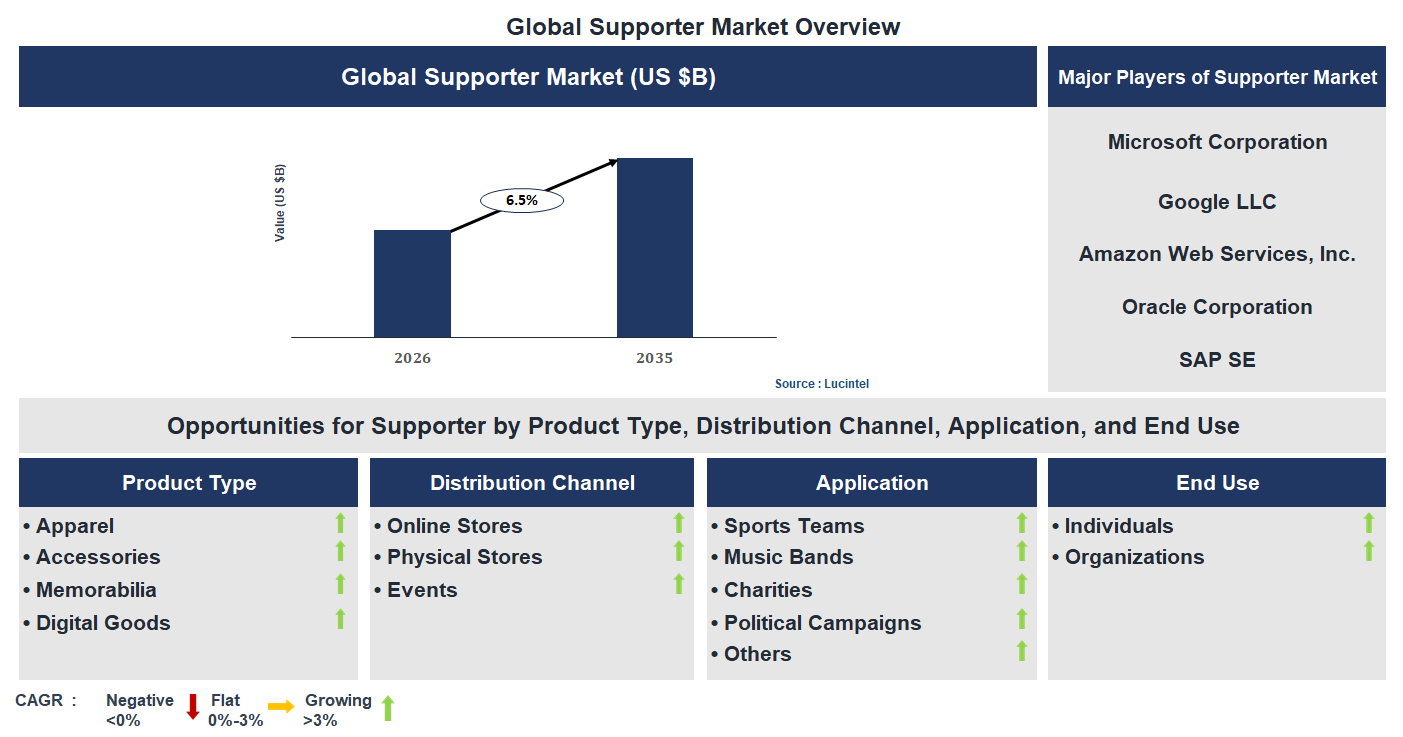
Key data points: The market size in 2035 = $33 billion, growth forecast = 7.7% annually for the next 8 years. Scroll below to get more insights. This market report covers trends, opportunities and forecasts in supporter market to 2035 by product type (apparel, accessories, memorabilia, and digital goods), distribution channel (online stores, physical stores, and events), application (sports teams, music bands, charities, political campaigns, and others), end use (individuals and organizations), and region (North America, Europe, Asia Pacific, and the Rest of the World)
We'll send your sample report shortly.
• Lucintel forecasts that, within the product type category, apparel is expected to witness the highest growth over the forecast period.
• Within the application category, sports team is expected to witness the highest growth.
• In terms of region, North America is expected to witness the highest growth over the forecast period. Gain valuable insights for your business decisions with our comprehensive 150+ page report. Sample figures with some insights are shown below.
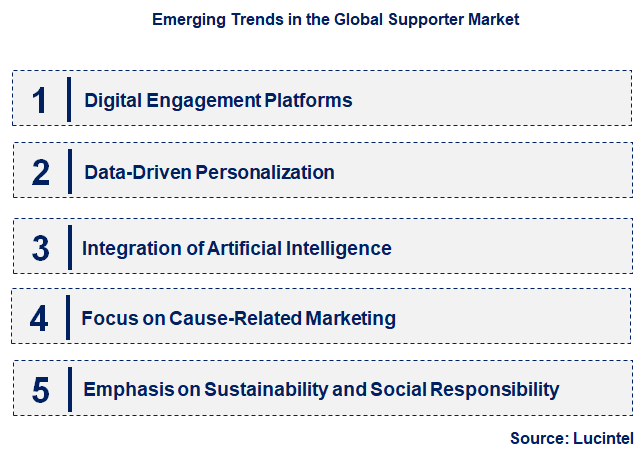
• Digital Engagement Platforms: The rise of digital platforms enables organizations to connect with supporters more effectively through social media, mobile apps, and online portals. These tools facilitate real-time communication, personalized content, and interactive experiences, increasing supporter involvement and loyalty. Digital engagement also allows for broader outreach beyond traditional channels, attracting younger demographics and global audiences. As a result, organizations can cultivate stronger relationships, gather valuable data, and tailor their campaigns to meet supporter preferences, ultimately boosting support and participation.
• Data-Driven Personalization: Leveraging data analytics has become crucial for understanding supporter behavior and preferences. Personalized communication, targeted campaigns, and customized donation options enhance supporter satisfaction and retention. By analyzing supporter data, organizations can identify trends, predict future support, and optimize engagement strategies. This trend leads to more efficient resource allocation and higher conversion rates, creating a more meaningful supporter experience. As data privacy regulations evolve, organizations must balance personalization with ethical data management to maintain trust.
• Integration of Artificial Intelligence: AI technologies are increasingly used to automate and enhance supporter interactions. Chatbots provide instant responses to inquiries, while AI-driven insights help tailor outreach efforts. Machine learning algorithms can predict supporter churn, identify potential major donors, and optimize fundraising strategies. This integration improves operational efficiency, reduces costs, and enables more proactive engagement. As AI continues to advance, its role in supporter market management will expand, offering innovative ways to deepen supporter relationships and increase support levels.
• Focus on Cause-Related Marketing: Supporters are increasingly motivated by causes they believe in, prompting organizations to emphasize cause-related marketing. Campaigns that clearly demonstrate impact and align with supporter values foster stronger emotional connections. This trend encourages supporters to participate actively through volunteering, advocacy, and donations, driven by a sense of purpose. Organizations are also partnering with brands to amplify their cause messaging, expanding reach and credibility. This approach not only boosts support but also enhances organizational reputation and long-term sustainability.
• Emphasis on Sustainability and Social Responsibility: Supporters are prioritizing organizations that demonstrate a genuine commitment to sustainability and social responsibility. Transparency in operations, ethical practices, and environmental initiatives is now a key factor influencing supporter decisions. Organizations adopting sustainable practices and communicating their impact attract more support and foster loyalty. This trend reflects a broader societal shift towards responsible consumption and support, compelling organizations to integrate social responsibility into their core strategies. Emphasizing these values helps build trust and long-term supporter engagement. In summary, these emerging trends are fundamentally transforming the supporter market by fostering deeper, more personalized, and technologically advanced relationships. Digital platforms, data analytics, AI, cause-related marketing, and social responsibility initiatives are collectively enhancing supporter engagement, expanding reach, and increasing support sustainability. As these trends continue to evolve, organizations that adapt proactively will be better positioned to thrive in a competitive and ever-changing supporter landscape.
• Expanding Interaction Opportunities: Supporters increasingly prefer digital channels for engagement, prompting companies to develop advanced platforms that facilitate real-time interaction, content sharing, and community building. These platforms enable personalized experiences, foster loyalty, and increase supporter retention. Enhanced mobile apps, social media integration, and live streaming services are central to this growth, allowing supporters to connect seamlessly with their favorite brands or teams. This shift significantly boosts market reach and creates new revenue streams.
• Tailoring Experiences for Supporters: The use of big data analytics allows organizations to understand supporter preferences and behaviors better. Personalized content, targeted marketing, and customized offers improve supporter satisfaction and engagement. Data-driven strategies enable brands to deliver relevant experiences, increasing loyalty and lifetime value. This development also helps identify emerging trends and optimize resource allocation, ultimately strengthening market competitiveness and fostering long-term supporter relationships.
• New Revenue Opportunities: Emerging sponsorship models leverage technology to create more interactive and engaging brand partnerships. Virtual and augmented reality experiences, branded content, and digital activations provide supporters with immersive interactions. These models generate additional revenue streams for organizations while enhancing supporter involvement. As sponsorship becomes more integrated with digital platforms, the market benefits from increased monetization opportunities and deeper supporter-brand connections.
• Aligning with Supporter Values: Supporters are increasingly conscious of environmental and social issues, prompting organizations to adopt sustainability initiatives. These efforts include eco-friendly events, transparent reporting, and social responsibility programs. Such initiatives resonate with supporters’ values, fostering loyalty and positive brand perception. Incorporating sustainability into core strategies not only enhances reputation but also attracts environmentally conscious supporters, creating a competitive advantage in the evolving market landscape.
• Expanding Reach and Accessibility: The rise of virtual events offers supporters worldwide access to exclusive content, live performances, and interactive sessions. These experiences break geographical barriers, increase participation, and diversify revenue sources. Virtual platforms enable organizations to engage supporters more frequently and innovatively, especially during restrictions on physical gatherings. This development broadens market reach, enhances supporter engagement, and provides scalable opportunities for growth in the supporter market. These developments are transforming the supporter market by enhancing digital engagement, personalizing experiences, creating innovative revenue models, emphasizing sustainability, and expanding accessibility through virtual events. Collectively, they foster deeper supporter loyalty, broaden market reach, and drive revenue growth. As organizations adapt to these trends, the market is poised for sustained expansion, increased competitiveness, and more meaningful supporter relationships, shaping a more dynamic and resilient industry landscape.
• Market Penetration Through Sports and Event Sponsorships: Supporters are increasingly used in sports and event sponsorships to boost brand visibility and fan engagement. Companies are investing heavily in customized supporter products to create emotional connections with audiences. The rising popularity of live events and sports leagues globally is driving demand for branded supporters, making them essential promotional tools. This trend offers manufacturers opportunities to expand product lines and strengthen brand associations, ultimately increasing market share.
• Opportunities in Customization and Personalization: Customization is a key growth driver in the supporter market, with consumers seeking personalized products that reflect their identity or team loyalty. Advanced manufacturing techniques enable tailored designs, colors, and messages, enhancing consumer appeal. Brands leveraging personalization can differentiate themselves in a competitive landscape, fostering customer loyalty. The increasing demand for unique supporter items presents manufacturers with opportunities to innovate and offer bespoke solutions, thereby expanding their market presence.
• Growth of E-commerce and Digital Platforms: The rise of online shopping platforms has significantly expanded access to supporter products worldwide. E-commerce enables brands to reach a broader audience, including international markets, with ease. Digital marketing strategies and social media influence consumer purchasing decisions, boosting sales. The convenience of online ordering and customization options attracts more customers. This digital shift provides opportunities for market players to develop direct-to-consumer channels, increase sales volume, and gather valuable consumer data for targeted marketing.
• Advancements in Material Technology and Sustainability: Innovations in materials, such as eco-friendly fabrics and biodegradable plastics, are shaping the supporter market. Consumers are increasingly conscious of sustainability, prompting brands to adopt environmentally responsible practices. These advancements improve product durability, comfort, and aesthetic appeal. Sustainable supporters not only meet consumer expectations but also enhance brand reputation. The focus on eco-friendly materials offers manufacturers a competitive edge and opens new markets aligned with global sustainability goals.
• Expansion into Emerging Markets and Demographics: Emerging markets present significant growth potential due to rising disposable incomes and growing sports and entertainment industries. Targeting new demographics, including youth and women, can diversify the customer base. Localized products and culturally relevant designs can enhance market acceptance. Strategic entry into these regions allows brands to establish early dominance and build brand loyalty. This expansion supports overall market growth and diversification, ensuring long-term sustainability amid changing global economic conditions. These growth opportunities collectively position the supporter market for robust expansion, driven by technological innovations, evolving consumer preferences, and strategic market penetration. Embracing customization, sustainability, digital channels, and emerging markets will enable industry players to capitalize on new revenue streams. As the market adapts to changing trends and demands, it is set to experience sustained growth, offering significant benefits for manufacturers, brands, and consumers alike.
• Technological Innovation: The integration of advanced digital platforms, mobile apps, and social media channels has revolutionized supporter engagement. These technologies enable personalized communication, real-time updates, and seamless donation processes, significantly increasing supporter participation. The proliferation of smartphones and high-speed internet has made it easier for supporters to connect and contribute from anywhere, fostering a more dynamic and interactive environment. As technology continues to evolve, the market benefits from enhanced data analytics, targeted marketing, and automation, which improve efficiency and supporter retention. This ongoing innovation is a key driver fueling market growth and expanding supporter bases globally.
• Growing Social Awareness and Causes: Increasing awareness of social, environmental, and humanitarian issues has motivated more individuals to become supporters of various causes. Campaigns highlighting pressing global challenges inspire action and foster a sense of community among supporters. This heightened consciousness encourages sustained engagement and larger contributions, fueling market expansion. Organizations are leveraging storytelling and impactful campaigns to attract new supporters and deepen existing relationships. The rise of social movements and online activism further amplifies this trend, making supporter engagement more accessible and widespread. As societal values shift towards greater activism, the market experiences a steady influx of passionate supporters.
• Economic Factors and Disposable Income: Fluctuations in the economy directly influence supporters spending capacity. During periods of economic prosperity, supporters are more willing to donate and participate actively, boosting market revenues. Conversely, economic downturns can lead to reduced contributions and engagement levels. Supporter markets are also affected by employment rates and disposable income levels, which determine individuals ability to support causes financially. Organizations are adapting by offering flexible donation options and value-driven engagement to retain supporters during economic uncertainties. Overall, economic stability and growth are vital for sustaining and expanding the supporter base.
• Regulatory Environment and Data Privacy: Increasing regulations concerning data privacy and consumer protection impact how supporter data is collected, stored, and used. Compliance with laws such as GDPR and CCPA requires organizations to implement robust data management practices, which can increase operational costs but also build supporter trust. Regulatory changes may restrict certain marketing tactics or data-driven outreach, influencing supporter engagement strategies. Organizations must stay abreast of evolving legal frameworks to avoid penalties and maintain transparency. These regulations shape the market landscape by emphasizing ethical data handling and fostering trust, which are crucial for long-term supporter relationships.
• Strategic Partnerships and Collaborations: Collaborations between organizations, corporations, and technology providers create new opportunities for supporter engagement. Strategic alliances enable access to broader audiences, innovative tools, and shared resources, enhancing supporter experiences. Partnerships with social media platforms, payment processors, and content creators facilitate seamless interactions and expand outreach. These collaborations also foster credibility and trust, encouraging more supporters to participate. As organizations recognize the value of collective efforts, the market benefits from increased innovation and resource pooling, driving growth and sustainability. The challenges facing the supporter market include:
• Regulatory Compliance and Data Security: Navigating complex legal frameworks around data privacy and security remains a significant challenge. Organizations must invest in compliance measures, which can be costly and resource-intensive. Failure to adhere to regulations risks legal penalties, reputational damage, and loss of supporter trust. Ensuring data security against breaches is critical, especially given the sensitive nature of supporter information. Balancing personalized engagement with privacy concerns requires sophisticated systems and ongoing monitoring. These regulatory pressures necessitate continuous adaptation and can hinder rapid market expansion if not managed effectively.
• Economic Uncertainty and Supporter Engagement: Economic instability can lead to decreased supporter contributions and engagement. During recessions or financial crises, supporters may prioritize essential expenses over donations, impacting revenue streams. Additionally, changing economic conditions can alter supporter demographics and preferences, requiring organizations to adapt their strategies. Maintaining supporter loyalty amid uncertainty is challenging, especially when supporters face personal financial hardships. Organizations must develop flexible engagement models and diversify income sources to mitigate these risks and sustain their supporter base.
• Competition and Market Saturation: The increasing number of organizations vying for supporters attention intensifies competition within the market. Differentiating offerings and maintaining supporter loyalty become more difficult as supporters are bombarded with numerous causes and campaigns. Market saturation can lead to supporter fatigue, reducing overall engagement and donations. Organizations need innovative approaches and compelling storytelling to stand out. Additionally, the proliferation of digital channels requires strategic resource allocation to effectively reach and retain supporters. Managing competitive pressures is essential for long-term growth and market stability. In summary, the supporter market is shaped by rapid technological advancements, societal shifts towards activism, economic conditions, regulatory frameworks, and strategic collaborations. While these drivers present significant growth opportunities, challenges such as regulatory compliance, economic fluctuations, and market saturation pose risks that require careful management. The overall impact is a dynamic environment where innovation and adaptability are crucial for sustained success. Organizations that effectively leverage technological tools, foster trust through transparency, and differentiate themselves will be better positioned to thrive amid evolving market conditions. Balancing growth initiatives with risk mitigation strategies will determine long-term sustainability and influence the future trajectory of the supporter market.
• Microsoft Corporation
• Google LLC
• Amazon Web Services, Inc.
• Oracle Corporation
• SAP SE
• Salesforce.com, Inc.
• Adobe Inc.
• ServiceNow, Inc.
• Workday, Inc.
• Cisco Systems, Inc.
• Apparel
• Accessories
• Memorabilia
• Digital Goods
• Online Stores
• Physical Stores
• Events
• Sports Teams
• Music Bands
• Charities
• Political Campaigns
• Others
• Individuals
• Organizations
• North America
• Europe
• Asia Pacific
• The Rest of the World
• United States: The US supporter market has seen growth driven by increased demand for personalized and eco-friendly products. Innovations in sustainable materials and smart supporter designs are gaining popularity. Major brands are expanding their online presence and direct-to-consumer channels, enhancing customer engagement. Regulatory focus on environmental standards is encouraging companies to adopt greener manufacturing practices. Additionally, sports and entertainment sectors are investing heavily in supporter merchandise, boosting market expansion. The integration of digital technologies, such as augmented reality, is enhancing consumer experience and customization options.
• China: Chinas supporter market is rapidly expanding due to rising sports enthusiasm and government initiatives promoting sports infrastructure. Local brands are gaining ground by offering affordable, innovative products tailored to domestic tastes. E-commerce platforms like Alibaba and JD.com facilitate widespread distribution and quick adoption of new supporter designs. Sustainability is becoming a key focus, with companies exploring eco-friendly materials. The government’s support for sports events and leagues is further fueling demand. Digital marketing and social media campaigns are effectively engaging younger consumers, driving market growth and diversification.
• Germany: The German supporter market emphasizes quality, durability, and sustainability. Consumers prefer high-performance, eco-conscious products, prompting brands to innovate with biodegradable and recycled materials. The market benefits from a strong sports culture, especially in football, with supporters seeking authentic and functional merchandise. Digitalization has improved online shopping experiences, with virtual fitting rooms and personalized options becoming standard. Regulatory standards around environmental impact are strict, encouraging companies to adopt sustainable practices. Collaborations with sports clubs and events are common, boosting brand visibility and loyalty among supporters.
• India: The supporter market in India is experiencing rapid growth fueled by increasing sports popularity, especially cricket and football. Local brands are emerging with affordable, culturally relevant products that resonate with diverse consumer segments. E-commerce platforms and social media marketing are vital channels for reaching younger audiences. Sustainability is gaining importance, with brands exploring eco-friendly materials and practices. The government’s focus on promoting sports infrastructure and events is further stimulating demand. Customization and innovative designs are becoming popular, reflecting a blend of tradition and modernity, which appeals to Indian supporters.
• Japan: Japan’s supporter market is characterized by a focus on innovation, quality, and sustainability. Consumers prefer technologically advanced products, such as supporters with integrated sensors or smart features. The market is driven by a strong sports culture, especially in baseball and soccer, with supporters seeking unique and high-quality merchandise. Digital engagement through social media and online stores enhances customer experience. Environmental regulations influence product development, encouraging eco-friendly materials and manufacturing processes. Collaborations with sports teams and events are common, fostering brand loyalty and expanding market reach. The trend toward sustainable and innovative supporter products continues to grow steadily.


• Microsoft Corporation
• Google LLC
• Amazon Web Services, Inc.
• Oracle Corporation
• SAP SE
• Salesforce.com, Inc.
• Adobe Inc.
• ServiceNow, Inc.
• Workday, Inc.
• Cisco Systems, Inc. Q5. Which supporter market segment will be the largest in future? Answer: Lucintel forecasts that, within the product type category, apparel is expected to witness the highest growth over the forecast period. Q6. In supporter market, which region is expected to be the largest in next 5 years? Answer: In terms of region, North America is expected to witness the highest growth over the forecast period. Q7. Do we receive customization in this report? Answer: Yes, Lucintel provides 10% customization without any additional cost.


Choose a license that fits your team. Instant PDF delivery.
Prices exclude taxes. Instant delivery. Custom licensing available on request.
Market Report · July 22, 2026
Market Report · July 16, 2026
Market Report · May 18, 2026
Trusted partner for strategic intelligence and business growth


Receive a complimentary market analysis tailored to your industry. Our analysts will identify key growth opportunities and competitive dynamics specific to your business.

Market size, growth rate, and key trend analysis for your specific sector.

Top competitor positioning and market share analysis.

Strategic recommendations backed by data-driven insights.
Get curated market intelligence and competitive moves straight to your inbox.
By subscribing, you agree to receive our monthly insights. Unsubscribe anytime.
Receive a complimentary market analysis tailored to your industry. Our analysts will identify key growth opportunities and competitive dynamics specific to your business.
Market size, growth rate, and key trend analysis for your specific sector.
Top competitor positioning and market share analysis.
Strategic recommendations backed by data-driven insights.
Get curated market intelligence, emerging trends, and competitive moves straight to your inbox each month.
By subscribing, you agree to receive our monthly insights. Unsubscribe anytime.
We'll send your sample report shortly.