
Market Report · July 22, 2026

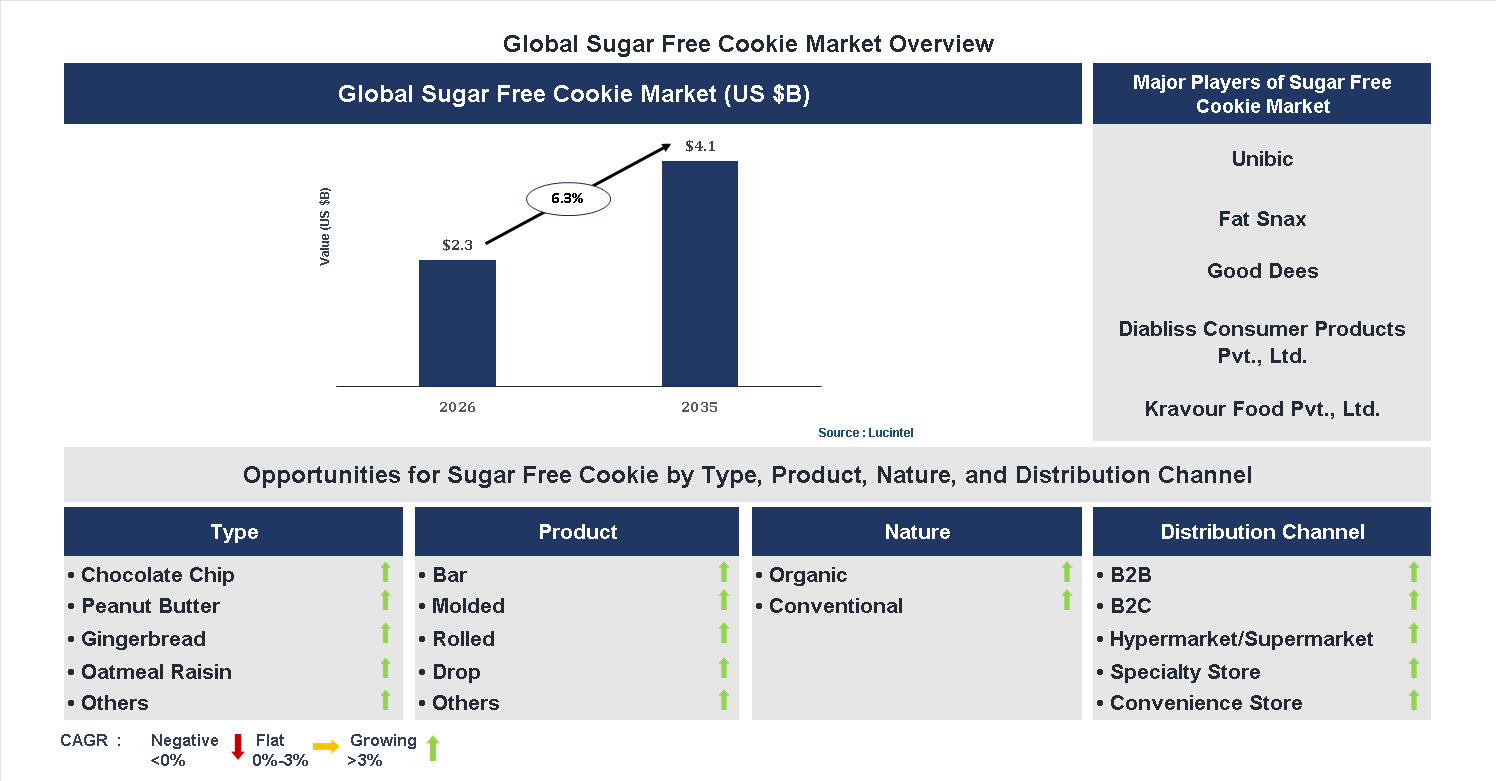
Key data points: The market size in 2035 = $4.1 billion, growth forecast = 6.3% annually for the next 8 years. Scroll below to get more insights. This market report covers trends, opportunities and forecasts in sugar free cookie market to 2035 by type (chocolate chip, peanut butter, gingerbread, oatmeal raisin, and others), product (bar, molded, rolled, drop, and others), nature (organic and conventional), distribution channel (B2B, B2C, hypermarket/supermarket, specialty store, convenience store, retailers, and online store), and region (North America, Europe, Asia Pacific, and the Rest of the World)
We'll send your sample report shortly.
• Lucintel forecasts that, within the type category, oatmeal raisin is expected to witness the highest growth over the forecast period.
• Within the distribution channel category, hypermarket/supermarket is expected to witness the highest growth.
• In terms of region, APAC is expected to witness the highest growth over the forecast period. Gain valuable insights for your business decisions with our comprehensive 150+ page report. Sample figures with some insights are shown below.
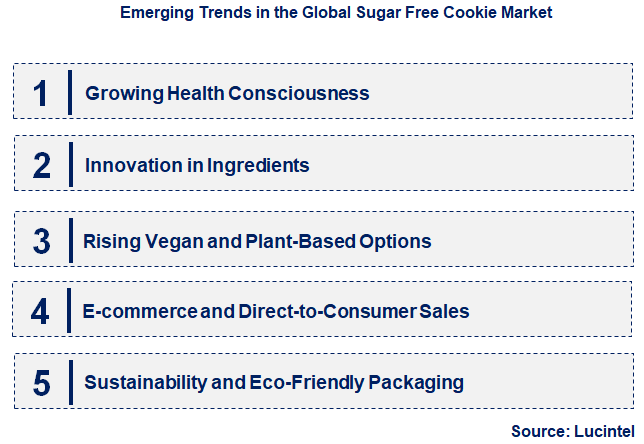
• Growing Health Consciousness: Consumers are increasingly aware of the health risks associated with sugar consumption, such as diabetes and obesity. This awareness drives demand for sugar-free alternatives, including cookies, as part of a healthier lifestyle. Brands are responding by developing products with natural sweeteners and clean-label ingredients, emphasizing health benefits. The trend is supported by rising interest in functional foods that offer additional health benefits, making sugar-free cookies a popular choice among health-conscious consumers seeking indulgence without guilt.
• Innovation in Ingredients: The market is witnessing significant innovation in ingredients used in sugar-free cookies. Natural sweeteners like stevia, monk fruit, and erythritol are replacing traditional sugars, offering lower-calorie options with minimal impact on blood sugar levels. Additionally, functional ingredients such as fiber, protein, and superfoods are being incorporated to enhance nutritional value. These innovations improve taste, texture, and health benefits, making sugar-free cookies more appealing. The focus on clean-label and minimally processed ingredients is also gaining importance, aligning with consumer preferences for transparency and natural products.
• Rising Vegan and Plant-Based Options: The increasing adoption of vegan and plant-based diets is influencing the sugar-free cookie market. Manufacturers are developing plant-based formulations using ingredients like coconut oil, almond flour, and plant-based emulsifiers. These products cater to ethical, environmental, and health considerations, expanding the consumer base. Vegan sugar-free cookies often appeal to a broader demographic, including those with dairy or egg allergies. This trend encourages innovation in formulation and packaging, making plant-based sugar-free cookies more accessible and appealing to a diverse audience.
• E-commerce and Direct-to-Consumer Sales: The growth of online retail channels is transforming how sugar-free cookies are marketed and sold. E-commerce platforms provide a wider reach, convenience, and access to niche products, including specialty and artisanal options. Brands are leveraging digital marketing, subscription models, and personalized offerings to attract consumers. The direct-to-consumer approach allows for better customer engagement, feedback, and brand loyalty. This trend is especially significant during the COVID-19 pandemic, accelerating online shopping adoption and enabling brands to expand their market presence beyond traditional retail outlets.
• Sustainability and Eco-Friendly Packaging: Environmental concerns are influencing packaging choices within the sugar-free cookie market. Consumers are increasingly demanding sustainable, biodegradable, and recyclable packaging options. Brands are adopting eco-friendly materials and reducing plastic usage to align with sustainability goals. This trend enhances brand image and appeals to environmentally conscious consumers. Additionally, transparent labeling about sustainability practices is becoming a key marketing point. The focus on eco-friendly packaging is reshaping industry standards, encouraging innovation, and fostering a more responsible approach to product development and marketing. In summary, these emerging trends are reshaping the sugar-free cookie market by emphasizing health, innovation, sustainability, and digital engagement. They are expanding consumer choices, fostering product differentiation, and driving industry growth. As these trends continue to evolve, they will likely lead to more personalized, sustainable, and health-oriented offerings, ultimately transforming the market landscape and consumer expectations.
• Growing Health Consciousness: The increasing awareness of health issues related to sugar consumption is driving demand for sugar-free cookies. Consumers are actively seeking products that help manage weight, blood sugar levels, and overall health. This trend is encouraging manufacturers to develop innovative, tasty, and nutritious options that cater to dietary restrictions. As a result, the market is expanding rapidly, with new product launches and increased shelf space in retail outlets. This shift is fostering a competitive environment focused on health benefits and ingredient transparency.
• Rising Diabetes and Obesity Rates: The global rise in diabetes and obesity rates is significantly impacting the sugar-free cookie market. Consumers diagnosed with these conditions prefer low-sugar or sugar-free alternatives to manage their health better. This demand is prompting companies to formulate products with natural sweeteners and functional ingredients. The market is witnessing a surge in specialized offerings targeting health conditions, which enhances consumer trust and loyalty. Consequently, this trend is expanding the market’s reach into healthcare and wellness sectors, creating new growth avenues.
• Innovation in Ingredients and Flavors: Advances in ingredient technology are enabling the development of sugar-free cookies that do not compromise on taste or texture. Natural sweeteners like stevia, monk fruit, and erythritol are replacing traditional sugars, offering healthier options. Additionally, flavor innovation is making these products more appealing, with options ranging from classic chocolate chip to exotic flavors. This innovation is attracting a broader consumer base, including those without dietary restrictions, thereby increasing market penetration. It also encourages product differentiation and premium offerings.
• Sustainable Packaging and Manufacturing: Sustainability is becoming a key factor influencing consumer choices in the sugar-free cookie market. Brands are adopting eco-friendly packaging materials and sustainable manufacturing practices to appeal to environmentally conscious buyers. This shift not only enhances brand image but also aligns with global sustainability goals. Companies investing in green initiatives are gaining competitive advantages, attracting new customers, and complying with regulations. Sustainable practices are thus becoming integral to product development and marketing strategies, fostering long-term growth and market trust.
• Expansion of E-commerce and Direct Sales: The growth of online retail channels is significantly impacting the sugar-free cookie market. E-commerce platforms provide a wider reach, convenience, and access to niche products for health-conscious consumers. Direct-to-consumer sales enable brands to build stronger relationships and gather valuable consumer data. This expansion is facilitating rapid product launches, personalized marketing, and increased sales volumes. As online shopping continues to grow, the market is becoming more dynamic, competitive, and accessible, driving overall industry growth and innovation. These developments are collectively transforming the sugar-free cookie market by enhancing product innovation, expanding consumer base, and promoting sustainable practices. Increased health awareness and technological advancements are fueling market growth, while e-commerce expansion offers new sales channels. Overall, these opportunities are making the market more competitive, diverse, and aligned with consumer preferences, ensuring sustained growth and innovation in the industry.
• Expanding Consumer Base Through Health-Conscious Trends: The rising awareness of health and wellness is broadening the consumer base for sugar-free cookies. People with dietary restrictions, diabetics, and those seeking weight management options are increasingly opting for low-sugar alternatives. This trend encourages brands to develop innovative, appealing products that meet these needs, thereby expanding market reach. As health consciousness continues to grow, demand for sugar-free cookies is expected to rise, creating substantial growth opportunities for manufacturers.
• Innovation in Ingredients and Formulations: Advances in ingredient technology enable the development of sugar-free cookies that do not compromise on taste or texture. Natural sweeteners like stevia and erythritol are gaining popularity, allowing for better flavor profiles. Companies investing in R&D can create unique formulations that appeal to a broader audience. These innovations help differentiate products in a competitive market, attract health-conscious consumers, and open avenues for premium product lines, ultimately driving market expansion.
• Strategic Partnerships and Collaborations: Collaborations between ingredient suppliers, health brands, and retailers can accelerate product development and distribution. Partnering with health-focused organizations or influencers enhances credibility and visibility. Such alliances facilitate access to new markets and customer segments, boosting sales. Additionally, co-branding initiatives can position sugar-free cookies as premium or specialty products, increasing consumer interest and loyalty, which collectively contribute to sustained market growth.
• Expansion into Emerging Markets: Developing regions with rising disposable incomes and increasing health awareness present significant growth opportunities. Localizing products to suit regional tastes and preferences can facilitate market entry. Establishing distribution channels and educating consumers about the benefits of sugar-free options can accelerate adoption. As these markets mature, they offer substantial potential for volume growth and brand expansion, making them attractive targets for global players seeking to diversify their portfolios.
• Growing E-commerce and Direct-to-Consumer Sales: The surge in online shopping provides brands with direct access to consumers, enabling personalized marketing and faster product launches. E-commerce platforms facilitate a wider reach, especially in regions with limited retail infrastructure. Digital marketing strategies can target niche segments effectively. This channel also allows for gathering consumer feedback to refine products. As online sales continue to grow, leveraging digital channels will be crucial for capturing market share and driving overall industry growth. The overall impact of these opportunities is set to significantly accelerate the growth trajectory of the sugar-free cookie market, fostering innovation, expanding consumer access, and strengthening competitive positioning across global markets.
• Technological Innovation: Advances in food processing and formulation techniques allow manufacturers to develop high-quality sugar-free cookies that mimic traditional flavors and textures. These innovations improve product shelf life, taste, and nutritional profile, attracting health-conscious consumers. As technology evolves, the ability to incorporate natural sweeteners and functional ingredients enhances product appeal, fostering market growth. Continuous R&D investments are crucial for staying competitive and meeting consumer expectations for taste and health benefits.
• Rising Health Awareness: Increasing awareness about health issues related to sugar consumption, such as diabetes, obesity, and cardiovascular diseases, is a significant driver. Consumers are actively seeking healthier snack options, including sugar-free cookies, to manage their health without sacrificing taste. This shift in consumer preferences encourages manufacturers to innovate and expand their product lines, fueling market growth. The trend is reinforced by the proliferation of health-focused marketing and educational campaigns.
• Demographic Shifts: The growing aging population and urbanization contribute to increased demand for healthier food options. Older adults often require low-sugar or sugar-free diets, while urban consumers seek convenient, healthful snacks. These demographic changes expand the target market for sugar-free cookies, prompting companies to develop products tailored to diverse consumer needs. Market segmentation based on age and lifestyle is becoming more prominent, further driving sales.
• Regulatory Support and Labeling Standards: Governments and regulatory bodies are implementing guidelines that promote transparency and safety in food labeling. Clear labeling of sugar-free products reassures consumers and boosts confidence in these offerings. Regulatory support for natural sweeteners and health claims can also facilitate market entry and expansion. Compliance with these standards ensures product credibility and helps companies differentiate themselves in a competitive landscape.
• Growing E-commerce Penetration: The rise of online retail channels provides wider access to sugar-free cookies, especially in regions with limited brick-and-mortar options. E-commerce platforms enable direct consumer engagement, personalized marketing, and convenient purchasing, which accelerates market penetration. Digital marketing strategies and online reviews influence consumer choices, making e-commerce a vital driver for expanding market reach and increasing sales volumes. The challenges facing the sugar free cookie market include:
• Ingredient Sourcing and Cost: Procuring high-quality, natural sweeteners and functional ingredients can be challenging and costly. Limited supply chains and fluctuating prices impact product pricing and profitability. Additionally, maintaining consistent ingredient quality is essential for consumer trust and regulatory compliance. These factors can hinder product development and limit market expansion, especially for small and medium-sized enterprises.
• Consumer Acceptance and Taste Preferences: Despite health benefits, some consumers remain hesitant to adopt sugar-free cookies due to concerns over taste, texture, and aftertaste associated with alternative sweeteners. Overcoming these sensory barriers requires extensive formulation efforts, which can increase costs and development time. Gaining widespread consumer acceptance remains a significant hurdle for market growth.
• Regulatory and Labeling Challenges: Navigating complex regulatory environments regarding health claims, ingredient disclosures, and labeling standards can be burdensome. Variations across regions complicate compliance and market entry strategies. Non-compliance risks legal penalties and damage to brand reputation. Ensuring transparency while meeting diverse regulatory requirements is a persistent challenge for manufacturers aiming for global expansion. In summary, the sugar free cookie market is driven by technological advancements, health consciousness, demographic shifts, regulatory support, and e-commerce growth. However, ingredient sourcing costs, consumer taste preferences, and regulatory complexities pose notable challenges. These factors collectively influence market dynamics, requiring stakeholders to innovate continuously, adapt to regulatory landscapes, and address consumer needs effectively. Successfully navigating these drivers and challenges will determine the markets future trajectory, with opportunities for growth balanced by the need for strategic management of obstacles.
• Unibic
• Fat Snax
• Good Dees
• Diabliss Consumer Products Pvt., Ltd.
• Kravour Food Pvt., Ltd.
• Voortman Bakery
• galletas gullon
• Bisk Farm
• helwa wafelbakkerij bv
• burtons biscuit company
• Chocolate Chip
• Peanut Butter
• Gingerbread
• Oatmeal Raisin
• Others
• Bar
• Molded
• Rolled
• Drop
• Others
• Organic
• Conventional
• B2B
• B2C
• Hypermarket/Supermarket
• Specialty Store
• Convenience Store
• Retailers
• Online Store
• North America
• Europe
• Asia Pacific
• The Rest of the World
• United States: The US market has seen a surge in organic and plant-based sugar-free cookies, with major brands expanding their product lines to include keto-friendly options. Innovative marketing campaigns emphasize health benefits, and e-commerce sales continue to grow rapidly, making these products more accessible to consumers seeking convenient, healthy snacks. Consumer demand for transparency and clean labels has driven brands to adopt natural sweeteners and minimal ingredients.
• China: In China, the sugar-free cookie market is expanding due to increasing awareness of health issues and rising disposable incomes. Local brands are introducing culturally tailored flavors, such as green tea and red bean, to appeal to domestic tastes. The online retail sector is a significant distribution channel, with social media marketing boosting brand visibility. Additionally, there is a growing trend toward functional cookies that offer added health benefits like gut health and immunity support.
• Germany: Germanys market is characterized by a strong preference for organic and gluten-free sugar-free cookies. Consumers are highly conscious of ingredient quality and sustainability, prompting brands to focus on eco-friendly packaging and natural ingredients. The market also benefits from a well-established health food culture, with many products available in health stores and supermarkets. Innovations include the use of alternative sweeteners like stevia and erythritol to cater to health-conscious consumers.
• India: The Indian sugar-free cookie market is rapidly developing, driven by increasing awareness of diabetes and lifestyle-related health issues. Local companies are launching affordable options with traditional flavors such as cardamom and saffron, appealing to regional tastes. The growth of online shopping and modern retail outlets has expanded access to these products. Additionally, there is a rising demand for fortified cookies that provide nutritional benefits, including vitamins and minerals.
• Japan: Japans market features a focus on low-calorie and allergen-free sugar-free cookies, aligning with the countrys health and wellness trends. Innovative ingredients like konjac and bacon syrup are used to create unique textures and flavors. The market benefits from a mature health-conscious consumer base that values quality and safety, with many products available in specialty stores and online. Collaborations with local confectionery brands have also helped introduce novel, culturally relevant options.


• Unibic
• Fat Snax
• Good Dees
• Diabliss Consumer Products Pvt., Ltd.
• Kravour Food Pvt., Ltd.
• Voortman Bakery
• galletas gullon
• Bisk Farm
• helwa wafelbakkerij bv
• burtons biscuit company Q6. Which sugar free cookie market segment will be the largest in future? Answer: Lucintel forecasts that, within the type category, oatmeal raisin is expected to witness the highest growth over the forecast period. Q7. In sugar free cookie market, which region is expected to be the largest in next 5 years? Answer: In terms of region, APAC is expected to witness the highest growth over the forecast period. Q8. Do we receive customization in this report? Answer: Yes, Lucintel provides 10% customization without any additional cost.


Choose a license that fits your team. Instant PDF delivery.
Prices exclude taxes. Instant delivery. Custom licensing available on request.
Market Report · July 22, 2026
Market Report · July 22, 2026
Market Report · July 22, 2026
Trusted partner for strategic intelligence and business growth


Receive a complimentary market analysis tailored to your industry. Our analysts will identify key growth opportunities and competitive dynamics specific to your business.

Market size, growth rate, and key trend analysis for your specific sector.

Top competitor positioning and market share analysis.

Strategic recommendations backed by data-driven insights.
Get curated market intelligence and competitive moves straight to your inbox.
By subscribing, you agree to receive our monthly insights. Unsubscribe anytime.
Receive a complimentary market analysis tailored to your industry. Our analysts will identify key growth opportunities and competitive dynamics specific to your business.
Market size, growth rate, and key trend analysis for your specific sector.
Top competitor positioning and market share analysis.
Strategic recommendations backed by data-driven insights.
Get curated market intelligence, emerging trends, and competitive moves straight to your inbox each month.
By subscribing, you agree to receive our monthly insights. Unsubscribe anytime.
We'll send your sample report shortly.