
Market Report · July 22, 2026

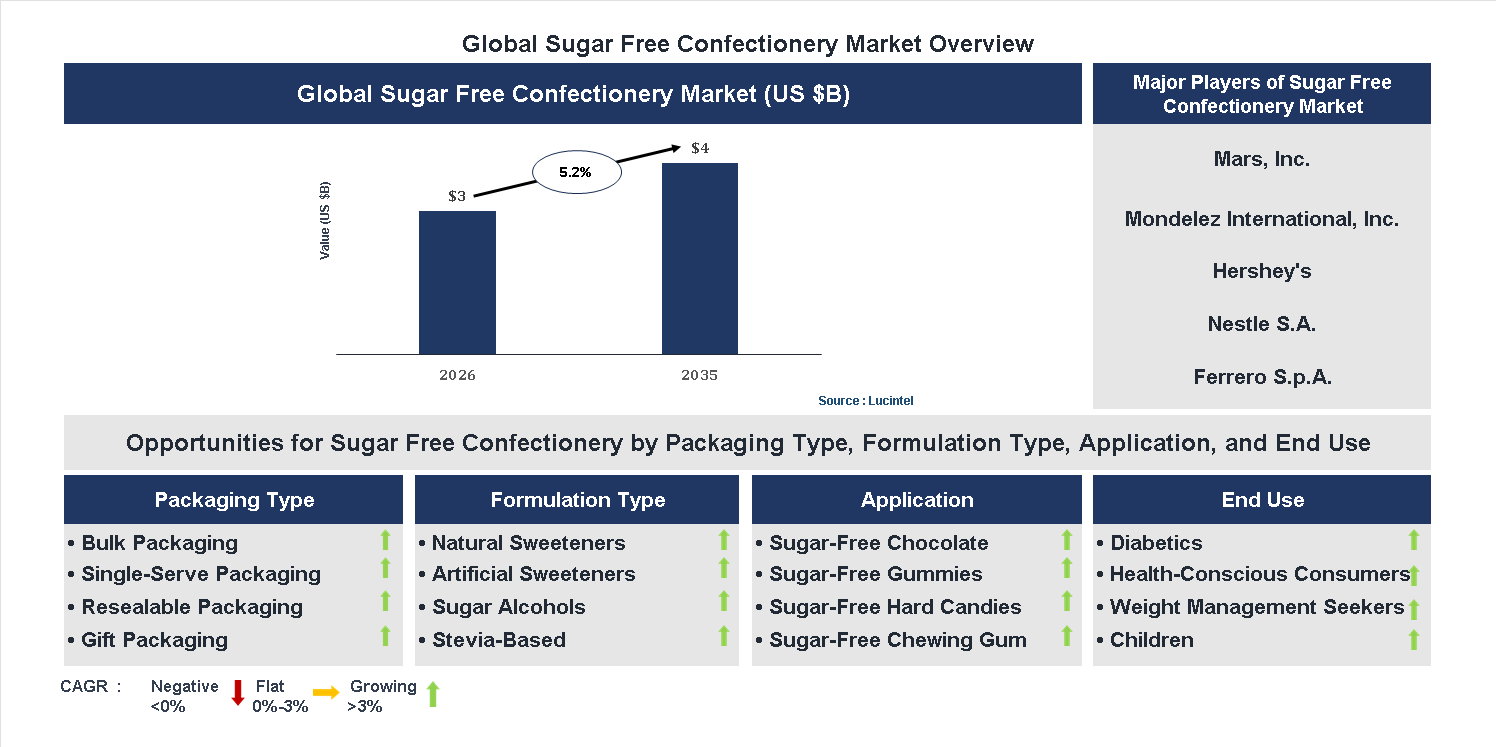
Key data points: The market size in 2035 = $4 billion, growth forecast = 5.2% annually for the next 8 years. Scroll below to get more insights. This market report covers trends, opportunities and forecasts in sugar free confectionery market to 2035 by packaging type (bulk packaging, single-serve packaging, resealable packaging, and gift packaging), formulation type (natural sweeteners, artificial sweeteners, sugar alcohols, and stevia-based), application (sugar-free chocolate, sugar-free gummies, sugar-free hard candies, and sugar-free chewing gum), end use (diabetics, health-conscious consumers, weight management seekers, and children), and region (North America, Europe, Asia Pacific, and the Rest of the World)
We'll send your sample report shortly.
• Lucintel forecasts that, within the packaging type category, single-serve packaging is expected to witness the highest growth over the forecast period.
• Within the application category, sugar-free chocolate is expected to witness the highest growth.
• In terms of region, APAC is expected to witness the highest growth over the forecast period. Gain valuable insights for your business decisions with our comprehensive 150+ page report. Sample figures with some insights are shown below.
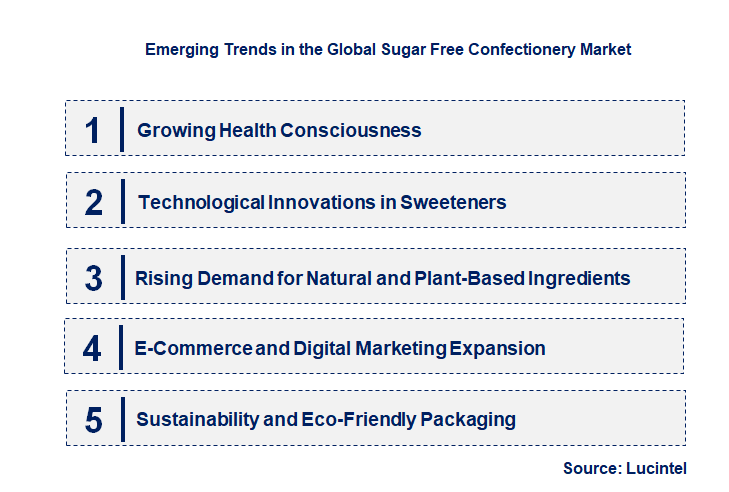
• Growing Health Consciousness: Consumers are increasingly aware of the health risks associated with sugar consumption, such as obesity and diabetes. This awareness drives demand for sugar-free options that allow indulgence without compromising health. Market players are responding by developing products with natural sweeteners and functional benefits, appealing to health-conscious demographics. This trend is expanding the customer base and encouraging innovation in product formulations, making sugar-free confectionery more accessible and appealing to a broader audience.
• Technological Innovations in Sweeteners: Advances in food technology are enabling the development of new, more effective, and natural sweeteners that mimic sugars taste and texture. These innovations improve product quality and consumer acceptance, reducing the aftertaste often associated with artificial sweeteners. Enhanced sweetener options also allow for better customization and formulation flexibility, leading to a wider variety of products. This trend is crucial in overcoming previous barriers to sugar-free confectionery adoption and is expected to continue driving product innovation.
• Rising Demand for Natural and Plant-Based Ingredients: Consumers are increasingly seeking products made with natural, plant-based ingredients due to health, ethical, and environmental concerns. This preference influences the formulation of sugar-free confectionery, prompting manufacturers to incorporate natural sweeteners like stevia, monk fruit, and erythritol. The shift towards natural ingredients enhances product appeal, aligns with clean-label trends, and supports sustainability initiatives. This trend is fostering innovation and differentiation in the market, attracting a segment of consumers willing to pay a premium for natural options.
• E-commerce and Digital Marketing Expansion: The growth of online retail channels and digital marketing strategies is significantly impacting the sugar free confectionery market. E-commerce platforms provide wider reach and convenience, enabling brands to target niche markets and health-conscious consumers effectively. Digital marketing facilitates personalized advertising, influencer collaborations, and direct consumer engagement, boosting brand visibility and sales. This trend is transforming distribution models, making sugar-free products more accessible and fostering direct consumer relationships, which are vital for market growth and innovation.
• Sustainability and Eco-Friendly Packaging: Environmental concerns are prompting manufacturers to adopt sustainable practices, including eco-friendly packaging and responsible sourcing of ingredients. Consumers increasingly prefer brands that demonstrate environmental responsibility, influencing purchasing decisions. Companies are investing in biodegradable packaging, reducing plastic use, and ensuring ethical supply chains. This trend not only enhances brand reputation but also aligns with global sustainability goals, creating a competitive advantage. As sustainability becomes a key factor, it is reshaping product development, branding, and consumer engagement strategies in the market. These emerging trends are collectively reshaping the sugar free confectionery market by fostering innovation, expanding consumer choices, and emphasizing health and sustainability. They are driving market growth, encouraging product differentiation, and aligning industry practices with evolving consumer values, ultimately creating a more dynamic and responsible marketplace.
• Growing Health Consciousness: The increasing awareness of health issues related to sugar consumption has led consumers to seek sugar-free options, boosting demand for sugar-free confectionery products. This trend encourages manufacturers to innovate with natural sweeteners and healthier ingredients, expanding product portfolios. As a result, the market is experiencing rapid growth, attracting new players and increasing competition. The shift towards healthier indulgence is also fostering product differentiation and premium offerings, ultimately broadening consumer choices and market reach.
• Rising Prevalence of Diabetes and Obesity: The global rise in diabetes and obesity rates has significantly influenced consumer preferences toward sugar-free alternatives. This health concern has prompted a surge in demand for products that allow consumers to enjoy sweets without compromising their health. Manufacturers are responding by developing specialized sugar-free confectionery tailored for health-conscious consumers. This trend not only expands the customer base but also encourages innovation in product formulations, leading to increased market penetration and brand loyalty among health-focused demographics.
• Innovation in Natural Sweeteners: Advances in natural sweetener technology, such as stevia and monk fruit, have revolutionized sugar-free confectionery. These ingredients offer better taste profiles and health benefits, making products more appealing. Companies investing in R&D are creating innovative formulations that mimic traditional sweetness without adverse health effects. This development enhances product quality, broadens consumer acceptance, and allows brands to position themselves as health-conscious leaders. Consequently, the market benefits from increased product diversity and improved consumer trust.
• Expansion of Distribution Channels: The growth of online retail, specialty stores, and health-focused outlets has expanded access to sugar-free confectionery products. E-commerce platforms enable brands to reach a wider audience, including niche markets and international consumers. Retail partnerships with supermarkets and convenience stores increase product visibility and availability. This expansion facilitates consumer engagement and drives sales growth. As distribution channels diversify, companies can better meet consumer demand for convenient, accessible, and innovative sugar-free options, fueling overall market expansion.
• Increasing Marketing and Product Innovation: Companies are investing heavily in marketing campaigns emphasizing health benefits and indulgence without sugar. Innovative packaging, flavor profiles, and product formats attract diverse consumer segments. Social media and influencer marketing further boost brand awareness and consumer engagement. This focus on innovation and marketing enhances brand differentiation and consumer loyalty. As a result, the market experiences accelerated growth, with more consumers adopting sugar-free confectionery as a preferred choice for healthier indulgence. The overall impact of these developments is a rapidly expanding market characterized by innovation, increased consumer choice, and broader accessibility. As health concerns continue to influence purchasing decisions, the sugar-free confectionery sector is poised for sustained growth, attracting new entrants and fostering competitive innovation. This evolution benefits consumers through healthier options and provides industry players with lucrative opportunities for expansion and diversification.
• Expanding Product Innovation to Include Natural Sweeteners and Functional Ingredients: The market is poised for growth through the development of sugar-free confections using natural sweeteners like stevia and monk fruit, combined with functional ingredients such as vitamins and antioxidants. These innovations cater to health-conscious consumers seeking indulgent yet nutritious options, driving demand and differentiation in a competitive landscape.
• Increasing Adoption of Online Sales Channels and Direct-to-Consumer Marketing: E-commerce platforms are becoming vital for reaching a broader audience, especially among younger consumers. Brands leveraging online channels can offer personalized experiences, exclusive products, and targeted marketing campaigns, boosting sales and brand loyalty. The convenience and expanding digital infrastructure are expected to accelerate growth in the sugar-free confectionery segment.
• Growing Demand in Emerging Markets with Rising Health Awareness: As awareness of health issues increases globally, emerging markets present significant growth opportunities. Urbanization, rising disposable incomes, and changing lifestyles are fueling demand for healthier confectionery options. Companies investing in local manufacturing, distribution, and culturally tailored products can capitalize on these expanding markets.
• Strategic Partnerships and Acquisitions to Enhance Product Portfolios: Collaborations between confectionery brands and health-focused ingredient suppliers can lead to innovative product lines. Acquisitions of smaller, niche brands allow larger companies to diversify their offerings quickly. These strategies enable market players to strengthen their market position, expand their consumer base, and accelerate innovation in the sugar-free confectionery space.
• Focus on Sustainable and Eco-Friendly Packaging to Attract Environmentally Conscious Consumers: Consumers increasingly prefer brands that prioritize sustainability. Developing eco-friendly packaging solutions, such as biodegradable wrappers and recyclable containers, can enhance brand image and appeal to environmentally conscious buyers. This focus on sustainability not only aligns with consumer values but also provides a competitive edge in a crowded market. The overall impact of these growth opportunities is a dynamic and expanding sugar free confectionery market. Companies that innovate, adapt to digital trends, and prioritize sustainability are well-positioned to capitalize on the increasing demand for healthier, more sustainable treats. This evolution promises sustained growth, increased consumer engagement, and a broader global footprint for industry players.
• Technological Innovations: The development of new, natural, and more palatable sugar substitutes has significantly propelled the market. Advances in food technology enable manufacturers to create sugar-free products that closely mimic traditional confections in taste and texture. These innovations meet consumer demand for healthier options without compromising flavor, thus expanding market reach. Additionally, improved manufacturing processes reduce costs and enhance product quality, further fueling growth. As research continues, the introduction of novel sweeteners and delivery methods is expected to sustain innovation momentum, attracting health-conscious consumers and broadening product portfolios.
• Rising Health Awareness: Increasing awareness about health issues such as diabetes, obesity, and dental problems has driven consumers toward sugar-free alternatives. Consumers are actively seeking products that allow them to indulge without adverse health effects, leading to a surge in demand for sugar-free confectionery. This shift is supported by public health campaigns and changing lifestyles emphasizing wellness. As a result, manufacturers are expanding their offerings to include a variety of sugar-free candies, chocolates, and gums, catering to a growing demographic that prioritizes health while enjoying sweet treats. This trend is expected to continue as health consciousness intensifies globally.
• Regulatory Environment: Stringent regulations regarding sugar content and labeling standards influence the market significantly. Governments and health organizations are imposing limits on added sugars and mandating clear labeling to inform consumers. These regulations encourage manufacturers to develop sugar-free alternatives to comply with legal standards and avoid penalties. Moreover, regulatory approval processes for new sweeteners impact product development timelines. While regulations can pose challenges, they also create opportunities for innovation and differentiation in the market, as companies develop compliant, health-oriented products to meet legal and consumer demands.
• Consumer Preference for Natural Ingredients: There is a growing preference for natural and organic ingredients in confectionery products. Consumers are increasingly wary of artificial sweeteners and seek natural substitutes derived from plant sources. This trend drives the development of natural sugar-free sweeteners like stevia and monk fruit, which are perceived as healthier options. Manufacturers are reformulating products to incorporate these natural ingredients, appealing to health-conscious consumers and differentiating their offerings in a competitive market. The shift toward natural ingredients not only influences product formulation but also impacts marketing strategies, emphasizing transparency and health benefits.
• Market Expansion in Emerging Economies: Rapid urbanization, increasing disposable incomes, and changing lifestyles in emerging economies are expanding the market base. Consumers in these regions are adopting Western-style confectionery habits, including sugar-free options, driven by rising health awareness. Companies are entering these markets through strategic partnerships and localized product offerings, capitalizing on the growing demand. This expansion presents significant growth opportunities, although it also requires adaptation to regional tastes, regulatory landscapes, and distribution channels. The increasing penetration of retail outlets and e-commerce platforms further facilitates market growth in these regions. The challenges facing this Market include:
• Regulatory Restrictions: Stringent regulations on artificial sweeteners and labeling standards pose significant hurdles. Many countries have imposed bans or restrictions on certain synthetic sweeteners due to health concerns, limiting product formulation options. Navigating diverse regulatory environments requires substantial compliance efforts and can delay product launches. Additionally, ongoing regulatory scrutiny can lead to product recalls or bans, impacting brand reputation and profitability. Companies must invest in research and legal expertise to ensure compliance, which can increase costs and complicate market entry strategies.
• Consumer Skepticism: Despite the demand for sugar-free products, skepticism persists regarding the safety and health effects of artificial sweeteners. Some consumers associate these ingredients with potential health risks, leading to reluctance in adoption. This skepticism hampers market growth and necessitates extensive consumer education and transparent marketing. Overcoming misconceptions requires building trust through scientific validation and clear communication about the safety and benefits of sugar substitutes, which can be resource-intensive and time-consuming.
• High Production Costs: Developing and manufacturing sugar-free confectionery often involves higher costs due to specialized ingredients, advanced processing techniques, and quality control measures. Natural sweeteners like stevia and monk fruit are expensive, impacting product pricing and profit margins. Additionally, maintaining consistent quality and taste in sugar-free products presents technical challenges, further increasing costs. These factors can limit competitiveness, especially in price-sensitive markets, and may restrict the ability of smaller players to enter or expand within the market. Managing costs while maintaining product quality remains a critical challenge for industry stakeholders. The sugar free confectionery market is shaped by technological advancements, health awareness, regulatory standards, consumer preferences, and regional expansion opportunities. While these drivers foster innovation and growth, challenges such as regulatory restrictions, consumer skepticism, and high production costs pose significant hurdles. Navigating these factors requires strategic planning, investment in research, and transparent communication. Overall, the markets future depends on balancing innovation with compliance and consumer trust, which will determine its long-term sustainability and expansion potential.
• Mars, Inc.
• Mondelez International, Inc.
• Hersheys
• Nestle S.A.
• Ferrero S.p.A.
• Unilever PLC
• Haribo GmbH & Co. KG
• Bulk Packaging
• Single-Serve Packaging
• Resealable Packaging
• Gift Packaging
• Natural Sweeteners
• Artificial Sweeteners
• Sugar Alcohols
• Stevia-Based
• Sugar-Free Chocolate
• Sugar-Free Gummies
• Sugar-Free Hard Candies
• Sugar-Free Chewing Gum
• Diabetics
• Health-Conscious Consumers
• Weight Management Seekers
• Children
• North America
• Europe
• Asia Pacific
• The Rest of the World
• United States: The US market has seen rapid growth, driven by rising awareness of health issues and a preference for low-sugar products. Major brands are launching innovative sugar-free candies and chocolates, emphasizing natural ingredients and functional benefits. E-commerce sales are expanding, and marketing campaigns focus on health benefits and lifestyle alignment. Regulatory bodies are encouraging transparency and labeling, boosting consumer confidence. The market also benefits from a strong presence of health-conscious millennials and Gen Z consumers seeking indulgence without guilt. Overall, the US remains a leader in product innovation and market expansion in this sector.
• China: Chinas sugar free confectionery market is experiencing robust growth due to increasing health awareness and urbanization. Consumers are seeking healthier alternatives amid rising diabetes and obesity rates. Domestic companies are investing in R&D to develop appealing, affordable sugar-free products, while international brands are expanding their presence. E-commerce platforms and modern retail channels are crucial for distribution. Government initiatives promoting healthy lifestyles and food safety standards are influencing product formulations. The market is also witnessing a surge in demand for natural and organic ingredients, aligning with global health trends. This growth reflects Chinas evolving consumer preferences and increasing disposable incomes.
• Germany: Germanys market is characterized by a strong focus on organic, natural, and sustainable products. Consumers prefer high-quality, ethically sourced sugar-free confectionery options. The country’s strict regulations on food labeling and health claims influence product development and marketing strategies. Innovation in plant-based and functional ingredients is prominent, catering to health-conscious and environmentally aware consumers. Retail chains and specialty stores play a significant role in distribution. The market benefits from Germanys high health literacy and proactive approach to wellness. Overall, the country emphasizes transparency, quality, and sustainability, shaping a mature and discerning market landscape.
• India: The Indian sugar free confectionery market is rapidly expanding, driven by increasing awareness of health issues and rising diabetes prevalence. Consumers are seeking affordable, tasty, and healthy alternatives to traditional sweets. Local brands are innovating with traditional flavors and natural sweeteners like stevia and erythritol. The growth of modern retail outlets and e-commerce platforms is facilitating access to a broader consumer base. Government initiatives promoting health and wellness are also influencing market trends. Urbanization and changing lifestyles are further fueling demand. The market is expected to continue its upward trajectory, with a focus on affordability, taste, and health benefits.
• Japan: Japans market for sugar-free confectionery is characterized by a high level of innovation and health consciousness. Consumers prefer products with functional benefits, such as dental health and digestion support. The market features a variety of sugar substitutes, including polyols and natural sweeteners, with a focus on quality and safety. Traditional flavors are combined with modern formulations to appeal to local tastes. Regulatory standards are strict, ensuring product safety and transparency. The popularity of functional foods and wellness-oriented products supports market growth. Retail channels include convenience stores, specialty shops, and online platforms, reflecting Japan’s sophisticated consumer base and emphasis on health and quality.


• Mars, Inc.
• Mondelez International, Inc.
• Hersheys
• Nestle S.A.
• Ferrero S.p.A.
• Unilever PLC
• Haribo GmbH & Co. KG Q6. Which sugar free confectionery market segment will be the largest in future? Answer: Lucintel forecasts that, within the packaging type category, single-serve packaging is expected to witness the highest growth over the forecast period. Q7. In sugar free confectionery market, which region is expected to be the largest in next 5 years? Answer: In terms of region, APAC is expected to witness the highest growth over the forecast period. Q8. Do we receive customization in this report? Answer: Yes, Lucintel provides 10% customization without any additional cost.


Choose a license that fits your team. Instant PDF delivery.
Prices exclude taxes. Instant delivery. Custom licensing available on request.
Market Report · July 22, 2026
Market Report · July 22, 2026
Market Report · July 22, 2026
Trusted partner for strategic intelligence and business growth


Receive a complimentary market analysis tailored to your industry. Our analysts will identify key growth opportunities and competitive dynamics specific to your business.

Market size, growth rate, and key trend analysis for your specific sector.

Top competitor positioning and market share analysis.

Strategic recommendations backed by data-driven insights.
Get curated market intelligence and competitive moves straight to your inbox.
By subscribing, you agree to receive our monthly insights. Unsubscribe anytime.
Receive a complimentary market analysis tailored to your industry. Our analysts will identify key growth opportunities and competitive dynamics specific to your business.
Market size, growth rate, and key trend analysis for your specific sector.
Top competitor positioning and market share analysis.
Strategic recommendations backed by data-driven insights.
Get curated market intelligence, emerging trends, and competitive moves straight to your inbox each month.
By subscribing, you agree to receive our monthly insights. Unsubscribe anytime.
We'll send your sample report shortly.