
Market Report · July 29, 2026

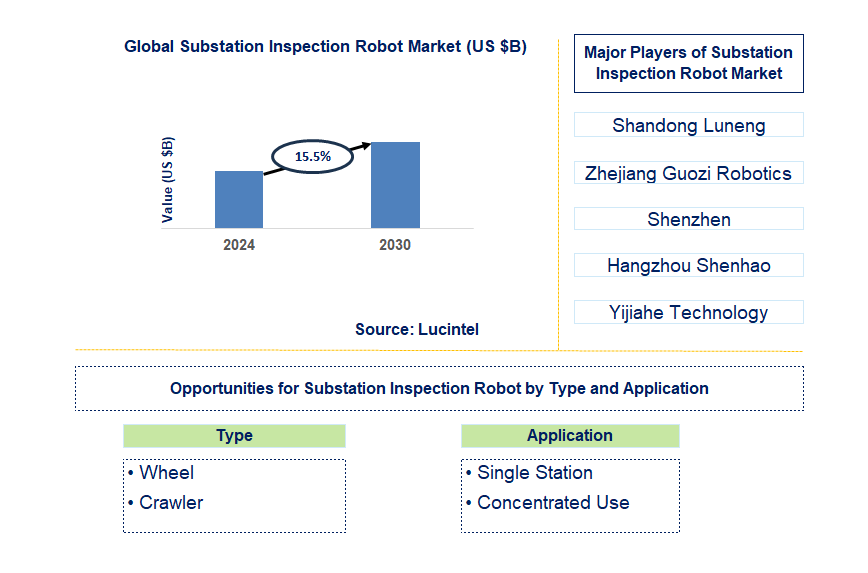
Key data points: The growth forecast = 15.5% annually next 6 years. Scroll below to get more insights. This market report covers trends, opportunities, and forecast in the global substation inspection robot market to 2030 by type (wheel and crawler), application (single station and concentrated use), and region (North America, Europe, Asia Pacific, and the Rest of the World)
We'll send your sample report shortly.
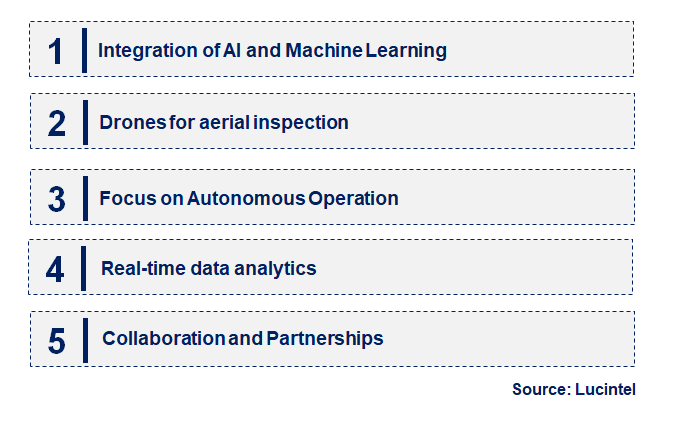
• Integration of AI and Machine Learning: The integration of AI and machine learning in substation inspection robots allows for enhanced data analysis and predictive maintenance. These technologies enable robots to identify potential issues before they escalate, improving reliability and reducing downtime in power systems.
• Drones for Aerial Inspection: Drones are being used alongside ground-based robots to inspect substations from the air. Equipped with high-resolution cameras and thermal imaging sensors, drones can quickly cover large areas and provide utilities with comprehensive data to aid in decision-making and maintenance planning.
• Focus on Autonomous Operation: There is a growing focus on developing fully autonomous inspection robots that can operate with minimal or no human intervention. This trend enhances safety, as personnel do not need to work in hazardous environments, while improving operational efficiency and reducing labor costs.
• Real-time Data Analytics: Real-time data analytics are changing the way utilities monitor substation conditions. Inspection robots equipped with sensitive sensors can sense and transmit real-time information, allowing for immediate analysis and faster response to any diagnosed issues.
• Collaboration and Partnerships: Increasing collaboration between technology providers and utility companies is driving innovation in substation inspection robots. These partnerships pool expertise and resources to develop solutions that address specific industry challenges. These emerging trends are reshaping the substation inspection robot market by enhancing efficiency, safety, and operational management in the energy sector.
• Substation Autonomous Robot Deployment: Several utilities have begun deploying autonomous robots capable of independently inspecting substations and reporting observations. These robots reduce the need for personnel in hazardous areas, improving both safety and operational efficiency.
• Improvement in Sensor Technology: Advanced sensors, such as thermal cameras and gas leak detectors, are improving the effectiveness of substation inspection robots. These sensors help better evaluate equipment health and environmental conditions, allowing for more timely maintenance.
• Development of Modular Robots: Companies are developing modular robotic systems that can adapt to a variety of inspection tasks. Utilities can customize their inspection approaches using a wide range of techniques tailored to specific needs and challenges.
• Remote Operation and Monitoring: New technologies for remote operation allow inspection robots to be controlled from a safe distance. This enhances efficiency in challenging conditions, enabling operators to conduct inspections without being physically present.
• AI-Driven Predictive Maintenance: With the integration of AI and data analytics, robots can now predict equipment failures based on historical and real-time data. This shift towards proactive maintenance minimizes downtime and extends the lifespan of critical infrastructure. These advancements are creating significant momentum in the substation inspection robot market, driving product innovation and improving overall utility operations.
• Telecom Integration: Growth in robust telecommunications infrastructure presents an opportunity for substation inspection robots. Integrating these solutions with telecom networks allows for real-time data and monitoring capabilities, critical for modern communication systems.
• Smart Grid Applications: The smart grid introduces a need for advanced inspection technologies. Companies can develop robots capable of assessing grid conditions to ensure reliability and performance, particularly in support of renewable energy sources.
• Environmental Monitoring: The growing emphasis on environmental compliance presents opportunities for robots that monitor substation impacts on surrounding ecosystems. These robots can provide data on emissions, noise, and wildlife interactions, supporting regulatory compliance and corporate responsibility efforts.
• Training and Simulation Tools: There is potential for growth in training and simulation tools using robotic technology. These tools can help technicians prepare for real-world inspections and improve their understanding of robotic operations, enhancing safety and efficiency.
• Service and Maintenance Contracts: Manufacturers can secure steady revenue through service and maintenance contracts for substation inspection robots. These contracts ensure that robotic systems operate optimally, encouraging long-term relationships with customers. These growth opportunities highlight the diverse applications of substation inspection robots and the potential for innovation and expansion in the market.
• Emergence of Automation: Increasing demand for automation within utilities is a primary driver for substation inspection robots. Automation ensures that data is collected safely, efficiently, and accurately, making it an essential element of modern power management.
• Advances in Robotics Technology: Ongoing developments in robotics, including AI and sensor technology, are enhancing the functionality of inspection robots. This enables more efficient inspection and maintenance, contributing to market growth.
• Regulatory Compliance Requirements: Strict regulations related to safety and environmental monitoring are pushing utilities to adopt robotic inspection solutions. Compliance is necessary to maintain operational integrity and minimize liabilities.
• Cost-Effectiveness of Robotic Solutions: The long-term cost savings offered by robotic inspection solutions are attractive to utilities. Robots can reduce labor costs and minimize downtime through proactive maintenance.
• Need for Infrastructure Maintenance: With aging electrical infrastructure, effective inspection technologies are essential. Substation inspection robots can assess and address problems before they worsen, ensuring reliable power delivery. Challenges:
• High Initial Investment Costs: The initial cost of deploying substation inspection robots can be significant. Utilities may be hesitant to invest in new technologies without clear, immediate returns on investment.
• Integration with Existing Systems: Integrating robotic inspection solutions with existing utility management systems can be complex. Data compatibility and operational integration pose challenges to the adoption of new technologies.
• Lack of Skilled Labor: A shortage of skilled labor to operate and maintain robotic systems can hinder the adoption of these technologies. Utilities may struggle to find qualified technicians, creating challenges in implementing and operating robots. The drivers and challenges in the substation inspection robot market present both opportunities for innovation and obstacles that need to be addressed for sustained growth.
• Shandong Luneng Intelligence
• Zhejiang Guozi Robotics
• Shenzhen Langchixinchuang
• Hangzhou Shenhao
• Yijiahe Technology
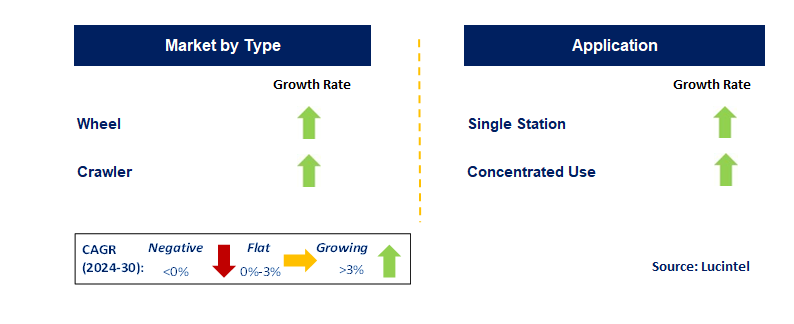
• Wheel
• Crawler
• Single Station
• Concentrated Use
• North America
• Europe
• Asia Pacific
• The Rest of the World
• Lucintel forecasts that wheeled robots will remain the largest segment over the forecast period.
• Within this market, concentrated use will remain the dominant segment.
• APAC will continue to be the largest region over the forecast period.


• Shandong Luneng Intelligence
• Zhejiang Guozi Robotics
• Shenzhen Langchixinchuang
• Hangzhou Shenhao
• Yijiahe Technology Q5. Which substation inspection robot market segment will be the largest in future? Answer: Lucintel forecasts that wheel will remain the larger segment over the forecast period. Q6. In substation inspection robot market, which region is expected to be the largest in next 5 years? Answer: APAC will remain the largest region over the forecast period. Q.7 Do we receive customization in this report? Answer: Yes, Lucintel provides 10% customization without any additional cost.


Choose a license that fits your team. Instant PDF delivery.
Prices exclude taxes. Instant delivery. Custom licensing available on request.
Market Report · July 29, 2026
Market Report · July 20, 2026
Market Report · July 20, 2026
Trusted partner for strategic intelligence and business growth


Receive a complimentary market analysis tailored to your industry. Our analysts will identify key growth opportunities and competitive dynamics specific to your business.

Market size, growth rate, and key trend analysis for your specific sector.

Top competitor positioning and market share analysis.

Strategic recommendations backed by data-driven insights.
Get curated market intelligence and competitive moves straight to your inbox.
By subscribing, you agree to receive our monthly insights. Unsubscribe anytime.
Receive a complimentary market analysis tailored to your industry. Our analysts will identify key growth opportunities and competitive dynamics specific to your business.
Market size, growth rate, and key trend analysis for your specific sector.
Top competitor positioning and market share analysis.
Strategic recommendations backed by data-driven insights.
Get curated market intelligence, emerging trends, and competitive moves straight to your inbox each month.
By subscribing, you agree to receive our monthly insights. Unsubscribe anytime.
We'll send your sample report shortly.