
Market Report · July 20, 2026

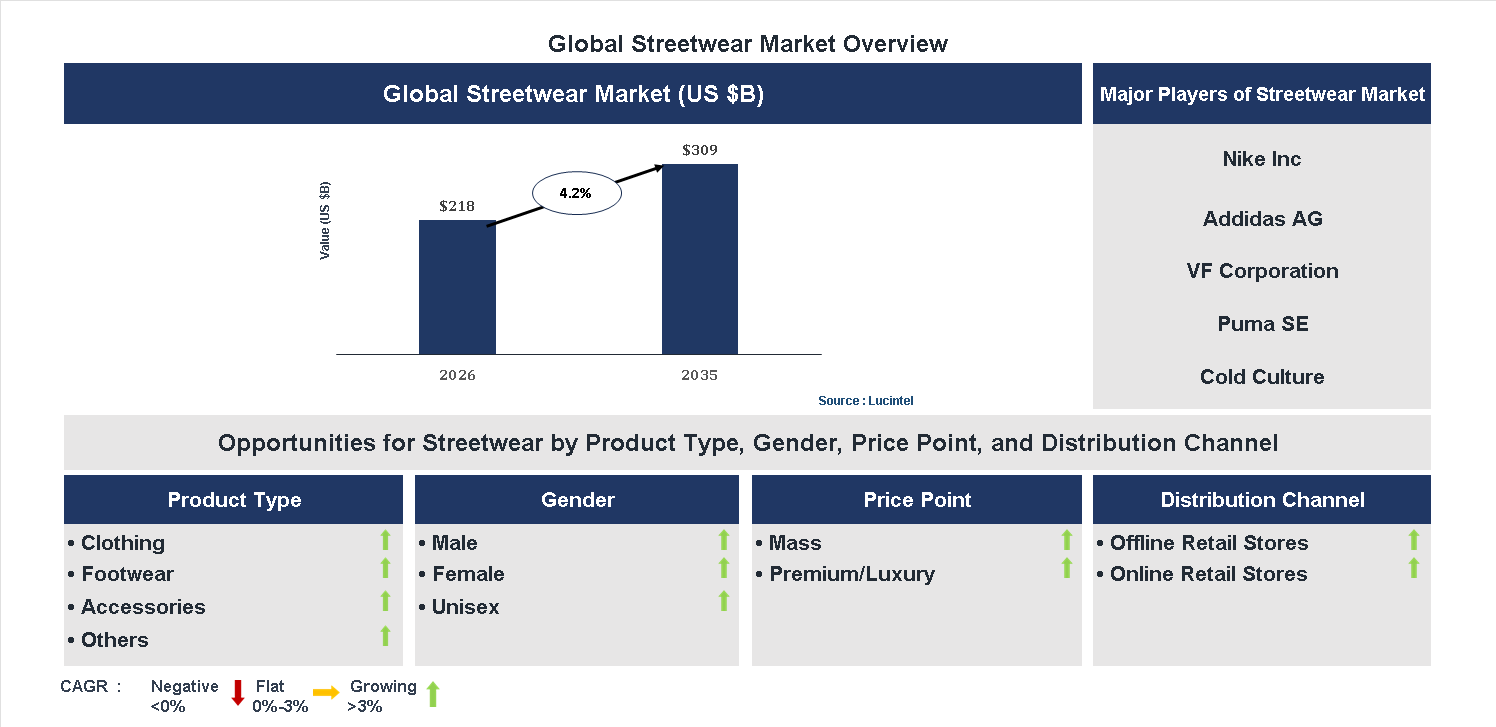
Key data points: The market size in 2035 = $309 billion, growth forecast = 0.042 annually for the next 8 years. Scroll below to get more insights. This market report covers trends, opportunities and forecasts in streetwear market to 2035 by product type (clothing, footwear, accessories, and others), gender (male, female, and unisex), price point (mass and premium/luxury), distribution channel (offline retail stores and online retail stores), and region (North America, Europe, Asia Pacific, and the Rest of the World)
We'll send your sample report shortly.
• Lucintel forecasts that, within the product type category, clothing is expected to witness higher growth over the forecast period.
• Within the distribution channel category, offline retail store is expected to witness higher growth.
• In terms of region, APAC is expected to witness the highest growth over the forecast period. Gain valuable insights for your business decisions with our comprehensive 150+ page report. Sample figures with some insights are shown below.
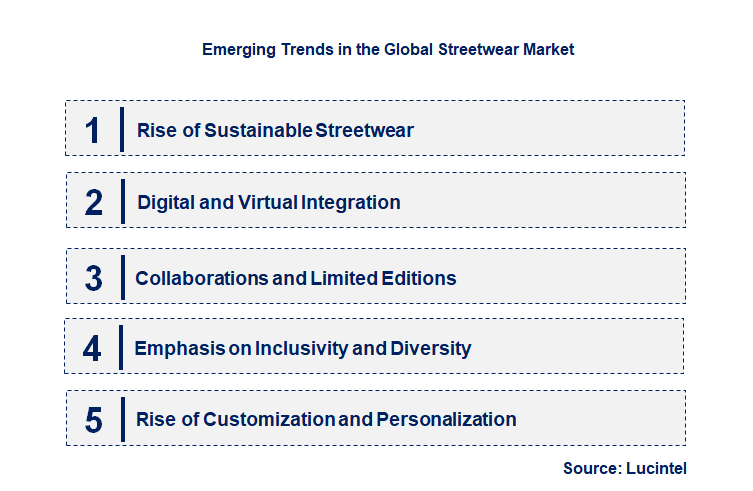
• Rise of Sustainable Streetwear: Increasing consumer awareness about environmental issues is prompting brands to adopt eco-friendly materials and ethical production practices. This trend emphasizes sustainability as a core value, with brands using organic fabrics, recycled materials, and transparent supply chains. The impact is a shift towards more responsible consumption, appealing to environmentally conscious consumers and fostering brand loyalty. As sustainability becomes a differentiator, companies investing in eco-friendly initiatives are gaining competitive advantage and setting new industry standards.
• Digital and Virtual Integration: The integration of digital technology into streetwear is revolutionizing how brands engage with consumers. Virtual try-ons, augmented reality (AR) experiences, and digital fashion shows are becoming commonplace. Additionally, the rise of NFTs and virtual sneakers allows consumers to own digital assets, blending fashion with blockchain technology. This digital shift enhances customer engagement, creates new revenue streams, and caters to the tech-savvy youth demographic. It also enables brands to reach global audiences instantly, transforming traditional retail models into immersive digital experiences.
• Collaborations and Limited Editions: Strategic collaborations between streetwear brands and artists, designers, or mainstream companies continue to drive hype and exclusivity. Limited edition drops create urgency and desirability, fueling resale markets and social media buzz. These collaborations often blend different cultural influences, expanding brand appeal and fostering innovation. The impact is a dynamic market where scarcity and storytelling are key drivers of consumer interest, encouraging brand loyalty and elevating streetwear to a mainstream fashion status.
• Emphasis on Inclusivity and Diversity: The market is increasingly embracing inclusivity, with brands showcasing diverse models, designs, and cultural influences. This trend reflects broader societal shifts towards equality and representation. Inclusive marketing and product lines cater to a wider audience, fostering a sense of community and authenticity. The impact is a more representative industry that appeals to global consumers, enhances brand reputation, and encourages innovation through diverse perspectives, ultimately broadening the market’s reach and relevance.
• Rise of Customization and Personalization: Consumers are seeking unique, personalized streetwear pieces that reflect their individual identity. Brands are offering customizable options, from monogramming to bespoke designs, facilitated by digital tools. This trend enhances customer engagement and loyalty by providing a sense of ownership and exclusivity. The impact is a shift towards more consumer-centric products, fostering deeper brand connections and allowing brands to differentiate themselves in a competitive market. Personalization also enables brands to gather valuable data for future product development. These trends are fundamentally reshaping the streetwear market by fostering sustainability, digital innovation, exclusivity, inclusivity, and personalization. They are driving growth, expanding consumer engagement, and elevating streetwear from niche to mainstream fashion, ensuring its relevance in a rapidly changing industry landscape.
• Digital Customization: Personalization drives consumer engagement and loyalty. Brands are leveraging AI and online platforms to offer customizable products, allowing consumers to design unique streetwear pieces. This trend enhances customer experience, fosters brand loyalty, and increases sales. The ability to tailor products to individual preferences is also reducing inventory waste and enabling brands to stand out in a competitive market.
• Sustainability Initiatives: Eco-friendly practices are becoming central to streetwear brands. Companies are adopting sustainable materials, ethical manufacturing, and recycling programs to appeal to environmentally conscious consumers. These efforts not only improve brand reputation but also meet increasing regulatory standards. Sustainability initiatives are influencing consumer purchasing decisions and encouraging industry-wide shifts toward greener practices, thus shaping a more responsible market future.
• E-commerce and Digital Platforms: Online sales channels are expanding rapidly, driven by social media and direct-to-consumer models. Brands are utilizing influencer collaborations, virtual showrooms, and augmented reality to enhance online shopping experiences. This digital shift allows brands to reach global audiences more efficiently, reduce reliance on physical stores, and gather valuable consumer data. The growth of e-commerce is making streetwear more accessible and personalized, fueling market expansion.
• Collaborations and Limited Editions: Strategic partnerships and exclusive drops are boosting brand visibility and desirability. Collaborations with artists, designers, and other brands create buzz and attract diverse consumer segments. Limited editions foster a sense of exclusivity, encouraging quick purchases and social media sharing. These strategies generate hype, increase sales, and strengthen brand positioning within the competitive streetwear landscape.
• Global Market Penetration: Emerging markets in Asia, Africa, and Latin America present significant growth opportunities. Brands are tailoring products to local tastes and cultures, establishing regional partnerships, and expanding distribution channels. This global outreach diversifies revenue streams and enhances brand recognition worldwide. As urbanization accelerates in these regions, the streetwear market is poised for substantial growth, driven by increasing youth populations and rising disposable incomes. The recent developments in digital customization, sustainability, e-commerce, collaborations, and global expansion are collectively transforming the streetwear market. These innovations are fostering deeper consumer engagement, expanding market reach, and promoting responsible practices. As a result, the industry is becoming more dynamic, competitive, and sustainable, positioning it for continued growth and influence in the global fashion landscape.
• Expansion into Sustainable Streetwear Collections: Growing consumer demand for eco-friendly products presents a significant opportunity for brands to develop sustainable streetwear lines. Incorporating recycled materials, ethical manufacturing, and eco-conscious packaging can attract environmentally aware customers. This shift not only enhances brand reputation but also aligns with global sustainability goals. By investing in sustainable innovation, brands can differentiate themselves in a competitive market and foster long-term loyalty among eco-conscious consumers.
• Leveraging Digital and Social Media for Brand Engagement: The rise of social media platforms offers unparalleled opportunities for streetwear brands to connect directly with their audience. Creating engaging content, influencer collaborations, and limited-edition drops can generate buzz and foster community. Digital marketing enables real-time feedback and personalized experiences, increasing brand loyalty. As online shopping continues to grow, brands that effectively utilize social media will expand their reach, boost sales, and stay ahead of emerging trends in the streetwear landscape.
• Collaborations with High-Profile Artists and Designers: Strategic partnerships with celebrities, artists, and renowned designers can elevate brand visibility and desirability. These collaborations often result in exclusive collections that attract media attention and consumer interest. By aligning with influential figures, brands can tap into new customer segments and create hype around their products. Such partnerships also foster innovation, blending different creative visions, and reinforcing the streetwear’s cultural relevance and trendsetting status.
• Expansion into New Geographic Markets: Emerging markets in Asia, Africa, and Latin America present substantial growth opportunities for streetwear brands. Increasing urbanization, rising disposable incomes, and a youthful demographic eager for global fashion trends drive demand. Localizing product offerings and marketing strategies can enhance market penetration. Establishing regional partnerships and distribution channels will enable brands to build a strong presence, adapt to cultural preferences, and capitalize on the expanding global streetwear consumer base.
• Integration of Technology for Customization and Virtual Shopping: Incorporating augmented reality (AR), virtual fitting rooms, and customization tools enhances the consumer shopping experience. These technologies allow customers to personalize products and try them virtually, increasing engagement and satisfaction. As e-commerce continues to grow, brands that adopt innovative tech solutions can differentiate themselves and reduce return rates. This integration also appeals to tech-savvy youth, fostering brand loyalty and encouraging repeat purchases in an increasingly digital retail environment. These growth opportunities are poised to significantly influence the streetwear market by fostering innovation, expanding reach, and aligning with consumer values. Brands that strategically invest in sustainability, digital engagement, collaborations, geographic expansion, and technological integration will be better positioned to thrive in a dynamic and competitive landscape. Embracing these opportunities will drive long-term growth and reinforce the cultural relevance of streetwear globally.
• Technological Innovation: The integration of digital platforms, e-commerce, and social media has revolutionized marketing and sales channels. Brands leverage these tools for targeted advertising, influencer collaborations, and direct-to-consumer sales, expanding reach and engagement. Augmented reality (AR) and virtual fitting rooms enhance online shopping experiences, increasing conversion rates. Technology also facilitates rapid product development and customization, aligning offerings with consumer preferences. As digital adoption accelerates, brands that innovate technologically can better capture market share and foster brand loyalty, making technology a key driver of growth.
• Changing Consumer Preferences: Millennials and Generation Z consumers prioritize individuality, sustainability, and brand authenticity. Their demand for unique, limited-edition items and eco-friendly products drives innovation within the market. Social media influences trends and creates viral demand for specific styles, fueling rapid product turnover. Consumers increasingly seek brands that align with their values, such as ethical manufacturing and social responsibility. This shift encourages brands to adapt quickly, offering more personalized and sustainable options, which in turn stimulates market expansion and diversification.
• Globalization and Market Expansion: The rise of e-commerce platforms enables streetwear brands to reach international markets effortlessly. Emerging markets in Asia, Africa, and Latin America present new growth opportunities due to rising disposable incomes and urbanization. Global collaborations and brand partnerships foster cross-cultural influences, broadening appeal. This globalization trend allows brands to scale rapidly and diversify their customer base, fueling overall market growth. However, it also introduces challenges related to cultural adaptation and supply chain management across borders.
• Influence of Social Media and Celebrity Endorsements: Social media platforms like Instagram, TikTok, and YouTube serve as powerful marketing tools, enabling brands to connect directly with consumers. Influencers and celebrities shape trends and endorse products, creating instant demand. Viral content and user-generated posts amplify brand visibility and credibility. This direct engagement fosters community building and brand loyalty. The ability to quickly respond to trending topics and leverage influencer partnerships significantly accelerates product adoption, making social media a critical driver for market growth.
• Sustainability and Ethical Practices: Increasing awareness of environmental issues prompts brands to adopt sustainable materials and ethical manufacturing processes. Consumers are more conscious of the environmental impact of their purchases, favoring brands with transparent supply chains and eco-friendly initiatives. This shift encourages innovation in sustainable fabrics and production methods, creating a competitive advantage. Emphasizing sustainability not only aligns with consumer values but also helps brands comply with evolving regulations, ensuring long-term viability and market relevance. The challenges facing the streetwear market include:-
• Regulatory and Intellectual Property Issues: As the market expands globally, navigating diverse regulatory environments becomes complex. Intellectual property infringement, counterfeit products, and trademark disputes pose significant risks, undermining brand integrity and revenue. Stricter enforcement and evolving laws require brands to invest in legal protections and compliance strategies. Additionally, tariffs and trade restrictions can increase costs and complicate supply chains. Managing these regulatory challenges is essential to sustain growth and protect brand equity in a competitive landscape.
• Supply Chain Disruptions: The streetwear industry relies heavily on global supply chains for raw materials and manufacturing. Disruptions caused by geopolitical tensions, pandemics, or natural disasters can lead to delays, increased costs, and inventory shortages. These issues hinder product availability and customer satisfaction. Companies must develop resilient supply chain strategies, diversify sourcing, and adopt flexible manufacturing practices to mitigate risks. Failure to address these challenges can result in lost sales and diminished market share.
• Market Saturation and Intense Competition: The rapid growth of streetwear brands has led to a saturated market with numerous players vying for consumer attention. Differentiating products and maintaining brand relevance becomes increasingly difficult. Price wars and copycat designs threaten profitability. Brands must innovate continuously and build strong community engagement to stand out. Failure to adapt to changing trends or to effectively differentiate can lead to declining sales and market share erosion. The streetwear market is driven by technological advancements, evolving consumer preferences, globalization, social media influence, and sustainability initiatives. However, it faces challenges such as regulatory complexities, supply chain vulnerabilities, and intense competition. These drivers and challenges collectively shape the market’s trajectory, requiring brands to innovate, adapt, and strategically navigate risks. Success in this dynamic environment depends on balancing growth opportunities with effective risk management, ensuring long-term sustainability and competitiveness.
• Nike Inc
• Addidas AG
• VF Corporation
• Puma SE
• Cold Culture
• XinDeSheng
• New Balance Athletics Inc.
• Stussy Inc.
• A Bathing Ape (BAPE)
• Palace Skateboards
• Clothing
• Footwear
• Accessories
• Others
• Male
• Female
• Unisex
• Mass
• Premium/Luxury
• Offline Retail Stores
• Online Retail Stores
• North America
• Europe
• Asia Pacific
• The Rest of the World
• United States: The US market is witnessing a focus on sustainability, with brands adopting eco-friendly materials and ethical manufacturing practices. Collaborations between streetwear labels and popular artists or influencers are boosting brand visibility. E-commerce platforms and social media marketing remain crucial for growth, and there is a rising trend of limited-edition drops creating hype and exclusivity. Additionally, vintage and retro styles are making a comeback, appealing to nostalgic consumers.
• China: The Chinese streetwear market is rapidly expanding, driven by a young, fashion-conscious demographic. Local brands are gaining international recognition through innovative designs and strategic collaborations with global brands. The influence of K-pop and Western pop culture is evident, fueling demand for trendy, bold styles. E-commerce giants like Tmall and WeChat are vital channels for sales and marketing. Moreover, streetwear is increasingly integrated with gaming and digital culture, creating new avenues for engagement.
• Germany: Germany’s streetwear market emphasizes sustainability and ethical production. Many brands are adopting eco-friendly fabrics and transparent supply chains to appeal to environmentally conscious consumers. The market is also characterized by a focus on high-quality craftsmanship and minimalist aesthetics. Collaborations with local artists and designers are common, fostering a sense of community and cultural identity. Digital innovation, including augmented reality shopping experiences, is enhancing customer engagement.
• India: The Indian streetwear scene is rapidly evolving, blending traditional motifs with contemporary styles to cater to a diverse consumer base. Local brands are gaining popularity by incorporating regional art, textiles, and cultural symbols into their designs. The youth demographic, driven by social media influencers, is fueling demand for bold, expressive fashion. E-commerce platforms like Flipkart and Myntra are expanding their offerings, making streetwear more accessible. There is also a growing interest in sustainable and ethically produced clothing among Indian consumers.
• Japan: Japan continues to lead in innovative streetwear design, integrating cutting-edge technology such as wearable electronics and augmented reality. The market is characterized by unique, avant-garde aesthetics that often blend traditional Japanese art with modern street fashion. Limited-edition releases and collaborations with global brands create buzz and exclusivity. Japanese brands are also focusing on sustainability, using eco-friendly materials and promoting ethical manufacturing. The influence of subcultures like Harajuku and Tokyo street fashion remains strong, inspiring global trends and attracting international consumers.


• Nike Inc
• Addidas AG
• VF Corporation
• Puma SE
• Cold Culture
• XinDeSheng
• New Balance Athletics Inc.
• Stussy Inc.
• A Bathing Ape (BAPE)
• Palace Skateboards Q6. Which streetwear market segment will be the largest in future? Answer: Lucintel forecasts that, within the product type category, clothing is expected to witness higher growth over the forecast period. Q7. In streetwear market, which region is expected to be the largest in next 5 years? Answer: In terms of region, APAC is expected to witness the highest growth over the forecast period. Q8. Do we receive customization in this report? Answer: Yes, Lucintel provides 10% customization without any additional cost.


Choose a license that fits your team. Instant PDF delivery.
Prices exclude taxes. Instant delivery. Custom licensing available on request.
Market Report · July 20, 2026
Market Report · July 15, 2026
Market Report · July 15, 2026
Trusted partner for strategic intelligence and business growth


Receive a complimentary market analysis tailored to your industry. Our analysts will identify key growth opportunities and competitive dynamics specific to your business.

Market size, growth rate, and key trend analysis for your specific sector.

Top competitor positioning and market share analysis.

Strategic recommendations backed by data-driven insights.
Get curated market intelligence and competitive moves straight to your inbox.
By subscribing, you agree to receive our monthly insights. Unsubscribe anytime.
Receive a complimentary market analysis tailored to your industry. Our analysts will identify key growth opportunities and competitive dynamics specific to your business.
Market size, growth rate, and key trend analysis for your specific sector.
Top competitor positioning and market share analysis.
Strategic recommendations backed by data-driven insights.
Get curated market intelligence, emerging trends, and competitive moves straight to your inbox each month.
By subscribing, you agree to receive our monthly insights. Unsubscribe anytime.
We'll send your sample report shortly.