
Market Report · July 22, 2026

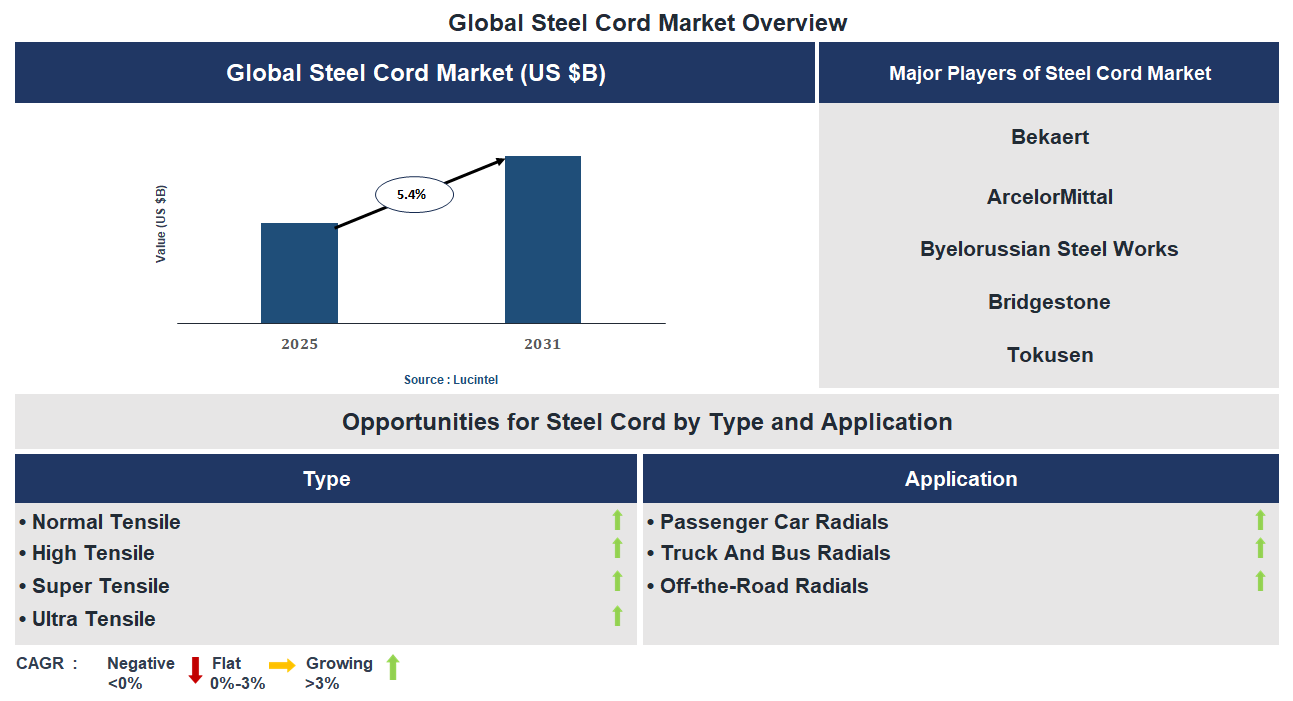
Key data points: The growth forecast = 5.4% annually for the next 7 years. Scroll below to get more insights. This market report covers trends, opportunities and forecasts in steel cord market to 2031 by type (normal tensile, high tensile, super tensile, and ultra tensile), application (passenger car radials, truck and bus radials, and off-the-road radials), and region (North America, Europe, Asia Pacific, and the Rest of the World)
We'll send your sample report shortly.
• Lucintel forecasts that, within the type category, ultra tensile is expected to witness the highest growth over the forecast period.
• Within the application category, passenger car radial is expected to witness the highest growth.
• In terms of region, APAC is expected to witness the highest growth over the forecast period. Gain valuable insights for your business decisions with our comprehensive 150+ page report. Sample figures with some insights are shown below.
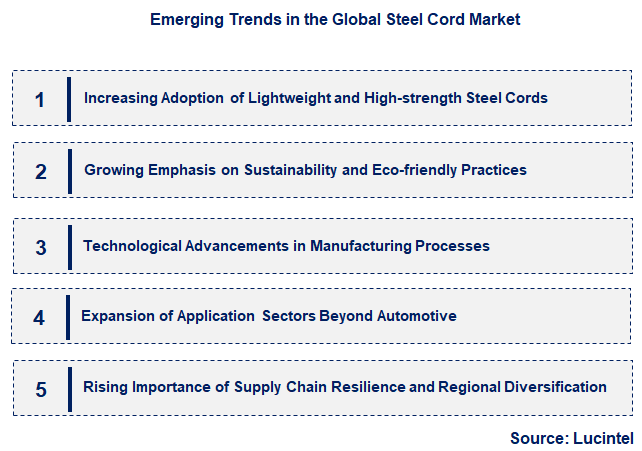
• Increasing Adoption of Lightweight and High-strength Steel Cords: The automotive industry’s push for fuel efficiency and safety standards is driving demand for lightweight yet durable steel cords. Innovations in alloy compositions and manufacturing processes enable the production of cords that reduce vehicle weight without compromising strength. This trend enhances vehicle performance, reduces emissions, and aligns with regulatory requirements, thereby expanding market opportunities. Manufacturers are investing in R&D to develop advanced steel cords that meet these stringent criteria, which in turn boosts overall market growth and competitiveness.
• Growing Emphasis on Sustainability and Eco-friendly Practices: Environmental concerns and stricter regulations are prompting companies to adopt sustainable manufacturing processes. This includes using recycled steel, reducing carbon emissions during production, and developing eco-friendly coatings. Such initiatives not only help companies comply with global standards but also appeal to environmentally conscious consumers. The shift towards sustainability is fostering innovation in raw material sourcing and process optimization, ultimately leading to a greener, more responsible steel cord industry that aligns with global sustainability goals.
• Technological Advancements in Manufacturing Processes: Automation, digitalization, and precision engineering are revolutionizing steel cord production. Advanced machinery and quality control systems improve product consistency, reduce waste, and enhance efficiency. These innovations enable manufacturers to meet the increasing demand for high-quality, reliable steel cords while lowering production costs. The integration of Industry 4.0 technologies facilitates real-time monitoring and predictive maintenance, which minimizes downtime and enhances supply chain resilience. This trend is crucial for maintaining competitiveness in a rapidly evolving market landscape.
• Expansion of Application Sectors Beyond Automotive: While automotive remains the dominant sector, steel cords are increasingly used in construction, industrial machinery, and renewable energy sectors. For example, steel cords are vital in reinforced concrete, conveyor belts, and wind turbine blades. This diversification reduces dependency on a single industry and opens new revenue streams. As infrastructure projects grow and renewable energy adoption accelerates, demand for specialized steel cords tailored to these applications is rising. This expansion broadens market scope and encourages innovation tailored to diverse industry needs.
• Rising Importance of Supply Chain Resilience and Regional Diversification: Global disruptions, such as pandemics and geopolitical tensions, highlight the need for resilient supply chains. Companies are diversifying sourcing strategies, establishing regional manufacturing hubs, and investing in inventory buffers. This approach reduces dependency on single sources and mitigates risks associated with supply chain interruptions. Strengthening regional supply chains also enables faster delivery and customization, enhancing customer satisfaction. As a result, market players are prioritizing supply chain agility and resilience, which are critical for maintaining competitiveness in an increasingly volatile global environment. In summary, these emerging trends are fundamentally reshaping the steel cord market by fostering innovation, promoting sustainability, expanding application areas, and enhancing supply chain resilience. These developments are driving market growth, encouraging technological progress, and positioning the industry to better meet future demands and challenges.
• Technological Innovation: Introduction of advanced manufacturing processes has improved steel cord strength and flexibility, leading to enhanced product performance and longer service life. This innovation allows manufacturers to meet the increasing demands of automotive and industrial applications, boosting market competitiveness and expanding application scope.
• Raw Material Price Fluctuations: Volatility in steel and rubber prices has impacted production costs and profit margins. Companies are adopting strategic sourcing and cost management practices to mitigate risks, which influences pricing strategies and supply chain stability across the market.
• Sustainability Initiatives: Growing emphasis on eco-friendly production methods and recyclable materials has prompted industry players to adopt sustainable practices. This shift not only reduces environmental impact but also aligns with regulatory requirements, influencing product development and market positioning.
• Supply Chain Resilience: The COVID-19 pandemic exposed vulnerabilities in global supply chains, prompting companies to diversify sourcing and increase inventory buffers. Strengthening supply chain resilience ensures consistent product availability and supports market stability amid disruptions.
• Market Expansion and New Applications: Emerging markets and new industrial sectors are adopting steel cords for innovative uses such as renewable energy infrastructure and advanced transportation systems. This expansion opens new revenue streams and drives demand growth in the market. In summary, these developments are collectively transforming the steel cord market by enhancing product quality, managing costs, promoting sustainability, ensuring supply chain robustness, and expanding application horizons. These factors are fostering a more resilient, innovative, and competitive industry landscape, positioning market players for sustained growth and adaptation to future demands.
• Increasing Demand for Lightweight, High-Strength Materials: Steel cords are essential in manufacturing tires and reinforcement components, supporting the shift toward electric vehicles and improved fuel efficiency, thereby boosting market growth.
• Growing Infrastructure Projects and Urbanization: Steel cords are used in concrete reinforcement and industrial applications, driven by rising infrastructure investments and urban development, expanding market opportunities.
• Rising Demand for Conveyor Belts and Machinery: Steel cords provide durability and strength in manufacturing equipment, supporting automation and industrial growth, which enhances market expansion.
• Adoption of Eco-friendly Production Processes: Companies are investing in sustainable steel cord manufacturing, reducing environmental impact and aligning with global green policies, thus opening new market segments.
• Growth in Asia-Pacific and Latin America: Rapid industrialization and infrastructure development in these regions are fueling demand for steel cords, creating significant growth prospects for market players. In summary, these growth opportunities are significantly impacting the steel cord market by driving innovation, expanding regional presence, and aligning with sustainability trends. This dynamic environment offers substantial potential for industry stakeholders to capitalize on emerging demands and strengthen their market positions.
• Technological Innovation: The development of advanced manufacturing techniques enhances product strength, flexibility, and durability, leading to higher quality steel cords. Automation and process optimization reduce production costs and improve efficiency, enabling manufacturers to meet increasing global demand. Innovations such as high-tensile steel cords are expanding applications in tires and industrial sectors, fostering market growth. Continuous R&D investments are crucial for maintaining a competitive advantage and adapting to evolving industry standards.
• Growing Automotive Industry: The rising demand for automobiles worldwide, especially in emerging economies, significantly boosts the need for steel cords used in tire reinforcement. As vehicle production increases, so does the requirement for durable, lightweight, and high-performance tires. The shift towards electric vehicles further amplifies this demand due to their specific performance needs. This trend directly correlates with increased steel cord consumption, supporting market expansion.
• Infrastructure Development: Rapid urbanization and infrastructure projects in developing countries drive demand for steel cords in construction applications such as cables, reinforcements, and industrial equipment. The need for durable, high-strength materials in bridges, tunnels, and buildings propels the market forward. Government initiatives and investments in infrastructure modernization are expected to sustain this growth trajectory, creating new opportunities for manufacturers.
• Raw Material Availability and Cost: The markets growth is heavily influenced by the availability and prices of raw materials like steel and coal. Fluctuations in raw material costs can impact profit margins and production planning. Stable supply chains and cost-effective sourcing are vital for maintaining competitiveness. Additionally, environmental regulations aimed at reducing carbon emissions may increase raw material costs, posing challenges for manufacturers. The challenges in the steel cord market are:
• Environmental Regulations and Sustainability Concerns: Stricter environmental policies aimed at reducing carbon footprints and promoting sustainable practices impose additional costs on manufacturers. Compliance with regulations such as emissions standards and waste management increases operational expenses. Transitioning to eco-friendly raw materials and processes may require significant investments, potentially affecting profit margins and market competitiveness.
• Price Volatility of Raw Materials: The steel industry is susceptible to global fluctuations in raw material prices, driven by geopolitical tensions, supply chain disruptions, and demand-supply imbalances. Price volatility can lead to unpredictable production costs, affecting profitability and pricing strategies. Manufacturers must develop risk mitigation strategies to navigate these uncertainties effectively.
• Trade Policies and Tariffs: International trade tensions and tariffs influence the import-export dynamics of steel products. Protective tariffs can increase costs for manufacturers reliant on imported raw materials or markets, reducing competitiveness. Conversely, trade restrictions may limit market access and export opportunities, hindering growth prospects. Navigating complex trade regulations remains a significant challenge for industry players. In summary, the steel cord markets growth is driven by technological advancements, expanding automotive and infrastructure sectors, and raw material availability. However, it faces challenges from environmental regulations, raw material price volatility, and trade policies. These factors collectively influence market stability, profitability, and future expansion potential. Stakeholders must strategically adapt to these drivers and challenges to sustain competitive advantage and capitalize on emerging opportunities in this evolving landscape.
• Bekaert
• ArcelorMittal
• Byelorussian Steel Works
• Bridgestone
• Tokusen
• Tokyo Rope MFG
• Sumitomo Electric
• Hyosung
• Kiswire
• Jiangsu Xingda
• Normal Tensile
• High Tensile
• Super Tensile
• Ultra Tensile
• Passenger Car Radials
• Truck And Bus Radials
• Off-the-Road Radials
• North America
• Europe
• Asia Pacific
• The Rest of the World
• United States: The US market has seen increased demand driven by the automotive industrys shift towards lightweight vehicles, prompting innovations in steel cord manufacturing. Advanced production techniques and sustainability initiatives are gaining prominence, with companies investing in eco-friendly processes. The growth of infrastructure projects also boosts steel cord consumption, while technological integration enhances product quality and performance. Regulatory standards are evolving to promote environmental responsibility, influencing industry practices. Overall, the US remains a key player, focusing on innovation and sustainability to maintain a competitive advantage.
• China: China continues to dominate the steel cord market with rapid industrialization and infrastructure development fueling demand. The country has expanded its production capacity, adopting advanced manufacturing technologies to improve product quality and reduce costs. The automotive sectors growth, especially in electric vehicles, has increased the need for high-performance steel cords. Government policies supporting green manufacturing and export expansion further bolster the market. Additionally, local companies are investing in research and development to innovate and meet international standards, positioning China as a global leader in steel cord production and innovation.
• Germany: Germanys steel cord market is characterized by high-quality standards and technological innovation. The country’s focus on automotive manufacturing, particularly premium and electric vehicles, drives demand for durable, lightweight steel cords. German companies emphasize research and development to improve product strength and longevity, aligning with sustainability goals. The integration of Industry 4.0 practices enhances manufacturing efficiency and product customization. Regulatory frameworks promote eco-friendly production, and collaborations with research institutions foster innovation. Germany remains a key player in high-performance steel cords, catering to both domestic and international markets.
• India: The Indian steel cord market is experiencing rapid growth due to expanding infrastructure projects and a burgeoning automotive industry. Increasing urbanization and government initiatives like Smart Cities boost demand for construction materials, including steel cords. Local manufacturers are investing in modernizing production facilities and adopting new technologies to improve quality and reduce costs. The automotive sector’s growth, especially in two-wheelers and commercial vehicles, further propels market expansion. Additionally, India’s focus on self-reliance and export potential encourages innovation and capacity building within the steel cord industry, positioning the country as an emerging market leader.
• Japan: Japan’s steel cord market is driven by its advanced automotive sector and emphasis on high-performance materials. The country prioritizes innovation in steel cord manufacturing to meet the demands of electric and hybrid vehicles, which require lightweight yet durable components. Japanese firms focus on sustainable production practices and energy efficiency, aligning with national environmental goals. The integration of automation and smart manufacturing techniques enhances product quality and operational efficiency. Japan’s strong R&D capabilities and collaborations with global partners ensure continuous technological advancements, maintaining its position as a leader in high-quality steel cords for automotive and industrial applications.


• Bekaert
• ArcelorMittal
• Byelorussian Steel Works
• Bridgestone
• Tokusen
• Tokyo Rope MFG
• Sumitomo Electric
• Hyosung
• Kiswire
• Jiangsu Xingda Q5. Which steel cord market segment will be the largest in future? Answer: Lucintel forecasts that, within the type category, ultra tensile is expected to witness the highest growth over the forecast period. Q6. In steel cord market, which region is expected to be the largest in next 5 years? Answer: In terms of region, APAC is expected to witness the highest growth over the forecast period. Q7. Do we receive customization in this report? Answer: Yes, Lucintel provides 10% customization without any additional cost.


Choose a license that fits your team. Instant PDF delivery.
Prices exclude taxes. Instant delivery. Custom licensing available on request.
Market Report · July 22, 2026
Market Report · July 22, 2026
Market Report · July 22, 2026
Trusted partner for strategic intelligence and business growth


Receive a complimentary market analysis tailored to your industry. Our analysts will identify key growth opportunities and competitive dynamics specific to your business.

Market size, growth rate, and key trend analysis for your specific sector.

Top competitor positioning and market share analysis.

Strategic recommendations backed by data-driven insights.
Get curated market intelligence and competitive moves straight to your inbox.
By subscribing, you agree to receive our monthly insights. Unsubscribe anytime.
Receive a complimentary market analysis tailored to your industry. Our analysts will identify key growth opportunities and competitive dynamics specific to your business.
Market size, growth rate, and key trend analysis for your specific sector.
Top competitor positioning and market share analysis.
Strategic recommendations backed by data-driven insights.
Get curated market intelligence, emerging trends, and competitive moves straight to your inbox each month.
By subscribing, you agree to receive our monthly insights. Unsubscribe anytime.
We'll send your sample report shortly.