
Market Report · July 22, 2026

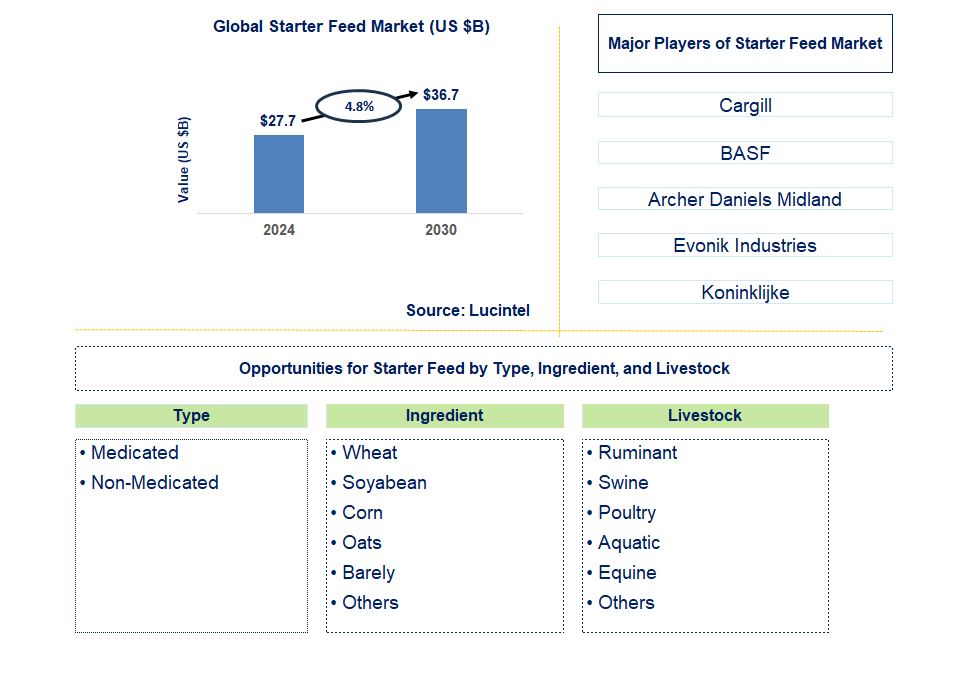
Key data points: The market size in 2030 = $36.7 billion, growth forecast = 4.8% annually for the next 6 years. Scroll below to get more insights. This market report covers trends, opportunities, and forecasts in the global starter feed market to 2030 by type (medicated and non-medicated), ingredient (wheat, soyabean, corn, oats, barely, and others), livestock (ruminant, swine, poultry, aquatic, equine, and others), and region (North America, Europe, Asia Pacific, and the Rest of the World)
We'll send your sample report shortly.
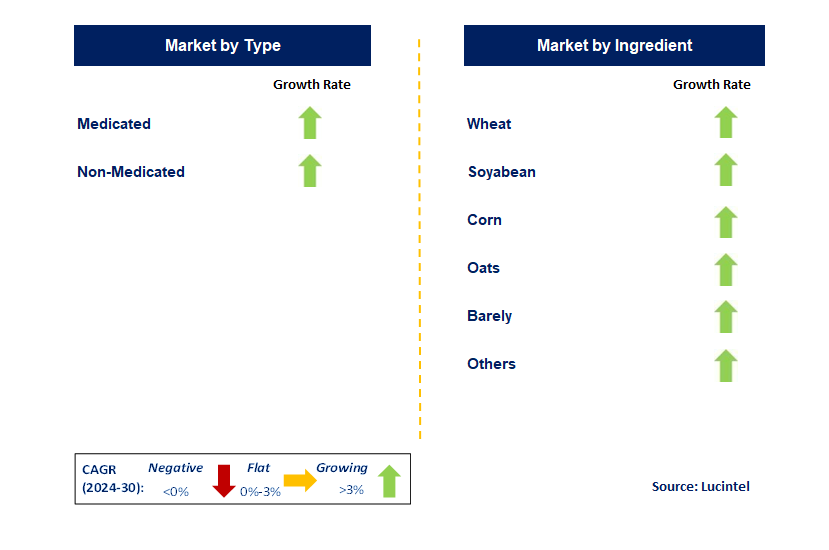
• Lucintel forecasts that, within the ingredient category, oats is expected to witness the highest growth over the forecast period because oats are mostly utilized in poultry feed due to their high fiber and beta-glucan content, which makes them easier to offer to animals than other cereals.
• Within the livestock category, poultry will remain the largest segment because poultry starter feed is a balanced nutritional formulation and offers poultry to develop a healthy nutritional appetite at the initial stage of growth.
• In terms of regions, APAC is expected to witness highest growth over the forecast period because it is diversified, with a range of economic brackets, technological capabilities, and end-user desires for higher-quality feed for cattle, which increases the potential for future expansion. A more than 150-page report is developed to help in your business decisions.
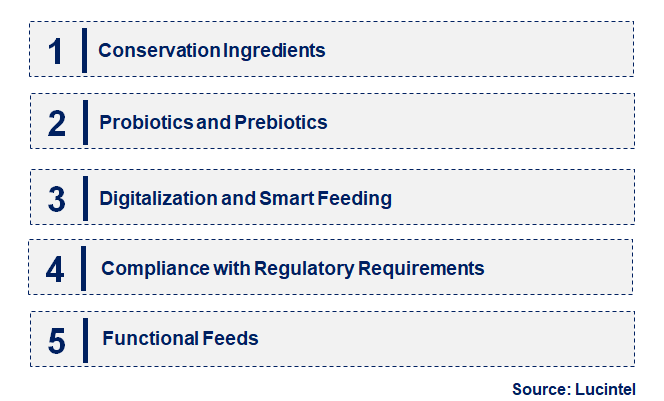
• Conservation Ingredients: Recently, new sustainable and alternative protein sources in Starter Feeds, such as insect meal and algae, have become mainstream. This is due to the increased demand from consumers for environmentally friendly products and regulations aimed at reducing their carbon footprint. The use of sustainable ingredients is beneficial not only in terms of lower environmental impact but also for increased feed efficiency, which is of great interest to many livestock producers.
• Probiotics and Prebiotics: Given their benefits in gut health and immune function in animals, probiotics and prebiotics are increasingly being used in Starter Feeds. These additives enhance nutrient absorption, generally contributing to a better growth rate. As consumers demand antibiotic-free meat, probiotics offer a natural means of enhancing livestock health, which greatly enhances the appeal of the market.
• Digitalization and Smart Feeding: The adoption of digital technologies in feed formulation and distribution is revolutionizing the market. Smart feeding systems employ data analytics to enhance feed efficiency and animal performance. This enables producers to make better-informed decisions, reduce waste, and improve profitability. Traceability is enhanced, supporting consumer demand for greater transparency in food production.
• Compliance with Regulatory Requirements: Stricter regulations on animal welfare and feed safety are also reshaping the Starter Feeds portfolio. Producers must adjust their formulations in accordance with these requirements, which further spur innovation in feed additives and procurement. This will improve the quality of products and encourage producers to act as agents of sustainability for both themselves and consumers.
• Functional Feeds: Functional feed is increasingly available to support specific health outcomes in animals. Added functions include immunity-enhancing additives as well as probiotics that improve the digestive health of animals. This resonates with consumers' preferences for healthier animal products and follows a pervasive trend toward more customized nutrition solutions in the animal feed industry. In short, the emerging trends in the market are shaping the Starter Feed industry into a more sustainable, healthy, efficient, and responsible sector in terms of livestock production.
• Technological Innovations: Advances in feed formulation technologies are improving their nutritional profiles, which in turn leads to greater growth and health for the animals. Companies have increased funding for research and development to create feeds containing specific nutrient combinations tailored to particular species. Improved feed efficiency and waste reduction are some of the benefits of innovation that help achieve sustainability objectives in livestock production.
• Focus on Sustainability: Pressure for sustainability has increased in the starter feed market, where producers are exploring not only environmentally friendly ingredients but also production methods. Efforts to reduce the carbon footprint in feed production have become standard, and consumers want to associate with these environmentally friendly processes. There has been a significant change in sourcing strategies and investment in sustainable practices.
• Regulatory Changes: New feed-usage regulations for antibiotics are shaping product development. Natural feed additives and probiotics, among other alternative options, are being used to meet the health requirements of animals without the need for antibiotics. This not only meets customer demand but also increases market competitiveness.
• Growing Demand for Functional Feeds: The increasing demand for functional starter feeds continues to emphasize specific health benefits. As a result, manufacturers have begun developing enriched feeds that contain a variety of vitamins, minerals, and probiotics to cater to the health-conscious market. This trend has substantially contributed to positive growth in the market and improved animal performance. It aligns with consumer preferences for healthier livestock.
• Digital Solutions Integration: Digitalization is transforming the starter feed market through data analytics and smart feeding technologies. Producers now use various digital tools to optimize feed formulations and monitor animal performance, which improves production efficiency, reduces costs, and supports informed decision-making. These advancements contribute to overall market growth. these developments are shaping the starter feed market by driving innovation, sustainability, and compliance with regulatory standards, benefiting both producers and consumers.
• Organic and Non-GMO Feed: The rising demand for organic and non-GMO products creates a strong growth opportunity. As consumers increasingly insist on healthy and sustainable living, producers can target this demand by offering organic Starter Feeds. This trend aligns with consumer values and provides producers with a competitive advantage in the market.
• Nutritional Technology: Feed formulation technologies, such as precision nutrition and personalized feed solutions, have immense growth potential. Data analytics and R&D are also used by producers to create targeted feed formulations that improve both the growth performance and health of livestock. This personalized nutrition positions producers at the forefront of an ever-changing market.
• Probiotics and Prebiotics Integration: Growing awareness of gut health in animal nutrition also creates opportunities for the inclusion of probiotics and prebiotics in Starter Feeds. These additives have already shown positive effects on health and production traits, thus attracting the interest of producers who want to improve performance without using antibiotics. These trends align with regulatory and consumer shifts toward natural approaches.
• Sustainable Sourcing Practices: There is a growing trend toward sustainable sourcing of ingredients. Producers can invest in alternative protein sources, such as insect meal and plant-based proteins, to meet consumer demand for greener products. As a result, this strengthens the reputation of the brand and helps meet broader sustainability goals.
• Entering Emerging Markets: Expansion into emerging economies, particularly in Asia and Africa, presents promising growth opportunities for the Starter Feed market. Rising livestock populations and increasing demand for animal protein in these regions create favorable conditions for market entry. Opportunities may also arise from region-specific formulations tailored to local needs. these strategic growth opportunities highlight the potential for innovation and adaptation in the Starter Feed market, enabling stakeholders to exploit changing consumer preferences and enhance their competitive advantage.
• Rising Demand for Animal Protein: The ever-growing population and increasing income of the middle class are expanding the demand for animal protein. As consumers continue to demand more meat and dairy products, producers are compelled to invest in improving livestock strains to grow more productive animals. This raises the demand for premium-quality starter feeds that promote quicker growth and better health.
• Technological Advances: Innovations in feed formulation and processing technologies are driving efficiency in the starter feed market. Precision nutrition enables customized feed solutions that enhance nutrient availability and animal health. By optimizing feed performance and minimizing waste, these innovations help producers achieve better results.
• Animal Welfare and Health: As consumers become more conscious of animal welfare, producers must adopt better practices and higher feed quality. Health-promoting additives, such as probiotics and natural ingredients, are gaining more relevance in feed formulations as consumers increasingly demand ethically produced food.
• Sustainability Initiatives: The push toward sustainable agriculture is becoming more evident, with consumers demanding more environmentally friendly products. This has led to the adoption of sustainable sourcing practices, including the use of alternative protein sources in feeds to meet the environmental standards consumers expect.
• Regulatory Compliance: New regulatory requirements for feed safety, quality, and limits on antibiotics are prompting producers to innovate. Compliance with these regulations helps ensure product safety, strengthens brand reputation, and improves market positioning. Challenges in the starter feed market include:
• Increasing Raw Material Prices: Raw material cost volatility is a key issue for the starter feed industry. Severe supply chain disruptions and growing demand will continue to push up ingredient costs, eroding margins and necessitating more efficient sourcing and production strategies.
• Competitiveness of Alternative Proteins: The challenge to traditional animal feed comes from plant-based and alternative protein sources. Producers must innovate and adapt their products to appeal to consumers with vegetarian or vegan diets in order to remain competitive.
• Regulatory Challenges: Producers of starter feed face the challenge of navigating complex regulatory environments. Changing regulations for feed additives, safety standards, and labeling require ongoing investments in research and compliance, which can drain resources and reduce operational efficiency. the starter feed market is propelled by various drivers that offer growth potential, but also faces several challenges that must be strategically overcome. By understanding these dynamics, stakeholders can adjust their strategies, seize opportunities, and mitigate risks in this fast-changing market.
• Cargill
• BASF
• Archer Daniels Midland
• Evonik Industries
• Coinlike
• Medicated
• Non-Medicated
• Wheat
• Soyabean
• Corn
• Oats
• Barely
• Others
• Ruminant
• Swine
• Poultry
• Aquatic
• Equine
• Others
• North America
• Europe
• Asia Pacific
• The Rest of the World
• United States: A focus on high-protein feed formulations and the incorporation of probiotics is increasingly influencing the demand for Starter Feed in the U.S. Investment in R&D is essential to improve feed efficiency and nutritional value. The demand for organic and non-GMO feeds is rising, reflecting consumer preferences for sustainability. Regulatory pressures against antibiotic use in livestock are creating opportunities for manufacturers to innovate with alternative additives that promote animal health and growth.
• China: China is experiencing a high growth rate in Starter Feed demand due to the development of the country's booming livestock sector and the increasing demand for better-quality animal protein. Government interest in food safety and animal welfare is driving producers to modernize feeding practices. Improved feed technologies, including enzymes and fermentation, are enhancing feed conversion ratios, resulting in more efficient meat production.
• Germany: Germany is leading the way in adopting sustainable practices in the Starter Feed market. Emerging strict regulations and consumer demand for more environmentally friendly products are key drivers of this trend. Alternative protein sources, such as insects and algae, are increasingly being used. Additionally, innovations focused on feed formulations aim to maximize digestibility and minimize environmental impact. Efforts to reduce antibiotic use in livestock have rapidly expanded the natural feed additives industry.
• India: In India, demand for Starter Feed is increasing as awareness of animal nutrition and productivity grows. Consumers are seeking higher-quality livestock products, and the growing middle class is driving demand. New and local feed manufacturers are focusing on feeds rich in vitamins and minerals for healthy animal growth. Government initiatives promoting sustainable livestock production are encouraging investments in modern feed technologies.
• Japan: The Japanese Starter Feed market is premium and health-oriented. The reduction of chemicals in feed for staple animals is gaining popularity as consumers become more health-conscious. Functional ingredients that boost immunity are increasingly being added to feed formulations. Additionally, government policies on sustainable agriculture are influencing feed production strategies.


• Cargill
• BASF
• Archer Daniels Midland
• Evonik Industries
• Koninklijke Q6. Which starter feed market segment will be the largest in future? Answer: Lucintel forecasts that oats is expected to witness the highest growth over the forecast period because oats are mostly utilized in poultry feed due to their high fiber and beta-glucan content, which makes them easier to offer to animals than other cereals. Q7. In starter feed market, which region is expected to be the largest in next 6 years? Answer: APAC is expected to witness highest growth over the forecast period because it is diversified, with a range of economic brackets, technological capabilities, and end-user desires for higher-quality feed for cattle, which increases the potential for future expansion. Q.8 Do we receive customization in this report? Answer: Yes, Lucintel provides 10% customization without any additional cost.


Choose a license that fits your team. Instant PDF delivery.
Prices exclude taxes. Instant delivery. Custom licensing available on request.
Market Report · July 22, 2026
Market Report · July 20, 2026
Market Report · July 20, 2026
Trusted partner for strategic intelligence and business growth


Receive a complimentary market analysis tailored to your industry. Our analysts will identify key growth opportunities and competitive dynamics specific to your business.

Market size, growth rate, and key trend analysis for your specific sector.

Top competitor positioning and market share analysis.

Strategic recommendations backed by data-driven insights.
Get curated market intelligence and competitive moves straight to your inbox.
By subscribing, you agree to receive our monthly insights. Unsubscribe anytime.
Receive a complimentary market analysis tailored to your industry. Our analysts will identify key growth opportunities and competitive dynamics specific to your business.
Market size, growth rate, and key trend analysis for your specific sector.
Top competitor positioning and market share analysis.
Strategic recommendations backed by data-driven insights.
Get curated market intelligence, emerging trends, and competitive moves straight to your inbox each month.
By subscribing, you agree to receive our monthly insights. Unsubscribe anytime.
We'll send your sample report shortly.