
Market Report · July 22, 2026

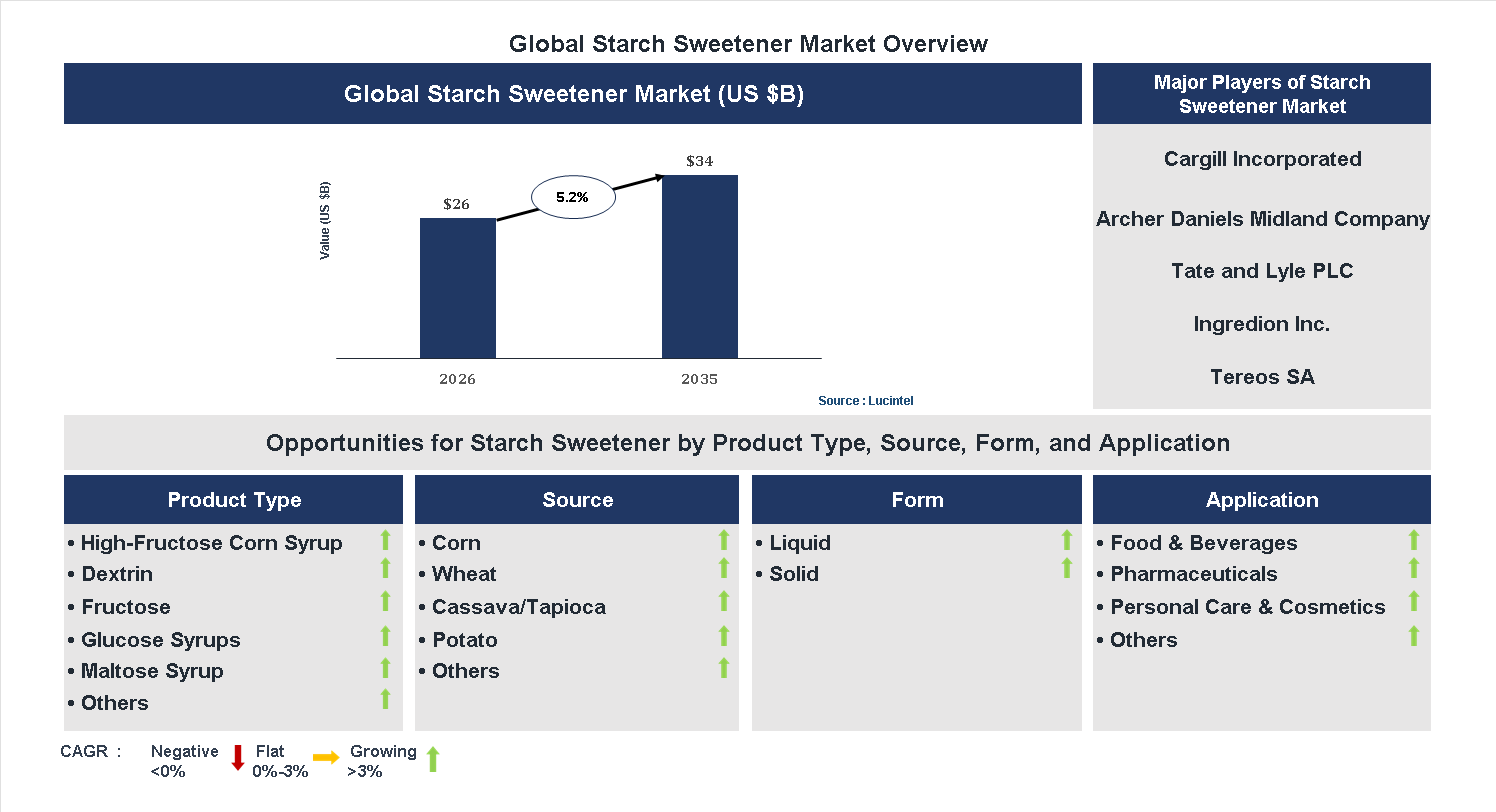
Key data points: The market size in 2035 = $34 billion, growth forecast = 5.2% annually for the next 8 years. Scroll below to get more insights. This market report covers trends, opportunities and forecasts in starch sweetener market to 2035 by product type (high-fructose corn syrup, dextrin, fructose, glucose syrups, maltose syrup, and others), source (corn, wheat, cassava/tapioca, potato, and others), form (liquid and solid), application (food & beverages, pharmaceuticals, personal care & cosmetics, and others), and region (North America, Europe, Asia Pacific, and the Rest of the World)
We'll send your sample report shortly.
• Lucintel forecasts that, within the product type category, glucose syrup is expected to witness the highest growth over the forecast period.
• Within the application category, pharmaceutical is expected to witness the highest growth.
• In terms of region, APAC is expected to witness the highest growth over the forecast period. Gain valuable insights for your business decisions with our comprehensive 150+ page report. Sample figures with some insights are shown below.
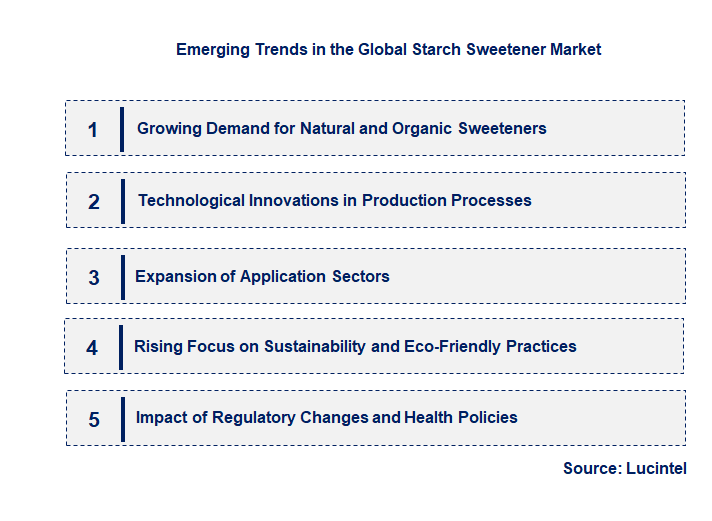
• Growing Demand for Natural and Organic Sweeteners : Consumers are increasingly seeking natural and organic alternatives to traditional starch sweeteners, driven by health concerns and clean-label trends. This shift encourages manufacturers to develop plant-based, minimally processed options like stevia, monk fruit, and erythritol, which are perceived as healthier. The trend boosts innovation in extraction and formulation techniques, fostering a competitive edge for brands that can deliver authentic, high-quality natural sweeteners. It also influences marketing strategies, emphasizing transparency and health benefits to attract health-conscious consumers.
• Technological Innovations in Production Processes : Advances in enzymatic processing, fermentation, and extraction technologies are enhancing the efficiency and sustainability of starch sweetener production. These innovations reduce costs, improve product purity, and enable the development of novel sweetener variants with tailored functionalities. For example, enzyme technology allows for more precise conversion of starches into desired sweeteners, minimizing waste and energy consumption. Such technological progress not only boosts production capacity but also supports the creation of customized solutions for specific industry needs, fostering a more flexible and responsive market environment.
• Expansion of Application Sectors : The versatility of starch sweeteners is leading to their increased adoption across diverse sectors such as bakery, dairy, beverages, and pharmaceuticals. In bakery products, they serve as sugar replacers to reduce calorie content; in beverages, they enhance sweetness without affecting flavor; and in pharmaceuticals, they act as excipients and stabilizers. This broad application spectrum is driven by consumer demand for healthier, low-calorie options and regulatory pressures to reduce sugar content. The expansion into new sectors opens up additional revenue streams and encourages product innovation tailored to specific industry requirements.
• Rising Focus on Sustainability and Eco-Friendly Practices : Sustainability concerns are prompting manufacturers to adopt eco-friendly sourcing, production, and packaging methods. The use of renewable raw materials, waste reduction, and energy-efficient processes are becoming standard practices. Companies are also exploring biodegradable packaging and transparent supply chains to meet consumer expectations for environmental responsibility. These initiatives not only improve brand reputation but also align with regulatory standards and global sustainability goals. The emphasis on eco-conscious practices is reshaping the market by fostering innovation and encouraging the development of sustainable product lines.
• Impact of Regulatory Changes and Health Policies : Governments and regulatory bodies are implementing stricter guidelines on food additives, labeling, and health claims related to sweeteners. These regulations influence product formulation, marketing, and consumer trust. Manufacturers must ensure compliance with safety standards and transparent labeling to avoid legal issues and build consumer confidence. Additionally, policies promoting low-sugar and sugar-free products are accelerating the adoption of alternative sweeteners. This regulatory landscape compels industry players to innovate continuously and adapt their strategies to meet evolving legal and health standards, ultimately shaping the markets growth trajectory. These emerging trends are collectively transforming the starch sweetener market by fostering innovation, expanding application areas, emphasizing sustainability, and aligning with health regulations. This evolution is creating new opportunities for growth, encouraging sustainable practices, and meeting the changing demands of consumers and regulators alike.
• Growing Demand for Natural Sweeteners: Increasing consumer preference for natural, plant-based sweeteners like glucose and maltodextrin is boosting market growth. These alternatives are perceived as healthier options, leading to higher adoption in food and beverage products. Manufacturers are investing in R&D to develop innovative starch-based sweeteners that cater to health-conscious consumers. This trend is expanding the product portfolio and opening new market segments, especially in organic and clean-label products.
• Technological Innovations in Production: Advances in enzymatic conversion and extraction techniques are enhancing the efficiency and quality of starch sweeteners. These innovations reduce production costs and improve product purity, making them more attractive to manufacturers. Enhanced processing methods also enable the development of customized sweeteners with specific functional properties, such as controlled sweetness levels and improved stability. This technological progress is driving market competitiveness and expanding application possibilities.
• Expansion in Food and Beverage Applications: The increasing use of starch sweeteners in bakery, dairy, confectionery, and beverage industries is a significant growth driver. These sweeteners improve texture, shelf life, and flavor profiles, making them essential ingredients. The rising demand for low-calorie and sugar-free products further accelerates their adoption. Market players are developing tailored solutions for different segments, which enhances product versatility and broadens market reach across diverse food categories.
• Rising Health Awareness and Regulatory Support: Growing awareness of health issues related to sugar consumption is encouraging consumers to seek healthier alternatives. Governments and regulatory bodies are promoting the use of natural and safe sweeteners through guidelines and incentives. This supportive environment encourages manufacturers to innovate and expand their product offerings. As a result, the market benefits from increased consumer trust and regulatory approval, fostering sustainable growth and wider acceptance.
• Increasing Investment and Market Competition: The starch sweetener market is witnessing heightened investments from key players aiming to expand production capacity and R&D activities. Competitive strategies include mergers, acquisitions, and strategic alliances to strengthen market position. This influx of capital fosters innovation, improves supply chain efficiency, and reduces costs. The resulting competitive landscape benefits consumers through better products and prices, while also encouraging continuous technological advancements and market expansion. The recent developments in the starch sweetener market are significantly impacting its growth trajectory by fostering innovation, expanding application areas, and aligning with health and regulatory trends. These factors collectively enhance market competitiveness, attract investments, and meet evolving consumer demands, ensuring sustained growth and diversification across industries.
• Expanding Applications in Food and Beverage Industry: The growing consumer preference for healthier, low-calorie, and natural sweeteners is driving demand for starch-based sweeteners in bakery, dairy, beverages, and confectionery. Functional benefits such as improved texture, stability, and shelf life further enhance their appeal. Innovations in product formulations and the development of clean-label options are expanding market reach, especially in organic and health-conscious segments, creating opportunities for manufacturers to diversify their product portfolios.
• Rising Demand for Natural and Organic Sweeteners: Consumers are increasingly seeking natural, plant-based, and organic sweetening options, prompting manufacturers to develop starch-based sweeteners derived from non-GMO sources. This trend is particularly prominent in North America and Europe, where regulatory support and consumer awareness are high. The shift towards organic certification and sustainable sourcing practices is opening new markets and encouraging product innovation, thus fueling market growth.
• Technological Advancements in Production Processes: Innovations such as enzymatic conversion, fermentation, and extraction techniques are improving the efficiency, purity, and cost-effectiveness of starch sweeteners. These advancements enable the production of customized sweeteners with specific functional properties, catering to diverse industry needs. Enhanced processing technologies also reduce environmental impact, supporting sustainability goals and regulatory compliance, which further accelerates market expansion.
• Growing Use in Pharmaceutical and Personal Care Products: Starch sweeteners are increasingly used in pharmaceuticals and personal care items as excipients, flavoring agents, and stabilizers. Their biocompatibility, safety, and functional properties make them suitable for formulations requiring controlled release, improved texture, and stability. The expanding pharmaceutical industry, especially in developing regions, presents significant opportunities for market players to supply high-quality, functional starch-based ingredients.
• Focus on Sustainable Sourcing and Eco-Friendly Production: The emphasis on sustainability is prompting companies to adopt eco-friendly extraction and processing methods, utilizing renewable resources and reducing waste. Certification standards such as organic and non-GMO are becoming critical for market acceptance. Sustainable sourcing not only aligns with consumer values but also enhances brand reputation, opening avenues for premium product offerings and long-term growth in environmentally conscious markets. These growth opportunities are poised to significantly influence the starch sweetener market by fostering innovation, expanding application scopes, and emphasizing sustainability. Companies that strategically leverage these trends can enhance their market position, meet evolving consumer demands, and capitalize on the increasing global shift towards healthier, natural, and sustainable products.
• Technological Advancements: The development of innovative extraction and processing techniques has enhanced the efficiency and quality of starch sweeteners. These technological improvements enable manufacturers to produce a wider variety of sweeteners, such as high-fructose corn syrup and glucose syrups, with better purity and consistency. As a result, food and beverage companies can meet consumer demands for healthier, low-calorie, and natural-sounding products. Continuous R&D investments are also leading to the creation of novel sweetener options, expanding market potential and application scope.
• Rising Consumer Preference for Natural and Low-Calorie Sweeteners: Increasing health consciousness among consumers is driving demand for natural, plant-based, and low-calorie sweeteners derived from starch sources. This trend is particularly prominent in developed regions where consumers seek healthier alternatives to sugar. The shift towards clean-label products and the desire to reduce sugar intake are fueling the adoption of starch-based sweeteners in various food categories, including beverages, dairy, and baked goods. This consumer preference is expected to sustain long-term growth and innovation within the market.
• Expansion of Food and Beverage Industry: The global food and beverage sector is experiencing rapid growth, driven by urbanization, changing lifestyles, and increasing disposable incomes. This expansion creates a substantial demand for sweeteners to enhance flavor, improve texture, and extend shelf life. Starch sweeteners are favored due to their cost-effectiveness, availability, and functional properties. The rise in processed food consumption, including confectionery, bakery, and dairy products, directly contributes to the market’s growth, making it a vital driver for industry players.
• Regulatory Support and Food Safety Standards: Governments and regulatory bodies worldwide are implementing policies that promote the use of safe and approved food ingredients, including starch sweeteners. Clear labeling requirements and safety assessments boost consumer confidence and encourage manufacturers to incorporate these sweeteners into their products. Additionally, regulations aimed at reducing sugar content in foods are incentivizing the development and adoption of alternative sweeteners derived from starch, thus supporting market growth.
• Innovation and Product Diversification: Continuous innovation in product formulations and diversification of starch sweetener applications are key drivers. Companies are exploring new sources, such as non-GMO and organic starches, to meet evolving consumer demands. The development of specialty sweeteners with unique functional properties, such as improved stability and solubility, is expanding their use in various sectors, including pharmaceuticals and functional foods. This ongoing innovation sustains competitive advantage and opens new revenue streams within the market. The challenges in the starch sweetener market are:-
• Fluctuating Raw Material Prices: The market heavily depends on raw materials like corn, wheat, and cassava, whose prices are subject to volatility due to factors such as climate change, geopolitical tensions, and supply chain disruptions. These fluctuations impact production costs and profit margins for manufacturers. Price instability can also hinder long-term planning and investment, creating uncertainty in market growth. Companies must adopt risk management strategies, but persistent volatility remains a significant challenge affecting overall market stability.
• Regulatory Restrictions and Health Concerns: Despite supportive policies, certain regions impose strict regulations on the use of specific starch sweeteners due to health concerns, such as potential links to obesity and metabolic disorders. These restrictions can limit product formulations and market access, especially in health-conscious markets. Additionally, ongoing debates about the safety of high-fructose corn syrup and other sweeteners may lead to bans or increased scrutiny, complicating compliance and innovation efforts for manufacturers.
• Competition from Alternative Sweeteners: The market faces intense competition from alternative sweeteners like stevia, monk fruit, and artificial sweeteners, which are perceived as healthier options. Consumer preferences are shifting towards these alternatives, challenging the dominance of traditional starch-based sweeteners. This competition pressures pricing strategies and market share, compelling companies to innovate and diversify their product portfolios. Staying ahead requires significant investment in R&D and marketing to maintain relevance in a rapidly evolving landscape. The starch sweetener market is driven by technological innovations, consumer health trends, industry expansion, supportive regulations, and product diversification. However, it faces challenges such as raw material price volatility, regulatory restrictions, and stiff competition from alternative sweeteners. These factors collectively influence market stability and growth prospects. While opportunities for innovation and expansion are substantial, addressing supply chain risks and regulatory hurdles will be crucial for sustained success. Overall, the markets future hinges on balancing these drivers and challenges to meet evolving consumer demands and regulatory standards.
• Cargill Incorporated
• Archer Daniels Midland Company
• Tate and Lyle PLC
• Ingredion Inc.
• Tereos SA
• Roquette Frères
• IFF
• Südzucker AG
• Global Sweeteners Holdings Ltd
• Zhucheng Dongxiao Biotechnology Co., Ltd
• High-Fructose Corn Syrup
• Dextrin
• Fructose
• Glucose Syrups
• Maltose Syrup
• Others
• Corn
• Wheat
• Cassava/Tapioca
• Potato
• Others
• Liquid
• Solid
• Food & Beverages
• Pharmaceuticals
• Personal Care & Cosmetics
• Others
• North America
• Europe
• Asia Pacific
• The Rest of the World
• United States: The US market has seen increased adoption of plant-based and organic starch sweeteners, driven by rising health consciousness among consumers. Major companies are investing in sustainable extraction techniques and expanding product lines to include low-calorie options. Regulatory agencies are also promoting cleaner production standards, encouraging innovation in biodegradable packaging and eco-friendly processes. The demand for customized sweetener solutions for food and beverage applications continues to grow, boosting market growth.
• China: China remains the largest producer and consumer of starch sweeteners, with a focus on cost-effective manufacturing and export expansion. Recent developments include the adoption of advanced enzymatic conversion technologies to improve yield and reduce production costs. The government’s support for the bioeconomy has led to increased R&D investments in alternative raw materials and sustainable practices. Domestic demand for healthier food options is also driving innovation in low-sugar and functional sweeteners, further expanding the market.
• Germany: Germany’s market is characterized by a strong emphasis on quality, safety, and sustainability. Companies are investing in research to develop innovative, clean-label starch sweeteners that meet strict European regulations. There is a growing trend toward using starch sweeteners in functional foods and nutraceuticals, supported by advancements in extraction and modification techniques. The focus on environmentally friendly production processes aligns with Europe’s broader sustainability goals, fostering market growth and product differentiation.
• India: India’s starch sweetener market is rapidly expanding due to increasing urbanization, changing dietary habits, and a rising middle class. Local manufacturers are adopting modern processing technologies to improve efficiency and product quality. The government’s initiatives to promote bio-based industries and reduce reliance on imports are encouraging domestic innovation. There is a notable shift toward natural and organic sweeteners, driven by consumer awareness of health issues, which is creating new opportunities for market players.
• Japan: Japan’s market is characterized by high consumer awareness and demand for premium, health-oriented products. Companies are focusing on developing low-calorie, functional starch sweeteners that cater to aging populations and health-conscious consumers. Technological advancements in enzymatic processing and fermentation are enabling the production of novel sweetener variants. Japan’s emphasis on sustainability and eco-friendly manufacturing practices is influencing industry standards, fostering innovation and competitive differentiation in the market.


• Cargill Incorporated
• Archer Daniels Midland Company
• Tate and Lyle PLC
• Ingredion Inc.
• Tereos SA
• Roquette Frères
• IFF
• Südzucker AG
• Global Sweeteners Holdings Ltd
• Zhucheng Dongxiao Biotechnology Co., Ltd Q6. Which starch sweetener market segment will be the largest in future? Answer: Lucintel forecasts that, within the product type category, glucose syrup is expected to witness the highest growth over the forecast period. Q7. In starch sweetener market, which region is expected to be the largest in next 8 years? Answer: In terms of region, APAC is expected to witness the highest growth over the forecast period. Q8. Do we receive customization in this report? Answer: Yes, Lucintel provides 10% customization without any additional cost.


Choose a license that fits your team. Instant PDF delivery.
Prices exclude taxes. Instant delivery. Custom licensing available on request.
Market Report · July 22, 2026
Market Report · July 22, 2026
Market Report · July 22, 2026
Trusted partner for strategic intelligence and business growth


Receive a complimentary market analysis tailored to your industry. Our analysts will identify key growth opportunities and competitive dynamics specific to your business.

Market size, growth rate, and key trend analysis for your specific sector.

Top competitor positioning and market share analysis.

Strategic recommendations backed by data-driven insights.
Get curated market intelligence and competitive moves straight to your inbox.
By subscribing, you agree to receive our monthly insights. Unsubscribe anytime.
Receive a complimentary market analysis tailored to your industry. Our analysts will identify key growth opportunities and competitive dynamics specific to your business.
Market size, growth rate, and key trend analysis for your specific sector.
Top competitor positioning and market share analysis.
Strategic recommendations backed by data-driven insights.
Get curated market intelligence, emerging trends, and competitive moves straight to your inbox each month.
By subscribing, you agree to receive our monthly insights. Unsubscribe anytime.
We'll send your sample report shortly.