
Market Report · May 18, 2026

This market report covers trends, opportunities, and forecasts in the global standard multilayers in the pcb market to 2031 by technology (fr-4, fr-4 high tg, fr-4 halogen free, standard, and others), end use industry (computers/peripherals, communication, consumer electronics, industrial electronics, automotive, military/aerospace, and others), and region (North America, Europe, Asia Pacific, and the Rest of the World)
We'll send your sample report shortly.
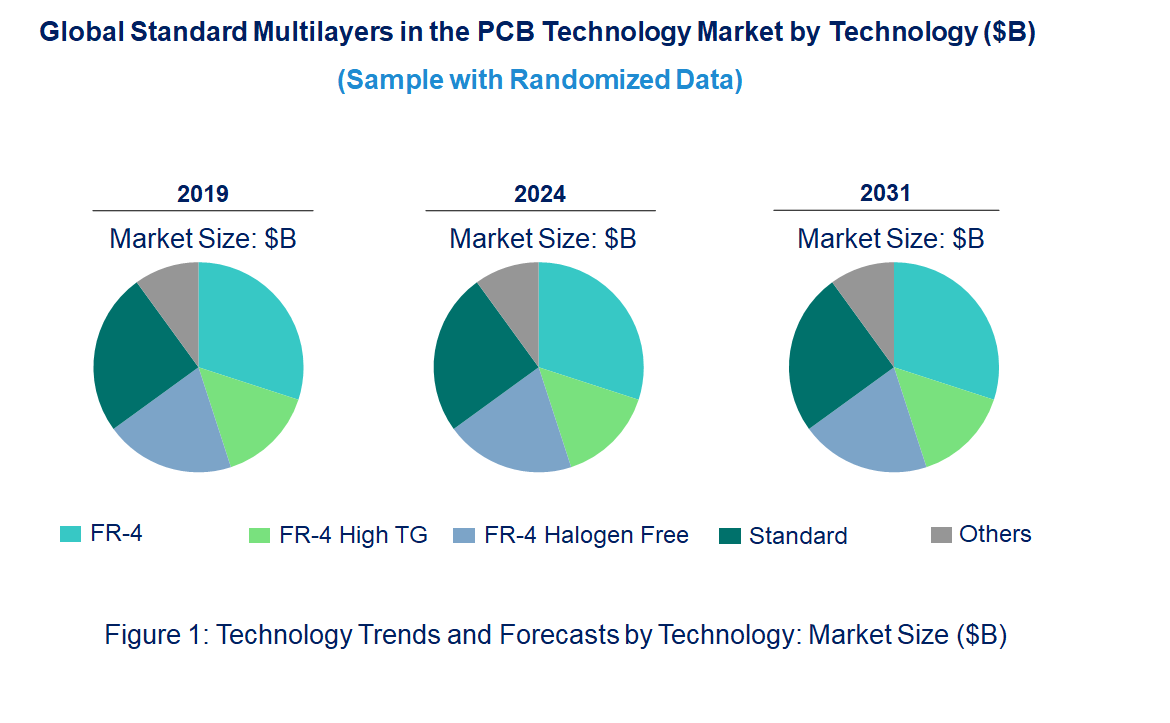
![Standard Multilayers in the PCB Market Trend and Forecast by End Use Industry [Value from 2019 to 2031]:](https://lucintel.com/images/Standard-Multilayers-in-the-PCB-Technology-Market-Segment.png "Standard Multilayers in the PCB Market Trend and Forecast by End Use Industry [Value from 2019 to 2031]:")
• Increased Layer Count for Improved Performance: Higher layer-count PCBs are being used to support complex and high-speed circuits in AI applications. The advancement allows for more space for routing, reduced signal interference, and faster data processing speed, leading to better performance in advanced AI systems such as autonomous vehicles and models of machine learning.
• Advanced Material Integration: High-frequency laminates and thermal management substrates are increasingly being used. These materials enhance signal integrity and heat dissipation and make for reliable operation at higher speeds and power levels. This is crucial to keep AI-driven devices within industrial and automation robotics stable and long-lasting.
• Miniaturization and Compact Designs: The demand for smaller, more efficient devices drives the trend towards increasingly compact multilayer PCBs. This trend facilitates the development of portable and wearable AI devices without compromising performance, allowing for applications in medical diagnostics, consumer electronics, and IoT.
• High-Frequency PCB Technology: With AI systems demanding real-time processing, the adoption of high-frequency PCBs is increasing. These PCBs minimize signal loss and ensure that data transfer remains constant, thus allowing for seamless communication in AI applications like edge computing and data analytics.
• Automated and Advanced Manufacturing Processes: The advancement in the manufacturing process by laser drilling and automated routing improved the precision and efficiency of producing a multilayer PCB. These technologies enable the rapid manufacturing and high-quality requirements of AI, reducing cost and time to market. These trends in standard multilayers in PCB technology are driving innovation and enabling the development of next-generation AI systems. Changes from enhanced performance with higher layer counts to improved materials and manufacturing practices are reshaping the landscape of AI technology by supporting the demand for compact, efficient, and high-performance electronic devices.
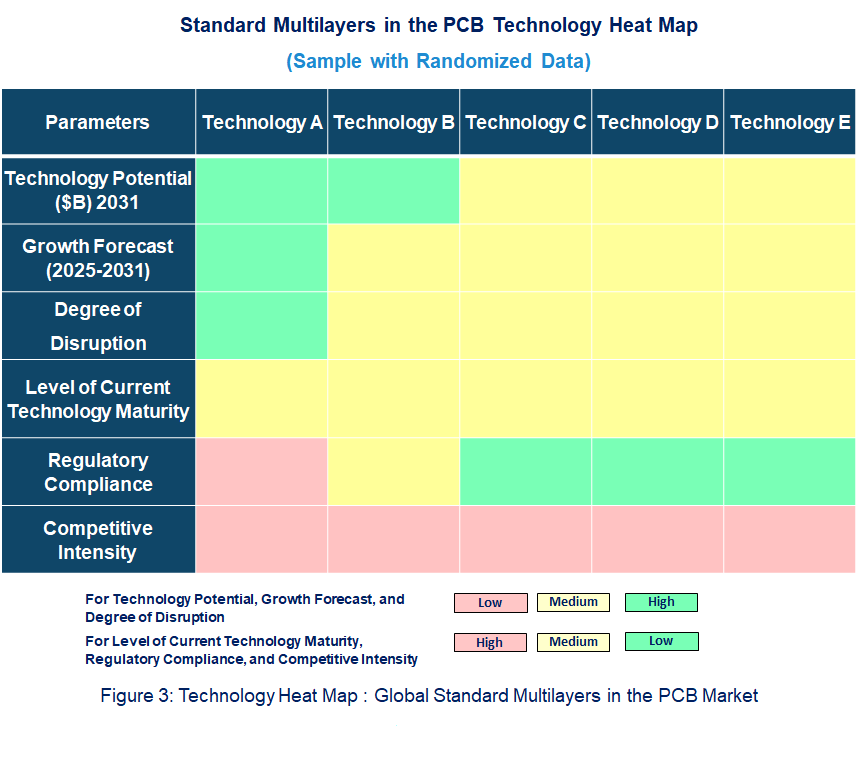
• Technology Potential: The potential of standard multilayers in PCB technology lies in that they can satisfy the AI system’s demand for high-speed data processing, miniaturization, and advanced connectivity. These multilayer PCBs facilitate complex circuit designs and high-density interconnects that are critical to AI applications, which are expected to support improved performance in products such as autonomous vehicles, robotics, and IoT sensors. These PCBs present improved thermal management and signal integrity with the integration of advanced materials and cutting-edge manufacturing processes.
• Degree of Disruption: The shift from traditional, simpler PCB designs to high-layer, high-performance multilayer PCBs has disarranged the industry through more compact and powerful AI devices. This change leads to the development of more complex AI-driven solutions, permitting real-time data processing, an important aspect of autonomous systems and smart technologies. It is changing how devices talk and process information through incorporating multilayer PCBs in AI hardware, pushing further the boundaries of technology applications.
• Current Technology Maturity Level: Standard Multilayer PCB technology is well advanced, and improvements continue to focus on high-frequency performance and automated manufacturing. It is fast becoming the norm in high-performance AI hardware and electronic systems because it is reliable and meets complex design needs.
• Regulatory Compliance: Standard Multilayer manufacturers in PCB technology have to meet all the requirements of the RoHS and WEEE in terms of material safety and the environment. This standard ensures that the production process is friendly to the environment and also meets global compliance in the aspects of sustainability and safety for responsible manufacturing within the AI industry.
• Flexium Interconnect: Flexium Interconnect has improved its technology in designing high-layer count multilayer PCBs, supporting faster data transmission and enhanced performance for AI-based devices. Advanced manufacturing techniques, along with high-density interconnects, have allowed more compact and efficient designs to emerge, which suit modern electronics and AI technologies.
• Fujikura: Fujikura has developed new multilayer PCB technologies that can significantly improve signal integrity and decrease electromagnetic interference (EMI). Innovative materials and improved bonding techniques allow for high-speed and high-frequency AI and IoT applications with the PCBs of Fujikura. This makes it an essential asset in advanced computing and automation.
• Nippon Mektron: Nippon Mektron has focused on building reliability and thermal management in its multilayer PCB. These are critical for AI applications in areas like high-performance computing, where they need to work in severe conditions. Such developments further facilitate support for compact, yet very powerful AI-driven devices.
• TTM Technologies: TTM Technologies has expanded its multilayer PCB production with an emphasis on high-density and flexible PCB designs. This innovation supports the growing need for flexible, lightweight electronic solutions in wearable technology and AI-powered portable devices. Their commitment to sustainability and eco-friendly practices also ensures that they meet regulatory standards.
• Zhen Ding Tech: Advanced multilayer PCBs developed by Zhen Ding Tech support greater circuit density and improved electrical performance. This is crucial for high-end AI and computing applications. Focusing on integrating high-performance materials and leveraging automation in production has allowed them to become leaders in the competitive PCB market, thus driving future technological developments. These developments will show the continuous development and technological advancements in standard multilayers of PCB, vital for supporting the demands that AI and modern electronics are increasing continuously. Key players, especially, are not just talking about high performance but also about being sustainable and compliant with the growing regulatory environment.
• High-Density Interconnects (HDI): This shift towards HDI PCBs enables greater circuit density, which allows for more powerful and compact AI devices. This development enables the incorporation of complex AI processing units in space-constrained applications like wearable tech and IoT devices, thereby enhancing data handling and faster performance.
• Development of Eco-Friendly and Sustainable Materials: The push for sustainability in manufacturing has led to the adoption of eco-friendly materials in PCB production. This trend helps companies align with regulatory requirements and meet consumer demand for green technology. Sustainable practices support long-term growth and build trust with environmentally conscious stakeholders.
• Improved Thermal Management Solutions: Thermal management in PCBs is one of the key factors for performance and reliability in AI systems. Innovative heat dissipation techniques enhance the PCB lifespan and functionality in high-performance computing and AI applications, leading to efficient operation of AI hardware.
• Advanced Materials Integration: Improvements in PCB capability are being driven by using high-performance materials, such as specialized laminates and composites, for their integration. This ensures signal integrity is higher, that data is transmitted faster and with reduced signal loss, and demands of AI applications requiring both high-speed processing and dealing with real-time data processing.
• Miniaturizing PCB Designs: Miniaturization of multilayer PCBs allows for the development of smaller, more efficient AI-powered devices. This trend supports the increasing demand for compact electronics, which are crucial in sectors such as healthcare, automotive, and consumer electronics, enabling more versatile AI applications. The growth opportunities in the PCB Technology market for standard multilayers are reshaping the industry with improved performance, reliability, and sustainability of AI hardware. Advancements in HDI, eco-friendly materials, and thermal management contribute significantly toward the development of next-generation AI systems, driving the adoption of these technologies in many sectors.
• Flexium Interconnect
• Fujikura
• Nippon Mektron
• Ttm Technologies
• Zhen Ding Tech
• Technology Readiness: FR-4 is fully ready for general-purpose application and supports consumer electronics, automotive, and home appliances. FR-4 High TG is suitable for the automotive and aerospace industries where heat stability is crucial. FR-4 Halogen Free is being used more and more in sustainable applications such as medical device applications and green consumer products applications. Standard PCBs will address cost-sensitive applications, while new high-performance technologies are emerging for specialized applications in high-speed data processing, such as data centers and telecommunications. Such emerging technology readiness supports growing demands for power efficiency, miniaturization, and sustainability to shape future PCBs in AI and IoT, and more..
• Competitive Intensity and Regulatory Compliance: Competition in FR-4, FR-4 High TG, FR-4 Halogen Free, and other technologies is based on performance, cost, and environmental compliance. FR-4 is competitively priced, while FR-4 High TG and FR-4 Halogen Free cater to markets demanding higher performance and eco-friendliness. The regulatory compliance aspect is important, as industries are experiencing stricter environmental regulations that encourage the use of halogen-free materials. This ensures products meet environmental directives such as RoHS and WEEE while balancing sustainability with market competitiveness. Standard PCBs have to evolve to meet even stricter regulations, which makes innovation in material science and manufacturing inevitable.
• Disruption Potential: FR-4, FR-4 High TG, FR-4 Halogen Free, Standard, and many more are very significant PCB technologies because of the variety of performance required in electronics. FR-4 is the most widely used one due to its cost-effectiveness and reliability for general applications. FR-4 High TG is used for higher-temperature applications that provide better stability and performance in demanding environments. FR-4 halogen-free serves the sustainability requirement because it decreases environmental impact, which is a critical requirement for environment-friendly designs. Standard PCBs are appropriate for applications with a cost-performance balance, as they do not require any highly specialized or high-frequency applications. Newer materials and composites are used in applications requiring high-frequency handling and high-power handling. This evolution improves the performance, durability, and sustainability of PCBs, impacting the automotive, consumer electronics, and aerospace industries
• FR-4
• FR-4 High TG
• FR-4 Halogen Free
• Standard
• Others
• Computers/Peripherals
• Communication
• Consumer Electronics
• Industrial Electronics
• Automotive
• Military/Aerospace
• Others
• North America
• Europe
• Asia Pacific
• The Rest of the World
• Latest Developments and Innovations in the Standard Multilayers in the PCB Technologies
• Companies / Ecosystems
• Strategic Opportunities by Technology Type


Choose a license that fits your team. Instant PDF delivery.
Prices exclude taxes. Instant delivery. Custom licensing available on request.
Market Report · May 18, 2026
Market Report · May 18, 2026
Market Report · May 18, 2026
Trusted partner for strategic intelligence and business growth


Receive a complimentary market analysis tailored to your industry. Our analysts will identify key growth opportunities and competitive dynamics specific to your business.

Market size, growth rate, and key trend analysis for your specific sector.

Top competitor positioning and market share analysis.

Strategic recommendations backed by data-driven insights.
Get curated market intelligence and competitive moves straight to your inbox.
By subscribing, you agree to receive our monthly insights. Unsubscribe anytime.
Receive a complimentary market analysis tailored to your industry. Our analysts will identify key growth opportunities and competitive dynamics specific to your business.
Market size, growth rate, and key trend analysis for your specific sector.
Top competitor positioning and market share analysis.
Strategic recommendations backed by data-driven insights.
Get curated market intelligence, emerging trends, and competitive moves straight to your inbox each month.
By subscribing, you agree to receive our monthly insights. Unsubscribe anytime.
We'll send your sample report shortly.