
Market Report · July 31, 2026

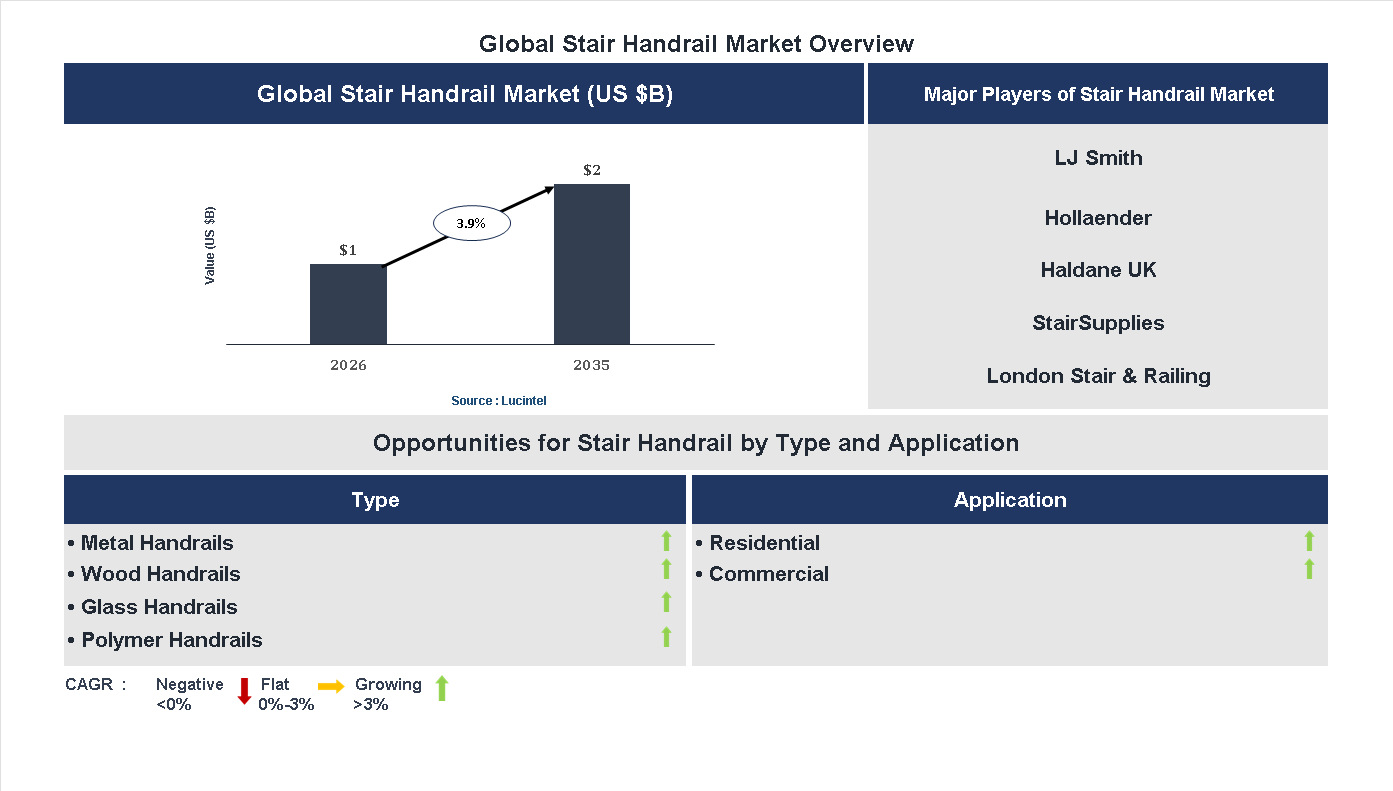
Key data points: The market size in 2035 = $2 billion, growth forecast = 3.9% annually for the next 8 years. Scroll below to get more insights. This market report covers trends, opportunities and forecasts in stair handrail market to 2035 by type (metal handrails, wood handrails, glass handrails, and polymer handrails), application (residential and commercial), and region (North America, Europe, Asia Pacific, and the Rest of the World)
We'll send your sample report shortly.
• Lucintel forecasts that, within the type category, glass handrail is expected to witness the highest growth over the forecast period.
• Within the application category, residential is expected to witness higher growth.
• In terms of region, APAC is expected to witness the highest growth over the forecast period. Gain valuable insights for your business decisions with our comprehensive 150+ page report. Sample figures with some insights are shown below.
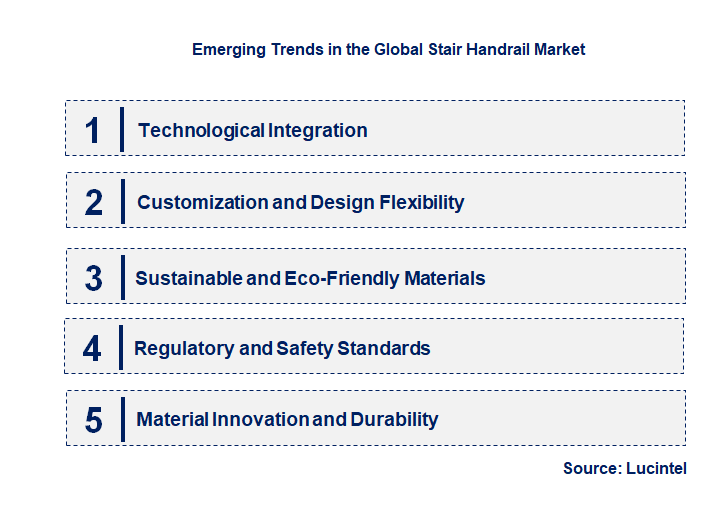
• Technological Integration: The adoption of smart handrails with embedded sensors and lighting is revolutionizing safety and convenience. These intelligent systems can detect falls, provide illumination, and connect with home automation networks, enhancing user safety and experience. This trend is driven by advancements in IoT technology and increasing consumer demand for connected living solutions. As a result, the market is shifting towards high-tech, multifunctional products that offer improved safety features and modern aesthetics, appealing to tech-savvy consumers and smart building projects.
• Customization and Design Flexibility: Consumers now seek personalized stair handrails that match their interior decor and functional needs. Manufacturers are offering customizable options in materials, finishes, and shapes, allowing for greater design flexibility. This trend caters to the growing demand for unique, aesthetically pleasing solutions that reflect individual style and architectural requirements. The impact is a more diverse product range, enabling architects and homeowners to create distinctive spaces, thereby increasing market competitiveness and customer satisfaction.
• Sustainable and Eco-Friendly Materials: The focus on sustainability is prompting the use of eco-friendly materials such as recycled metals, bamboo, and sustainably sourced wood. These materials reduce environmental impact and appeal to environmentally conscious consumers. The market is witnessing a shift towards greener manufacturing practices and certifications, which enhance brand reputation and meet regulatory standards. This trend not only supports environmental goals but also opens new market segments for sustainable products, aligning with global efforts to promote eco-conscious construction and design.
• Regulatory and Safety Standards: Stricter safety regulations and building codes are influencing product development and market growth. Manufacturers are innovating to meet these standards by incorporating features like anti-slip surfaces, impact resistance, and fire safety measures. Compliance ensures market access and reduces liability risks, making safety a key differentiator. This trend drives continuous innovation and quality improvements, fostering consumer trust and encouraging the adoption of safer, more reliable handrail solutions across residential and commercial sectors.
• Material Innovation and Durability: Advances in material science are leading to the development of more durable, low-maintenance, and corrosion-resistant handrails. New materials such as composite plastics and treated metals extend product lifespan and reduce upkeep costs. This trend enhances product performance in various environments, including outdoor and humid settings. The impact is increased customer confidence and reduced lifecycle costs, making these products more attractive for long-term investments in both residential and commercial projects. These emerging trends are collectively reshaping the stair handrail market by emphasizing safety, customization, sustainability, technological integration, and durability. They are driving innovation, expanding market options, and aligning products with modern consumer values and regulatory requirements. As a result, the market is becoming more dynamic, competitive, and responsive to evolving architectural and safety standards, paving the way for continued growth and development.
• Technological Innovations in Material Manufacturing: Advancements in materials like stainless steel, aluminum, and composite fibers are enhancing durability and aesthetic appeal. These innovations allow for lightweight, corrosion-resistant, and customizable handrails, meeting diverse architectural needs. The integration of smart features, such as embedded lighting and sensors, is also emerging, improving safety and user experience. These developments are expanding product offerings and opening new market segments.
• Increasing Adoption of Eco-Friendly Materials: Growing environmental awareness is driving the use of sustainable materials in handrail production. Recycled metals, bamboo, and biodegradable composites are gaining popularity due to their low environmental impact. Manufacturers adopting eco-friendly practices are gaining competitive advantage, appealing to eco-conscious consumers and regulatory bodies. This shift is fostering innovation in sustainable design and expanding the market for green building projects.
• Rising Demand for Customization and Aesthetic Appeal: Consumers and architects increasingly prioritize personalized and stylish handrails that complement interior and exterior designs. Modular systems, decorative finishes, and innovative shapes are being developed to meet these preferences. The demand for bespoke solutions is driving manufacturers to offer more versatile and design-oriented products. This trend enhances market growth by catering to luxury residential, commercial, and public infrastructure projects.
• Implementation of Safety and Compliance Standards: Stricter safety regulations and building codes are prompting the adoption of compliant handrail solutions. Features like anti-slip surfaces, load-bearing capacity, and fire-resistant materials are becoming standard. Manufacturers are investing in R&D to meet evolving standards, which boosts consumer confidence and market credibility. This focus on safety is expanding the market, especially in commercial and public infrastructure sectors.
• Expansion of Market Through Geographic Penetration: Emerging economies are witnessing increased infrastructure development, creating new opportunities for handrail manufacturers. Urbanization and government initiatives in Asia-Pacific, Africa, and Latin America are driving demand. Local manufacturers are expanding their product lines to meet regional needs, while international players are entering these markets. This geographic expansion is diversifying the market and fostering competitive growth globally. The recent developments in material innovation, eco-friendly practices, customization, safety standards, and geographic expansion are collectively transforming the stair handrail market. These trends are driving increased demand, enhancing product quality, and expanding market reach. As a result, the industry is poised for sustained growth, offering lucrative opportunities for stakeholders. The evolving landscape underscores the importance of innovation and compliance in maintaining competitive advantage and meeting diverse customer needs.
• Increasing Adoption of Modern Materials in Residential and Commercial Projects: The demand for stainless steel, glass, and aluminum handrails is rising due to their durability, aesthetic appeal, and low maintenance. Modern materials enable innovative designs, enhancing safety and style in homes, offices, and public spaces. As construction standards evolve, the preference for high-quality, corrosion-resistant, and eco-friendly materials is expected to boost market growth across various regions.
• Growing Focus on Safety Regulations and Building Codes: Stricter safety standards and building codes worldwide are driving the adoption of compliant handrail solutions. Governments and regulatory bodies mandate specific heights, load capacities, and materials to ensure occupant safety. This regulatory environment compels builders and architects to invest in certified, high-quality handrails, thereby expanding market opportunities, especially in commercial and industrial sectors.
• Expansion of Renovation and Retrofitting Activities: The increasing need to upgrade aging infrastructure and improve safety standards is fueling renovation projects. Retrofitting existing staircases with modern, compliant handrails offers a significant growth avenue. This trend is prominent in urban areas with historic buildings and commercial complexes seeking to enhance safety and aesthetics without complete reconstruction, thereby creating sustained demand for versatile handrail solutions.
• Technological Innovations Enhancing Functionality and Design: Advances such as integrated lighting, anti-slip coatings, and modular systems are transforming the market. These innovations improve safety, usability, and visual appeal, attracting a broader customer base. Customizable and smart handrail options are gaining popularity, especially in high-end residential and commercial projects, providing manufacturers with opportunities to differentiate their offerings and expand market share.
• Rising Demand for Eco-Friendly and Sustainable Handrail Solutions: Environmental concerns are prompting the adoption of sustainable materials like recycled metals and eco-friendly coatings. Green building certifications such as LEED influence project specifications, encouraging the use of environmentally responsible products. This shift supports market growth by appealing to eco-conscious consumers and developers seeking sustainable construction practices, thereby opening new avenues for innovation and market expansion. The overall market outlook indicates that these growth opportunities will significantly influence the development of the stair handrail industry, fostering innovation, compliance, and sustainability. As demand for safer, stylish, and eco-friendly solutions increases, market players are poised to capitalize on these trends, ensuring sustained growth and competitive advantage in a dynamic environment.
• Technological Advancements: The integration of innovative materials such as stainless steel, glass, and composites has revolutionized stair handrail design, offering enhanced durability, safety, and aesthetic appeal. Smart handrails with embedded sensors are emerging, providing additional safety features. These technological improvements attract consumers and builders seeking modern, reliable solutions, thereby expanding market potential. Continuous R&D efforts further fuel product innovation, keeping the market competitive and responsive to evolving customer preferences.
• Increasing Construction Activities: Rapid urbanization and infrastructure development worldwide have led to a surge in residential, commercial, and public building projects. Governments and private developers prioritize safety and design, boosting demand for high-quality stair handrails. The growth in new constructions and renovations directly correlates with increased consumption of handrail products, especially in regions with expanding urban landscapes. This trend is expected to sustain market growth over the coming years.
• Regulatory Standards and Building Codes: Stringent safety regulations and building codes mandate the installation of compliant handrails in new constructions and renovations. These standards ensure safety and accessibility, compelling builders and architects to source certified products. Compliance drives demand for standardized, high-quality handrails, influencing manufacturing practices and product offerings. Market players must stay updated with evolving regulations to maintain competitiveness and avoid legal issues.
• Economic Growth and Investment: Economic stability and growth in key regions lead to increased disposable income and investment in infrastructure. This economic momentum encourages construction activities, which in turn boost demand for stair handrails. Additionally, rising disposable income allows consumers to opt for premium, designer, or customized handrails, expanding market segments. Economic factors thus play a crucial role in shaping market size and product innovation. The challenges in the stair handrail market are:
• Fluctuating Raw Material Prices: The market heavily depends on raw materials like stainless steel, glass, and aluminum, whose prices are subject to volatility due to global supply chain disruptions, geopolitical tensions, and fluctuating commodity markets. Rising raw material costs can increase manufacturing expenses, leading to higher product prices and potential reduced demand. Manufacturers may face difficulties in maintaining profit margins, and price fluctuations can hinder long-term planning and investment.
• Regulatory Compliance and Certification Costs: While regulations promote safety, they also impose compliance costs on manufacturers. Obtaining necessary certifications and adhering to evolving standards require significant investment in testing, quality control, and documentation. These costs can act as barriers for smaller players and slow down product innovation. Additionally, non-compliance risks legal penalties and market restrictions, adding to operational challenges.
• Environmental and Sustainability Concerns: Growing emphasis on eco-friendly products and sustainable manufacturing practices presents challenges for the industry. Manufacturers must adopt environmentally responsible sourcing and production methods, which can increase costs and complexity. Waste management, recyclability, and energy efficiency are critical factors that influence product development and market acceptance. Failure to meet sustainability expectations can limit market opportunities and damage brand reputation. The stair handrail market is driven by technological innovations, construction growth, regulatory standards, and economic development, which collectively foster expansion and product diversification. However, challenges such as raw material price volatility, compliance costs, and sustainability pressures pose significant hurdles. These factors require market participants to adapt strategically, balancing innovation with cost management and regulatory adherence. Overall, the markets future will depend on how effectively stakeholders navigate these drivers and challenges, ensuring safety, sustainability, and competitiveness in a dynamic environment.
• LJ Smith
• Hollaender
• Haldane UK
• StairSupplies
• London Stair & Railing
• Prestige Metal
• HDI
• Optimum Works
• Handrail Creations
• Seered
• Metal Handrails
• Wood Handrails
• Glass Handrails
• Polymer Handrails
• Residential
• Commercial
• North America
• Europe
• Asia Pacific
• The Rest of the World
• United States: The US market has seen increased adoption of smart handrails with integrated lighting and safety features. There is a rising trend toward eco-friendly materials and customizable designs, driven by consumer preferences and building codes. Major companies are investing in innovative manufacturing processes to improve durability and aesthetics, especially in commercial and residential sectors. The government’s emphasis on safety standards has also spurred growth, with increased demand for high-quality, compliant products. Additionally, renovation projects in urban areas are boosting market opportunities for premium and technologically advanced stair handrails.
• China: China’s stair handrail market is rapidly expanding due to urbanization and infrastructure development. The focus is on cost-effective, durable materials such as stainless steel and aluminum, with a growing interest in decorative designs. The government’s initiatives to improve building safety and standards are fueling demand for modern, compliant handrails. E-commerce platforms are playing a significant role in distribution, making products more accessible. Local manufacturers are increasingly adopting automation and innovative manufacturing techniques to meet rising demand, especially in residential complexes, commercial buildings, and public infrastructure projects.
• Germany: Germany’s market emphasizes high-quality, sustainable, and safety-compliant stair handrails. There is a strong focus on eco-friendly materials and energy-efficient manufacturing processes. The country’s strict safety regulations and building standards drive innovation in design and functionality. German companies are investing in smart solutions, such as integrated lighting and anti-slip features, to enhance safety and aesthetics. The market also benefits from a robust construction sector and renovation activities, with a growing preference for minimalist and modern designs that align with sustainable architecture trends.
• India: The Indian stair handrail market is witnessing rapid growth due to urban expansion, infrastructure projects, and increasing safety awareness. There is a rising demand for affordable, durable, and easy-to-install handrails made from stainless steel, iron, and other metals. The government’s focus on affordable housing and smart city initiatives is boosting market opportunities. Local manufacturers are expanding their product portfolios to include innovative designs and finishes to cater to diverse consumer preferences. Additionally, the growth of retail and e-commerce channels is facilitating wider access to a variety of products, supporting market expansion across urban and semi-urban areas.
• Japan: Japan’s market is characterized by a focus on safety, durability, and advanced technology integration. The adoption of anti-slip coatings, LED lighting, and smart safety features is increasing. The country’s aging population has driven demand for ergonomic and accessible handrail designs, especially in public infrastructure and residential buildings. Japanese manufacturers emphasize high-quality, corrosion-resistant materials suitable for harsh weather conditions. The market also sees innovations in minimalist and space-saving designs, aligning with Japan’s architectural trends. Government regulations and safety standards continue to promote the adoption of advanced, reliable stair handrail solutions.


• LJ Smith
• Hollaender
• Haldane UK
• StairSupplies
• London Stair & Railing
• Prestige Metal
• HDI
• Optimum Works
• Handrail Creations
• Seered Q6. Which stair handrail market segment will be the largest in future? Answer: Lucintel forecasts that, within the type category, glass handrail is expected to witness the highest growth over the forecast period. Q7. In stair handrail market, which region is expected to be the largest in next 5 years? Answer: In terms of region, APAC is expected to witness the highest growth over the forecast period. Q8. Do we receive customization in this report? Answer: Yes, Lucintel provides 10% customization without any additional cost.


Choose a license that fits your team. Instant PDF delivery.
Prices exclude taxes. Instant delivery. Custom licensing available on request.
Market Report · July 31, 2026
Market Report · July 31, 2026
Market Report · July 31, 2026
Trusted partner for strategic intelligence and business growth


Receive a complimentary market analysis tailored to your industry. Our analysts will identify key growth opportunities and competitive dynamics specific to your business.

Market size, growth rate, and key trend analysis for your specific sector.

Top competitor positioning and market share analysis.

Strategic recommendations backed by data-driven insights.
Get curated market intelligence and competitive moves straight to your inbox.
By subscribing, you agree to receive our monthly insights. Unsubscribe anytime.
Receive a complimentary market analysis tailored to your industry. Our analysts will identify key growth opportunities and competitive dynamics specific to your business.
Market size, growth rate, and key trend analysis for your specific sector.
Top competitor positioning and market share analysis.
Strategic recommendations backed by data-driven insights.
Get curated market intelligence, emerging trends, and competitive moves straight to your inbox each month.
By subscribing, you agree to receive our monthly insights. Unsubscribe anytime.
We'll send your sample report shortly.