
Market Report · July 31, 2026

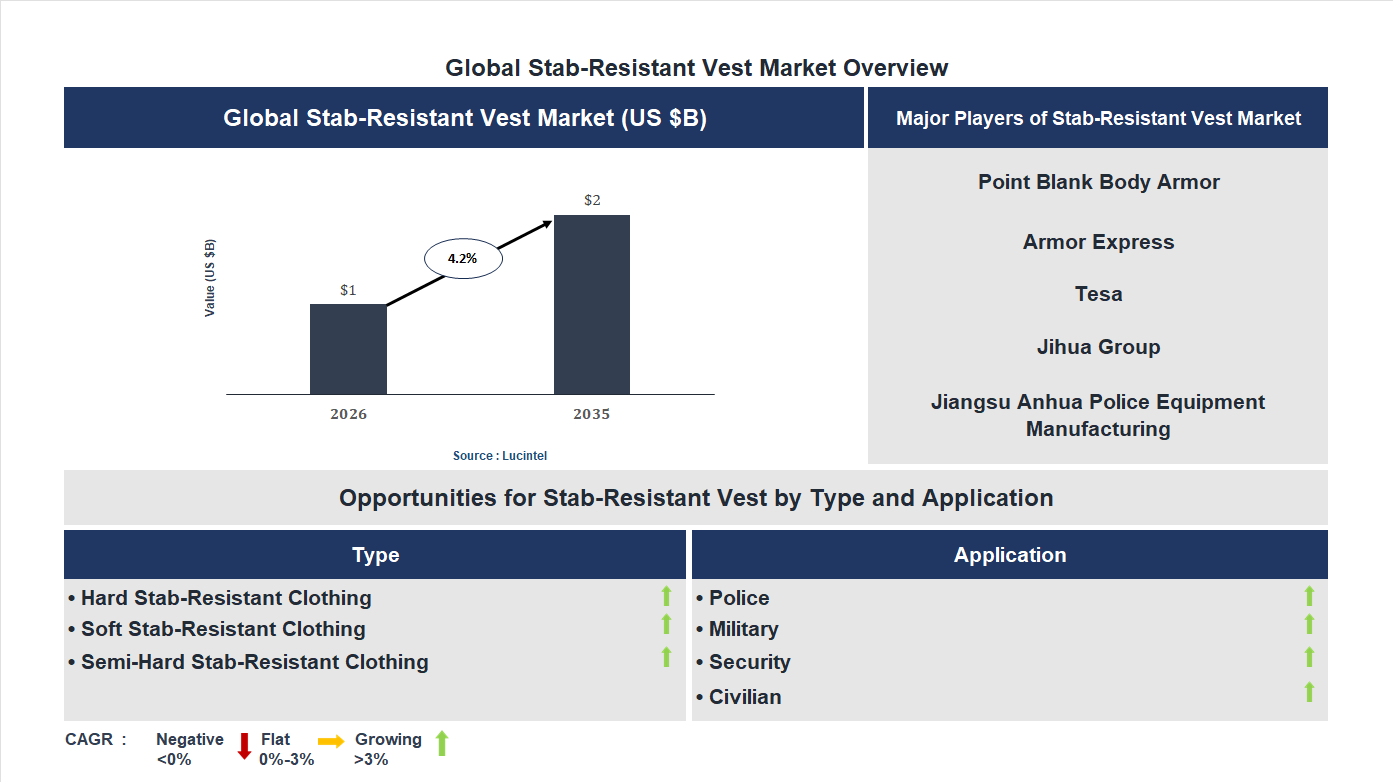
Key data points: The market size in 2035 = $2 billion, growth forecast = 4.2% annually for the next 8 years. Scroll below to get more insights. This market report covers trends, opportunities and forecasts in stab-resistant vest market to 2035 by type (hard stab-resistant clothing, soft stab-resistant clothing, and semi-hard stab-resistant clothing), application (police, military, security, and civilian), and region (North America, Europe, Asia Pacific, and the Rest of the World)
We'll send your sample report shortly.
• Lucintel forecasts that, within the type category, soft stab-resistant clothing is expected to witness the highest growth over the forecast period.
• Within the application category, police is expected to witness the highest growth.
• In terms of region, APAC is expected to witness the highest growth over the forecast period. Gain valuable insights for your business decisions with our comprehensive 150+ page report. Sample figures with some insights are shown below.
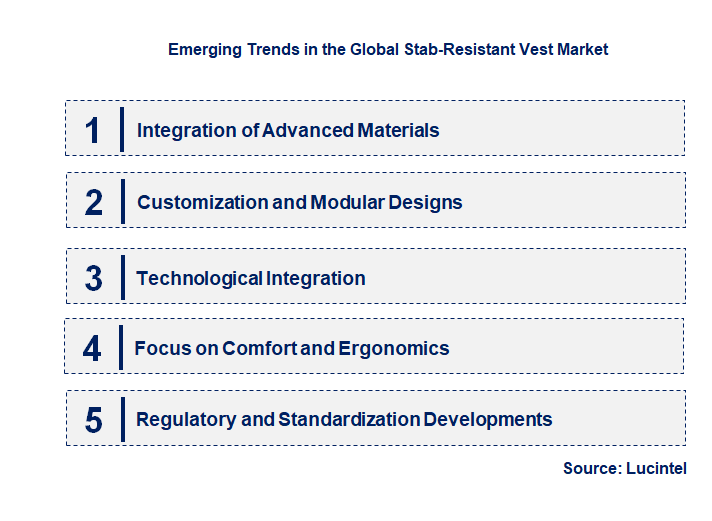
• Integration of Advanced Materials: The market is witnessing a shift towards high-performance materials like Kevlar, Dyneema, and ultra-high-molecular-weight polyethylene (UHMWPE). These materials offer superior strength-to-weight ratios, making vests lighter and more comfortable without compromising protection. This trend enhances wearer mobility and reduces fatigue, encouraging wider adoption across various sectors. Continuous research is leading to the development of even more durable and flexible materials, which are expected to further revolutionize protective gear, making it more effective and user-friendly.
• Customization and Modular Designs: Increasing demand for tailored protection solutions is driving the adoption of customizable and modular vest designs. These allow users to add or remove protective panels based on threat levels and operational needs. Modular vests improve versatility, comfort, and cost-efficiency, as users can upgrade or modify their gear without purchasing entirely new vests. This trend caters to diverse user requirements, from law enforcement to civilian security, and enhances overall user satisfaction by providing adaptable protection options.
• Technological Integration: The incorporation of smart technology into stab-resistant vests is gaining momentum. Features such as embedded sensors for real-time threat detection, GPS tracking, and communication systems are being integrated to improve safety and operational efficiency. These technological advancements enable quicker response times, better situational awareness, and enhanced data collection for security agencies. As technology becomes more affordable and compact, its integration into protective gear is expected to become standard, significantly transforming how security personnel operate and respond to threats.
• Focus on Comfort and Ergonomics: Market players are prioritizing comfort, breathability, and ergonomic design to increase user compliance and extend wearability. Innovations include moisture-wicking fabrics, adjustable straps, and lightweight construction. Enhanced comfort reduces fatigue and discomfort during prolonged use, making protective gear more acceptable for everyday wear. This trend is particularly important for civilian users and law enforcement officers who require reliable protection without sacrificing mobility or comfort, thereby broadening the market reach and encouraging consistent use.
• Regulatory and Standardization Developments: Governments and industry bodies are establishing stricter safety standards and certification requirements for stab-resistant vests. These regulations ensure product reliability, safety, and performance consistency, boosting consumer confidence. Compliance with evolving standards also drives innovation, as manufacturers develop products that meet or exceed regulatory benchmarks. This trend promotes market growth by fostering trust among buyers and encouraging manufacturers to invest in research and development, ultimately leading to higher-quality protective gear that aligns with global safety expectations. These emerging trends are significantly reshaping the stab-resistant vest market by fostering innovation, improving user experience, and enhancing safety standards. The integration of advanced materials and technology, coupled with customization options and regulatory support, is driving market expansion and elevating the overall quality of protective gear. As these trends continue to evolve, they will enable the industry to better address the complex security challenges faced by users worldwide.
• Growing Security Concerns: Increasing violence and terrorism incidents worldwide are driving demand for advanced protective gear, including stab-resistant vests. Governments and private sectors prioritize safety, leading to higher procurement of these vests. The need for reliable, lightweight, and comfortable protection solutions is prompting innovation. This trend boosts market growth, especially in regions with high crime rates. The expanding security infrastructure and law enforcement budgets further support market expansion, creating substantial opportunities for manufacturers to develop specialized products.
• Material Innovation and Technology: The development of advanced materials like Kevlar, Dyneema, and ultra-high-molecular-weight polyethylene (UHMWPE) is revolutionizing stab-resistant vests. These materials offer superior strength-to-weight ratios, enhancing comfort and mobility without compromising protection. Innovations in nanotechnology and composite materials are further improving durability and resistance. The integration of smart textiles with sensors for real-time monitoring is emerging. These technological advancements are expanding product capabilities, attracting new customers, and opening avenues for high-performance, lightweight protective gear in the market.
• Increasing Adoption in Law Enforcement and Military: Governments worldwide are investing in modernizing their security forces with advanced protective gear. Law enforcement agencies and military units are adopting stab-resistant vests for enhanced safety during operations. The demand is driven by rising threats and the need for reliable personal protection. This adoption is leading to increased procurement contracts and customized solutions tailored to specific operational needs. The trend is expected to continue, fostering innovation and expanding the market for specialized, high-performance stab-resistant vests.
• Rising Demand in Private Security Sector: The private security industry is experiencing significant growth, driven by increasing urbanization and corporate security concerns. Companies are investing in protective gear, including stab-resistant vests, for their personnel. The demand is also fueled by the need for personal safety among high-net-worth individuals and security personnel. Market players are offering customizable and discreet options to meet diverse client needs. This sectors expansion is creating new revenue streams and encouraging product diversification, further propelling market growth.
• Regulatory and Standardization Developments: Governments and industry bodies are establishing stricter safety standards and certifications for stab-resistant vests. These regulations ensure product reliability and safety, boosting consumer confidence. Compliance with standards like ISO and NIJ is becoming a key differentiator for manufacturers. The evolving regulatory landscape encourages innovation to meet new criteria, fostering higher quality and more effective products. This development supports market growth by ensuring product credibility and expanding acceptance across various sectors. The recent developments in material innovation, security concerns, and regulatory standards are significantly impacting the stab-resistant vest market. Increased adoption by law enforcement, military, and private security sectors is driving growth. Technological advancements are leading to lighter, more effective products, expanding market opportunities. Overall, these trends are fostering a competitive environment focused on safety, innovation, and customization, which will continue to shape the markets evolution and global reach.
• Increasing Demand for Law Enforcement and Military Security: The rising need for effective personal protection in law enforcement and military operations is a primary driver. Governments and private agencies are investing in advanced stab-resistant vests to safeguard personnel against threats like stabbing, slashing, and ballistic attacks. The growing urbanization and crime rates further amplify this demand, prompting manufacturers to develop lightweight, high-strength vests with enhanced mobility and protection features, expanding the market across regions.
• Technological Innovations in Material and Design: Advancements in materials such as Kevlar, Dyneema, and ultra-high-molecular-weight polyethylene (UHMWPE) are improving vest durability, flexibility, and weight reduction. Innovative design approaches, including modular and customizable vests, are increasing user comfort and adaptability. These innovations are enabling manufacturers to meet diverse customer needs, from tactical units to civilian security, thereby broadening application scopes and boosting market growth.
• Expansion of Private Security Sector and Commercial Applications: The rise in private security firms and commercial establishments requiring personal safety solutions is creating new growth avenues. Industries such as banking, jewelry, and event management are adopting stab-resistant vests for employee protection. The increasing awareness of workplace safety and the need for discreet, comfortable protective gear are driving demand, encouraging manufacturers to develop specialized products tailored for commercial use, thus diversifying market opportunities.
• Growing Adoption in Civilian and Personal Security Markets: The increasing concern for personal safety among civilians, especially in high-crime urban areas, is fueling demand for affordable, lightweight stab-resistant vests. These vests are increasingly used by security personnel, private citizens, and travelers. The development of discreet, fashionable, and comfortable vests is expanding their appeal, leading to higher adoption rates and market penetration in residential and personal security segments.
• Regional Market Expansion and Regulatory Support: Emerging markets in Asia-Pacific, Latin America, and Africa are witnessing rapid growth due to rising security concerns and government initiatives. Regulatory standards mandating personal protective equipment are encouraging adoption across sectors. Strategic partnerships, local manufacturing, and government procurement programs are facilitating regional market expansion, creating new opportunities for global players to tap into underserved markets and diversify their revenue streams. These growth opportunities collectively are transforming the stab-resistant vest market into a dynamic and expanding industry. Innovations in materials and design, coupled with increasing demand across law enforcement, private security, and civilian sectors, are driving market expansion. Regional developments and regulatory support further enhance growth prospects. Overall, these opportunities are set to significantly influence market dynamics, fostering innovation, increasing adoption, and expanding the global footprint of stab-resistant vests.
• Technological Innovation: The development of advanced materials such as ultra-high-molecular-weight polyethylene (UHMWPE) and aramid fibers enhances vest durability and protection levels. Continuous research leads to lighter, more flexible, and more effective protective gear, which appeals to law enforcement, military, and civilian markets. These innovations improve wearer comfort and mobility, encouraging wider adoption and expanding market reach. As technology progresses, manufacturers can offer products that meet higher safety standards while maintaining comfort, thus fueling market growth.
• Increasing Security Concerns: Rising crime rates, terrorism threats, and civil unrest globally have heightened the demand for effective personal protective equipment. Governments and private security agencies prioritize the safety of personnel, leading to increased procurement of stab-resistant vests. The growing awareness of security issues among civilians also contributes to market expansion, especially in regions with high crime rates. This heightened focus on personal safety directly correlates with increased sales and market development.
• Regulatory Standards and Certifications: Stringent safety regulations and certification requirements ensure that stab-resistant vests meet specific performance criteria. Governments and international bodies set standards that manufacturers must comply with, which drives innovation and quality improvements. These regulations also facilitate market entry and acceptance, boosting consumer confidence. As regulatory frameworks evolve, they create opportunities for new entrants and encourage existing players to upgrade their product offerings, fostering a competitive and dynamic market environment.
• Military and Law Enforcement Demand: The ongoing need for protective gear in military and law enforcement sectors significantly propels market growth. As conflicts and security operations increase worldwide, these agencies require reliable, high-performance stab-resistant vests. Budget allocations for defense and policing initiatives directly influence procurement volumes. The demand for customized and technologically advanced vests tailored to specific operational needs further stimulates market innovation and expansion.
• Growing Awareness and Adoption in Civilian Markets: Increasing awareness about personal safety among civilians, especially in urban areas, is expanding the market beyond traditional security sectors. Employers, individuals, and security firms are investing in protective gear for personal and corporate security. The rise of private security services and the adoption of protective vests in various industries contribute to market diversification and growth, opening new revenue streams and expanding the customer base. The challenges facing the stab-resistant vest market include:-
• High Manufacturing Costs: Developing advanced protective materials and ensuring compliance with strict safety standards involve significant R&D and manufacturing expenses. These costs can lead to higher retail prices, potentially limiting accessibility for some consumer segments. Manufacturers face pressure to balance quality with affordability, which can hinder market penetration, especially in price-sensitive regions. Additionally, sourcing high-quality raw materials and maintaining consistent production quality adds to operational costs, impacting overall profitability.
• Regulatory and Certification Complexities: Navigating diverse regulatory landscapes across different countries can be challenging. Variations in safety standards, certification processes, and approval timelines create barriers to market entry and expansion. Compliance costs increase, and delays in certification can hinder product launches. Keeping up with evolving regulations requires continuous investment in testing and quality assurance, which can strain resources, especially for smaller manufacturers.
• Market Competition and Price Pressures: The market is highly competitive, with numerous local and international players vying for market share. Price wars and aggressive marketing strategies can erode profit margins. Additionally, rapid technological advancements mean companies must continually innovate to stay ahead, increasing R&D costs. The pressure to offer affordable yet effective products can compromise quality, affecting brand reputation and customer trust. Market saturation in certain regions also limits growth opportunities, posing a challenge for sustained profitability. The stab-resistant vest market is shaped by technological advancements, rising security concerns, regulatory standards, and demand from military and civilian sectors. However, high manufacturing costs, regulatory complexities, and intense competition pose significant challenges. These drivers and obstacles collectively influence market dynamics, requiring stakeholders to innovate strategically and adapt to changing safety and regulatory landscapes. Overall, the markets growth prospects remain promising, driven by increasing safety awareness and technological progress, provided companies effectively navigate the associated challenges.
• Point Blank Body Armor
• Armor Express
• Tesa
• Jihua Group
• Jiangsu Anhua Police Equipment Manufacturing
• U. Protec
• PPSS Group
• Armadillo Tex
• Sinoarmor
• Beijing Aerorate Protection
• Hard Stab-Resistant Clothing
• Soft Stab-Resistant Clothing
• Semi-Hard Stab-Resistant Clothing
• Police
• Military
• Security
• Civilian
• North America
• Europe
• Asia Pacific
• The Rest of the World
• United States: The US market has seen increased adoption of stab-resistant vests in law enforcement and private security sectors. Technological innovations, such as lightweight composite materials, have improved comfort and protection levels. Government agencies are investing in research to enhance vest durability and functionality. The rise in urban crime rates and terrorism threats has further driven demand. Additionally, there is a growing trend toward custom-fit and covert vests for tactical operations, boosting market growth. The US also witnesses increased private sector participation, including corporate security firms adopting advanced protective gear.
• China: China’s market for stab-resistant vests is expanding rapidly due to rising security concerns and government initiatives to modernize law enforcement equipment. The country is investing heavily in research and development to produce affordable, high-quality vests. Domestic manufacturers are gaining prominence by offering innovative designs with improved comfort and mobility. The increasing number of public events and large-scale gatherings has heightened the need for protective gear. Moreover, China’s focus on military and police modernization has contributed to the market’s growth, with a rising demand for both standard and specialized vests across various security agencies.
• Germany: Germany’s market is characterized by a focus on high-quality, technologically advanced stab-resistant vests, primarily for law enforcement and military use. The country emphasizes compliance with strict safety standards and incorporates cutting-edge materials like aramid fibers and composite fabrics. Germany’s strong defense and security sectors are driving innovation, with a focus on lightweight, ergonomic designs. The increasing threat of terrorism and organized crime has led to higher procurement of protective gear. Additionally, Germany’s export of security equipment to other European countries has contributed to market expansion, supported by a robust manufacturing base and stringent quality controls.
• India: The Indian market is witnessing rapid growth due to increasing internal security challenges, terrorism, and insurgency activities. The government is prioritizing the procurement of advanced protective gear for police and paramilitary forces. Local manufacturers are expanding their product offerings, focusing on affordability and durability. The rising urbanization and large public events also necessitate enhanced security measures, boosting demand for stab-resistant vests. Additionally, international collaborations and technology transfers are helping improve product quality. The market is expected to grow further as India continues to modernize its security infrastructure and address evolving threats.
• Japan: Japan’s market for stab-resistant vests is driven by a focus on technological innovation and high safety standards. The country’s security agencies are adopting advanced materials such as ultra-high-molecular-weight polyethylene (UHMWPE) for lightweight protection. Japan emphasizes research and development to improve vest comfort, mobility, and durability. The threat of terrorism and organized crime has increased demand for sophisticated protective gear. Japan also exports security equipment to other Asian countries, leveraging its technological expertise. The market is characterized by a preference for discreet, covert vests suitable for law enforcement and special operations, with ongoing innovations aimed at enhancing overall safety and performance.


• Point Blank Body Armor
• Armor Express
• Tesa
• Jihua Group
• Jiangsu Anhua Police Equipment Manufacturing
• U. Protec
• PPSS Group
• Armadillo Tex
• Sinoarmor
• Beijing Aerorate Protection Q6. Which stab-resistant vest market segment will be the largest in future? Answer: Lucintel forecasts that, within the type category, soft stab-resistant clothing is expected to witness the highest growth over the forecast period. Q7. In stab-resistant vest market, which region is expected to be the largest in next 5 years? Answer: In terms of region, APAC is expected to witness the highest growth over the forecast period. Q8. Do we receive customization in this report? Answer: Yes, Lucintel provides 10% customization without any additional cost.


Choose a license that fits your team. Instant PDF delivery.
Prices exclude taxes. Instant delivery. Custom licensing available on request.
Market Report · July 31, 2026
Market Report · July 31, 2026
Market Report · July 31, 2026
Trusted partner for strategic intelligence and business growth


Receive a complimentary market analysis tailored to your industry. Our analysts will identify key growth opportunities and competitive dynamics specific to your business.

Market size, growth rate, and key trend analysis for your specific sector.

Top competitor positioning and market share analysis.

Strategic recommendations backed by data-driven insights.
Get curated market intelligence and competitive moves straight to your inbox.
By subscribing, you agree to receive our monthly insights. Unsubscribe anytime.
Receive a complimentary market analysis tailored to your industry. Our analysts will identify key growth opportunities and competitive dynamics specific to your business.
Market size, growth rate, and key trend analysis for your specific sector.
Top competitor positioning and market share analysis.
Strategic recommendations backed by data-driven insights.
Get curated market intelligence, emerging trends, and competitive moves straight to your inbox each month.
By subscribing, you agree to receive our monthly insights. Unsubscribe anytime.
We'll send your sample report shortly.