
Report Feature
Sports Shoe Market Trends and Forecast
The future of the global sports shoe market looks promising with opportunities in the baseball, basketball, soccer/football, and tennis markets. The global sports shoe market is expected to reach an estimated $160 billion by 2035 with a CAGR of 6.4% from 2026 to 2035. The major drivers for this market are the increasing participation in fitness activities, the rising demand for comfortable athletic footwear, and the growing popularity of sports lifestyle fashion.• Lucintel forecasts that, within the distribution channel category, online retail store is expected to witness the highest growth over the forecast period.
• Within the sport type category, soccer/football is expected to witness the highest growth.
• In terms of region, APAC is expected to witness the highest growth over the forecast period. Gain valuable insights for your business decisions with our comprehensive 150+ page report. Sample figures with some insights are shown below.
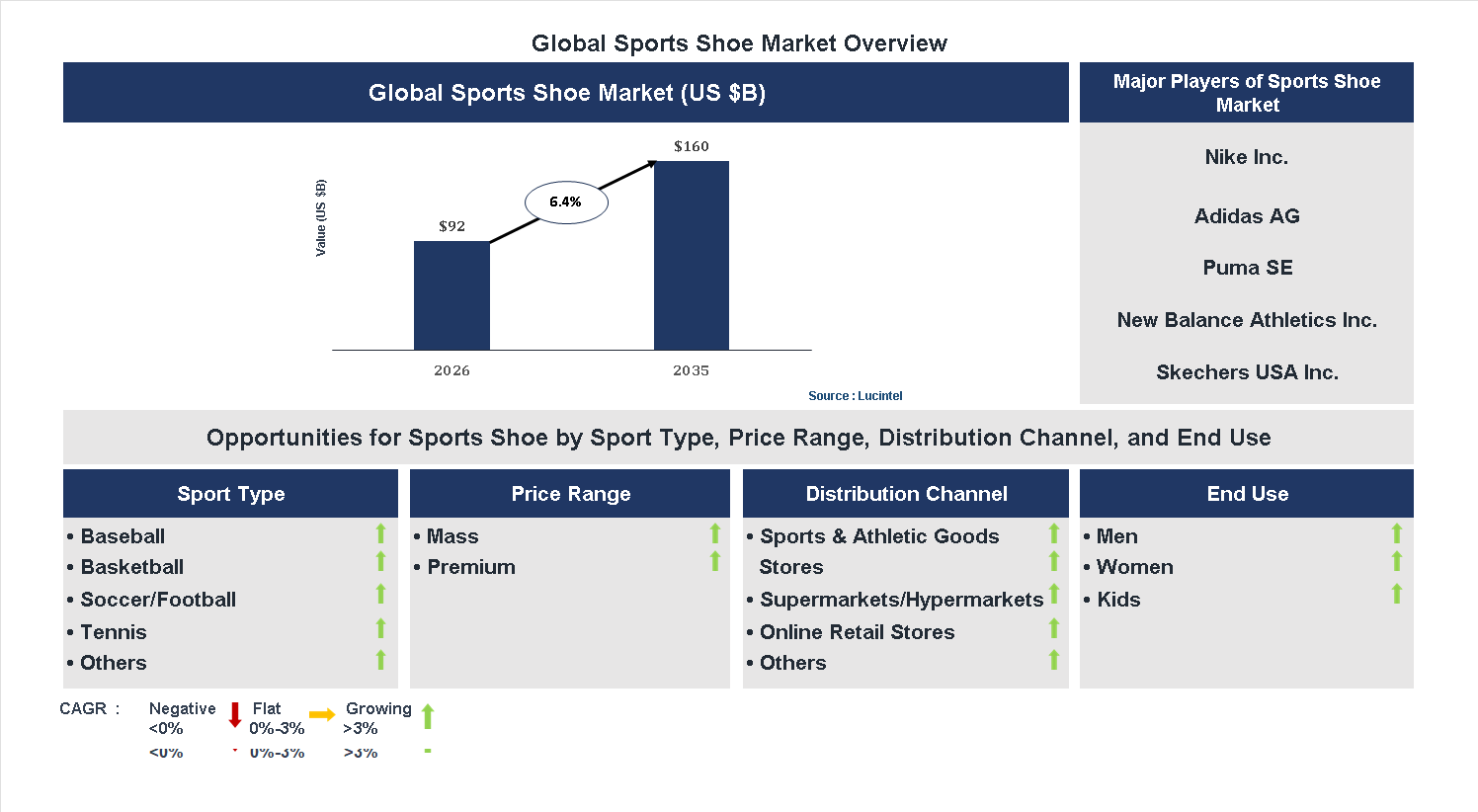
Emerging Trends in the Sports Shoe Market
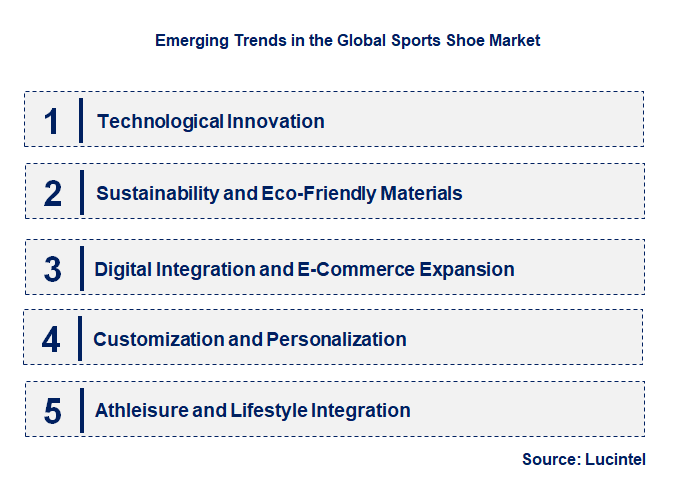
The sports shoe market is experiencing rapid evolution driven by technological advancements, changing consumer preferences, and increasing health consciousness. As athletes and casual wearers seek performance, comfort, and style, brands are innovating to meet these demands. The market is also influenced by sustainability initiatives and digital integration, shaping a competitive landscape that demands agility and innovation. These emerging trends are not only transforming product offerings but also redefining how brands engage with consumers, creating new opportunities and challenges. Understanding these key developments is essential for stakeholders aiming to stay ahead in this dynamic industry.• Technological Innovation: Enhanced Performance and Comfort : The integration of advanced materials, cushioning systems, and smart technology is revolutionizing sports shoes. Innovations like responsive midsoles, lightweight fabrics, and embedded sensors improve athletic performance and user experience. Brands are investing heavily in R&D to develop products that offer superior support, durability, and customization. This trend caters to both professional athletes and casual users seeking high-performance footwear, driving market growth and differentiation among competitors.
• Sustainability and Eco-Friendly Materials: Growing Consumer Demand for Green Products : Sustainability is becoming a core focus, with brands adopting eco-friendly materials such as recycled plastics, organic fabrics, and biodegradable components. This shift responds to increasing consumer awareness about environmental impact and ethical production practices. Companies are also implementing sustainable manufacturing processes and transparent supply chains. The emphasis on eco-conscious products is influencing purchasing decisions, encouraging brands to innovate in sustainable design and positioning themselves as responsible market leaders.
• Digital Integration and E-Commerce Expansion: Enhancing Consumer Engagement : The rise of digital platforms and e-commerce has transformed how consumers discover and purchase sports shoes. Virtual try-ons, augmented reality, and personalized online shopping experiences are becoming standard. Brands are leveraging social media, influencer marketing, and direct-to-consumer channels to build brand loyalty and reach wider audiences. This digital shift allows for real-time feedback, data-driven customization, and streamlined purchasing, significantly expanding market reach and consumer engagement.
• Customization and Personalization: Meeting Individual Preferences : Consumers increasingly seek personalized footwear tailored to their style, fit, and performance needs. Brands are offering customizable options, including color schemes, sole configurations, and fit adjustments through online tools and in-store services. This trend enhances customer satisfaction and brand loyalty by providing unique products that reflect individual identity. The ability to personalize products also allows brands to differentiate themselves in a competitive market, fostering deeper consumer relationships.
• Athleisure and Lifestyle Integration: Blurring Lines Between Sports and Fashion : The rise of athleisure has led to sports shoes becoming a staple in everyday fashion. Consumers prefer versatile designs that combine performance features with stylish aesthetics suitable for casual wear. This trend expands the market beyond athletes to include fashion-conscious consumers, increasing demand for trendy, comfortable footwear. Brands are collaborating with designers and celebrities to create fashionable yet functional shoes, driving sales across multiple segments and reshaping the traditional sports shoe market. These trends are reshaping the sports shoe market by fostering innovation, emphasizing sustainability, leveraging digital technology, enabling customization, and integrating fashion with function. This evolution is creating a more dynamic, consumer-centric industry that values performance, style, and responsibility, ultimately driving growth and competitive differentiation.
Recent Development in the Sports Shoe Market
The sports shoe market is experiencing rapid growth driven by increasing health consciousness, technological innovations, and expanding sports activities worldwide. Consumers seek high-performance, comfortable, and stylish footwear, fueling demand across various segments. Market players are investing in sustainable materials and smart shoe technology to meet evolving preferences. The rise of e-commerce platforms also facilitates wider accessibility and customization options. These developments are shaping a competitive landscape, offering new opportunities for brands to innovate and capture market share in a dynamic environment.• Technological Innovations in Shoe Design: Advancements in cushioning, lightweight materials, and smart features enhance athlete performance and comfort. These innovations attract consumers seeking high-quality, durable footwear, boosting sales across sports categories. Brands investing in R&D are gaining competitive advantages, leading to increased market share. The integration of sensors and connectivity in shoes also opens new revenue streams through data analytics and personalized training solutions, further expanding the market’s scope.
• Growing Popularity of Athleisure Wear: The blending of athletic and casual fashion has expanded the sports shoe market beyond traditional sports enthusiasts. Consumers now prioritize versatile, stylish footwear suitable for daily wear, driving demand in urban and lifestyle segments. This trend encourages brands to develop trendy, functional designs, increasing sales volume. Retailers benefit from higher margins on fashionable, branded shoes, and the segment’s growth supports the expansion of retail outlets and online platforms, broadening market reach.
• Expansion of E-commerce and Digital Platforms: Online sales channels are transforming how consumers purchase sports shoes, offering convenience, customization, and wider product choices. Digital marketing and virtual try-on technologies enhance customer engagement and satisfaction. E-commerce growth enables brands to reach global markets efficiently, reducing reliance on brick-and-mortar stores. The shift also fosters direct-to-consumer models, increasing profit margins and brand loyalty, which accelerates overall market growth and innovation.
• Focus on Sustainability and Eco-friendly Materials: Consumers are increasingly demanding environmentally responsible products, prompting brands to adopt sustainable materials like recycled plastics and organic fabrics. This shift reduces environmental impact and appeals to eco-conscious buyers, expanding the customer base. Companies investing in sustainable practices enhance brand reputation and meet regulatory standards. The development of eco-friendly shoes also opens new market segments, encouraging innovation in manufacturing processes and supply chain management, thus fostering long-term growth.
• Rise of Smart Shoes and Wearable Technology: Integration of sensors, GPS, and fitness tracking features in sports shoes offers personalized training insights and performance monitoring. This technological leap attracts athletes and fitness enthusiasts seeking data-driven improvements. Smart shoes create new revenue streams through app subscriptions and upgrades, while also fostering brand loyalty. The adoption of wearable tech in sports footwear is expected to accelerate, driving innovation and expanding the market into health and wellness sectors, ultimately transforming consumer engagement and product offerings. The overall impact of these developments is a more dynamic, innovative, and competitive sports shoe market. Increased consumer demand for high-tech, stylish, and sustainable products is driving growth across segments. Digital transformation and eco-conscious initiatives are broadening market reach and enhancing brand loyalty. These opportunities collectively foster a resilient industry poised for sustained expansion and technological advancement.
Strategic Growth Opportunities in the Sports Shoe Market
The sports shoe market is experiencing rapid growth driven by increasing health consciousness, rising participation in sports and fitness activities, and technological advancements in footwear design. Consumers are seeking high-performance, comfortable, and stylish shoes, fueling innovation and expanding market segments. E-commerce platforms and global distribution channels further enhance accessibility, creating new opportunities for brands to capture diverse customer bases. As the market evolves, strategic investments in product development and marketing are essential for capturing emerging trends and maintaining competitive advantage.• Increasing Demand for Performance and Athletic Shoes: The rising popularity of sports and fitness activities worldwide is boosting demand for high-performance athletic shoes. Consumers seek shoes with advanced cushioning, lightweight materials, and enhanced stability for activities like running, basketball, and training. Brands are investing in innovative technologies such as responsive midsoles and breathable fabrics to meet these needs. The segment includes running shoes, basketball shoes, and training footwear, which are experiencing significant growth due to their functional benefits and brand endorsements.
• Expansion of E-commerce and Digital Retail Channels: The growth of online shopping platforms has transformed the sports shoe market by providing consumers with easy access to a wide range of products. E-commerce enables brands to reach global audiences, offer personalized shopping experiences, and implement targeted marketing strategies. Digital channels also facilitate direct-to-consumer sales, reducing reliance on traditional retail outlets. The convenience, competitive pricing, and extensive product information available online are driving increased sales across all segments, especially among younger consumers.
• Rising Popularity of Sustainable and Eco-Friendly Footwear: Consumers are increasingly prioritizing sustainability in their purchasing decisions, prompting brands to develop eco-friendly sports shoes. Innovations include shoes made from recycled materials, biodegradable components, and environmentally responsible manufacturing processes. This trend appeals to environmentally conscious consumers and enhances brand reputation. The eco-friendly segment is expanding rapidly, with sub-segments like running shoes, casual sneakers, and lifestyle footwear adopting sustainable practices to meet market demand.
• Growth of Niche and Specialized Sports Shoe Segments: The market is witnessing a surge in niche segments such as trail running, skateboarding, and CrossFit shoes. These specialized shoes cater to specific athletic needs, offering tailored features like enhanced grip, durability, and ankle support. The rise of extreme sports and fitness trends fuels demand for these products. Brands are focusing on product innovation and endorsements by athletes in these niches to capture dedicated customer bases and differentiate themselves in a competitive landscape.
• Integration of Smart Technologies in Sports Shoes: The incorporation of smart features like fitness tracking, GPS, and biometric sensors is revolutionizing the sports shoe industry. These technologically advanced shoes provide real-time data to improve athletic performance and prevent injuries. The integration of IoT (Internet of Things) enhances user engagement and offers personalized training insights. This segment is gaining traction among professional athletes and fitness enthusiasts, creating opportunities for brands to develop premium, connected footwear that combines performance with digital innovation. These growth opportunities are shaping the future of the sports shoe market by fostering innovation, expanding consumer choices, and enhancing brand engagement. Embracing technological advancements, sustainability, and niche markets will enable companies to capitalize on emerging trends and sustain competitive advantage. As consumer preferences evolve, strategic focus on these areas will be crucial for market players aiming for long-term growth and market leadership.
Sports Shoe Market Driver and Challenges
The sports shoe market is influenced by a variety of technological, economic, and regulatory factors that shape its growth and development. Innovations in materials and manufacturing processes drive product performance and consumer appeal. Economic conditions, such as disposable income levels and global economic stability, impact consumer spending on sports footwear. Regulatory standards related to sustainability and safety influence product design and manufacturing practices. Additionally, evolving consumer preferences and increasing health consciousness further propel market dynamics. Navigating these drivers and overcoming challenges is essential for market players to sustain competitive advantage and meet the growing demand for innovative, sustainable, and high-performance sports shoes. The factors responsible for driving the sports shoe market include:• Technological Innovation: Advancements in materials and manufacturing techniques such as lightweight, breathable fabrics, and cushioning technologies enhance product performance. Companies invest heavily in R&D to develop innovative designs that improve comfort, durability, and athletic performance. Smart shoes with embedded sensors are also gaining popularity, offering personalized training insights. These innovations attract consumers seeking high-quality, functional footwear, thereby expanding market size and driving sales growth.
• Rising Health and Fitness Trends: Increasing awareness about health, fitness, and active lifestyles has led consumers to invest more in sports footwear. The surge in gym memberships, running events, and outdoor activities fuels demand for specialized shoes tailored for different sports and fitness routines. This trend encourages brands to diversify their product offerings, catering to a broader consumer base and boosting overall market revenue.
• E-commerce Expansion: The growth of online retail platforms has revolutionized the distribution of sports shoes. Consumers now enjoy greater access to a wide range of brands and products with the convenience of home delivery. E-commerce also enables targeted marketing and personalized shopping experiences, increasing consumer engagement. This digital shift reduces reliance on traditional brick-and-mortar stores, expanding market reach and accelerating sales growth.
• Brand Collaborations and Endorsements: Strategic partnerships with athletes, celebrities, and sports teams significantly influence consumer purchasing decisions. High-profile endorsements and limited-edition collaborations create buzz and exclusivity, attracting brand loyalists and new customers alike. These marketing strategies enhance brand visibility and credibility, driving demand for premium and innovative sports shoes.
• Sustainability and Eco-Friendly Materials: Growing environmental awareness prompts brands to adopt sustainable practices, including the use of recycled materials and eco-friendly manufacturing processes. Consumers increasingly prefer brands that demonstrate environmental responsibility, influencing purchasing choices. This shift encourages innovation in sustainable product lines, fostering market differentiation and long-term growth. The challenges facing the sports shoe market include:
• Intense Competition: The sports shoe market is highly competitive, with numerous global and local brands vying for market share. Price wars, product differentiation, and marketing battles make it difficult for companies to maintain profitability. Smaller players often struggle to compete with established brands that have extensive distribution networks and brand loyalty, which can hinder market consolidation and innovation.
• Regulatory and Environmental Standards: Increasing regulations related to product safety, labor practices, and environmental impact pose compliance challenges. Companies must invest in sustainable manufacturing and adhere to strict standards, which can increase costs and complicate supply chains. Failure to meet these standards risks legal penalties, reputational damage, and loss of consumer trust.
• Supply Chain Disruptions: The global nature of the sports shoe industry makes it vulnerable to supply chain disruptions caused by geopolitical tensions, pandemics, and logistical issues. Material shortages, increased shipping costs, and factory closures can delay product launches and reduce inventory availability. These disruptions impact sales, profitability, and the ability to respond swiftly to market trends. The sports shoe market is driven by technological advancements, health trends, digital expansion, strategic branding, and sustainability initiatives. However, it faces significant challenges from intense competition, regulatory pressures, and supply chain vulnerabilities. These factors collectively influence market dynamics, requiring companies to innovate continuously, adapt to regulatory changes, and optimize supply chains. Successfully navigating these drivers and challenges will determine the markets future growth trajectory and competitive landscape.
List of Sports Shoe Companies
Companies in the market compete on the basis of product quality offered. Major players in this market focus on expanding their manufacturing facilities, R&D investments, infrastructural development, and leverage integration opportunities across the value chain. With these strategies sports shoe companies cater increasing demand, ensure competitive effectiveness, develop innovative products & technologies, reduce production costs, and expand their customer base. Some of the sports shoe companies profiled in this report include-• Nike Inc.
• Adidas AG
• Puma SE
• New Balance Athletics Inc.
• Skechers USA Inc.
• Under Armour Inc.
• ASICS Corporation
• Anta Sports Products Ltd.
• Li-Ning Company Ltd.
• Columbia Sportswear Co.
Sports Shoe Market by Segment
The study includes a forecast for the global sports shoe market by sport type, price range, distribution channel, end use, and region.Sports Shoe Market by Sport Type [Value from 2019 to 2035]:
• Baseball
• Basketball
• Soccer/Football
• Tennis
• Others
Sports Shoe Market by Price Range [Value from 2019 to 2035]:
• Mass
• Premium
Sports Shoe Market by Distribution Channel [Value from 2019 to 2035]:
• Sports & Athletic Goods Stores
• Supermarkets/Hypermarkets
• Online Retail Stores
• Others
Sports Shoe Market by End Use [Value from 2019 to 2035]:
• Men
• Women
• Kids
Sports Shoe Market by Region [Value from 2019 to 2035]:
• North America
• Europe
• Asia Pacific
• The Rest of the World
Country Wise Outlook for the Sports Shoe Market
The sports shoe market has experienced significant growth and innovation driven by technological advancements, changing consumer preferences, and increasing health consciousness worldwide. As the global demand for athletic footwear rises, key markets such as the United States, China, Germany, India, and Japan are witnessing unique developments. These countries are shaping the industry through product innovation, sustainability initiatives, and expanding e-commerce channels. Understanding these regional trends provides insight into the evolving landscape of the sports shoe market and highlights opportunities for brands to adapt and grow in diverse markets.• United States: The US market has seen a surge in demand for performance-oriented and athleisure footwear, driven by health trends and fitness culture. Major brands are investing in sustainable materials and innovative designs, with a focus on comfort and technology integration such as smart shoes. E-commerce sales continue to grow rapidly, and collaborations with athletes and influencers boost brand visibility. The market also emphasizes inclusivity, offering a wider range of sizes and styles to cater to diverse consumers.
• China: China remains the largest sports shoe market globally, with rapid urbanization and rising disposable incomes fueling growth. Local brands are gaining ground through aggressive marketing and product innovation, often blending traditional aesthetics with modern technology. E-commerce platforms like Tmall and JD.com are crucial for distribution, and digital marketing strategies are highly effective. Sustainability is becoming a priority, with brands exploring eco-friendly materials and manufacturing processes to appeal to environmentally conscious consumers.
• Germany: The German sports shoe market is characterized by a focus on high-quality, durable, and eco-friendly products. Consumers prioritize sustainability and ethical manufacturing practices. Innovation in cushioning, lightweight materials, and ergonomic design is prominent. The market is also influenced by a strong sporting culture, with a significant emphasis on running and outdoor activities. E-commerce is growing steadily, supported by a well-developed logistics infrastructure. Brands are increasingly adopting digital marketing and personalized shopping experiences to attract customers.
• India: The Indian sports shoe market is experiencing rapid growth due to increasing health awareness, urbanization, and a young demographic. Local brands are expanding their presence alongside international players, offering affordable and stylish options. The market is witnessing a shift towards performance footwear for sports like cricket, running, and badminton. E-commerce platforms are expanding reach, and marketing campaigns focus on affordability, durability, and style. Sustainability is gaining importance, with brands exploring eco-friendly materials to meet consumer demand.
• Japan: Japans sports shoe market emphasizes innovation, comfort, and technology integration. Consumers favor high-performance footwear for sports and daily wear, with a strong preference for brands that combine functionality with sleek design. Sustainability initiatives are also gaining traction, with brands adopting eco-friendly manufacturing practices. The market benefits from a mature retail infrastructure and a high level of consumer awareness. Digital marketing and online shopping are increasingly important, with brands leveraging technology to enhance customer engagement and product customization.

Features of the Global Sports Shoe Market
Market Size Estimates: Sports shoe market size estimation in terms of value ($B). Trend and Forecast Analysis: Market trends (2019 to 2025) and forecast (2026 to 2035) by various segments and regions. Segmentation Analysis: Sports shoe market size by various segments, such as by sport type, price range, distribution channel, end use, and region in terms of value ($B). Regional Analysis: Sports shoe market breakdown by North America, Europe, Asia Pacific, and Rest of the World. Growth Opportunities: Analysis of growth opportunities in different sport types, price ranges, distribution channels, end uses, and regions for the sports shoe market. Strategic Analysis: This includes M&A, new product development, and competitive landscape of the sports shoe market. Analysis of competitive intensity of the industry based on Porter’s Five Forces model.
FAQ
Q1. What is the sports shoe market size? Answer: The global sports shoe market is expected to reach an estimated $160 billion by 2035. Q2. What is the growth forecast for sports shoe market? Answer: The global sports shoe market is expected to grow with a CAGR of 6.4% from 2026 to 2035. Q3. What are the major drivers influencing the growth of the sports shoe market? Answer: The major drivers for this market are the increasing participation in fitness activities, the rising demand for comfortable athletic footwear, and the growing popularity of sports lifestyle fashion. Q4. What are the major segments for sports shoe market? Answer: The future of the sports shoe market looks promising with opportunities in the baseball, basketball, soccer/football, and tennis markets. Q5. Who are the key sports shoe market companies? Answer: Some of the key sports shoe companies are as follows:• Nike Inc.
• Adidas AG
• Puma SE
• New Balance Athletics Inc.
• Skechers USA Inc.
• Under Armour Inc.
• ASICS Corporation
• Anta Sports Products Ltd.
• Li-Ning Company Ltd.
• Columbia Sportswear Co. Q6. Which sports shoe market segment will be the largest in future? Answer: Lucintel forecasts that, within the distribution channel category, online retail store is expected to witness the highest growth over the forecast period. Q7. In sports shoe market, which region is expected to be the largest in next 5 years? Answer: In terms of region, APAC is expected to witness the highest growth over the forecast period. Q8. Do we receive customization in this report? Answer: Yes, Lucintel provides 10% customization without any additional cost.
Table of Contents
List of Figures
List of Tables
Methodology
- In-depth interviews of the major players in this market
- Detailed secondary research from competitors’ financial statements and published data
- Extensive searches of published works, market, and database information pertaining to industry news, company press releases, and customer intentions
- A compilation of the experiences, judgments, and insights of Lucintel’s professionals, who have analyzed and tracked this market over the years.


Buy Now
Choose a license that fits your team. Instant PDF delivery.
Prices exclude taxes. Instant delivery. Custom licensing available on request.
Key Questions
- • What are some of the most promising, high-growth opportunities for the sports shoe market by sport type (baseball, basketball, soccer/football, tennis, and others), price range (mass and premium), distribution channel (sports & athletic goods stores, supermarkets/hypermarkets, online retail stores, and others), end use (men, women, and kids), and region (North America, Europe, Asia Pacific, and the Rest of the World)?
- • Which segments will grow at a faster pace and why?
- • Which region will grow at a faster pace and why?
- • What are the key factors affecting market dynamics? What are the key challenges and business risks in this market?
- • What are the business risks and competitive threats in this market?
- • What are the emerging trends in this market and the reasons behind them?
- • What are some of the changing demands of customers in the market?
- • What are the new developments in the market? Which companies are leading these developments?
- • Who are the major players in this market? What strategic initiatives are key players pursuing for business growth?
- • What are some of the competing products in this market and how big of a threat do they pose for loss of market share by material or product substitution?
- • What M&A activity has occurred in the last 7 years and what has its impact been on the industry? For any questions related to Sports Shoe Market, Sports Shoe Market Size, Sports Shoe Market Growth, Sports Shoe Market Analysis, Sports Shoe Market Report, Sports Shoe Market Share, Sports Shoe Market Trends, Sports Shoe Market Forecast, Sports Shoe Companies, write Lucintel analyst at email: helpdesk@lucintel.com. We will be glad to get back to you soon.


