
Market Report · July 22, 2026

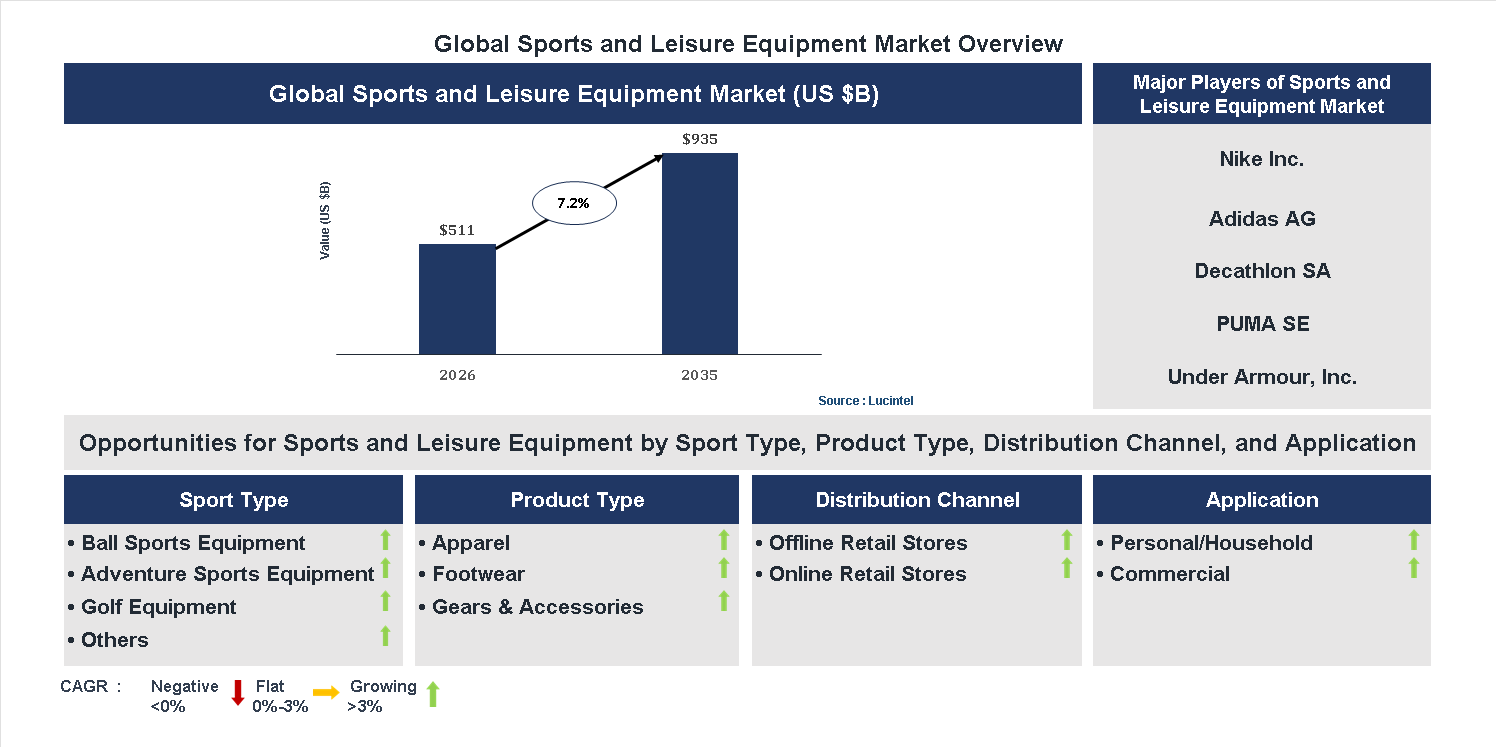
Key data points: The market size in 2035 = $935 billion, growth forecast = 7.2% annually for the next 8 years. Scroll below to get more insights. This market report covers trends, opportunities and forecasts in sports and leisure equipment market to 2035 by sport type (ball sports equipment, adventure sports equipment, golf equipment, and others), product type (apparel, footwear, and gears & accessories), distribution channel (offline retail stores and online retail stores), application (personal/household and commercial), and region (North America, Europe, Asia Pacific, and the Rest of the World)
We'll send your sample report shortly.
• Lucintel forecasts that, within the sport type category, ball sport equipment is expected to witness the highest growth over the forecast period.
• Within the application category, commercial is expected to witness higher growth.
• In terms of region, APAC is expected to witness the highest growth over the forecast period. Gain valuable insights for your business decisions with our comprehensive 150+ page report. Sample figures with some insights are shown below.
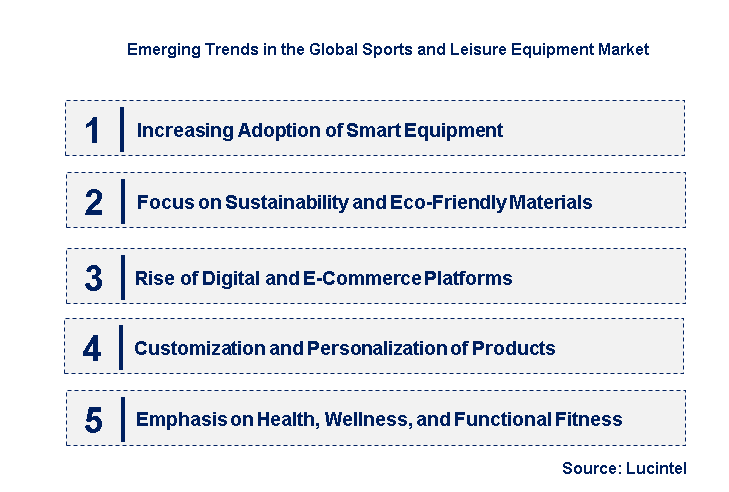
• Increasing Adoption of Smart Equipment: The integration of IoT and wearable technology is revolutionizing sports and leisure products. Smart equipment offers real-time data tracking, personalized training programs, and performance analytics, enhancing user engagement and motivation. This trend is driven by advancements in sensor technology and connectivity, making products more interactive and tailored to individual needs. It also enables manufacturers to gather valuable user data for product improvement and innovation. As consumers become more health-conscious and tech-savvy, the demand for smart equipment is expected to grow significantly, transforming traditional sports gear into connected, intelligent devices.
• Focus on Sustainability and Eco-Friendly Materials: Consumers and regulators are increasingly prioritizing environmental responsibility. Manufacturers are adopting sustainable practices by using recycled materials, biodegradable components, and eco-friendly manufacturing processes. This shift not only reduces environmental impact but also appeals to environmentally conscious consumers. Brands that emphasize sustainability are gaining competitive advantage, fostering brand loyalty and trust. The market is witnessing a rise in products like biodegradable yoga mats, recycled plastic sports bottles, and sustainably sourced apparel. This trend is reshaping product development, supply chains, and marketing strategies within the industry.
• Rise of Digital and E-Commerce Platforms: The growth of online retail channels is transforming how consumers access sports and leisure equipment. E-commerce offers convenience, wider product selection, and competitive pricing, attracting a broader customer base. Digital platforms also enable brands to engage directly with consumers through personalized marketing, virtual try-ons, and online communities. The COVID-19 pandemic accelerated this shift, making digital channels essential for market survival. As a result, companies are investing heavily in digital infrastructure, omnichannel strategies, and virtual experiences to enhance customer engagement and streamline purchasing processes, fundamentally changing the distribution landscape.
• Customization and Personalization of Products: Consumers increasingly seek products tailored to their specific preferences, performance needs, and aesthetic tastes. Advances in manufacturing technologies like 3D printing and modular designs facilitate greater customization options. Personalization enhances user satisfaction, brand loyalty, and perceived value. Companies are offering bespoke equipment, customizable colors, and adjustable features to meet diverse consumer demands. This trend is particularly prominent in premium segments, where individual performance goals and style preferences drive purchasing decisions. The emphasis on personalization is reshaping product development, marketing, and customer service strategies within the market.
• Emphasis on Health, Wellness, and Functional Fitness: The rising awareness of health benefits associated with active lifestyles is fueling demand for fitness equipment and leisure products that promote wellness. Functional fitness, home workouts, and holistic health practices are gaining popularity, especially post-pandemic. Products like compact home gyms, versatile multi-use equipment, and wellness-focused accessories are in high demand. This trend encourages innovation in ergonomic design, ease of use, and multifunctionality. It also influences marketing strategies, emphasizing health benefits and lifestyle integration. As health consciousness continues to grow, the market is shifting towards products that support overall well-being and functional fitness routines. These trends are collectively reshaping the sports and leisure equipment market by fostering innovation, sustainability, digital integration, and consumer-centric approaches. They are expanding market opportunities, driving competitive differentiation, and aligning products more closely with evolving consumer values and lifestyles. This dynamic environment promises continued growth and transformation in the industry.
• Growing Demand for Smart Sports Equipment: The integration of IoT and wearable technology enhances user experience, providing real-time data and personalized training. This innovation attracts tech-savvy consumers and boosts product sales, fostering a competitive edge for brands. The market benefits from increased engagement and motivation, leading to higher customer retention and brand loyalty. As smart equipment becomes more affordable, adoption is expected to accelerate, expanding market size and encouraging further technological development.
• Expansion of Eco-Friendly and Sustainable Products: Consumers increasingly prioritize environmentally responsible products, prompting manufacturers to adopt sustainable materials and eco-conscious manufacturing processes. This shift reduces environmental impact and appeals to eco-aware buyers, enhancing brand reputation. The market sees a rise in biodegradable, recycled, and energy-efficient equipment, aligning with global sustainability goals. This trend not only attracts new customer segments but also encourages innovation in sustainable design, fostering long-term growth and compliance with regulations.
• Rise of E-commerce and Digital Platforms: Online sales channels are transforming how consumers access sports and leisure equipment, offering convenience, wider selection, and competitive pricing. Digital marketing and virtual try-ons improve customer engagement and personalization. E-commerce expansion enables brands to reach global markets more efficiently, increasing sales volume and market penetration. The shift also encourages direct-to-consumer models, reducing intermediaries and enhancing profit margins, ultimately driving industry growth and innovation
• Increased Focus on Health and Wellness Trends: The rising awareness of physical and mental health drives demand for fitness equipment and recreational products. Consumers seek versatile, user-friendly, and space-efficient solutions suitable for home use, especially post-pandemic. This trend boosts sales of home gym equipment, outdoor gear, and wellness accessories. Market players innovate to meet these needs, offering multifunctional and compact products. The focus on health also encourages product diversification, creating new revenue streams and expanding market reach.
• Technological Innovations in Product Design: Advanced materials, 3D printing, and automation improve product durability, performance, and customization. These innovations enable manufacturers to develop lightweight, high-performance equipment tailored to individual needs. Enhanced design processes reduce production costs and lead times, accelerating product launch cycles. The adoption of new technologies fosters differentiation and competitive advantage, attracting consumers seeking cutting-edge solutions. Overall, technological progress drives industry modernization and growth, meeting evolving consumer expectations. The sports and leisure equipment market is significantly impacted by these developments, fostering innovation, sustainability, and consumer engagement. These opportunities are expanding market size, enhancing product offerings, and increasing global reach. As a result, the industry is poised for sustained growth, driven by technological advancements and shifting consumer preferences, creating a dynamic environment for stakeholders to capitalize on emerging trends.
• Expansion into Emerging Markets: The sports and leisure equipment market is poised for significant growth in developing regions due to rising disposable incomes, urbanization, and increased sports participation. Companies are targeting these markets with tailored products and localized marketing strategies to tap into new customer bases. Infrastructure development and government initiatives promoting sports further boost demand. This expansion offers substantial revenue potential and diversification of market risk, making emerging markets a key focus for industry players seeking long-term growth.
• Integration of Smart Technology in Equipment: Incorporating IoT and wearable technology into sports and leisure products enhances user experience through real-time data tracking, performance analysis, and personalized feedback. Smart equipment appeals to tech-savvy consumers and athletes seeking performance optimization. This innovation drives product differentiation and premium pricing. Companies investing in R&D to develop connected equipment can capture higher margins and foster brand loyalty. The integration of technology also opens avenues for new service models, such as subscription-based coaching and data analytics.
• Focus on Sustainable and Eco-Friendly Products: Consumers increasingly demand environmentally responsible products, prompting manufacturers to adopt sustainable materials and eco-friendly manufacturing processes. This shift reduces carbon footprint and appeals to environmentally conscious buyers. Developing recyclable, biodegradable, or renewable-material equipment not only aligns with global sustainability goals but also enhances brand reputation. Companies that lead in eco-innovation can differentiate themselves in a competitive market, attract new customer segments, and comply with evolving regulations, ensuring long-term viability and growth.
• Diversification into Multifunctional and Versatile Equipment: The demand for versatile sports and leisure equipment that caters to multiple activities is rising, driven by space constraints and lifestyle flexibility. Products like multi-use gym equipment, convertible outdoor gear, and adaptable sports accessories appeal to urban consumers and fitness enthusiasts. This diversification allows companies to target broader markets and increase sales per unit. Developing multifunctional products also encourages innovation, reduces inventory complexity, and meets the evolving needs of consumers seeking convenience and value.
• Expansion of online Retail and Direct-to-Consumer Channels: The growth of e-commerce has transformed how consumers purchase sports and leisure equipment. Direct-to-consumer sales via brand websites and online marketplaces enable companies to control branding, pricing, and customer data. Digital marketing strategies, virtual try-ons, and augmented reality enhance online shopping experiences. This channel expansion reduces reliance on traditional retail, lowers distribution costs, and provides access to global markets. Strengthening online presence is crucial for capturing tech-savvy consumers and accelerating market penetration. The overall landscape of the sports and leisure equipment market is shaped by these strategic growth opportunities, which collectively drive innovation, market expansion, and consumer engagement. Companies that effectively leverage these opportunities will be positioned for sustained growth, increased market share, and competitive advantage in a rapidly evolving industry.
• Technological Advancements: The integration of innovative materials, smart technology, and manufacturing techniques enhances product performance and user experience. For example, the development of lightweight, durable, and eco-friendly materials improves equipment longevity and appeal. Smart equipment with connectivity features enables personalized training and real-time feedback, attracting tech-savvy consumers. These advancements foster product differentiation, stimulate demand, and open new revenue streams for manufacturers. As technology continues to evolve, the market benefits from increased innovation, improved safety features, and enhanced consumer engagement, ultimately driving sales and market growth.
• Rising Health and Fitness Awareness: Growing awareness about health benefits associated with physical activity has led to increased demand for sports and leisure equipment. Consumers are investing in home gyms, outdoor sports gear, and fitness accessories to maintain active lifestyles. The proliferation of fitness influencers and wellness trends further amplifies this demand. This shift towards health-conscious living encourages product innovation tailored to diverse fitness needs, from high-intensity training to low-impact exercises. As a result, manufacturers are expanding their product portfolios to cater to a broader demographic, fueling market expansion and encouraging sustained growth.
• Urbanization and Lifestyle Changes: Rapid urbanization has resulted in limited outdoor space, prompting consumers to seek compact, versatile, and easy-to-use equipment suitable for small living environments. Additionally, busy lifestyles increase demand for convenient, at-home leisure options. Urban dwellers prefer multi-purpose equipment that fits into limited spaces, such as foldable or modular designs. This trend encourages manufacturers to develop innovative, space-saving products, thereby expanding market reach. Urbanization also fosters the growth of indoor sports facilities and recreational centers, further boosting demand for specialized equipment and contributing to overall market growth.
• Economic Growth and Disposable Income: Improved economic conditions and rising disposable incomes enable consumers to spend more on leisure and sports activities. Higher income levels facilitate access to premium and branded equipment, encouraging brand loyalty and repeat purchases. Economic stability also supports investments in sports infrastructure and recreational facilities, creating additional market opportunities. As consumers prioritize health and leisure spending, manufacturers benefit from increased sales of high-end and technologically advanced products. This economic momentum sustains market growth, attracts new entrants, and encourages innovation within the industry.
• Expansion of E-commerce and Digital Marketing: The proliferation of online retail platforms and digital marketing strategies has broadened market access and consumer reach. E-commerce offers convenience, competitive pricing, and a wider product selection, attracting a global customer base. Digital marketing campaigns, social media influencers, and targeted advertising increase brand visibility and consumer engagement. This shift enables manufacturers to quickly respond to market trends and consumer preferences, accelerating product launches and sales cycles. The growth of online channels also facilitates direct-to-consumer sales, reducing distribution costs and increasing profit margins, thereby fueling overall market expansion. The challenges facing the sports and leisure equipment market include:
• Regulatory and Safety Standards: Stringent safety regulations and standards aimed at protecting consumers and the environment pose compliance challenges for manufacturers. Meeting diverse regional standards requires significant investment in testing, certification, and quality assurance processes. Non-compliance can lead to legal penalties, product recalls, and damage to brand reputation. Additionally, evolving regulations related to sustainability and eco-friendly materials necessitate ongoing innovation and adaptation. Navigating these regulatory complexities can increase costs and delay product launches, impacting competitiveness and market growth.
• Supply Chain Disruptions: The global supply chain has been increasingly vulnerable to disruptions caused by geopolitical tensions, pandemics, and logistical challenges. Shortages of raw materials, manufacturing delays, and transportation issues can lead to inventory shortages and increased costs. These disruptions hinder timely product delivery, affect sales, and reduce customer satisfaction. Manufacturers must invest in diversified supply chains and inventory management strategies to mitigate risks. However, such measures require significant resources and planning, posing ongoing challenges to maintaining market stability and growth.
• Intense Market Competition: The sports and leisure equipment market is highly competitive, with numerous established brands and new entrants vying for market share. Price wars, innovation races, and marketing battles can erode profit margins and pressure companies to continuously innovate. Differentiating products in a crowded marketplace is challenging, especially with rapid technological changes and evolving consumer preferences. Companies must invest heavily in R&D, branding, and customer engagement to sustain competitive advantage. This intense competition can lead to market saturation, reduced profitability, and increased pressure on smaller players to survive. The sports and leisure equipment market is driven by technological innovations, health consciousness, urbanization, economic growth, and digital expansion. However, regulatory hurdles, supply chain vulnerabilities, and fierce competition pose significant challenges. These factors collectively influence market dynamics, requiring stakeholders to adapt strategically. While opportunities for growth are substantial, success depends on navigating regulatory landscapes, managing supply chains effectively, and differentiating offerings in a competitive environment. Overall, the markets future hinges on balancing innovation with compliance and resilience, ensuring sustainable expansion amid evolving consumer and industry demands.
• Nike Inc.
• Adidas AG
• Decathlon SA
• PUMA SE
• Under Armour, Inc.
• New Balance Athletics, Inc
• Amer Sports, Inc.
• Authentic Brands Group
• Callaway Golf Co.
• Acushnet Holdings Corporation
• Ball Sports Equipment
• Adventure Sports Equipment
• Golf Equipment
• Others
• Apparel
• Footwear
• Gears & Accessories
• Offline Retail Stores
• Online Retail Stores
• Personal/Household
• Commercial
• North America
• Europe
• Asia Pacific
• The Rest of the World
• United States: The US market has seen a surge in smart sports equipment, integrating IoT technology for enhanced user experience. E-commerce sales continue to grow rapidly, driven by online fitness trends and home workout preferences. Major brands are investing in sustainable materials and eco-friendly products to meet consumer demand for environmentally conscious options. Additionally, there is increased focus on inclusive and adaptive sports equipment catering to diverse populations. The government’s initiatives promoting physical activity and health awareness programs have also contributed to market growth. Overall, innovation and sustainability are key drivers shaping the US market landscape.
• China: China’s sports and leisure equipment market is expanding swiftly, fueled by rising health consciousness and urbanization. Domestic brands are gaining ground through technological innovation and competitive pricing. The adoption of smart fitness devices and connected equipment is increasing rapidly, supported by widespread internet penetration. Government policies encouraging sports participation and infrastructure development are further boosting growth. E-commerce platforms like Alibaba and JD.com play a vital role in distribution, making products more accessible. The market is also witnessing a shift towards premium and customized equipment, reflecting growing consumer sophistication and disposable income levels.
• Germany: Germany’s market emphasizes high-quality, durable, and sustainable sports equipment, aligning with its strong environmental values. The country is a leader in integrating eco-friendly materials and manufacturing processes. There is a notable increase in outdoor and winter sports equipment, driven by a culture of outdoor recreation. Technological advancements such as smart gear and wearable devices are gaining popularity among German consumers. The market benefits from a well-established retail infrastructure and a focus on health and fitness. Additionally, collaborations between brands and sports clubs are enhancing product innovation and market reach. Overall, sustainability and technological integration are prominent trends in Germany.
• India: The Indian sports and leisure equipment market is experiencing rapid growth due to increasing health awareness and rising disposable incomes. Urbanization and a youthful demographic are driving demand for fitness equipment, sports gear, and outdoor recreational products. Local manufacturers are expanding their product offerings, often incorporating affordable and innovative features. The government’s initiatives promoting sports development and fitness campaigns are contributing to market expansion. E-commerce platforms are making sports equipment more accessible to rural and urban consumers alike. There is also a growing interest in traditional sports equipment, alongside modern fitness gear, reflecting diverse consumer preferences.
• Japan: Japan’s market is characterized by a focus on innovation, quality, and compact design, catering to urban lifestyles. The popularity of home gyms and compact fitness equipment has increased, especially post-pandemic. Smart and connected devices are widely adopted, enhancing workout efficiency and tracking. The market also emphasizes eco-friendly and sustainable products, aligning with Japan’s environmental values. Outdoor sports equipment remains popular, particularly for winter sports and cycling. Japanese companies are investing in R&D to develop advanced materials and ergonomic designs. The aging population is also influencing the market, with a rise in adaptive sports equipment tailored for seniors.


• Nike Inc.
• Adidas AG
• Decathlon SA
• PUMA SE
• Under Armour, Inc.
• New Balance Athletics, Inc
• Amer Sports, Inc.
• Authentic Brands Group
• Callaway Golf Co.
• Acushnet Holdings Corporation Q6. Which sports and leisure equipment market segment will be the largest in future? Answer: Lucintel forecasts that, within the sport type category, ball sport equipment is expected to witness the highest growth over the forecast period. Q7. In sports and leisure equipment market, which region is expected to be the largest in next 5 years? Answer: In terms of region, APAC is expected to witness the highest growth over the forecast period. Q8. Do we receive customization in this report? Answer: Yes, Lucintel provides 10% customization without any additional cost.


Choose a license that fits your team. Instant PDF delivery.
Prices exclude taxes. Instant delivery. Custom licensing available on request.
Market Report · July 22, 2026
Market Report · July 16, 2026
Market Report · May 18, 2026
Trusted partner for strategic intelligence and business growth


Receive a complimentary market analysis tailored to your industry. Our analysts will identify key growth opportunities and competitive dynamics specific to your business.

Market size, growth rate, and key trend analysis for your specific sector.

Top competitor positioning and market share analysis.

Strategic recommendations backed by data-driven insights.
Get curated market intelligence and competitive moves straight to your inbox.
By subscribing, you agree to receive our monthly insights. Unsubscribe anytime.
Receive a complimentary market analysis tailored to your industry. Our analysts will identify key growth opportunities and competitive dynamics specific to your business.
Market size, growth rate, and key trend analysis for your specific sector.
Top competitor positioning and market share analysis.
Strategic recommendations backed by data-driven insights.
Get curated market intelligence, emerging trends, and competitive moves straight to your inbox each month.
By subscribing, you agree to receive our monthly insights. Unsubscribe anytime.
We'll send your sample report shortly.