
Market Report · July 22, 2026

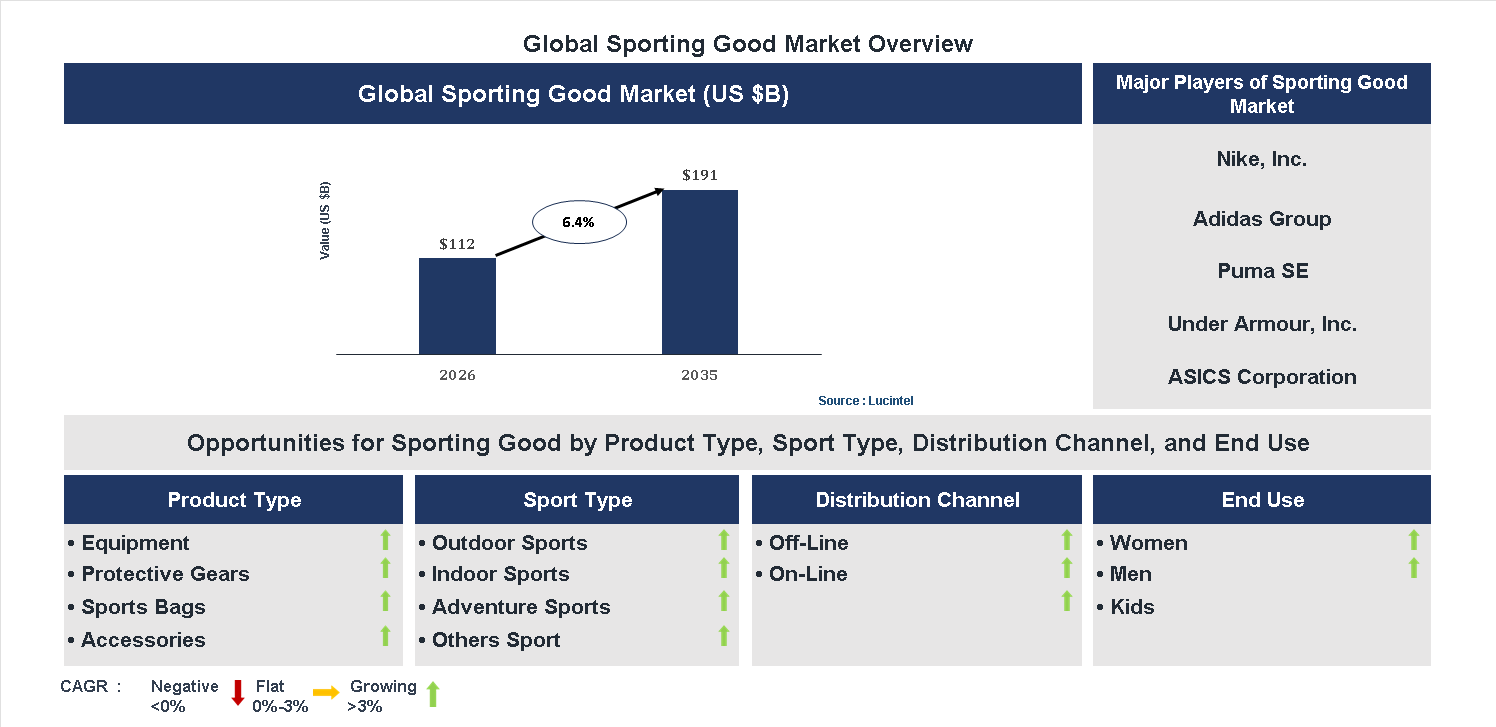
Key data points: The market size in 2035 = $191 billion, growth forecast = 6.4% annually for the next 8 years. Scroll below to get more insights. This market report covers trends, opportunities and forecasts in sporting good market to 2035 by product type (equipment, protective gears, sports bags, and accessories), sport type (outdoor sports, indoor sports, adventure sports, and others), distribution channel (off-line and on-line), end use (women, men, and kids), and region (North America, Europe, Asia Pacific, and the Rest of the World)
We'll send your sample report shortly.
• Lucintel forecasts that, within the product type category, equipment is expected to witness the highest growth over the forecast period.
• Within the sport type category, outdoor sport is expected to witness higher growth.
• In terms of region, APAC is expected to witness the highest growth over the forecast period. Gain valuable insights for your business decisions with our comprehensive 150+ page report. Sample figures with some insights are shown below.
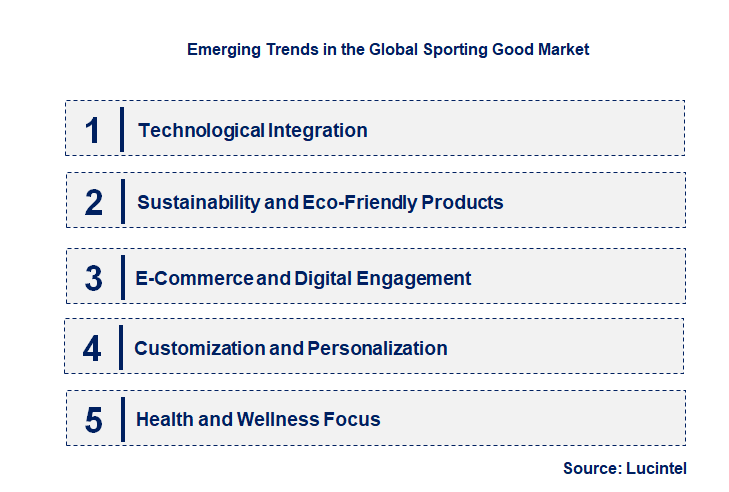
• Technological Integration: Enhanced product features and smart equipment are revolutionizing the market. Wearable devices, smart shoes, and connected fitness equipment enable real-time tracking, personalized training, and data analysis. This integration improves user experience, boosts engagement, and encourages long-term loyalty. Companies investing in IoT and AI are gaining a competitive edge by offering innovative, tech-enabled products that cater to tech-savvy consumers. The trend also supports the rise of virtual training and remote coaching, expanding market reach and creating new revenue streams.
• Sustainability and Eco-Friendly Products: Consumers are increasingly prioritizing environmentally responsible products. Brands are adopting sustainable materials, eco-friendly manufacturing processes, and recyclable packaging to meet this demand. This shift not only enhances brand reputation but also aligns with global efforts to reduce carbon footprints. The market for eco-conscious sporting goods is growing rapidly, influencing product design and supply chain practices. Companies that innovate in sustainability are likely to attract environmentally conscious consumers and differentiate themselves in a competitive landscape
• E-commerce and Digital Engagement: The pandemic accelerated the shift toward online shopping, a trend that continues to dominate the sporting good market. E-commerce platforms offer convenience, wider product selection, and personalized shopping experiences through AI-driven recommendations. Virtual try-ons, augmented reality, and online communities foster engagement and brand loyalty. Digital marketing strategies, influencer collaborations, and social media campaigns are vital for reaching target audiences. This trend is reshaping distribution channels, reducing reliance on brick-and-mortar stores, and enabling brands to access global markets more efficiently
• Customization and Personalization: Consumers now seek products tailored to their specific needs and preferences. Advances in manufacturing, such as 3D printing and modular designs, facilitate customization. Personalized gear enhances performance, comfort, and style, driving consumer satisfaction and brand loyalty. Brands offering bespoke options are gaining a competitive advantage by catering to individual athletic requirements and aesthetic preferences. This trend also extends to digital services, including personalized training plans and virtual coaching, creating a holistic, customer-centric experience that boosts market engagement.
• Health and Wellness Focus: The increasing emphasis on health, fitness, and overall wellness is fueling demand for versatile, functional sporting goods. Products that support home workouts, outdoor activities, and holistic health routines are particularly popular. The rise of boutique fitness studios and outdoor sports has expanded market opportunities. Companies are developing multi-purpose equipment, portable gear, and wellness-oriented accessories to meet this demand. This trend is fostering innovation in product design and marketing strategies, emphasizing health benefits and lifestyle integration, thereby broadening the market beyond traditional sports enthusiasts. These emerging trends are fundamentally reshaping the sporting good market by fostering innovation, sustainability, and digital engagement. They are expanding consumer choices, enhancing personalization, and promoting healthier lifestyles, which collectively drive growth and competitiveness in this evolving industry.
• Innovation in Smart Sports Equipment: The integration of IoT and wearable technology is revolutionizing sports gear, providing real-time data and personalized training. This enhances athlete performance and attracts tech-savvy consumers, creating a significant growth opportunity. Companies investing in smart equipment are gaining competitive advantages, expanding their market share, and fostering brand loyalty. The trend also encourages product differentiation and opens avenues for premium pricing, ultimately boosting revenue streams and market expansion.
• Sustainability and Eco-Friendly Products: The shift towards environmentally sustainable materials and manufacturing processes is gaining momentum. Consumers increasingly prefer eco-conscious brands, prompting companies to develop biodegradable, recycled, and sustainable products. This focus not only reduces environmental impact but also enhances brand reputation and customer loyalty. The adoption of green practices is expected to drive market growth, attract new customer segments, and meet regulatory standards, positioning companies as responsible industry leaders.
• Digital Transformation and E-Commerce Growth: The rise of online retail platforms and digital marketing strategies is transforming how consumers purchase sporting goods. E-commerce offers convenience, wider product selection, and personalized shopping experiences, fueling sales growth. Companies investing in digital infrastructure and online channels are expanding their reach globally, increasing sales volumes, and gaining valuable consumer insights. This shift is crucial for staying competitive in a rapidly evolving market landscape.
• Expansion of Fitness and Wellness Trends: The increasing focus on health, fitness, and wellness is boosting demand for sports apparel, equipment, and accessories. Consumers are engaging in more recreational and fitness activities, creating a surge in demand for versatile, high-performance products. Market players are capitalizing on this trend by launching innovative, functional, and stylish offerings. The growth in fitness culture is expected to sustain market expansion and diversify consumer demographics.
• Customization and Personalization of Products: Advances in manufacturing and digital technology enable brands to offer tailored sporting goods to meet individual preferences. Personalized products enhance customer engagement and satisfaction, fostering brand loyalty. This trend allows companies to differentiate themselves in a competitive market, command premium prices, and increase customer retention. The focus on customization is expected to drive sales growth and strengthen market positioning. These developments are significantly transforming the sporting good market by fostering innovation, sustainability, and digital integration. They are expanding consumer choices, enhancing brand loyalty, and opening new revenue streams. As companies adapt to these trends, market competition intensifies, and growth opportunities multiply. Overall, these advancements are creating a more dynamic, customer-centric industry poised for sustained expansion and increased global influence.
• Expansion into Emerging Markets: The sporting good market is poised for significant growth in developing regions where sports participation is increasing. Rising disposable incomes, urbanization, and government initiatives promote sports infrastructure development, creating demand for equipment, apparel, and accessories. Companies investing in local manufacturing, distribution, and marketing can tap into these expanding consumer bases. Tailoring products to regional preferences and establishing strategic partnerships will enhance market penetration and brand recognition, driving long-term growth in these high-potential areas.
• Integration of Technology for Innovative Products: Incorporating advanced technology into sporting goods offers a competitive edge by enhancing performance, safety, and user experience. Smart wearables, GPS-enabled equipment, and performance-tracking devices are gaining popularity among athletes and fitness enthusiasts. Companies investing in R&D to develop innovative, tech-enabled products can differentiate themselves and meet the evolving needs of consumers. This trend also opens opportunities for collaborations with tech firms, creating new revenue streams and expanding product portfolios in the high-growth sports tech segment.
• Growth of E-commerce Channels and Direct-to-Consumer Sales: The rise of online retail platforms has transformed how consumers purchase sporting goods, offering convenience, wider selection, and competitive pricing. Brands establishing direct-to-consumer channels can improve margins, gather valuable customer data, and foster brand loyalty. E-commerce enables rapid market entry and expansion into new regions without significant physical infrastructure. Leveraging digital marketing, personalized shopping experiences, and efficient logistics will be crucial for capturing online market share and meeting the demands of digitally-savvy consumers.
• Focus on Sustainable and Eco-Friendly Products: Increasing environmental awareness among consumers is driving demand for sustainable sporting goods. Companies adopting eco-friendly materials, ethical manufacturing practices, and recyclable packaging can appeal to environmentally conscious buyers. Developing sustainable product lines not only enhances brand reputation but also aligns with global regulatory trends. Investing in sustainable innovation can open new market segments, reduce costs through resource efficiency, and meet the growing consumer preference for responsible consumption, thereby strengthening market position.
• Strategic Partnerships and Sponsorships to Boost Brand Visibility: Collaborations with sports teams, athletes, and events significantly enhance brand recognition and credibility. Sponsorships and strategic alliances can increase product visibility, drive consumer engagement, and foster loyalty. Partnering with popular sports leagues or athletes helps target specific demographics and creates marketing opportunities across multiple channels. These collaborations also facilitate co-branded product launches and experiential marketing campaigns, which can boost sales and market share. Building strong partnerships is essential for long-term brand positioning and market growth. The overall landscape of the sporting good market is shaped by these opportunities, which collectively foster innovation, expand reach, and meet evolving consumer demands. Companies that strategically leverage these growth avenues will be well-positioned to capitalize on market potential, ensuring sustained expansion and competitive advantage in a rapidly evolving industry.
• Technological Innovation: The integration of advanced materials, such as lightweight composites and moisture-wicking fabrics, improves product performance and durability. 3D printing and automation streamline manufacturing, reducing costs and enabling customization. Wearable technology and smart equipment enhance user experience, attracting tech-savvy consumers. These innovations lead to higher product differentiation and increased consumer interest, fueling market growth. Companies investing in R&D can introduce cutting-edge products that meet evolving consumer needs, thus maintaining competitive advantage and expanding market share.
• Rising Disposable Income and Urbanization: As disposable incomes increase globally, consumers are more willing to spend on sports and fitness activities, including high-quality sporting goods. Urbanization promotes active lifestyles, creating demand for sports equipment, apparel, and accessories suitable for city living. The growing middle class in emerging economies further amplifies this trend, providing a vast customer base. This economic shift encourages retail expansion and online sales channels, boosting overall market revenue. The trend also supports the development of premium and branded products, catering to aspirational consumers seeking quality and status.
• Growing Health and Fitness Awareness: Increasing awareness about health benefits associated with sports and physical activities drives demand for sporting goods. Consumers are investing in fitness equipment, apparel, and accessories to support active lifestyles. The proliferation of fitness centers, sports clubs, and wellness programs amplifies this trend. Additionally, social media influencers and fitness celebrities promote sports participation, influencing consumer preferences. This heightened health consciousness encourages repeated purchases and brand loyalty, contributing to sustained market growth. Manufacturers are innovating to offer specialized products tailored for different sports and fitness regimes, further expanding the market.
• Expansion of E-commerce and Digital Platforms: The rise of online retail channels provides consumers with easy access to a wide range of sporting goods. E-commerce platforms enable brands to reach global markets efficiently, reducing reliance on traditional brick-and-mortar stores. Digital marketing and social media campaigns enhance brand visibility and consumer engagement. The convenience of online shopping, coupled with home delivery and easy returns, boosts sales volumes. Data analytics and personalized recommendations improve customer experience and retention. This digital shift allows new entrants to penetrate the market and fosters competitive pricing, ultimately expanding the market size and diversity of offerings. The challenges facing the sporting good market include
• Fluctuating Raw Material Prices: The cost of raw materials such as rubber, plastics, and textiles significantly impacts manufacturing expenses. Price volatility, driven by geopolitical tensions, supply chain disruptions, and environmental factors, can lead to increased production costs and reduced profit margins. Manufacturers may face difficulties in maintaining consistent pricing strategies, which can affect competitiveness. Additionally, sudden price hikes may force companies to pass costs onto consumers, potentially dampening demand. Managing supply chain risks and securing stable raw material sources are crucial for sustaining profitability and market stability.
• Regulatory and Safety Standards: Stringent regulations related to product safety, environmental impact, and labeling requirements pose compliance challenges. Different countries have varying standards, complicating international trade and increasing costs for certification and testing. Non-compliance can result in legal penalties, product recalls, and damage to brand reputation. As consumers become more conscious of sustainability and safety, companies must invest in eco-friendly materials and transparent labeling. Navigating complex regulatory landscapes requires significant resources and expertise, which can hinder market entry and expansion, especially for smaller players.
• Environmental Concerns and Sustainability: Growing environmental awareness pressures companies to adopt sustainable practices, such as using eco-friendly materials and reducing carbon footprints. The production of sporting goods often involves resource-intensive processes, raising concerns about environmental impact. Failure to address sustainability can lead to consumer backlash and loss of market share. Additionally, regulatory pressures to minimize waste and emissions increase operational costs. Companies investing in sustainable innovation and transparent supply chains can gain competitive advantage, but the transition poses financial and logistical challenges that may slow market growth. The sporting good market is driven by technological advancements, economic growth, health awareness, and digital expansion, which collectively foster innovation and consumer engagement. However, challenges such as raw material price fluctuations, regulatory complexities, and environmental sustainability concerns pose significant hurdles. These factors influence market dynamics, requiring stakeholders to adapt strategically. While opportunities for growth remain substantial, addressing these challenges effectively is essential for long-term success. Overall, the markets evolution will depend on balancing innovation with sustainability and regulatory compliance, shaping a resilient and competitive landscape.
• Nike, Inc.
• Adidas Group
• Puma SE
• Under Armour, Inc.
• ASICS Corporation
• Decathlon SA
• New Balance Athletics, Inc.
• Columbia Sportswear Company
• Gunn & Moore (GM)
• Amer Sports Corporation
• Equipment
• Protective Gears
• Sports Bags
• Accessories
• Outdoor Sports
• Indoor Sports
• Adventure Sports
• Others
• Off-Line
• On-Line
• Women
• Men
• Kids
• North America
• Europe
• Asia Pacific
• The Rest of the World
• United States: The US sporting good market has seen a surge in e-commerce sales, driven by increased online shopping and direct-to-consumer brands. Innovation in wearable technology and smart equipment is gaining popularity, enhancing user experience. Sustainability initiatives are also prominent, with brands adopting eco-friendly materials and practices. Additionally, the rise of athleisure wear continues to blur the lines between sportswear and casual fashion, expanding market segments.
• China: China’s sporting goods industry is rapidly expanding, fueled by government support and a growing middle class interested in health and fitness. Domestic brands are gaining prominence through innovation and competitive pricing. The market is witnessing increased investment in sports infrastructure and digital platforms, integrating e-commerce with live streaming and social media marketing. Sustainability efforts are emerging, though at a slower pace compared to Western markets. The focus remains on mass production and affordability
• Germany: Germany’s market emphasizes high-quality, durable sporting goods with a strong focus on sustainability and eco-conscious manufacturing. Technological integration, such as smart sports equipment and advanced materials, is advancing. The country’s consumers favor premium brands and innovative products, especially in outdoor and winter sports. The industry also benefits from a well-established retail network and a growing interest in health and wellness activities.
• India: The Indian sporting good market is experiencing rapid growth due to increasing awareness of fitness and sports participation. Local brands are expanding their reach, supported by government initiatives promoting sports infrastructure. The market is characterized by affordability and accessibility, with a rising demand for sports apparel, equipment, and footwear. Digital marketing and e-commerce are playing crucial roles in reaching consumers. There is also a growing focus on youth sports development and grassroots programs.
• Japan: Japan’s sporting good market is marked by technological innovation and a focus on quality. The country leads in sports technology, including wearable devices and smart equipment. Consumer preferences lean toward premium, specialized products, especially in golf, running, and outdoor activities. Sustainability is gaining importance, with brands adopting eco-friendly materials and practices. The aging population influences product development, emphasizing health and wellness-oriented sports gear. The market remains competitive, driven by a combination of tradition and innovation.


• Nike, Inc.
• Adidas Group
• Puma SE
• Under Armour, Inc.
• ASICS Corporation
• Decathlon SA
• New Balance Athletics, Inc.
• Columbia Sportswear Company
• Gunn & Moore (GM)
• Amer Sports Corporation Q6. Which sporting good market segment will be the largest in future? Answer: Lucintel forecasts that, within the product type category, equipment is expected to witness the highest growth over the forecast period. Q7. In sporting good market, which region is expected to be the largest in next 5 years? Answer: In terms of region, APAC is expected to witness the highest growth over the forecast period. Q8. Do we receive customization in this report? Answer: Yes, Lucintel provides 10% customization without any additional cost.


Choose a license that fits your team. Instant PDF delivery.
Prices exclude taxes. Instant delivery. Custom licensing available on request.
Market Report · July 22, 2026
Market Report · July 22, 2026
Market Report · July 22, 2026
Trusted partner for strategic intelligence and business growth


Receive a complimentary market analysis tailored to your industry. Our analysts will identify key growth opportunities and competitive dynamics specific to your business.

Market size, growth rate, and key trend analysis for your specific sector.

Top competitor positioning and market share analysis.

Strategic recommendations backed by data-driven insights.
Get curated market intelligence and competitive moves straight to your inbox.
By subscribing, you agree to receive our monthly insights. Unsubscribe anytime.
Receive a complimentary market analysis tailored to your industry. Our analysts will identify key growth opportunities and competitive dynamics specific to your business.
Market size, growth rate, and key trend analysis for your specific sector.
Top competitor positioning and market share analysis.
Strategic recommendations backed by data-driven insights.
Get curated market intelligence, emerging trends, and competitive moves straight to your inbox each month.
By subscribing, you agree to receive our monthly insights. Unsubscribe anytime.
We'll send your sample report shortly.