
Market Report · May 18, 2026

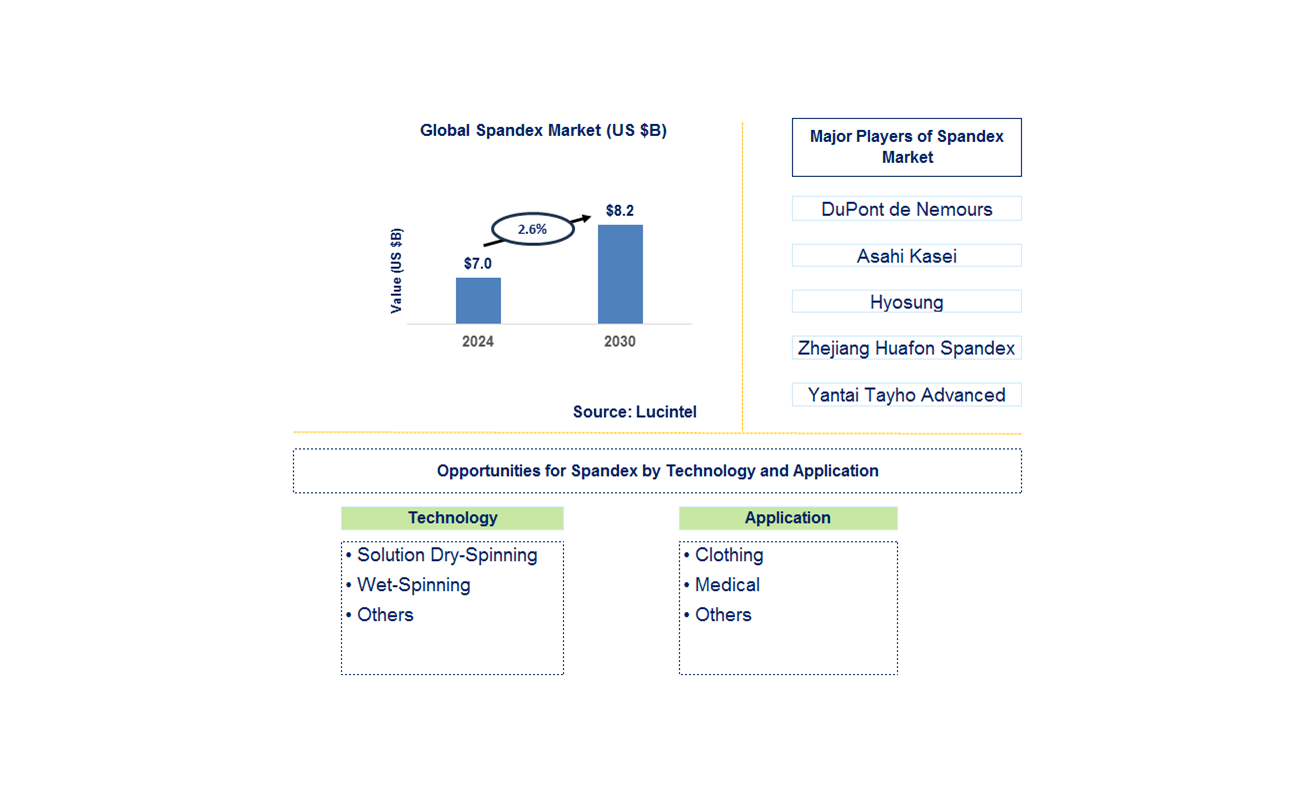
Key data points: The growth forecast = 2.6% annually for the next 6 years. Scroll below to get more insights. This market report covers trends, opportunities, and forecasts in spandex market to 2030 by technology (solution dry-spinning, wet-spinning, and others), application (clothing, medical, and others), and region (North America, Europe, Asia Pacific, and the Rest of the World)
We'll send your sample report shortly.
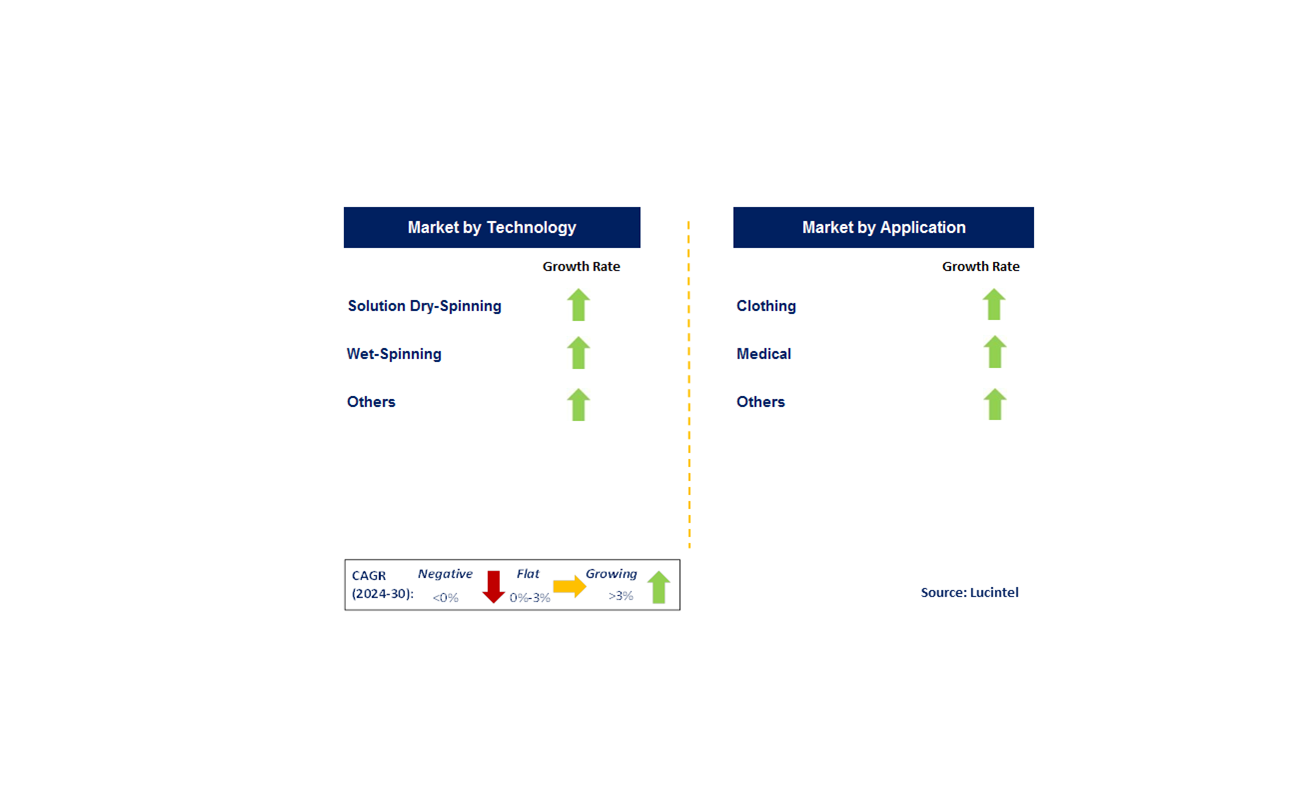
• Lucintel forecasts that, within the technology category, solution dry-spinning is expected to witness higher growth over the forecast period because it increases the productivity of the product to a great extent as compared to other processes, such as wet spinning and melt spinning.
• In terms of regions, APAC is expected to witness the highest growth over the forecast period due to the industrial sector expanding quickly in nations like China and India, and international investment is also rising in the area. Gain valuable insights for your business decisions with our comprehensive 150+ page report.
• Sustainable and Eco-Friendly Spandex: The demand for sustainable spandex is rising as consumers and companies seek to reduce their environmental impact. Innovations include spandex made from recycled materials and bio-based sources. This trend aligns with broader industry efforts towards sustainability and reduced carbon footprints.
• Integration with Smart Textiles: Spandex is increasingly being integrated into smart textiles, which incorporate electronic components for functionalities such as temperature regulation and fitness tracking. This integration enhances the versatility of spandex and opens new opportunities in the wearable technology sector.
• Technological Advancements in Fiber Production: Advancements in spandex fiber production technology are focusing on improving durability, elasticity, and performance. Innovations include enhanced stretch recovery, moisture management, and resistance to wear and tear, catering to the growing demand for high-performance textiles.
• Growth in Activewear and Athleisure Markets: The rise of activewear and athleisure trends is driving the demand for spandex due to its superior stretch and comfort. This growth is fueled by increasing health consciousness and lifestyle changes, leading to higher consumption of spandex in sportswear and casual apparel.
• Customization and Innovation in Fabric Blends: There is a growing trend towards customizing spandex blends to achieve specific fabric properties. Manufacturers are experimenting with different combinations of spandex and other fibers to create unique textures, finishes, and functionalities for various applications.
• Expansion in Emerging Markets: Emerging markets, particularly in Asia-Pacific and Latin America, are experiencing significant growth in spandex demand. This expansion is driven by rising disposable incomes, increased urbanization, and growing interest in fashion and sportswear. The spandex market is evolving with trends focusing on sustainability, smart textiles, technological advancements, and growing demand in emerging markets. Companies that can adapt to these trends and innovate will be well-positioned to capitalize on future growth opportunities.

• Adoption of Sustainable Practices: Recent developments include the increasing adoption of eco-friendly spandex production practices. Manufacturers are exploring the use of recycled fibers and biodegradable materials to create more sustainable spandex products. This shift is driven by consumer demand for environmentally responsible products and stricter regulations on textile waste.
• Technological Innovations in Fiber Production: Advancements in spandex fiber production technology have led to improved performance characteristics. Innovations include enhanced stretch recovery, better moisture management, and increased durability. These technological improvements are helping spandex meet the evolving demands of various applications, from activewear to medical textiles.
• Expansion of Production Capacities: Companies are expanding their production capacities to meet the growing global demand for spandex. New facilities are being established in key markets such as Asia-Pacific and Latin America, with investments aimed at increasing production efficiency and output. This expansion is driven by the rising popularity of spandex in various textile applications.
• Development of High-Performance Spandex Products: Recent developments include the introduction of high-performance spandex products with specialized properties. These include spandex with enhanced elasticity, resistance to extreme temperatures, and advanced moisture-wicking capabilities. Such products are designed to cater to niche markets and specialized applications.
• Strategic Partnerships and Collaborations: Companies in the spandex market are forming strategic partnerships and collaborations to enhance their product offerings and market reach. These collaborations often involve joint ventures with fashion brands, technology firms, and research institutions to develop innovative spandex solutions and expand market presence.
• Growing Focus on Health and Wellness: The spandex market is seeing increased focus on health and wellness applications. Spandex is being incorporated into textiles designed for medical use, including compression garments and rehabilitation wear. This trend is driven by the growing awareness of health benefits associated with specialized textile products. Recent developments in the spandex market reflect a focus on sustainability, technological advancements, and expansion into new markets. Companies that invest in innovation and strategic growth are well-positioned to capitalize on emerging opportunities.
• Activewear and Athleisure: The activewear and athleisure segments present significant growth opportunities for spandex. The increasing popularity of fitness and casual wear requires high-performance spandex that provides stretch, comfort, and durability. Companies can capitalize on this trend by developing spandex blends that meet the demands of this expanding market.
• Medical Textiles: The medical textiles sector is a growing application for spandex, particularly in compression garments and orthopedic supports. Spandex’s elasticity and durability make it ideal for use in medical applications that require comfort and functional performance. Investing in specialized spandex products for this sector can drive growth and diversification.
• Fashion and Luxury Apparel: Spandex is increasingly used in high-fashion and luxury apparel for its superior stretch and fit. Opportunities exist in developing premium spandex blends that offer enhanced performance and comfort while meeting the aesthetic demands of the fashion industry. Collaborations with designers and brands can help tap into this lucrative segment.
• Home Textiles and Upholstery: The use of spandex in home textiles and upholstery is growing, driven by demand for durable and stretchable fabrics. Applications include furniture covers, curtains, and bedding. Developing spandex products that combine functionality with aesthetic appeal can open new market opportunities in this sector.
• Industrial Applications: Spandex is also finding applications in industrial textiles, such as safety gear and protective clothing. The demand for spandex with specific performance characteristics, such as flame resistance or impact protection, presents opportunities for growth in this niche market.
• Sports and Performance Gear: The sports and performance gear market offers growth potential for spandex, particularly in areas like athletic wear and equipment. Spandex’s properties, such as moisture management and flexibility, are critical for performance gear. Investing in innovative spandex technologies that enhance athletic performance can drive growth in this segment. The spandex market presents strategic growth opportunities across various applications, including activewear, medical textiles, fashion, home textiles, and industrial uses. Companies that focus on developing specialized products and catering to emerging market needs will be well-positioned for success.
• Increasing Demand for High-Performance Textiles: The rising demand for high-performance textiles in activewear, sportswear, and medical applications is a major driver for the spandex market. Spandex’s superior elasticity and comfort make it a preferred choice for these applications, fueling market growth.
• Technological Advancements: Advancements in spandex production technology, such as improved fiber strength and durability, are driving market growth. Innovations that enhance spandex performance and functionality cater to evolving consumer preferences and industry needs.
• Growing Focus on Sustainability: The push for sustainability in the textile industry is driving demand for eco-friendly spandex alternatives. Manufacturers are responding by developing spandex made from recycled or biodegradable materials, aligning with environmental regulations and consumer expectations. Challenges in the spandex market are:
• Expanding Applications in Emerging Markets: The expansion of spandex applications in emerging markets, particularly in Asia-Pacific and Latin America, presents growth opportunities. Increasing disposable incomes and urbanization are driving demand for spandex in various textile products and applications.
• Raw Material Costs and Supply Chain Disruptions: Challenges such as fluctuations in raw material costs and supply chain disruptions can impact the spandex market. Companies must manage these challenges to ensure stable production and pricing while maintaining product quality.
• Competition from Alternative Materials: The spandex market faces competition from alternative materials and technologies, such as other stretch fibers and digital printing. Companies need to differentiate their products and highlight the unique benefits of spandex to stay competitive. The spandex market is driven by factors such as increasing demand for high-performance textiles, technological advancements, and sustainability. However, challenges related to raw material costs, supply chain disruptions, and competition from alternative materials must be addressed to ensure continued market growth.
• DuPont de Nemours
• Asahi Kasei
• Hyosung
• Zhejiang Huafon Spandex
• Yantai Tayho Advanced Materials
• Indorama Industries
• TK Chemical
• Taekwang Industrial
• Jiangsu Shaungliang Spandex
• Xiamen Lilong Spandex
• Solution Dry-Spinning
• Wet-Spinning
• Others
• Clothing
• Medical
• Others
• North America
• Europe
• Asia Pacific
• The Rest of the World
• United States: The U.S. spandex market is witnessing significant growth driven by increasing demand in the activewear and athleisure segments. Major U.S. textile manufacturers are investing in advanced spandex technologies to enhance the elasticity, comfort, and durability of their products. Companies are also focusing on sustainability by developing eco-friendly spandex alternatives, such as those made from recycled materials. Additionally, there has been a rise in collaborative efforts between spandex producers and fashion brands to innovate new fabric blends that cater to consumer preferences for high-performance and stylish apparel.
• China: China remains a dominant player in the global spandex market, benefiting from its extensive textile manufacturing base. Recent developments include advancements in spandex production technology to improve fiber strength and elasticity. Chinese companies are increasingly focusing on producing high-quality, cost-effective spandex to meet the growing demand from domestic and international markets. Additionally, there is a strong push towards sustainability, with several manufacturers investing in green production processes and the development of spandex made from sustainable raw materials to align with global environmental standards.
• India: In India, the spandex market is experiencing growth due to rising demand in the fitness and sportswear sectors. Indian textile manufacturers are expanding their production capabilities to cater to the increasing need for high-performance fabrics. There is also a focus on technological advancements to improve the quality and performance of spandex fibers. The Indian government’s support for the textile industry through various incentives is encouraging investments in spandex production, further bolstering the market. Furthermore, there is a growing trend towards integrating spandex with traditional fabrics to enhance their comfort and stretchability.
• Japan: Japan’s spandex market is characterized by innovation and high-quality production. Japanese companies are leading the way in developing advanced spandex technologies, such as those that provide superior stretch recovery and moisture management. The market is also seeing increased adoption of spandex in various applications, including medical textiles and high-end fashion. Japanese manufacturers are focusing on creating spandex with unique properties, such as enhanced breathability and durability, to cater to specific market needs. The emphasis on research and development is driving the introduction of new spandex products and applications.
• Brazil: Brazil’s spandex market is growing as demand increases in the sportswear and swimwear segments. Brazilian manufacturers are investing in modernizing their production facilities to enhance the quality and performance of spandex fibers. There is a notable trend towards sustainability, with companies exploring eco-friendly spandex alternatives and implementing more sustainable production practices. Additionally, the market is benefiting from the rise in domestic textile production and the growing popularity of activewear among Brazilian consumers. The Brazilian government’s support for the textile industry is also fostering growth in the spandex sector.


• DuPont de Nemours
• Asahi Kasei
• Hyosung
• Zhejiang Huafon Spandex
• Yantai Tayho Advanced Materials
• Indorama Industries
• TK Chemical
• Taekwang Industrial
• Jiangsu Shaungliang Spandex
• Xiamen Lilong Spandex Q6. Which spandex market segment will be the largest in future? Answer: Lucintel forecasts that solution dry-spinning is expected to witness the higher growth over the forecast period because it increases the productivity of the product to a great extent as compared to other processes, such as wet spinning and melt spinning. Q7. In spandex market, which region is expected to be the largest in next 5 years? Answer: APAC is expected to witness the highest growth over the forecast period due to the industrial sector is expanding quickly in nations like China and India, and international investment is also rising in the area. Q.8 Do we receive customization in this report? Answer: Yes, Lucintel provides 10% customization without any additional cost. This report answers following 11 key questions:


Choose a license that fits your team. Instant PDF delivery.
Prices exclude taxes. Instant delivery. Custom licensing available on request.
Market Report · May 18, 2026
Market Report · May 18, 2026
Market Report · May 18, 2026
Trusted partner for strategic intelligence and business growth


Receive a complimentary market analysis tailored to your industry. Our analysts will identify key growth opportunities and competitive dynamics specific to your business.

Market size, growth rate, and key trend analysis for your specific sector.

Top competitor positioning and market share analysis.

Strategic recommendations backed by data-driven insights.
Get curated market intelligence and competitive moves straight to your inbox.
By subscribing, you agree to receive our monthly insights. Unsubscribe anytime.
Receive a complimentary market analysis tailored to your industry. Our analysts will identify key growth opportunities and competitive dynamics specific to your business.
Market size, growth rate, and key trend analysis for your specific sector.
Top competitor positioning and market share analysis.
Strategic recommendations backed by data-driven insights.
Get curated market intelligence, emerging trends, and competitive moves straight to your inbox each month.
By subscribing, you agree to receive our monthly insights. Unsubscribe anytime.
We'll send your sample report shortly.