
Market Report · July 22, 2026

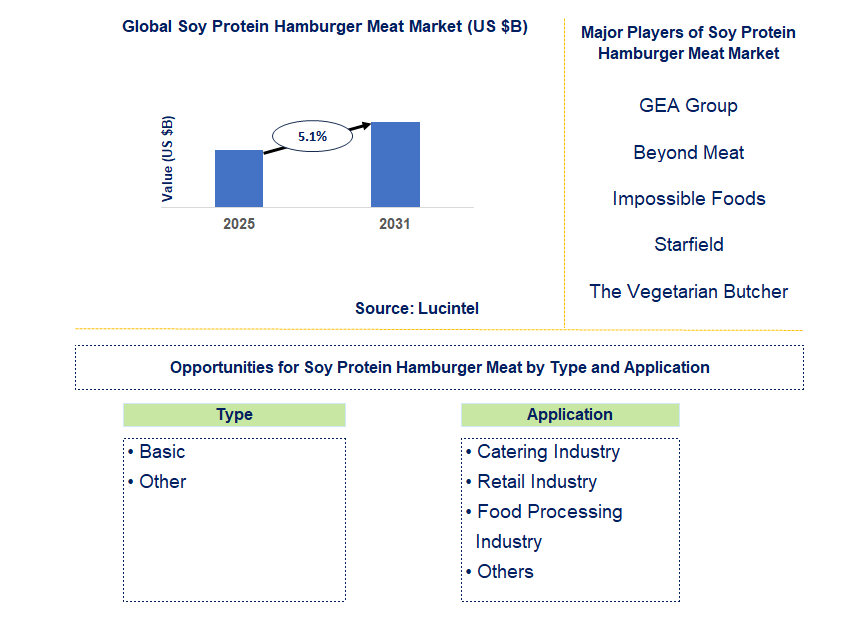
Key data points: The growth forecast = 5.1% annually for the next 7 years. Scroll below to get more insights. This market report covers Trends, opportunities and forecasts in soy protein hamburger meat market to 2031 by type (basic and others), application (catering, retail, food processing, and others), and region (North America, Europe, Asia Pacific, and the Rest of the World)
We'll send your sample report shortly.
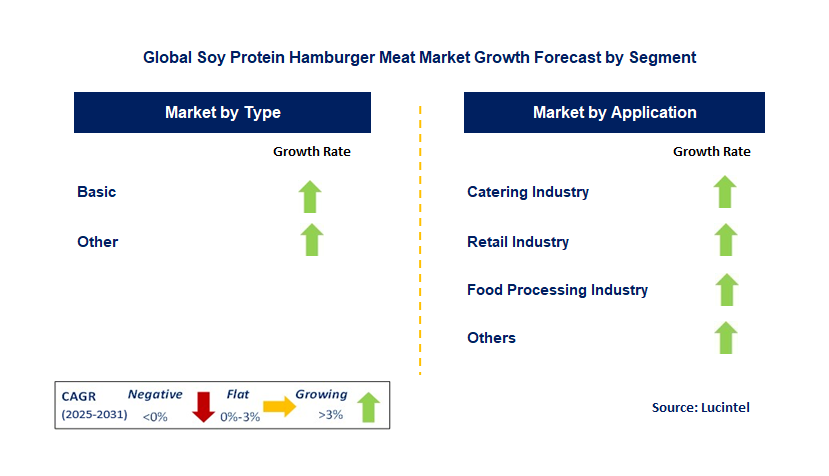
• Lucintel forecasts that, within the type category, basic will remain the largest segment over the forecast period due to its affordability and versatility.
• Within the application category, food processing is expected to witness the highest growth due to increasing demand of plant-based food.
• In terms of region, North America is expected to witness the highest growth over the forecast period due to rising adoption of plant-based food.
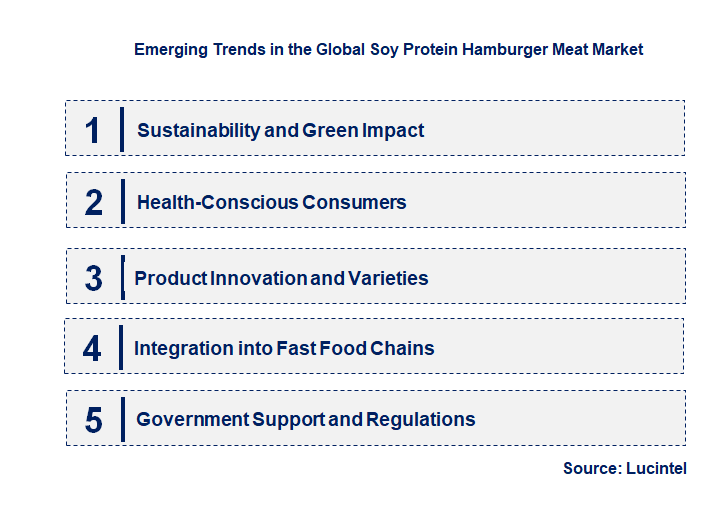
• Sustainability and Green Impact: Today, people care more and more about how the food they eat affects the environment, and products such as soy protein burgers are perceived to be a more environmentally friendly alternative to meat. With increasing interest in deforestation, greenhouse gases, and the water footprint in livestock production, soy protein burgers are becoming more and more desirable to green shoppers.
• Health-Conscious Consumers: With increasing numbers of people adopting plant-based diets for health purposes, soy protein hamburgers are becoming increasingly popular as a healthy option to conventional meat. With high protein and low-fat content, soy burgers provide a healthy choice for those who want to lower their intake of animal products without sacrificing the familiar food forms.
• Product Innovation and Varieties: The market for soy protein hamburgers is becoming more varied, with manufacturers introducing new flavors, textures, and formulations. New developments such as soy protein burgers with enhanced ingredients such as vitamins and minerals appeal to health-oriented consumers seeking enriched plant-based products. Customization and premium offerings are also on the rise to meet diverse taste needs.
• Integration into Fast Food Chains: Fast food chains are increasingly featuring plant-based soy protein hamburgers to address increasing demand from health-conscious and environmentally conscious consumers. Collaborations with large chains like Burger King and McDonald's are broadening the exposure of soy protein burgers and presenting them as an alternative to beef hamburgers in mainstream food establishments.
• Government Support and Regulations: Governments worldwide are encouraging plant-based meat alternatives through positive regulations and incentives in order to minimize carbon emissions and encourage healthier eating. The creation of labeling guidelines for plant-based meat alternatives and subsidies for plant-based protein research are making soy protein hamburgers more affordable to consumers and adding to the market's growth. These trends are influencing the future of the soy protein hamburger meat market. From sustainability issues to product innovation and government incentives, the market is on the verge of substantial growth as consumer preferences keep moving toward healthier and greener food choices.
• Booming Market for Plant-Based Meat Alternatives: With rising consumer demand for plant-based foods, the market for soy protein hamburger meat has experienced rapid growth. Large food companies are building out their lines to include soy protein-based products, and innovations in taste and texture are assisting in driving consumer uptake in retail and foodservice channels.
• Government Rules and Incentives: Governments in some regions have been providing incentives for plant protein substitutes, such as soy protein burgers, as a part of sustainable and health policies. Meat reduction policies and policies supporting green products are contributing to influencing the market. Government regulations are stimulating food companies to invest in plant substitutes.
• Health and Wellness Trends: Consumers who are health-conscious are increasingly using plant-based foods such as soy protein burgers as a means of lowering their consumption of red meat and processed foods. In response, manufacturers are coming up with products that are not only plant-based but also nutritionally enhanced, providing benefits such as high fiber and added vitamins and minerals.
• Retail and Fast-Food Adoption: Soy protein burgers are increasingly being adopted in retail and fast food establishments. National fast-food chains such as Burger King have already integrated plant-based protein into their menu, which is normalizing soy protein burgers as a daily food choice. This is further driving the market growth and making it more accessible to a larger group of people.
• Emphasis on Flavor and Texture Innovation: Firms are investing in technologies that enhance the texture and flavor of soy protein hamburgers. Developments in flavor enhancement methods are making the products more desirable to meat consumers, guaranteeing a wider consumer base. Enhanced sensory experiences are central to driving demand for soy protein burgers in mainstream markets. These developments underscore the broad momentum for the soy protein hamburger meat market. Government backing, consumer health patterns, and innovation in product quality and taste are fueling expansion, placing plant-based soy protein alternatives in mainstream position for a more sustainable, health-focused future.
• Expansion in Quick Service Chains: Quick service chains are increasingly adding plant-based offerings to their menus, which will open up important growth opportunities for soy protein hamburgers. Growing partnerships with big restaurant chains will promote wider reach and exposure of soy-based burgers, drawing higher customer numbers and fueling growth in the market.
• Targeting Health-Conscious Consumers: The increasing health-conscious consumer segment offers a significant opportunity for the soy protein hamburger meat market. Through emphasis on producing products with improved nutritional profiles, including added vitamins, fiber, and minerals, firms can appeal to this growing base of consumers seeking healthier, plant-based substitutes for conventional meat.
• Global Market Expansion: The market for soy protein hamburger meat has strong growth prospects in global markets. Expansion into emerging markets with increasing demand for plant-based foods, like Southeast Asia and Europe, can be a source of new revenues. This is particularly true in nations where vegetarianism or flexitarians is increasing.
• Personalized Product Offerings: Firms can create personalized soy protein burger variants specific to local preferences and flavors. Presenting distinct tastes and textures appealing to the local market can capture a broader base of consumers. Customization may also be applied to vegan, gluten-free, or low-carb variations to meet special dietary requirements.
• Sustainability Partnerships: Partnering with sustainability-oriented organizations and green initiatives can assist soy protein burger brands in establishing credibility and appealing to environmentally conscious consumers. These partnerships may involve certification schemes, green packaging, and involvement in plant-based food programs, further enhancing brand value and market share. These growth prospects identify the potential for the soy protein hamburger meat market to grow even more. With an emphasis on strategic alliances, local adaptation, and sustainability, businesses can leverage the increasing need for plant-based alternatives and emerge as leaders in this emerging market.
• GEA Group
• Beyond Meat
• Impossible Foods
• Starfield
• The Vegetarian Butcher
• Basic
• Others
• Catering
• Retail
• Food Processing
• Others
• North America
• Europe
• Asia Pacific
• The Rest of the World
• United States: The U.S. has witnessed rapid expansion in the soy protein hamburger meat market due to the growing popularity of plant-based diets. Key players such as Beyond Meat and Impossible Foods have paved the way for soy protein-based substitutes, and consumer demand for healthy, sustainable foods is on the rise. The U.S. market is a key driver in the global plant-based protein market.
• China: China is experiencing strong demand for plant protein products, such as soy protein hamburgers. Although the nation has a rich history of soy consumption, there is a growing trend towards alternative protein sources due to increased awareness of health and environmental issues. The market is still in its development stages, with issues of consumer education and acceptance of plant-based diets.
• Germany: In Germany, sustainability and lowering meat intake are highly emphasized, driving growth in the soy protein hamburger meat market. The German market is among the top markets in Europe for plant-based meat alternatives, with consumers looking for products that are sustainable and healthy. Soy protein burgers are gaining popularity in retail and foodservice.
• India: India has a huge vegetarian base, and the growth of plant-based protein foods like soy protein hamburgers fits well with this demographic. As people are increasingly concerned with animal welfare and sustainability, urban markets are gaining traction for plant-based meat. Yet, the market is at a nascent stage, and cultural acceptance and affordability are crucial to market penetration.
• Japan: Japan's increasing interest in plant-based eating has resulted in a rise in demand for soy protein-based hamburger substitutes. As sustainability becomes increasingly important, consumers are looking for environmentally friendly products. Japan's food industry is responding to international plant-based trends, and soy protein burgers are viewed as healthier and more sustainable than conventional meat.


• GEA Group
• Beyond Meat
• Impossible Foods
• Starfield
• The Vegetarian Butcher Q5. Which soy protein hamburger meat market segment will be the largest in future? Answer: Lucintel forecasts that, within the type category, basic will remain the largest segment over the forecast period due to its affordability and versatility. Q6. In soy protein hamburger meat market, which region is expected to be the largest in next 5 years? Answer: In terms of region, North America is expected to witness the highest growth over the forecast period due to rising adoption of plant-based food. Q7. Do we receive customization in this report? Answer: Yes, Lucintel provides 10% customization without any additional cost.


Choose a license that fits your team. Instant PDF delivery.
Prices exclude taxes. Instant delivery. Custom licensing available on request.
Market Report · July 22, 2026
Market Report · July 22, 2026
Market Report · July 22, 2026
Trusted partner for strategic intelligence and business growth


Receive a complimentary market analysis tailored to your industry. Our analysts will identify key growth opportunities and competitive dynamics specific to your business.

Market size, growth rate, and key trend analysis for your specific sector.

Top competitor positioning and market share analysis.

Strategic recommendations backed by data-driven insights.
Get curated market intelligence and competitive moves straight to your inbox.
By subscribing, you agree to receive our monthly insights. Unsubscribe anytime.
Receive a complimentary market analysis tailored to your industry. Our analysts will identify key growth opportunities and competitive dynamics specific to your business.
Market size, growth rate, and key trend analysis for your specific sector.
Top competitor positioning and market share analysis.
Strategic recommendations backed by data-driven insights.
Get curated market intelligence, emerging trends, and competitive moves straight to your inbox each month.
By subscribing, you agree to receive our monthly insights. Unsubscribe anytime.
We'll send your sample report shortly.