
Report Feature
Solvent Extraction Rapeseed Oil Market Trends and Forecast
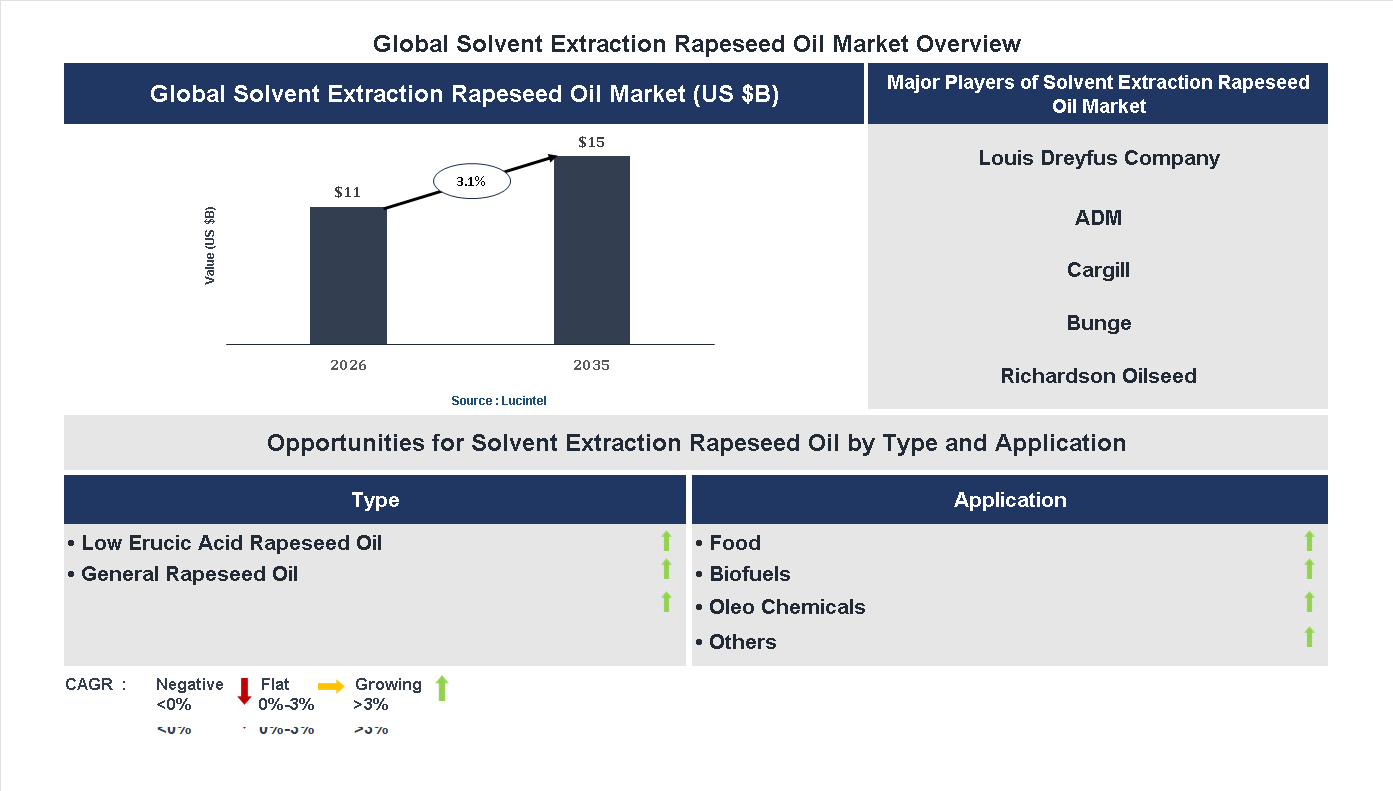
The future of the global solvent extraction rapeseed oil market looks promising with opportunities in the food, biofuel, and oleo chemical markets. The global solvent extraction rapeseed oil market is expected to reach an estimated $15 billion by 2035 with a CAGR of 3.1% from 2026 to 2035. The major drivers for this market are the increasing demand for affordable edible oils, the rising use in processed food production, and the growing consumption of vegetable cooking oils.• Lucintel forecasts that, within the type category, low erucic acid rapeseed oil is expected to witness higher growth over the forecast period.
• Within the application category, biofuel is expected to witness the highest growth.
• In terms of region, APAC is expected to witness the highest growth over the forecast period. Gain valuable insights for your business decisions with our comprehensive 150+ page report. Sample figures with some insights are shown below.
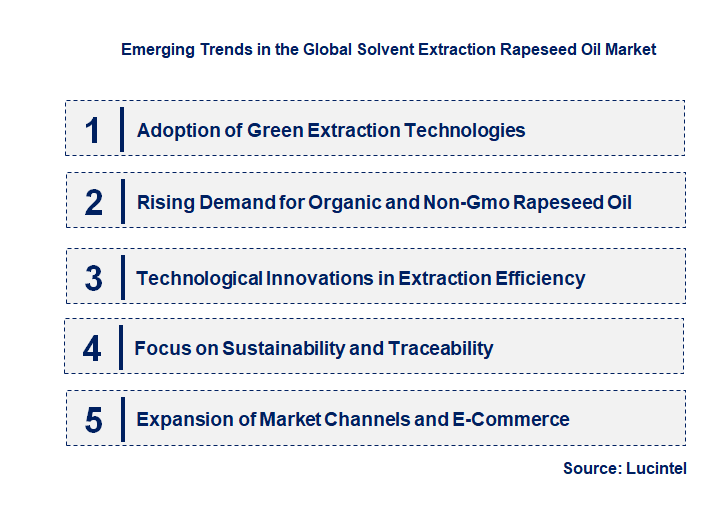
Emerging Trends in the Solvent Extraction Rapeseed Oil Market
The solvent extraction rapeseed oil market is experiencing significant transformation driven by technological advancements, changing consumer preferences, and sustainability initiatives. As global demand for plant-based oils increases, industry players are adopting innovative extraction methods and focusing on eco-friendly practices. These developments are not only enhancing efficiency and product quality but also aligning with environmental and health standards. The markets evolution reflects a broader shift towards sustainable agriculture and health-conscious consumption, prompting companies to innovate continuously. Understanding these emerging trends is crucial for stakeholders aiming to capitalize on growth opportunities and navigate the competitive landscape effectively.• Adoption of Green Extraction Technologies: This trend involves utilizing environmentally friendly extraction methods such as supercritical CO2 extraction and cold-pressing, which reduce chemical use and energy consumption. These techniques improve oil purity and preserve nutritional quality, appealing to health-conscious consumers. The shift towards green technologies also aligns with regulatory pressures and sustainability goals, helping companies reduce their carbon footprint and meet eco-label standards. As a result, the market is witnessing increased investment in innovative, eco-friendly extraction processes that enhance product appeal and compliance.
• Rising Demand for Organic and Non-GMO Rapeseed Oil: Consumers are increasingly seeking organic and non-GMO options due to health concerns and environmental awareness. This trend influences sourcing practices, with farmers adopting organic cultivation methods and non-GMO seeds. Companies are responding by expanding their organic product lines and obtaining relevant certifications, which can command premium prices. The demand for organic and non-GMO rapeseed oil is driving market growth, encouraging sustainable farming practices, and fostering transparency in supply chains, ultimately shaping a more health-focused and environmentally responsible market landscape.
• Technological Innovations in Extraction Efficiency: Advances in extraction equipment and process optimization are significantly improving yield and reducing processing time. Innovations such as ultrasonic-assisted extraction and enzyme-assisted methods enhance oil recovery while minimizing waste. These technological improvements lower production costs and increase profitability for manufacturers. Additionally, they enable the extraction of higher-quality oils with better flavor and nutritional profiles. As a result, companies can meet increasing consumer expectations for quality and sustainability, making efficiency improvements a key driver of market competitiveness and growth.
• Focus on Sustainability and Traceability: Consumers and regulators are demanding greater transparency regarding the origin and environmental impact of rapeseed oil. Companies are implementing traceability systems and sustainable sourcing practices to meet these expectations. This includes adopting blockchain technology for supply chain transparency and engaging in sustainable farming initiatives. Emphasizing sustainability not only enhances brand reputation but also ensures compliance with evolving regulations. The focus on traceability and sustainability is reshaping the market by fostering responsible production practices and building consumer trust, ultimately supporting long-term industry growth.
• Expansion of Market Channels and E-commerce: The rise of online retail platforms and direct-to-consumer sales channels is transforming distribution strategies. Consumers increasingly prefer purchasing health and specialty oils online for convenience and access to a broader product range. E-commerce enables brands to reach niche markets and provide detailed product information, fostering brand loyalty. This trend also encourages companies to develop digital marketing strategies and invest in online storefronts. The expansion of digital channels is broadening market reach, increasing sales opportunities, and supporting the growth of premium and specialty rapeseed oil products in a competitive landscape. These emerging trends are collectively reshaping the solvent extraction rapeseed oil market by promoting sustainability, technological innovation, and consumer-centric approaches. They are driving growth, improving product quality, and fostering transparency, which ultimately enhances market competitiveness and aligns with global sustainability and health objectives.
Recent Development in the Solvent Extraction Rapeseed Oil Market
The solvent extraction rapeseed oil market is experiencing rapid growth driven by increasing demand for healthy cooking oils and bio-based products. Innovations in extraction technology and sustainable practices are shaping the industry landscape. Market players are focusing on efficiency, quality, and environmental impact to meet consumer preferences and regulatory standards. These developments are creating new opportunities for producers, suppliers, and investors, ultimately transforming the market dynamics and expanding its global footprint.• Advancements in Extraction Technology: Enhanced solvent efficiency and automation are increasing yield and reducing costs, leading to higher profitability for producers. These innovations improve oil recovery rates and minimize environmental impact, making the process more sustainable. As a result, companies can meet rising demand more effectively, boosting overall market growth and competitiveness.
• Growing Demand for Organic and Non-GMO Oils: Consumers are increasingly seeking organic and non-GMO rapeseed oils for health and environmental reasons. This trend encourages farmers to adopt sustainable cultivation practices, which in turn supports premium pricing and market differentiation. The shift boosts market value, encourages product innovation, and expands the consumer base for organic rapeseed oil products.
• Expansion of Sustainable Farming Practices: Adoption of eco-friendly cultivation methods, such as crop rotation and reduced pesticide use, is gaining traction. These practices improve soil health and reduce environmental footprint, aligning with global sustainability goals. The market benefits from increased consumer trust and regulatory support, fostering long-term growth and encouraging investment in sustainable supply chains.
• Integration of Biotechnological Innovations: Genetic modification and biotechnology are enhancing rapeseed crop yields and oil content, making production more efficient. These innovations help meet rising global demand while reducing land use and resource consumption. The market gains from increased supply stability, cost reduction, and the ability to develop specialized oil varieties tailored to specific industrial needs.
• Rising Investment in Market Infrastructure: Investments in processing facilities, logistics, and storage are improving supply chain efficiency and product quality. Enhanced infrastructure reduces lead times and costs, enabling faster market response and expanded distribution networks. This development supports market scalability, attracts new entrants, and sustains growth momentum across regional markets. The overall impact of these developments is a more efficient, sustainable, and diversified solvent extraction rapeseed oil market. Increased technological innovation, consumer preference shifts, and infrastructure investments are driving growth, expanding market reach, and improving profitability. These factors collectively position the industry for long-term resilience and global competitiveness.
Strategic Growth Opportunities in the Solvent Extraction Rapeseed Oil Market
The solvent extraction rapeseed oil market is experiencing significant growth driven by increasing demand for plant-based oils, advancements in extraction technologies, and expanding applications across food, biofuel, and industrial sectors. Market players are focusing on innovation, sustainability, and supply chain optimization to capitalize on emerging opportunities. As consumer preferences shift towards healthier and eco-friendly products, the market is poised for substantial expansion, creating new avenues for investment and development in the coming years.• Enhanced extraction efficiency through advanced solvent technologies: Implementing innovative solvent systems and process optimizations can significantly increase oil yield from rapeseed. This reduces raw material waste, lowers production costs, and improves overall profitability. Additionally, environmentally friendly solvents and techniques align with sustainability goals, attracting eco-conscious consumers and regulatory approval. These improvements enable producers to meet rising demand while maintaining high-quality standards, fostering market growth and competitive advantage.
• Growing demand for rapeseed oil in biofuel production: The shift towards renewable energy sources is boosting the use of rapeseed oil as a feedstock for biodiesel. Its favorable fatty acid profile and high oil content make it an ideal candidate for biofuel manufacturing. Increasing government incentives and environmental regulations further support this trend. As the biofuel industry expands, solvent extraction methods will play a crucial role in ensuring efficient, large-scale oil production, driving market growth and diversification.
• Expansion of applications in food and nutraceutical sectors: Rapeseed oil is increasingly used in processed foods, cooking, and health supplements due to its nutritional benefits and versatility. Solvent extraction ensures high purity and quality, meeting stringent food safety standards. The rising consumer preference for plant-based, healthy oils fuels demand. Innovations in extraction processes that preserve bioactive compounds and improve flavor profiles will open new opportunities in premium and functional food markets, supporting overall industry expansion.
• Adoption of sustainable and eco-friendly extraction practices: Environmental concerns are prompting industry players to adopt greener extraction methods, such as using biodegradable solvents or supercritical CO2 extraction. These techniques reduce chemical waste and energy consumption, aligning with sustainability initiatives. Certification standards and consumer awareness are driving demand for sustainably produced rapeseed oil. Embracing eco-friendly practices not only enhances brand reputation but also ensures compliance with regulations, fostering long-term market stability and growth.
• Increasing investments in capacity expansion and technological innovation: Companies are investing in modernizing extraction facilities and adopting cutting-edge technologies to meet rising global demand. Automation, process optimization, and integration of digital solutions improve efficiency and product quality. These investments enable scalability, reduce operational costs, and facilitate rapid response to market fluctuations. As the industry evolves, continuous innovation and capacity expansion will be vital for maintaining competitive advantage and capturing new market segments. The overall impact of these growth opportunities is a dynamic, expanding solvent extraction rapeseed oil market characterized by technological advancements, diversified applications, and sustainability focus. These factors collectively enhance production efficiency, meet evolving consumer and regulatory demands, and open new revenue streams. As a result, the market is positioned for sustained growth, increased competitiveness, and greater global influence in the coming years.
Solvent Extraction Rapeseed Oil Market Driver and Challenges
The solvent extraction rapeseed oil market is influenced by a variety of technological, economic, and regulatory factors that shape its growth trajectory. Advances in extraction technologies, fluctuating global oilseed prices, and evolving food safety standards are key drivers. Additionally, increasing demand for healthy edible oils and sustainability initiatives further impact the market dynamics. Conversely, challenges such as environmental concerns, regulatory restrictions, and supply chain disruptions pose significant hurdles. Understanding these drivers and challenges is essential for stakeholders to navigate the market effectively and capitalize on emerging opportunities while mitigating risks. The factors responsible for driving the solvent extraction rapeseed oil market include:-• Technological Advancements: The development of innovative solvent extraction techniques has significantly improved oil yield efficiency and reduced processing costs. Modern extraction methods, such as supercritical fluid extraction, offer higher purity and environmental benefits, making the process more sustainable. These technological improvements enable producers to meet increasing demand while adhering to stricter quality standards, thus expanding market reach and profitability.
• Rising Demand for Edible Oils: The global increase in population and changing dietary preferences have led to a surge in demand for edible oils, especially healthy options like rapeseed oil. Its favorable nutritional profile, including low saturated fat content and high omega-3 fatty acids, makes it a preferred choice among consumers. This growing demand drives producers to expand extraction capacities and innovate to meet consumer preferences.
• Economic Growth and Urbanization: Rapid economic development in emerging markets has resulted in increased disposable incomes and urban lifestyles, which favor the consumption of processed and packaged foods containing rapeseed oil. This economic shift boosts demand for refined edible oils, encouraging investments in extraction facilities and supply chain infrastructure to cater to expanding markets.
• Supply Chain and Raw Material Availability: The availability of rapeseed crops, influenced by agricultural practices and climatic conditions, directly impacts the supply of raw materials for solvent extraction. Improved agricultural productivity and supply chain logistics ensure consistent raw material supply, enabling market players to meet demand efficiently and stabilize prices, thus fostering market growth.
• Sustainability and Environmental Concerns: Growing awareness of environmental impacts associated with solvent extraction processes, such as solvent emissions and waste generation, has prompted the adoption of greener extraction technologies. Regulatory pressures and consumer preferences for sustainable products are encouraging companies to innovate and adopt eco-friendly practices, which can influence market dynamics positively. The challenges facing the solvent extraction rapeseed oil market include:-
• Environmental Regulations and Sustainability Issues: Stringent environmental regulations aimed at reducing solvent emissions and waste disposal pose compliance challenges for producers. Implementing eco-friendly extraction technologies often involves high capital investments and operational adjustments, which can increase costs and limit profit margins, thereby hindering market expansion.
• Fluctuating Raw Material Prices: The volatility in rapeseed prices, driven by weather conditions, global demand, and agricultural policies, affects profit margins for extraction companies. Price fluctuations can lead to supply uncertainties and impact the overall stability of the market, making it difficult for producers to plan long-term investments.
• Supply Chain Disruptions: Disruptions caused by geopolitical tensions, transportation issues, or pandemics can hinder the procurement and distribution of raw materials and finished products. Such disruptions can lead to shortages, increased costs, and delayed market growth, especially in regions heavily dependent on imported rapeseed. The solvent extraction rapeseed oil market is shaped by technological innovations, rising consumer demand, economic growth, and supply chain efficiencies, which collectively drive its expansion. However, environmental regulations, raw material price volatility, and supply chain disruptions present significant challenges that could temper growth prospects. Navigating these factors requires strategic investments in sustainable practices and supply chain resilience, enabling market players to capitalize on opportunities while mitigating risks. Overall, the markets future will depend on balancing technological progress with regulatory compliance and supply chain stability.
List of Solvent Extraction Rapeseed Oil Companies
Companies in the market compete on the basis of product quality offered. Major players in this market focus on expanding their manufacturing facilities, R&D investments, infrastructural development, and leverage integration opportunities across the value chain. With these strategies solvent extraction rapeseed oil companies cater increasing demand, ensure competitive effectiveness, develop innovative products & technologies, reduce production costs, and expand their customer base. Some of the solvent extraction rapeseed oil companies profiled in this report include-• Louis Dreyfus Company
• ADM
• Cargill
• Bunge
• Richardson Oilseed
• Viterra
• Al Ghurair
• CHS
• Pacific Coast Canola
• Oliyar
Solvent Extraction Rapeseed Oil Market by Segment
The study includes a forecast for the global solvent extraction rapeseed oil market by type, application, and region.Solvent Extraction Rapeseed Oil Market by Type [Value from 2019 to 2035]:
• Low Erucic Acid Rapeseed Oil
• General Rapeseed Oil
Solvent Extraction Rapeseed Oil Market by Application [Value from 2019 to 2035]:
• Food
• Biofuels
• Oleo Chemicals
• Others
Solvent Extraction Rapeseed Oil Market by Region [Value from 2019 to 2035]:
• North America
• Europe
• Asia Pacific
• The Rest of the World
Country Wise Outlook for the Solvent Extraction Rapeseed Oil Market
The solvent extraction rapeseed oil market has experienced significant shifts driven by technological advancements, changing consumer preferences, and evolving regulatory landscapes across major economies. As countries seek sustainable and efficient extraction methods, innovations in processing techniques and increased demand for plant-based oils have shaped market dynamics. Each country’s unique agricultural practices, policies, and market needs influence these developments, leading to diverse trends and opportunities globally. Understanding these regional differences is crucial for stakeholders aiming to capitalize on emerging trends and ensure sustainable growth in the solvent extraction rapeseed oil sector.• United States: The U.S. market has seen increased adoption of environmentally friendly extraction technologies, such as supercritical CO2 extraction, reducing reliance on traditional solvents. Growing demand for organic and non-GMO rapeseed oil has prompted farmers and producers to adopt sustainable practices. Regulatory pressures for food safety and environmental standards have also driven innovation in processing methods. Additionally, the expansion of biofuel industries has boosted rapeseed oil production, aligning with renewable energy goals. Market players are investing in R&D to improve yield efficiency and oil quality, ensuring competitiveness in domestic and export markets.
• China: China remains the largest consumer and producer of rapeseed oil, with recent developments focusing on modernization of extraction facilities and increased capacity. The government’s support for agricultural modernization and sustainable practices has led to the adoption of advanced solvent extraction techniques. Efforts to reduce environmental impact include the use of less toxic solvents and waste management improvements. The rising demand for healthy cooking oils has encouraged producers to enhance oil purity and nutritional content. Additionally, China’s focus on food safety standards has prompted stricter quality controls, fostering innovation in extraction and refining processes to meet international standards.
• Germany: Germany’s market is characterized by a strong emphasis on organic and sustainable products, with solvent extraction methods evolving to meet these demands. Innovations include the use of green solvents and energy-efficient extraction processes to minimize environmental impact. The country’s strict regulatory environment has driven the adoption of cleaner technologies and higher quality standards. Germany’s focus on health-conscious consumers has increased demand for high-quality, non-GMO rapeseed oil, prompting producers to invest in advanced extraction and refining techniques. The integration of digital technologies for process optimization is also a recent trend, enhancing efficiency and product traceability.
• India: India’s rapeseed oil market is rapidly growing, driven by increasing health awareness and demand for affordable, nutritious cooking oils. Recent developments include the adoption of solvent extraction methods that improve yield and reduce processing costs. Government initiatives promoting oilseed cultivation and export have supported industry growth. There is a rising trend toward organic and cold-pressed oils, although solvent extraction remains dominant for large-scale production. Efforts to improve seed quality and reduce post-harvest losses are ongoing. Additionally, technological upgrades in extraction plants are enhancing efficiency and environmental compliance, aligning with India’s broader sustainability goals.
• Japan: Japan’s market focuses on high-quality, health-oriented rapeseed oils, with recent innovations emphasizing purity and safety. The adoption of advanced solvent extraction techniques ensures minimal residual solvents and high nutritional value. Regulatory standards for food safety and environmental impact are stringent, prompting the use of eco-friendly solvents and energy-efficient processes. The demand for specialty oils with specific health benefits has led to product diversification. Japan’s emphasis on sustainable agriculture and eco-conscious production practices influences market trends, with companies investing in research to develop premium, clean-label rapeseed oils that cater to health-conscious consumers.

Features of the Global Solvent Extraction Rapeseed Oil Market
Market Size Estimates: Solvent extraction rapeseed oil market size estimation in terms of value ($B). Trend and Forecast Analysis: Market trends (2019 to 2025) and forecast (2026 to 2035) by various segments and regions. Segmentation Analysis: Solvent extraction rapeseed oil market size by type, application, and region in terms of value ($B). Regional Analysis: Solvent extraction rapeseed oil market breakdown by North America, Europe, Asia Pacific, and Rest of the World. Growth Opportunities: Analysis of growth opportunities in different types, applications, and regions for the solvent extraction rapeseed oil market. Strategic Analysis: This includes M&A, new product development, and competitive landscape of the solvent extraction rapeseed oil market. Analysis of competitive intensity of the industry based on Porter’s Five Forces model.
FAQ
Q1. What is the solvent extraction rapeseed oil market size? Answer: The global solvent extraction rapeseed oil market is expected to reach an estimated $15 billion by 2035. Q2. What is the growth forecast for solvent extraction rapeseed oil market? Answer: The global solvent extraction rapeseed oil market is expected to grow with a CAGR of 3.1% from 2026 to 2035. Q3. What are the major drivers influencing the growth of the solvent extraction rapeseed oil market? Answer: The major drivers for this market are the increasing demand for affordable edible oils, the rising use in processed food production, and the growing consumption of vegetable cooking oils. Q4. What are the major segments for solvent extraction rapeseed oil market? Answer: The future of the solvent extraction rapeseed oil market looks promising with opportunities in the food, biofuel, and oleo chemical markets. Q5. Who are the key solvent extraction rapeseed oil market companies? Answer: Some of the key solvent extraction rapeseed oil companies are as follows:• Louis Dreyfus Company
• ADM
• Cargill
• Bunge
• Richardson Oilseed
• Viterra
• Al Ghurair
• CHS
• Pacific Coast Canola
• Oliyar Q6. Which solvent extraction rapeseed oil market segment will be the largest in future? Answer: Lucintel forecasts that, within the type category, low erucic acid rapeseed oil is expected to witness higher growth over the forecast period. Q7. In solvent extraction rapeseed oil market, which region is expected to be the largest in next 5 years? Answer: In terms of region, APAC is expected to witness the highest growth over the forecast period. Q8. Do we receive customization in this report? Answer: Yes, Lucintel provides 10% customization without any additional cost.
Table of Contents
List of Figures
List of Tables
Methodology
- In-depth interviews of the major players in this market
- Detailed secondary research from competitors’ financial statements and published data
- Extensive searches of published works, market, and database information pertaining to industry news, company press releases, and customer intentions
- A compilation of the experiences, judgments, and insights of Lucintel’s professionals, who have analyzed and tracked this market over the years.


Buy Now
Choose a license that fits your team. Instant PDF delivery.
Prices exclude taxes. Instant delivery. Custom licensing available on request.
Key Questions
- • What are some of the most promising, high-growth opportunities for the solvent extraction rapeseed oil market by type (low erucic acid rapeseed oil and general rapeseed oil), application (food, biofuels, oleo chemicals, and others), and region (North America, Europe, Asia Pacific, and the Rest of the World)?
- • Which segments will grow at a faster pace and why?
- • Which region will grow at a faster pace and why?
- • What are the key factors affecting market dynamics? What are the key challenges and business risks in this market?
- • What are the business risks and competitive threats in this market?
- • What are the emerging trends in this market and the reasons behind them?
- • What are some of the changing demands of customers in the market?
- • What are the new developments in the market? Which companies are leading these developments?
- • Who are the major players in this market? What strategic initiatives are key players pursuing for business growth?
- • What are some of the competing products in this market and how big of a threat do they pose for loss of market share by material or product substitution?
- • What M&A activity has occurred in the last 7 years and what has its impact been on the industry? For any questions related to Solvent Extraction Rapeseed Oil Market, Solvent Extraction Rapeseed Oil Market Size, Solvent Extraction Rapeseed Oil Market Growth, Solvent Extraction Rapeseed Oil Market Analysis, Solvent Extraction Rapeseed Oil Market Report, Solvent Extraction Rapeseed Oil Market Share, Solvent Extraction Rapeseed Oil Market Trends, Solvent Extraction Rapeseed Oil Market Forecast, Solvent Extraction Rapeseed Oil Companies, write Lucintel analyst at email: helpdesk@lucintel.com. We will be glad to get back to you soon.


