
Market Report · May 18, 2026

This market report covers trends, opportunities, and forecasts in the global solid-state battery market to 2031 by product technology (thin film battery and portable battery), application (consumer & portable electronics, electric vehicles, energy harvesting, wearable & medical devices, and others), and region (North America, Europe, Asia Pacific, and the Rest of the World)
We'll send your sample report shortly.
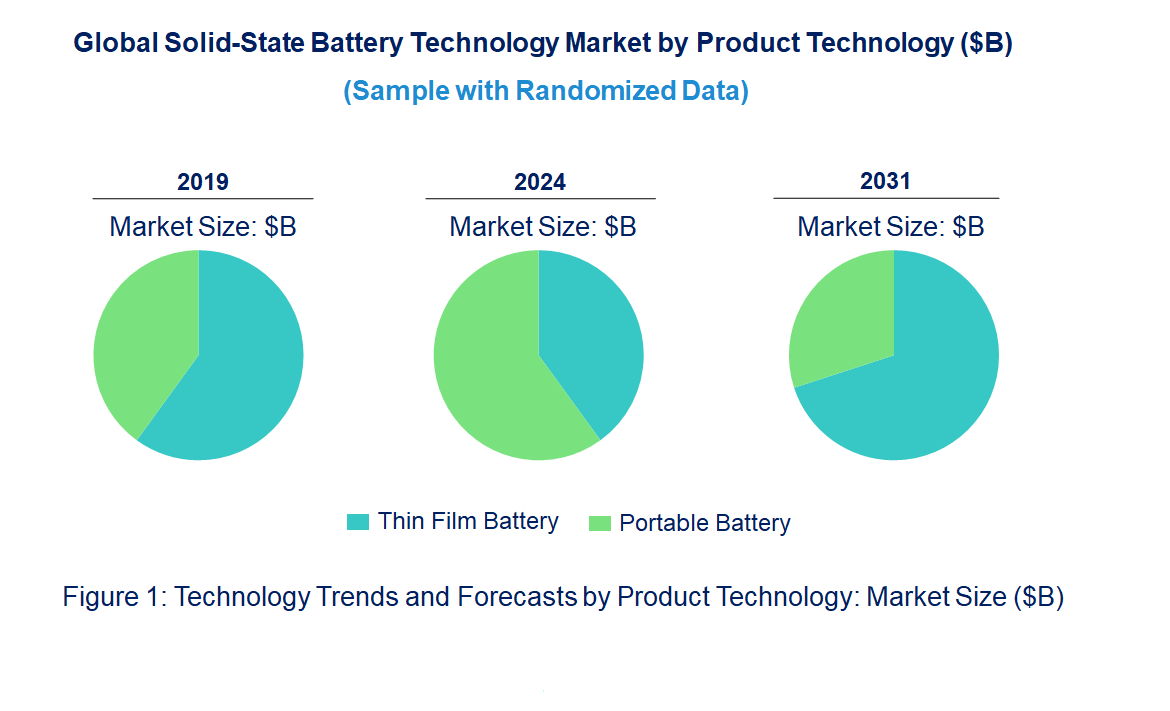
![Solid-State Battery Market Trend and Forecast by Application [Value from 2019 to 2031]:](https://lucintel.com/images/Solid-State-Battery-Technology-Market-Segment.png "Solid-State Battery Market Trend and Forecast by Application [Value from 2019 to 2031]:")
• Higher energy density: Solid-state batteries are achieving considerably higher energy densities compared to traditional lithium-ion batteries, meaning there will be longer-lasting power in smaller, lighter forms. This trend is extremely significant for electric vehicles (EVs), as longer driving ranges and faster charging times have become the key performance indicators. Improved energy density is helping solid-state batteries meet the growing demands of consumers and industries.
• Enhanced safety features: Solid-state batteries eliminate leak and fire hazards inherent to liquid electrolytes, improving safety. For applications like electric vehicles or wearable devices, battery safety becomes a primary consideration. A solid-state electrolyte offers much greater thermal stability and reduces the risk of thermal runaway.
• Improvements in manufacturing processes: New methods for manufacturing are making solid-state batteries more scalable. The development of cost-efficient production methods with high yields is taking solid-state batteries from the laboratory to the production level. Companies are investing in automated and innovative assembly processes to increase output, reduce manufacturing costs, and make solid-state batteries commercially viable.
• Flexible and thin-film battery development: Thin-film solid-state batteries are gaining traction due to their ability to be integrated into flexible and compact devices. This trend is particularly relevant for wearable electronics and medical devices, where small, lightweight batteries are essential. Flexible batteries also open the door for new applications, such as foldable electronics and flexible energy storage solutions.
• Applications in electric vehicles (EVs) and energy storage: Solid-state batteries are set to be a key technology for the next generation of electric vehicles and large-scale energy storage solutions. Superior energy density, safety, and charging speed make them the best choice for EVs, and their ability to store large amounts of energy in a compact space makes them critical for renewable energy integration and grid stabilization. All these emerging trends—the higher energy density, enhanced safety, improved manufacturing, flexible designs, and wide-ranging applications in EVs and energy storage—are revolutionizing the solid-state battery market. Once these innovations become more mainstream, solid-state batteries will play a critical role in future energy storage, from consumer electronics to renewable energy solutions.
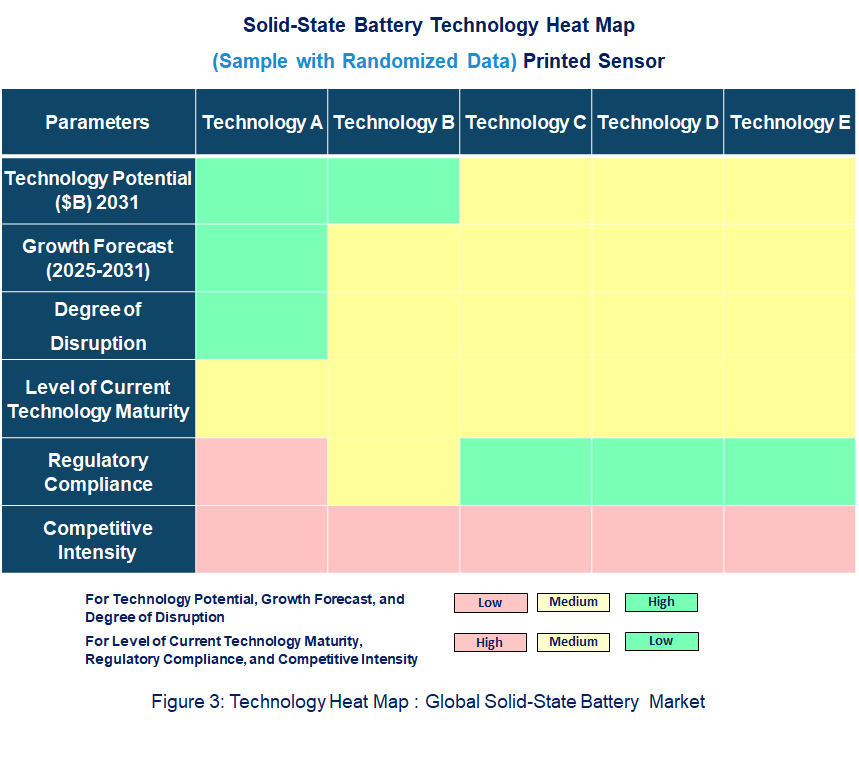
• Potential in Technology: Solid-state batteries have the potential to be highly disruptive because they offer higher energy density, faster charging, and improved safety compared to traditional liquid-based batteries. They use a solid electrolyte that does not leak or burn, making them more stable and efficient for energy storage. This potential is driving interest in solid-state batteries for applications such as electric vehicles, wearable electronics, and large-scale energy storage.
• Degree of Disruption: Solid-state batteries have the potential to disrupt industries by fully replacing current battery technologies. If their performance surpasses that of lithium-ion batteries in terms of safety and efficiency in high-demand applications, such as electric vehicles, battery replacement could become inevitable, especially for renewable energy storage and consumer electronics.
• Current Technology Maturity Level: Solid-state battery technology is still in the development stage, with most advancements occurring at the research and pilot-scale production levels. Despite significant progress, challenges related to cost, scalability, and material limitations remain. With the evolution of manufacturing techniques, technology maturity will increase, and commercial deployment will be possible within the next few years.
• Regulatory Compliance: Like all energy storage technologies, solid-state batteries must meet strict safety, environmental, and performance standards. Regulatory bodies around the world are emphasizing safety certifications, battery recycling standards, and performance benchmarks. Compliance with regulations will be crucial in determining how quickly solid-state batteries can be integrated into commercial markets, particularly in high-risk sectors like electric vehicles.
• BrightVolt: BrightVolt has developed solid-state batteries using proprietary thin-film technology. The company aims to develop flexible, lightweight, and high-energy-density batteries for wearable devices, IoT applications, and medical devices. BrightVolt’s technology will allow safer batteries to deliver improved performance and cycle life, making it a leader in the flexible solid-state battery space.
• Cymbet: Cymbet advances solid-state battery technology in industrial, medical, and automotive settings. Their EnerChip solid-state batteries are robust and perform well under extreme temperatures, opening doors for critical applications such as sensor networks and remote monitoring.
• Solid Power: Solid Power has been working on high-energy-density solid-state batteries, primarily targeting electric vehicle applications. Recently, the company has secured strategic partnerships, including collaborations with Ford and BMW to advance the commercialization of solid-state batteries for EVs. Their technology could offer better safety and performance, potentially reducing the reliance on traditional lithium-ion batteries in EVs.
• Toyota Motor: Toyota has further developed solid-state battery technology as part of its commitment to advancements in electric vehicles. The company aims to bring its solid-state batteries to market around 2025, with a focus on increasing energy density, reducing weight, and enhancing battery safety. Toyota’s solid-state batteries hold significant promise for revolutionizing electric vehicles by greatly increasing driving range and reducing charging time.
• Excellatron Solid State: Excellatron Solid State is driving advancements in high-performance, flame-retardant solid-state batteries. Excellatron’s devices focus on electric vehicle and aerospace applications, where efficiency and safety are paramount. Their technology promises higher energy density and longer battery life, making it a key player in the future of solid-state batteries.
• Robert Bosch: Robert Bosch is investing in solid-state battery technology to accelerate the development of high-performance, safe, and efficient energy storage solutions. Their research focuses on improving the performance of solid-state batteries for electric vehicles and industrial applications. Bosch is also exploring new materials and manufacturing processes to reduce the cost of solid-state batteries, aiming to make them commercially viable at scale.
• Altair Nanotechnologies: Altair Nanotechnologies is working on advanced solid-state batteries with an emphasis on increasing power density and reducing charging times. Their technology uses nanomaterials to enhance the performance and stability of solid-state batteries, particularly for electric vehicles. The solid-state batteries developed by Altair Nanotechnologies are expected to offer better performance than traditional lithium-ion batteries, with a long cycle life and improved safety. Some key players significantly advancing the solid-state battery market include BrightVolt, Cymbet, Solid Power, Toyota Motor, Excellatron Solid State, Robert Bosch, and Altair Nanotechnologies. These companies’ drive for technological innovation will revolutionize energy storage, particularly in electric vehicles, consumer electronics, and other high-demand applications. By focusing on energy density, safety, and performance, these companies are reshaping the landscape and positioning solid-state batteries as a viable alternative to conventional lithium-ion batteries in the near future.
• Increased Demand for Electric Vehicles (EVs): The increased demand for electric vehicles is driving the development of solid-state batteries due to their higher energy density and faster charging capabilities. Solid-state batteries perform well in electric cars because they can extend range while reducing charging times, which is a priority for automakers looking to improve these aspects.
• Safety Concerns with Traditional Lithium-Ion Batteries: Traditional lithium-ion batteries, being flammable and thermally unstable, are hazardous. Solid-state batteries, with their non-flammable solid electrolyte, offer a safer alternative for applications such as electric vehicles, consumer electronics, and aerospace, where battery safety is a crucial parameter.
• Advancements in Manufacturing Technology: A major driver for solid-state batteries is the advancement in manufacturing processes. Innovations in material science, along with automated production techniques, are making it possible to reduce manufacturing costs and improve scalability, bringing solid-state batteries closer to commercial viability and mass adoption in various sectors. Challenges in the solid-state battery market are:
• High Production Costs: One of the biggest challenges for solid-state batteries is the high cost of production. Advanced materials and complex manufacturing processes increase the cost of these batteries, making them less competitive than traditional lithium-ion batteries. Overcoming this challenge will be crucial to making solid-state batteries affordable and accessible at scale.
• Limited Scalability: Scalability poses a major challenge for solid-state battery production. Researchers are still making efforts as the production chain for scalable applications, such as electric vehicles or consumer electronics, continues to face difficulties. Critical scale-economy hurdles stand in the way of achieving economies that could enable practical use at a larger scale.
• Material and Performance Limitations: Challenges facing solid-state batteries relate to the performance and stability of solid electrolytes. For instance, material degradation and low ionic conductivity affect the lifetime and overall efficiency of the batteries. Material limitations must be addressed to enhance the performance and longevity of solid-state batteries. The solid-state battery market is fueled by factors such as the demand for electric vehicles, safety concerns with existing battery technologies, and advances in manufacturing capabilities. However, challenges such as high production costs, limited scalability, and material limitations need to be addressed to fully exploit solid-state batteries. These drivers and challenges are shaping the future of the market, and resolving key hurdles will be critical for the widespread adoption of solid-state batteries in various industries.
• Brightvolt
• Cymbet
• Solid Power
• Toyota Motor
• Excellatron Solid State
• Robert Bosch
• Technology Readiness: Thin film batteries are gaining momentum in niche applications such as flexible electronics and wearables but are not yet scalable or cost-effective. Portable solid-state batteries, which show promise for electric vehicles and consumer electronics, are somewhat more mature but still require further development in energy density and manufacturing techniques. Both technologies are maturing, and regulatory compliance is becoming increasingly important to meet current safety and environmental standards.
• Competitive Intensity and Regulatory Compliance of Various Technologies: Competition is intense in these markets. Companies compete by producing high-performing, low-cost variants that could replace traditional Li-ion batteries. Regulatory compliance will be highly valuable, as these technologies must meet safety, energy efficiency, and environmental standards. Given their applications, whether in the automotive sector or consumer electronics, portable batteries will be crucial for any company competing in these two emerging technologies.
• Technologies Disruption Potential: Thin film batteries and portable batteries are highly innovative solutions in the solid-state battery market. Thin film batteries are highly flexible, making them suitable for compact applications like wearables and medical devices, while portable batteries aim to solve energy storage problems related to consumer electronics and electric vehicles. Both technologies hold promise as disruptors in the market due to their increased energy density, enhanced safety characteristics, and reduced chances of leakage and fire, which are common with traditional batteries. However, much work is required to make these technologies ready to replace mainstream battery applications.
• Thin Film Battery
• Portable Battery
• Consumer & Portable Electronics
• Electric Vehicles
• Energy Harvesting
• Wearable & Medical Devices
• Others
• North America
• Europe
• Asia Pacific
• The Rest of the World
• Latest Developments and Innovations in the Solid-State Battery Technologies
• Companies / Ecosystems
• Strategic Opportunities by Technology Type


Choose a license that fits your team. Instant PDF delivery.
Prices exclude taxes. Instant delivery. Custom licensing available on request.
Market Report · May 18, 2026
Market Report · May 18, 2026
Market Report · May 18, 2026
Trusted partner for strategic intelligence and business growth


Receive a complimentary market analysis tailored to your industry. Our analysts will identify key growth opportunities and competitive dynamics specific to your business.

Market size, growth rate, and key trend analysis for your specific sector.

Top competitor positioning and market share analysis.

Strategic recommendations backed by data-driven insights.
Get curated market intelligence and competitive moves straight to your inbox.
By subscribing, you agree to receive our monthly insights. Unsubscribe anytime.
Receive a complimentary market analysis tailored to your industry. Our analysts will identify key growth opportunities and competitive dynamics specific to your business.
Market size, growth rate, and key trend analysis for your specific sector.
Top competitor positioning and market share analysis.
Strategic recommendations backed by data-driven insights.
Get curated market intelligence, emerging trends, and competitive moves straight to your inbox each month.
By subscribing, you agree to receive our monthly insights. Unsubscribe anytime.
We'll send your sample report shortly.