
Market Report · May 18, 2026

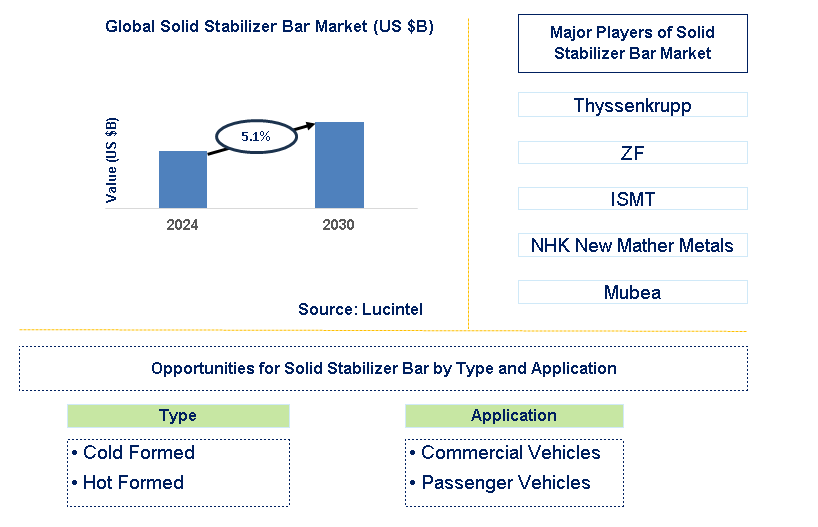
Key data points: The growth forecast = 5.1% annually for the next 6 years. Scroll below to get more insights. This market report covers trends, opportunities, and forecasts in the global solid stabilizer bar market to 2030 by type (cold formed and hot formed), application (commercial vehicles and passenger vehicles), and region (North America, Europe, Asia Pacific, and the Rest of the World)
We'll send your sample report shortly.
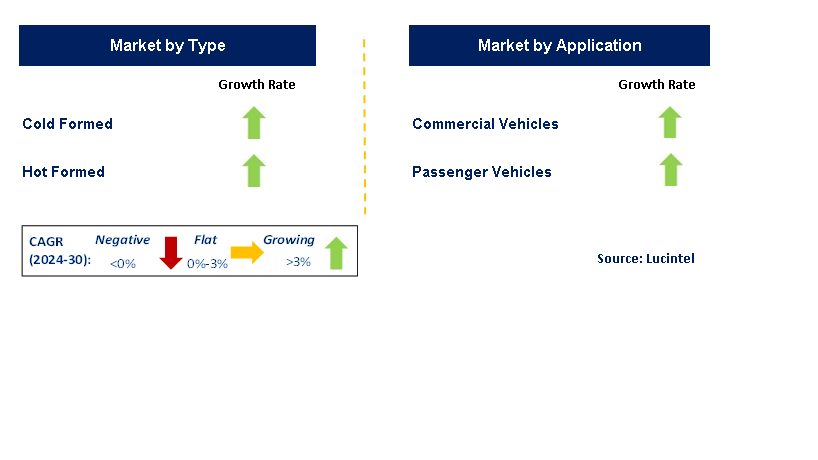
• Lucintel forecasts that, within the type category, cold formed is expected to witness a higher growth over the forecast period.
• Within the application category, commercial vehicles is expected to witness a higher growth.
• In terms of regions, APAC is expected to witness highest growth over the forecast period. Gain valuable insight for your business decisions with our comprehensive 150+ page report
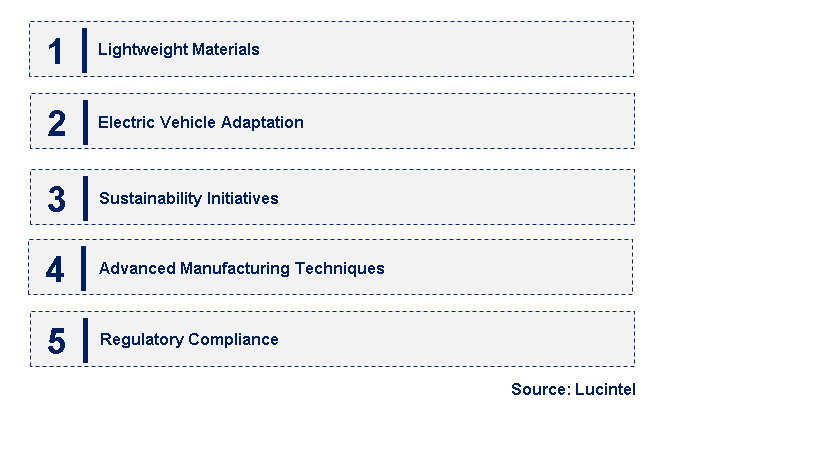
• Lightweight Materials: The shift towards lightweight materials, such as advanced composites and high-strength steel, is a key trend. These materials reduce vehicle weight, enhancing fuel efficiency and performance while maintaining structural integrity, crucial for modern automotive designs.
• Electric Vehicle Adaptation: The rise of electric vehicles is reshaping the stabilizer bar market. Manufacturers are focusing on developing bars that optimize weight and performance for EVs, ensuring stability and handling characteristics that meet the demands of this growing segment.
• Sustainability Initiatives: Increasing environmental concerns are driving manufacturers to adopt sustainable practices. This includes using recyclable materials and reducing waste during production, aligning with global efforts to minimize the automotive industry’s environmental footprint.
• Advanced Manufacturing Techniques: The adoption of automated and advanced manufacturing techniques is improving production efficiency. Technologies such as 3D printing and robotic assembly enhance precision and reduce lead times, enabling manufacturers to respond swiftly to market demands.
• Regulatory Compliance: Stricter regulations regarding vehicle emissions and safety are prompting innovation in stabilizer bar designs. Manufacturers are focused on developing products that comply with these regulations while enhancing vehicle performance and stability. These emerging trends are significantly reshaping the solid stabilizer bar market, fostering innovation and sustainability. The shift to lightweight materials and electric vehicle adaptation reflects broader automotive industry trends, enhancing performance while addressing environmental concerns. Advanced manufacturing techniques streamline production processes, enabling manufacturers to remain competitive. Regulatory compliance drives continuous improvement in design and materials, ensuring that stabilizer bars meet modern performance and safety standards. Collectively, these trends position the market for robust growth in the coming years.
• Material Innovations: Manufacturers are increasingly utilizing advanced materials such as high-strength steel and composites to enhance the performance and durability of solid stabilizer bars. These innovations not only improve product quality but also contribute to overall vehicle weight reduction.
• Electric Vehicle Integration: As electric vehicles gain traction, manufacturers are adapting stabilizer bar designs to cater to their unique requirements. This includes optimizing weight and performance to enhance handling characteristics in EVs.
• Automation in Production: The integration of automation and robotics in manufacturing processes is improving efficiency and precision. This trend reduces production costs and time while maintaining high-quality standards, enabling companies to scale operations effectively.
• Sustainability Practices: Growing environmental concerns are pushing manufacturers to adopt sustainable practices. This includes utilizing recyclable materials and reducing waste in production processes, aligning with global sustainability goals.
• Regulatory Adaptation: Stricter regulations on emissions and vehicle safety are driving innovation in stabilizer bar designs. Companies are investing in R&D to ensure compliance while enhancing performance and safety features in their products. These recent developments highlight the dynamic nature of the solid stabilizer bar market. Innovations in materials and designs are driving improvements in performance, particularly for electric vehicles. Automation enhances production efficiency, while sustainability practices align with global environmental goals. Regulatory adaptations ensure that manufacturers remain compliant while meeting modern consumer demands. Together, these developments are shaping a more competitive and sustainable market landscape
• Passenger Vehicle Manufacturing: The increasing demand for passenger vehicles creates significant growth opportunities for solid stabilizer bar manufacturers. As automakers prioritize performance and safety, high-quality stabilizer bars become essential components, driving demand.
• Commercial Vehicle Sector: Growth in the commercial vehicle sector, driven by rising logistics and transportation needs, presents a substantial opportunity. Stabilizer bars are critical for maintaining vehicle stability, making them integral to this market segment.
• Electric Vehicle Development: The rapid expansion of the electric vehicle market offers unique growth prospects. Manufacturers can innovate stabilizer bar designs tailored specifically for EV requirements, optimizing performance and weight distribution.
• Aftermarket Segment: The growing aftermarket for automotive parts provides opportunities for manufacturers to supply solid stabilizer bars for vehicle upgrades and replacements. This segment is increasingly focusing on performance enhancements, creating demand for high-quality components.
• Global Expansion: Expanding into emerging markets with growing automotive sectors presents significant opportunities. Manufacturers can tap into new customer bases by offering products that meet local demands for performance and reliability. These strategic growth opportunities underscore the solid stabilizer bar market potential for expansion. As demand increases across passenger and commercial vehicles, manufacturers can leverage these trends to innovate and capture market share. The electric vehicle boom presents unique challenges and opportunities, driving innovation in product design. Additionally, the aftermarket segment and global expansion strategies provide pathways for sustained growth. By aligning with these opportunities, businesses can enhance their competitiveness in a rapidly evolving market.
• Technological Advancements: Continuous innovations in materials and manufacturing processes significantly impact the solid stabilizer bar market. The development of lightweight materials, such as high-strength steel and composites, enhances the performance and durability of stabilizer bars. Furthermore, advancements in automated production techniques improve efficiency and precision, allowing manufacturers to produce high-quality components at lower costs. This focus on technology drives competitive advantage and positions companies to meet the growing demands for performance and sustainability in the automotive sector.
• Increasing Vehicle Production: The rising global demand for vehicles, particularly in emerging markets, is a major driver of the solid stabilizer bar market. As production ramps up to meet consumer needs, the demand for stabilizer bars grows correspondingly. This trend is particularly pronounced in regions with expanding automotive industries, where manufacturers are investing in new plants and technologies. The growth in vehicle production not only boosts stabilizer bar sales but also encourages innovations to enhance vehicle stability and safety features.
• Regulatory Compliance: Stricter regulations regarding emissions and vehicle safety are compelling manufacturers to innovate in the solid stabilizer bar market. Compliance with these regulations often requires improved designs and materials, leading to the development of more efficient stabilizer bars that enhance vehicle performance while meeting safety standards. This focus on regulatory compliance not only drives innovation but also helps manufacturers maintain market access and competitiveness in an increasingly regulated environment.
• Focus on Fuel Efficiency: As fuel efficiency becomes a critical consideration for consumers and manufacturers alike, there is a growing emphasis on producing lightweight stabilizer bars that contribute to overall vehicle weight reduction. Lighter vehicles improve fuel economy and reduce emissions, aligning with global sustainability goals. This trend prompts manufacturers to invest in research and development to create stabilizer bars that support fuel-efficient designs, further driving growth in the market.
• Market Competition: The solid stabilizer bar market is characterized by intense competition among manufacturers, pushing them to continuously innovate and improve product offerings. Companies are under pressure to enhance performance, reduce costs, and differentiate their products in a crowded marketplace. This competitive landscape encourages investment in research and development, leading to technological advancements and improved quality. However, it also requires manufacturers to adapt quickly to market changes and consumer preferences. Challenges in the solid stabilizer bar market are:
• Supply Chain Disruptions: Global supply chain disruptions can significantly impact the solid stabilizer bar market, affecting material availability and production timelines. Factors such as geopolitical tensions, natural disasters, and pandemics can lead to delays and increased costs. Manufacturers may struggle to source raw materials, which can hinder production and lead to shortages in the market. Navigating these challenges requires robust supply chain management strategies and diversification of suppliers to mitigate risks.
• Shifting Consumer Preferences: As consumer preferences evolve toward electric and hybrid vehicles, manufacturers of solid stabilizer bars must adapt their offerings to meet the unique requirements of these vehicles. Electric vehicles often have different weight distribution and performance needs, prompting a redesign of stabilizer bars. Companies that fail to anticipate and respond to these shifts may find themselves at a competitive disadvantage, highlighting the need for agility and innovation in product development.
• Cost Pressures: Rising material and production costs can pose significant challenges for manufacturers in the solid stabilizer bar market. Fluctuations in raw material prices, driven by global market conditions, can squeeze profit margins and complicate pricing strategies. Additionally, the need for investment in advanced technologies to enhance production efficiency may strain budgets. Companies must find ways to optimize operations and manage costs while maintaining product quality to remain competitive. The drivers and challenges impacting the solid stabilizer bar market create a complex landscape for manufacturers. While technological advancements, increasing vehicle production, and regulatory compliance offer significant growth opportunities, challenges such as supply chain disruptions, shifting consumer preferences, and cost pressures require strategic management. Balancing these factors is essential for companies aiming to thrive in this dynamic market, as they navigate both opportunities and obstacles in their pursuit of innovation and market leadership.
• Thyssenkrupp
• ZF
• ISMT
• NHK New Mather Metals
• Mubea
• Kongsberg
• Chuo Spring
• DAEWON
• ADDCO
• SwayTec
• Cold Formed
• Hot Formed
• Commercial Vehicles
• Passenger Vehicles
• North America
• Europe
• Asia Pacific
• The Rest of the World
• United States: In the U.S., the solid stabilizer bar market is experiencing growth due to the increasing demand for lightweight and high-performance automotive components. Innovations in materials, such as the use of high-strength steel and composites, are driving the development of more efficient stabilizer bars. Additionally, the shift toward electric vehicles is reshaping the market, with manufacturers adapting designs to meet the unique needs of these vehicles. Sustainability initiatives are also influencing production processes, as companies adopt more eco-friendly materials and manufacturing techniques.
• China: As the largest automotive market in the world, China plays a crucial role in the solid stabilizer bar industry. The country's rapid vehicle production growth, coupled with government initiatives to promote electric vehicles, has created significant demand for advanced stabilizer bar technologies. Chinese manufacturers are focusing on developing lightweight and durable stabilizer bars that enhance vehicle performance while complying with stringent emissions regulations. Additionally, the push for sustainability in China's automotive sector is driving innovation in recyclable materials and energy-efficient production methods.
• Germany: Germany's solid stabilizer bar market is characterized by technological leadership and a strong focus on research and development. The country's automotive industry is renowned for its engineering excellence, and manufacturers are continuously innovating to improve stabilizer bar performance. In particular, the shift toward electric vehicles and autonomous driving technologies is driving demand for stabilizer bars that enhance vehicle stability and safety. German companies are also leading the way in adopting sustainable manufacturing practices, aligning with the country's environmental goals.
• India: India represents a growing market for solid stabilizer bars, driven by rising vehicle production and increasing consumer demand for performance-oriented vehicles. The Indian government's push to promote electric vehicles is also influencing the market, as manufacturers develop stabilizer bars tailored for EV applications. Additionally, India's burgeoning automotive aftermarket presents opportunities for stabilizer bar manufacturers, particularly in the replacement and performance enhancement segments. However, challenges such as fluctuating raw material prices and supply chain disruptions remain key concerns for the industry.
• Japan: Japan's solid stabilizer bar market is shaped by its leadership in automotive manufacturing and innovation. Japanese companies are at the forefront of developing advanced stabilizer bar technologies, with a focus on improving vehicle stability and safety. The country's strong commitment to sustainability is also driving the adoption of eco-friendly materials and energy-efficient production processes. Japan's automotive sector is heavily focused on electric and hybrid vehicles, creating opportunities for manufacturers to develop stabilizer bars optimized for these vehicle types.


• Thyssenkrupp
• ZF
• ISMT
• NHK New Mather Metals
• Mubea
• Kongsberg
• Chuo Spring
• DAEWON
• ADDCO
• SwayTec Q5. Which solid stabilizer bar market segment will be the largest in future? Answer: Lucintel forecasts that, within the type category, cold formed is expected to witness higher growth over the forecast period. Q6. In solid stabilizer bar market, which region is expected to be the largest in next 5 years? Answer: In terms of regions, APAC is expected to witness highest growth over the forecast period. Q7. Do we receive customization in this report? Answer: Yes, Lucintel provides 10% customization without any additional cost.


Choose a license that fits your team. Instant PDF delivery.
Prices exclude taxes. Instant delivery. Custom licensing available on request.
Market Report · May 18, 2026
Market Report · May 18, 2026
Market Report · May 18, 2026
Trusted partner for strategic intelligence and business growth


Receive a complimentary market analysis tailored to your industry. Our analysts will identify key growth opportunities and competitive dynamics specific to your business.

Market size, growth rate, and key trend analysis for your specific sector.

Top competitor positioning and market share analysis.

Strategic recommendations backed by data-driven insights.
Get curated market intelligence and competitive moves straight to your inbox.
By subscribing, you agree to receive our monthly insights. Unsubscribe anytime.
Receive a complimentary market analysis tailored to your industry. Our analysts will identify key growth opportunities and competitive dynamics specific to your business.
Market size, growth rate, and key trend analysis for your specific sector.
Top competitor positioning and market share analysis.
Strategic recommendations backed by data-driven insights.
Get curated market intelligence, emerging trends, and competitive moves straight to your inbox each month.
By subscribing, you agree to receive our monthly insights. Unsubscribe anytime.
We'll send your sample report shortly.