
Market Report · July 22, 2026

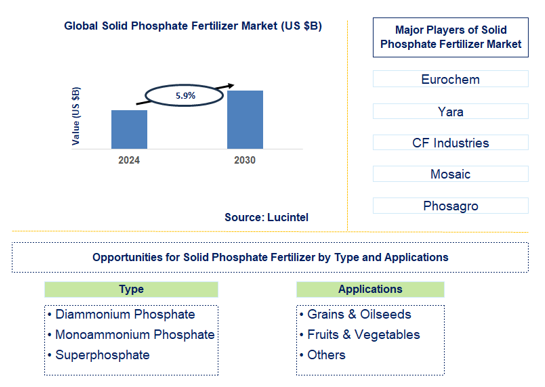
Key data points: The growth forecast = 5.9% annually for the next 6 years. Scroll below to get more insights. This market report covers trends, opportunities, and forecast in the global solid phosphate fertilizer market to 2030 by type (diammonium phosphate, monoammonium phosphate, and superphosphate), applications (grains & oilseeds, fruits & vegetables, and others), and region (North America, Europe, Asia Pacific, and the Rest of the World)
We'll send your sample report shortly.
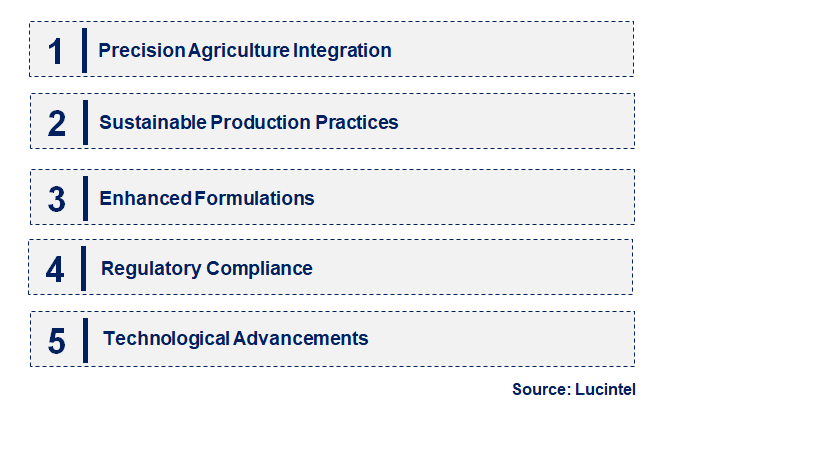
• Precision Agriculture Integration: The adoption of precision agriculture technologies is improving the efficiency of phosphate fertilizer use. By utilizing GPS and data analytics, farmers can apply fertilizers more precisely, reducing waste and enhancing crop yields.
• Sustainable Production Practices: There is a growing emphasis on sustainable production methods. Companies are investing in technologies to reduce emissions, recycle by-products, and minimize the environmental impact of phosphate fertilizer production.
• Enhanced Formulations: New formulations, such as slow-release and controlled-release fertilizers, are becoming more popular. These products improve nutrient availability over time and reduce the frequency of application, benefiting both crop yields and environmental health.
• Regulatory Compliance: Stricter environmental regulations are driving changes in the phosphate fertilizer industry. Companies are adapting to new standards by investing in cleaner technologies and improving their compliance with environmental policies.
• Technological Advancements: Innovations in manufacturing technologies, such as improved granulation and coating processes, are enhancing the quality and effectiveness of phosphate fertilizers. These advancements support better nutrient delivery and more efficient use. These emerging trends are having a profound impact on changing the crystalline phosphate fertilizer market by fostering technological advancements, mobile-related solutions, and compliance with regulations. As the industry adapts to these trends, it is moving toward energy-efficient, green, and accuracy-oriented solutions, which are more effective in their operation. This shift mirrors changing agricultural trends and points to the constant and progressive evolution needed to adapt to the changing market and its compliance requirements, meeting international standards.
• Technological Innovations: Advances in production technology have led to the development of more efficient and environmentally friendly phosphate fertilizers. Innovations include improved granulation techniques and enhanced nutrient release mechanisms.
• Sustainability Initiatives: Many companies are implementing sustainability initiatives to reduce the environmental impact of phosphate fertilizer production. These efforts include reducing greenhouse gas emissions, recycling waste products, and improving energy efficiency.
• Regulatory Changes: New regulations aimed at reducing environmental impact and ensuring safe fertilizer use are being introduced globally. Companies are adapting by investing in cleaner technologies and enhancing compliance with regulatory requirements.
• Market Expansion: The growth of agricultural activities in developing regions is driving demand for phosphate fertilizers. Companies are expanding their operations to cater to emerging markets and meet the increasing demand for agricultural inputs.
• Product Diversification: Manufacturers are diversifying their product offerings to include specialty fertilizers with enhanced properties, such as slow-release and controlled-release formulations. This diversification helps meet specific crop needs and improves fertilizer efficiency. These recent developments in the solid phosphate fertilizer market are significantly impacting the industry. Innovations in controlled-release formulations and environmental impact reduction are enhancing product efficiency and sustainability. The expansion of production facilities and integration of advanced technologies are addressing supply and operational challenges, while adaptation to new regulatory standards is driving compliance and innovation. Collectively, these developments are shaping the market by improving product performance, meeting regulatory requirements, and supporting sustainable agricultural practices, ultimately driving growth and transformation in the sector.
• Precision Agriculture: Integrating phosphate fertilizers with precision agriculture technologies offers opportunities for improved efficiency and targeted nutrient delivery. This approach helps optimize fertilizer use, enhance crop yields, and minimize environmental impact.
• Sustainable Fertilizer Solutions: There is a growing demand for sustainable phosphate fertilizers that minimize environmental impact. Opportunities exist in developing products with reduced emissions, improved nutrient release, and environmentally friendly production processes.
• Emerging Markets: Expanding into emerging markets with growing agricultural sectors presents significant growth opportunities. Companies can leverage local demand and invest in production and distribution to capture market share in these regions.
• Product Innovation: Developing new formulations, such as slow-release and controlled-release fertilizers, offers opportunities for differentiation and meeting specific crop needs. Innovation in product design can enhance fertilizer efficiency and performance.
• Regulatory Compliance: Adapting to new regulatory standards provides opportunities for companies to enhance their market position. Investing in technologies and practices that comply with environmental regulations can lead to competitive advantages and market growth. The solid phosphate fertilizer market is poised for growth through strategic opportunities in precision agriculture, organic farming, high-yield crop production, developing regions, and sustainable solutions. By focusing on these areas, stakeholders can enhance their product offerings, address emerging agricultural needs, and capitalize on evolving market trends. These opportunities not only support industry expansion but also align with broader sustainability and efficiency goals, driving overall market development and innovation.
• Increased Agricultural Demand: Growing global demand for food and agricultural products is driving the need for phosphate fertilizers. Increased crop production requirements are boosting the demand for effective nutrient solutions.
• Technological Advancements: Innovations in production technology and fertilizer formulations are enhancing the efficiency and effectiveness of phosphate fertilizers. Technological improvements support better nutrient delivery and environmental performance.
• Sustainability Trends: The push for sustainable agricultural practices is driving the development of environmentally friendly phosphate fertilizers. Companies are investing in cleaner production methods and sustainable product solutions.
• Regulatory Support: Supportive regulations and government initiatives aimed at improving agricultural productivity and sustainability are driving market growth. Subsidies and incentives for fertilizer use contribute to increased demand.
• Rising Incomes: Increasing incomes and changing dietary patterns in developing regions are driving higher agricultural productivity and fertilizer use. As income levels rise, so does the demand for efficient agricultural inputs. Challenges in the solid phosphate fertilizer market include:
• Environmental Concerns: The environmental impact of phosphate fertilizer production, including emissions and resource depletion, poses challenges. Companies must address these concerns through sustainable practices and regulatory compliance.
• Raw Material Prices: Fluctuations in raw material prices, such as phosphate rock and sulfuric acid, can affect production costs and pricing. Price volatility presents challenges for maintaining profitability and competitive pricing.
• Regulatory Compliance: Stricter environmental regulations and standards for fertilizer use require significant investment in technology and process improvements. Compliance with evolving regulations can be costly and complex. The solid phosphate fertilizer market is shaped by a range of drivers and challenges. Technological advancements and sustainability trends are driving growth, while environmental concerns and raw material price fluctuations present challenges. Companies that navigate these dynamics effectively will be better positioned for success in the market.
• Eurochem
• Yara
• CF Industries
• Mosaic
• Phosagro
• ICL
• Nutrien
• Diammonium Phosphate
• Monoammonium Phosphate
• Superphosphate
• Grains & Oilseeds
• Fruits & Vegetables
• Others
• North America
• Europe
• Asia Pacific
• The Rest of the World
• United States: In the U.S., there has been a push toward more sustainable and efficient fertilizer production processes. Recent developments include advancements in granulation technologies that improve nutrient delivery and reduce environmental impact. Additionally, companies are focusing on increasing the efficiency of phosphate use through enhanced formulations and precision agriculture techniques.
• China: China remains a major player in the phosphate fertilizer market, with recent developments focusing on expanding production capacity and improving environmental controls. The government has implemented stricter regulations on phosphate mining and processing to address environmental concerns. Companies are investing in new technologies to enhance product quality and reduce emissions.
• Germany: German firms are at the forefront of integrating phosphate fertilizers with digital farming solutions. Recent developments include the use of precision application technologies and the development of slow-release phosphate fertilizers. This aligns with Germany’s focus on sustainable agriculture and reducing the ecological footprint of fertilizer use.
• India: In India, the focus has been on improving the availability and affordability of phosphate fertilizers to support the growing agricultural sector. Recent developments include government subsidies for fertilizer production and distribution, as well as initiatives to increase local production capacity. Companies are also working on enhancing the efficiency of phosphate use in Indian soils.
• Japan: Japan has been innovating in the area of specialty phosphate fertilizers with controlled-release properties. Recent developments include the introduction of advanced formulations that enhance nutrient uptake and minimize runoff. Japan’s emphasis on high-tech agricultural practices is driving these innovations and supporting sustainable farming practices.


• Eurochem
• Yara
• CF Industries
• Mosaic
• Phosagro
• ICL
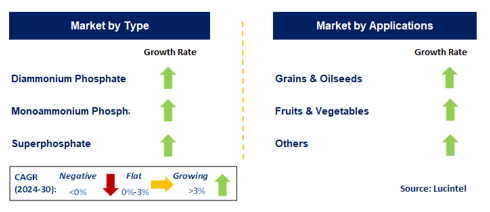
• Nutrien Q5. Which solid phosphate fertilizer market segment will be the largest in the future? Answer: Lucintel forecasts that diammonium phosphate is expected to witness the highest growth over the forecast period. Q6. In the solid phosphate fertilizer market, which region is expected to be the largest in the next 5 years? Answer: APAC is expected to witness the highest growth over the forecast period. Q7. Do we receive customization in this report? Answer: Yes, Lucintel provides 10% customization without any additional cost.


Choose a license that fits your team. Instant PDF delivery.
Prices exclude taxes. Instant delivery. Custom licensing available on request.
Market Report · July 22, 2026
Market Report · July 20, 2026
Market Report · July 20, 2026
Trusted partner for strategic intelligence and business growth


Receive a complimentary market analysis tailored to your industry. Our analysts will identify key growth opportunities and competitive dynamics specific to your business.

Market size, growth rate, and key trend analysis for your specific sector.

Top competitor positioning and market share analysis.

Strategic recommendations backed by data-driven insights.
Get curated market intelligence and competitive moves straight to your inbox.
By subscribing, you agree to receive our monthly insights. Unsubscribe anytime.
Receive a complimentary market analysis tailored to your industry. Our analysts will identify key growth opportunities and competitive dynamics specific to your business.
Market size, growth rate, and key trend analysis for your specific sector.
Top competitor positioning and market share analysis.
Strategic recommendations backed by data-driven insights.
Get curated market intelligence, emerging trends, and competitive moves straight to your inbox each month.
By subscribing, you agree to receive our monthly insights. Unsubscribe anytime.
We'll send your sample report shortly.